
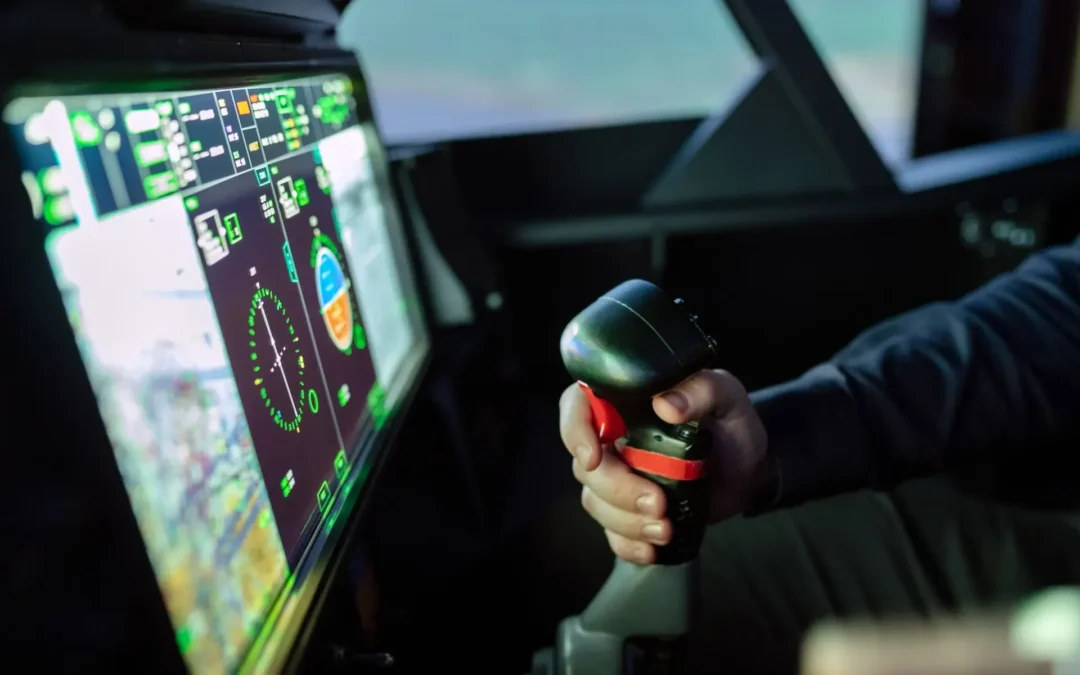
An ATP-CTP course with B737 simulator training connects transport-category knowledge with structured cockpit practice. At Las Vegas Flight Academy, the six-day program includes 32 hours of ground school, 4 hours in a fixed-base simulator (FBS), and 6 hours in a Level D B737-800 NG full-flight simulator (FFS). The sequence moves from academic preparation to crew procedures, decision-making, and realistic simulator application.
Ask Las Vegas Flight Academy about the ATP-CTP course with B737 simulator. Call 818-489-1738.
The simulator blocks are connected to the classroom curriculum, not treated as an isolated demonstration. Pilots study systems, safety, Crew Resource Management (CRM), and multi-crew operations before applying those concepts in progressively more capable training devices. The course supports the ATP pathway, but it does not guarantee a checkride result, employment, or any additional certificate.
What does an ATP-CTP course with B737 simulator training include?
Las Vegas Flight Academy delivers this FAA-approved Part 142 course in Las Vegas as a focused combination of classroom instruction and simulator training. The curriculum centers on airline-style operations, systems knowledge, flight safety, CRM, crew coordination, workload management, and aeronautical decision-making.
The course has three defined training blocks:
- 32 hours of ground school: This block develops the knowledge base behind transport-category operations. Instruction addresses aircraft systems, airline procedures, safety concepts, CRM, multi-crew coordination, and decision-making.
- 4 hours in a fixed-base simulator: The FBS block provides a practical setting to rehearse flows, callouts, checklist discipline, instrument scanning, and cockpit procedures before moving into full-flight simulation.
- 6 hours in a Level D B737-800 NG full-flight simulator: The FFS block adds high-fidelity B737-800 Next Generation operations. Pilots apply normal procedures, abnormal responses, communication, task sharing, and workload-management skills in a controlled environment.
| Training block | LVFA allocation | Primary purpose |
|---|---|---|
| Ground school | 32 hours | Build ATP-CTP knowledge, CRM, safety, and multi-crew foundations. |
| Fixed-base simulator | 4 hours | Rehearse systems, flows, callouts, and cockpit procedures. |
| Level D B737-800 NG FFS | 6 hours | Apply airline-style procedures and decision-making in high-fidelity simulation. |
The B737-800 NG focus matters. This program uses the Next Generation variant, not the 737 MAX. Pilots comparing training options should confirm the simulator model because aircraft variants can differ in systems, displays, procedures, and operating characteristics.
How is the six-day ATP-CTP schedule organized?
Las Vegas Flight Academy uses a concentrated progression from knowledge to application. Each stage prepares pilots for the next one, so simulator time has context instead of becoming a disconnected demonstration. Students should expect technical study, instructor-led discussion, procedural practice, simulator work, and debriefing throughout the six-day program.
- Establish the academic foundation. Begin with the 32-hour ground-school curriculum. Review transport-category systems, safety, CRM, multi-crew coordination, and the judgment required in airline operations.
- Study the operating environment. Connect aircraft knowledge with standard operating procedures, cockpit roles, briefings, callouts, checklists, and communication expectations.
- Prepare for cockpit application. Use the FBS to rehearse flows, instrument scanning, systems procedures, and task sharing before workload increases.
- Practice normal operations. Apply procedures in the Level D B737-800 NG FFS, including cockpit setup, briefings, automation management, and crew coordination.
- Work through abnormal scenarios. Use structured simulator exercises to practice prioritization, checklist execution, communication, and decision-making when conditions change.
- Review and debrief. Identify procedural or knowledge gaps, revisit key concepts, and organize the next steps in the ATP training pathway.
For a broader schedule overview, see LVFA’s inside look at the six-day ATP-CTP program. This article focuses on how the simulator blocks support the overall course.
What does an ATP-CTP course with B737 simulator add to learning?
Ground instruction explains what a pilot needs to know. Simulator training gives that knowledge an operational setting. In an ATP-CTP course with B737 simulator training, pilots move from discussing systems and crew coordination to managing those subjects in a B737-800 NG cockpit environment.
The FBS allows deliberate repetition. A pilot can rehearse flows, callouts, checklist use, and instrument scans while focusing on procedural accuracy. Instructors can identify confusion early, explain a system, and repeat an exercise before the student enters the higher-fidelity FFS.
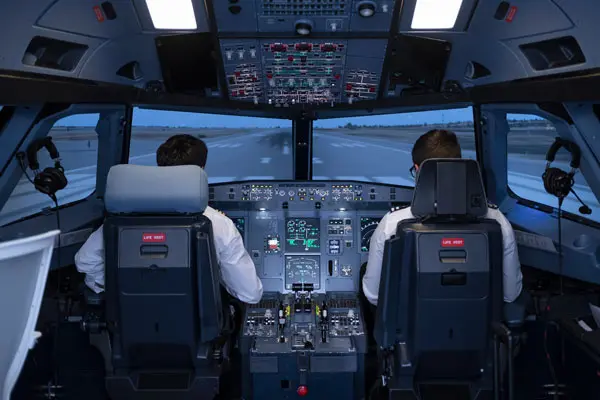
The Level D FFS adds a more immersive operating environment. The goal is not simply to make the experience feel realistic. The higher-fidelity setting allows pilots to manage aircraft operation, crew communication, procedures, and changing workload together. Sessions may include normal operations and abnormal procedures, subject to the approved curriculum and instructor plan.
CRM becomes practical during these exercises. Pilots must communicate clearly, divide duties, monitor the aircraft, challenge assumptions appropriately, and use available resources. Those behaviors are easier to evaluate when students must manage several demands at once instead of discussing them only in a classroom.
Learn more about Level D 737 simulator training to understand the role of high-fidelity simulation. The simulator supports learning and preparation, but it does not replace study, proficiency development, or the standards required for later evaluations.
Discuss LVFA’s simulator-based ATP-CTP training and current course dates.
How does an ATP-CTP course with B737 simulator support checkride preparation?
ATP checkride preparation requires more than memorizing technical information. Pilots must organize information, manage workload, apply procedures, communicate effectively, and make sound decisions. The simulator gives those skills a repeatable setting in which an instructor can observe performance and provide focused feedback.
How does simulation connect systems knowledge to cockpit actions?
Ground school provides the systems foundation. In the FBS and Level D FFS, pilots connect indications with procedures and decisions. Rehearsing checklist discipline, callouts, task sharing, and instrument scanning helps turn abstract knowledge into organized cockpit actions. The objective is disciplined application, not a promise of a particular checkride outcome.
How does simulator practice build workload management?
Airline-style operations require pilots to prioritize. A changing situation may involve aircraft control, communication, navigation, checklists, and coordination at the same time. Structured simulator scenarios help pilots practice maintaining control, identifying the problem, using resources, and communicating a plan rather than reacting impulsively.
How does debriefing identify preparation gaps?
A valuable part of simulator training happens after the exercise. Debriefing gives pilots a chance to review decisions, discuss procedural errors, and identify areas for additional study. This feedback can make later practice more purposeful. Each pilot remains responsible for meeting the applicable knowledge and performance standards for the evaluation.
For an overview of the academic side of the program, read what ATP-CTP training covers. Strong preparation combines that knowledge with deliberate simulator practice and honest self-assessment.
How is ATP-CTP different from a B737 type rating?
ATP-CTP and a B737 type rating are related steps, but they are not the same qualification. ATP-CTP develops knowledge and skills associated with the Airline Transport Pilot pathway. It includes academic instruction and simulator application focused on safety, CRM, multi-crew operations, and airline-oriented decision-making.
A B737 type rating is a separate aircraft-specific qualification. It has its own training objectives, prerequisites, scheduling, evaluation, and documentation. Completing LVFA’s ATP-CTP course does not itself grant a B737 type rating, and the six-day course should not be presented as a type-rating course.
The B737-800 NG simulator can make later planning more informed. Students gain exposure to the cockpit environment, standard operating procedures, and crew coordination concepts that may be relevant to subsequent B737 training. Pilots considering a type-rating add-on should confirm prerequisites, aircraft variant, schedule, and exact course scope with LVFA. The add-on is separate and subject to eligibility and scheduling.
For additional context, see what a B737 Level D simulator is. Understanding the equipment and the credential being pursued helps pilots compare programs accurately and avoid treating all simulator hours as interchangeable.
Who is a good fit for this Las Vegas ATP-CTP program?
Las Vegas Flight Academy’s course is intended for professional pilots who need ATP-CTP training as part of their next qualification step. It can suit pilots preparing for airline-oriented training, including domestic or international pilots ready for an intensive classroom and simulator schedule. Applicants should be prepared to study technical material, participate in crew-based exercises, and accept instructor feedback.
The six-day pace requires commitment. Students should confirm current dates, pricing, personal prerequisites, documentation, and travel requirements with LVFA before booking. Individual eligibility can vary, so this article is an overview rather than a substitute for direct enrollment guidance.
The program is also useful for pilots who want a clear separation between foundational ATP-CTP preparation and later aircraft-specific training. LVFA’s structure remains precise: 32 hours of ground school, 4 hours in an FBS, and 6 hours in a Level D B737-800 NG FFS. That allocation helps pilots plan study time and evaluate what a future type-rating add-on would need to provide.
What should pilots know before enrolling in this ATP-CTP course?
Before enrolling, pilots should verify the current course dates, tuition, prerequisites, required documents, and exact training scope with Las Vegas Flight Academy. They should also confirm that the planned 32-hour ground, 4-hour FBS, and 6-hour Level D B737-800 NG FFS allocation matches their training plan. A B737 type rating is a separate qualification.
Reviewing the course structure in advance makes the six-day schedule easier to manage. Pilots can arrive ready for technical study, simulator preparation, crew coordination exercises, and focused debriefing. The best questions are specific to eligibility and scheduling, because the FAA-approved course is delivered as an established curriculum rather than customized by individual experience level.
Travel planning is part of the preparation. Students coming to Las Vegas should arrive rested, review any materials supplied before class, and organize the documents requested during enrollment. A concentrated course leaves little room for avoidable delays. Confirm the start time, facility details, payment requirements, and training-device schedule before traveling.
Pilots should separate three decisions that are often blended together: completing ATP-CTP, preparing for an ATP checkride, and pursuing a B737 type rating. The six-day program addresses the ATP-CTP course and provides B737-800 NG simulator exposure. It does not replace later checkride preparation or automatically include the separate type-rating qualification.
That distinction also clarifies what to ask before booking. Confirm which training hours are included, which device will be used, what documentation is supplied, and what steps follow completion. Las Vegas Flight Academy can explain the current enrollment path and whether the available schedule fits the pilot’s qualification plan.
Frequently Asked Questions
What is included in the ATP-CTP course with B737 simulator?
Las Vegas Flight Academy includes 32 hours of ground school, 4 hours in a fixed-base simulator, and 6 hours in a Level D B737-800 NG full-flight simulator. The ATP-CTP course connects systems knowledge, CRM, multi-crew procedures, safety, and decision-making with structured simulator practice.
How long is the ATP-CTP course with B737 simulator at Las Vegas Flight Academy?
Las Vegas Flight Academy delivers this ATP-CTP course with B737 simulator training as an intensive six-day program. The schedule combines 32 hours of classroom instruction with FBS and Level D B737-800 NG FFS sessions. Pilots should confirm current dates and enrollment requirements before making travel or work arrangements.
Does the ATP-CTP course with B737 simulator include a type rating?
Las Vegas Flight Academy’s ATP-CTP course does not itself grant a B737 type rating. The course provides ATP-CTP training and B737-800 NG simulator exposure. A type-rating add-on is separate, with its own prerequisites, training scope, evaluation, documentation, and scheduling. Pilots should confirm the available pathway with LVFA.
Can the ATP-CTP course with B737 simulator help with ATP checkride preparation?
Las Vegas Flight Academy’s ATP-CTP course can support preparation by connecting academic instruction with CRM, procedures, workload management, and decision-making in simulation. It does not guarantee a checkride result. Each pilot must continue studying, build proficiency, and meet the applicable knowledge and performance standards for the evaluation.