
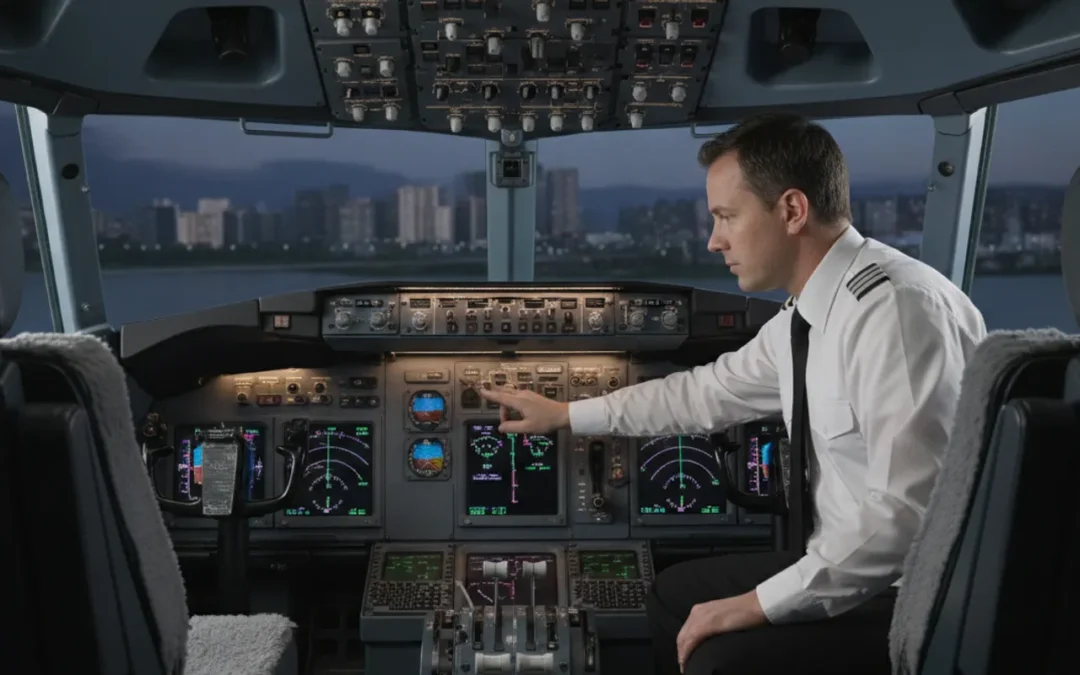
737 autopilot simulator training gives pilots a structured setting to practice managing automation while remaining responsible for the flight path. The value is not simply learning which switch to select. Pilots work on understanding the active guidance, checking that it matches the intended plan, noticing changes, and deciding when to intervene. This guide explains what that practice can involve and how to prepare without substituting self-study for approved training or aircraft-specific procedures.
Ask about 737 training options
What do pilots practice in 737 autopilot simulator training?
In a simulator, pilots can focus on the relationship between the intended flight path, the selected guidance, the indications on the flight deck, and the aircraft’s response. The exercise is not about treating the autopilot as a separate pilot. It is about using automation deliberately and checking its behavior as conditions and priorities change.
Depending on the approved course objectives and instructor briefing, practice may involve:
- Mode awareness: Identifying what guidance is active, what has been selected, and what change is expected next.
- Selection discipline: Making a deliberate input, then verifying the corresponding indications instead of assuming the system accepted the intended command.
- Flight path monitoring: Comparing the aircraft’s actual response with the cleared or planned path and recognizing when the two no longer agree.
- Workload management: Keeping automation tasks within a wider scan that includes flight path, aircraft state, communications, and the crew’s immediate priorities.
- Intervention judgment: Recognizing when a mode or response needs attention and applying the applicable procedures and instructor direction.
These are transferable training goals, not a substitute for the approved 737 procedures, aircraft manuals, or a course syllabus. The exact tasks depend on the aircraft configuration, training event, and instructor’s objectives. For broader context on formal training-center oversight, see this guide to Part 142 training. For official aviation regulatory information, pilots can start with the Federal Aviation Administration (FAA) and confirm course-specific requirements with their training provider.
Why does mode awareness matter when using the 737 autopilot?
A pilot can enter a selection with a clear intention and still misunderstand what the airplane is currently doing or what it will do next. Mode awareness means keeping that mental picture aligned with the indications and the aircraft’s behavior. It is an ongoing monitoring task, not a one-time check after engaging automation.
Simulator practice can make that task more deliberate. A pilot can verbalize the intended change, observe the relevant indications, and confirm that the response makes sense in the scenario. If it does not, the important skill is to notice the mismatch early, communicate as appropriate, and follow the approved procedure rather than continue on assumption.
The practical habit is to connect three things: what was commanded, what is annunciated, and what the aircraft is doing. If those do not line up with the plan, the discrepancy deserves attention. The instructor can help identify which indications and callouts are appropriate for the specific exercise and aircraft standard.
Mode awareness also depends on anticipation. Before a planned change, a pilot should understand the intended result and what would show that the change occurred. Afterward, monitoring continues. This is different from memorizing a sequence of button presses. A sequence without a clear picture of the expected result can be brittle when the situation changes.
How can pilots practice managing automation without overrelying on it?
Good automation management keeps the pilot engaged in the task. The autopilot can reduce some manual control demands, but it does not remove the need to monitor the flight, verify clearances, manage the aircraft systems, or make decisions. In a training session, pilots can practice maintaining a useful scan while the aircraft follows automated guidance.
A disciplined approach has several parts:
- Set the objective. Know the intended flight path or training goal before making a selection. Use the instructor’s briefing and the approved procedures for the session.
- Make a considered input. Avoid rapid or unnecessary mode changes. Each selection should support the plan and be understood by the crew.
- Verify the result. Check the relevant indications and aircraft response. Do not infer success only from the control input.
- Keep monitoring. Continue to assess whether the automation is doing what is expected as the scenario evolves.
- Respond to a mismatch. Use the applicable checklist, procedure, and instructor guidance. Do not improvise a technique from an online article.
Training is also a chance to identify personal habits. Some pilots may focus too long on the panel after making a selection; others may assume that an earlier mode remains active. A debrief can turn these observations into a specific study point. The goal is not to eliminate automation use. It is to use it with an accurate understanding of its current role and limits.
What kinds of simulator situations can develop autopilot skills?
Training scenarios can provide a controlled way to observe automation in context. The instructor sets the task, limits, and expected response. Depending on the approved syllabus, a session may connect autopilot use with routine changes in the flight plan, changing workload, or a need to reassess the selected guidance. A simulator allows a pilot to pause for explanation or repeat an exercise when that supports the training objective.
The following examples describe broad learning themes rather than a prescribed 737 procedure or promise that every course includes each event:
| Training theme | Practice and evaluation |
|---|---|
| Mode selection and confirmation | Practice: Make an intentional selection and check the expected indications. Evaluate: Did the selected guidance match the plan, and was the result verified? |
| Changing task priorities | Practice: Maintain a flight-path scan while handling an additional training task. Evaluate: Did monitoring remain effective as workload changed? |
| Unexpected or unclear response | Practice: Recognize when observed behavior does not match the expectation. Evaluate: Was the discrepancy identified and handled using approved guidance? |
| Return to manual control, when included | Practice: Transition attention and control in accordance with instructor direction. Evaluate: Was the transition planned, coordinated, and consistent with the exercise? |
| Debrief and correction | Practice: Review a decision or missed indication and repeat a learning point. Evaluate: Can the pilot explain what happened and what cue should be monitored? |
A scenario’s purpose is not to surprise a pilot with a trick. It is to make relevant decisions visible and reviewable. A useful debrief separates what the pilot intended, what the airplane indicated, what occurred, and what the pilot will watch for next time. That helps turn simulator time into a repeatable learning process rather than a collection of disconnected maneuvers.
How does autopilot practice fit into a 737 type rating?
Autopilot skills are one part of broader aircraft training. They connect with aircraft knowledge, flight-path management, procedures, communication, and the ability to maintain a clear picture of the situation. They should be learned within the approved program, not as isolated techniques.
Las Vegas Flight Academy provides Boeing 737 initial and recurrent training. Pilots comparing programs can review the academy’s Boeing 737 type-rating information and its 737 initial type-rating guide. Course scope and availability should be confirmed directly with the training provider; an article cannot establish what a particular course includes or replace its syllabus.
For an initial type rating, the pilot may be building familiarity with the aircraft while learning to apply its procedures under instructor supervision. For recurrent training, a pilot may be reviewing and demonstrating skills within the applicable program requirements. The starting point and emphasis differ, so the same autopilot topic may serve different learning needs. Ask the provider how the training objectives relate to your experience, course, and evaluation requirements.
Other study materials may help provide background. For instance, this 737 systems overview and 737 NG FMS guide address related aircraft knowledge. Use them as orientation only, then reconcile any study notes with current approved materials and instructor direction. Do not treat a general web guide as a checklist or operational authority.
How should pilots prepare for a simulator session?
Preparation should make the session more focused without creating an unofficial procedure. Begin with the training provider’s instructions. Confirm what material is expected, what configuration or variant the course covers, and whether there are pre-course study items. If any detail is unclear, ask before the session rather than guessing.
A practical preparation plan can include these steps:
- Review assigned materials. Use the syllabus, manuals, and documents the provider identifies. Keep notes tied to those sources.
- Set a learning goal. Choose a question to resolve, such as how to maintain mode awareness during a task transition. Let the instructor determine the exercise and appropriate technique.
- Refresh relevant terminology. Make sure you can describe what you intend to do and what indications you expect, using the course’s terminology.
- Prepare questions. Write down uncertainties about the program scope, aircraft standard, expected preparation, and debrief process.
- Protect attention for the session. Arrive ready to listen, brief, and participate. Ask the provider about its arrival and preparation expectations.
Do not build a personal button-by-button flow from an online description. Even material that sounds familiar may differ in context, configuration, or approved procedure. A concise question for the instructor is more useful than trying to resolve a technical uncertainty from an unverified source.
What should pilots look for in a 737 simulator training program?
When comparing training options, focus on evidence of fit and clarity rather than broad marketing language. A pilot should understand which course is relevant, what training objectives apply, which aircraft or device configuration is used, and how the provider handles preparation and debriefing. The details should come from the provider and its approved program documentation.
Useful questions include:
- Is the program intended for initial training, recurrent training, or another defined need?
- What aircraft variant, simulator configuration, and training objectives apply to the course I am considering?
- Which manuals or pre-course materials should I use, and which materials should I not rely on?
- How does the instructor explain the expected indications and monitoring tasks for the relevant exercises?
- How are questions, performance feedback, and debrief topics handled?
- What information should I provide so the academy can confirm the appropriate training path?
These questions keep the conversation concrete. They also help separate a general description of simulator training from the exact scope of the program being considered. For background on the academy and its training-center context, see Las Vegas Flight Academy’s information about the organization.
What mistakes can reduce the value of autopilot simulator practice?
One common trap is treating automation as a set of controls to memorize rather than a system whose state must be understood. That can lead to a pilot selecting a mode without being able to explain the expected result. Another is concentrating on the input while neglecting the aircraft’s response and the wider flight path.
Other unhelpful habits include:
- Assuming an indication without checking it.
- Making several changes in quick succession before evaluating the first one.
- Allowing a secondary task to draw attention away from monitoring.
- Using an online explanation instead of the approved procedure or instructor guidance.
- Leaving the debrief without a specific learning point to review.
These are not reasons to avoid automation. They are prompts to make practice more purposeful. Ask the instructor to clarify what cue should have drawn your attention, what you expected to see, and how the relevant approved guidance addresses the situation. When the training objective is clear, a pilot can focus on improving the decision process rather than merely completing a sequence.
Contact the academy about your 737 training needs
How can pilots get more from an autopilot debrief?
A debrief is most useful when it connects a specific observation to a practical learning point. Instead of writing only that a mode change was confusing, note what you expected, what indication or response you observed, and when you recognized the difference. Then ask the instructor which cue or approved reference should guide your understanding. This keeps the review precise and avoids turning a single event into a broad, unsupported rule.
Pilots can organize notes in a simple three-part format:
- Before the event: What was the objective, and what result did you expect?
- During the event: What did you observe, and what task competed for your attention?
- After the event: What will you review, and what question remains for the instructor?
Separate factual observations from interpretation. For example, record the indication you remember seeing before deciding why it appeared or what action should follow. Confirm technical questions against course materials and instructor guidance. If the scenario involved more than one task, identify which task affected your scan or delayed your recognition, without assuming that one factor explains everything.
A short follow-up plan is better than an unbounded list of things to study. Choose one or two points that relate directly to the course objective, review the assigned reference, and bring unresolved questions to the next briefing. If the instructor recommends repeating an exercise, focus on the cue and decision process identified in the debrief. The point is not to chase a perfect run through memorized actions; it is to build a more accurate understanding and apply it consistently within the approved training framework.
What should pilots remember about 737 autopilot simulator training?
737 autopilot simulator training helps pilots practice the thinking around automation: understanding the selected guidance, verifying indications, monitoring aircraft response, and responding appropriately when the picture does not match the plan. The simulator provides a setting to work through those tasks with instructor direction and a debrief. Course objectives and exact procedures depend on the approved program and aircraft configuration, so pilots should confirm details with the provider and rely on current authorized materials. Good preparation starts with clear questions, careful study, and a commitment to stay engaged while automation is in use.