
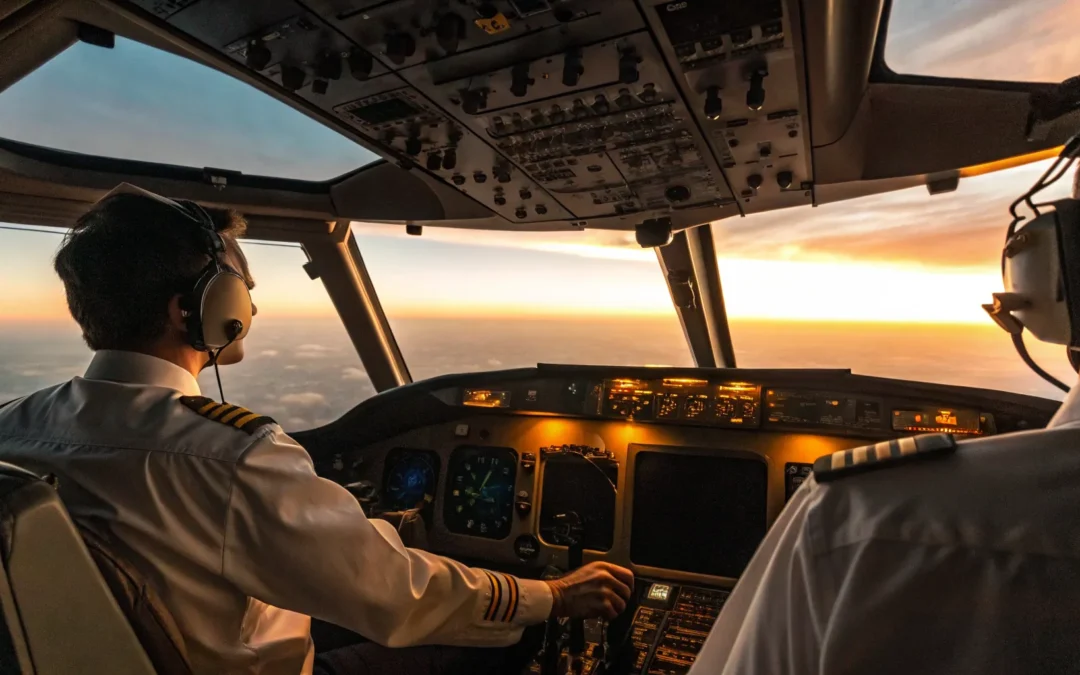
Stepping into the cockpit of a Boeing 737 for the first time is a moment that stays with you forever. The array of screens, the feel of the throttles, the sheer sense of potential—it’s a powerful experience. Have you ever dreamed of flying a Boeing 737 just like a real airline pilot? That dream becomes tangible in this very seat. The complexity can seem overwhelming at first, but it’s a workspace designed for precision and safety. Every switch and system is a piece of a puzzle you learn to master. This mastery doesn’t happen by accident; it’s the direct result of intensive, high-quality training in a program that breaks down every component, from ground school theory to hands-on simulator sessions.
Key Takeaways
- Becoming a B737 pilot follows a clear progression: Your path involves earning foundational licenses like the CPL, building flight hours to qualify for your ATP certificate, and completing specialized training like the ATP-CTP course and a final B737 type rating.
- Simulator training is where you build critical skills: Full-motion simulators are essential for mastering complex procedures and safely practicing emergency scenarios, giving you the confidence and muscle memory needed for the real flight deck. Explore our Level D 737 simulator training details to understand how full-motion simulators replicate real flight conditions.
- Your choice of school directly impacts your career: Selecting an FAA Part 142 certified training center guarantees your education meets the highest industry standards, making you a more prepared and desirable candidate for airline careers.
What It’s Like to Fly a Boeing 737
Stepping into the cockpit of a Boeing 737 is a moment most pilots work toward for years. It’s a significant leap from the single-engine planes where many of us start our journeys, and the difference is something you feel immediately. The flight deck is larger, the systems are more complex, and the sheer power at your fingertips is humbling. But once you settle into the seat, years of training kick in, and the complex array of instruments starts to feel like a familiar, powerful workspace. Flying the B737 is a dynamic experience that blends technical skill, sensory feedback, and immense responsibility. It challenges you to be precise, calm, and decisive from takeoff to touchdown, using every bit of your training to command the aircraft with confidence.
The Sights and Sounds of the Cockpit
The B737 communicates with you through a constant stream of sensory information. You feel the gentle hum of the hydraulic systems through the flight controls and hear the powerful roar of the engines as you advance the thrust levers. A common error for pilots new to the 737 is over-controlling; the aircraft is so responsive that it requires a delicate touch. Through dedicated training in a full-motion simulator, you develop the muscle memory needed to make smooth, precise inputs. This hands-on experience is a core part of our ATP CTP course, where you learn to feel the aircraft’s movements and anticipate its responses, even while the autopilot is flying.
Your First Time at the Controls
Few pilots forget their first time rolling onto the runway in a 737 simulator. As one pilot described it, “It’s quite a surreal feeling.” All the theory and procedures you’ve studied suddenly become real. For many, the initial emotions are a mix of pure excitement, intense focus, and a deep sense of personal pride and gratitude for reaching this milestone. Your body experiences a series of inexplicable feelings as you command the aircraft down the runway and into the air. It’s an exhilarating moment that represents the culmination of countless hours of dedication, study, and passion for aviation.
The Responsibility of Command
Beyond the thrill of flying is the profound responsibility that comes with command. Your ability to manage your own emotions is critical to thinking clearly and ensuring the safety of everyone on board. This is especially true during non-normal situations, where calm and collected leadership makes all the difference. It also means prioritizing safety over perfection. As seasoned pilots will tell you, a safe landing is far more important than a “butter” touchdown. Mastering this mindset is a key objective of a B737 Type Rating, where you learn to handle the aircraft with authority and make command decisions under pressure.
A Look Inside the B737 Cockpit
Stepping into the cockpit of a Boeing 737 for the first time is an unforgettable experience. It’s a sophisticated workspace where classic aviation design meets modern digital technology. At first glance, the array of switches, screens, and controls can seem complex, but each element has a specific purpose designed for safety and efficiency. Our training breaks down this environment into manageable systems, helping you build the confidence and competence to command this incredible aircraft. You’ll learn how every piece of equipment works together, from the manual flight controls to the advanced flight management systems.
The Primary Flight Controls and Throttles
The heart of flying the B737 lies in your connection to the primary flight controls. You’ll spend your time with your hands on the yoke and throttles and your feet on the rudder pedals. These controls feel responsive and direct, thanks to a hydraulic system that actuates the ailerons, elevators, and rudder for precise maneuvering. A key part of your training is developing the muscle memory to make smooth, deliberate inputs. You’ll learn to feel how the aircraft responds to your commands, mastering the art of hand-flying the jet. Our B737 Type Rating course focuses heavily on mastering these controls in all phases of flight.
Autopilot and Flight Management Systems
The B737’s autopilot and Flight Management System (FMS) are powerful tools that assist with your workload, especially during long flights. A common mistake for new pilots is to over-control the aircraft, but the autopilot is designed to help maintain smooth and stable flight. A great training technique is to feel the flight controls and thrust levers while the autopilot is engaged to understand the subtle inputs it makes. The FMS is the brain of the operation, allowing you to program your entire flight plan. Learning to work seamlessly with these automated systems is a core component of the ATP-CTP course, where you’ll build a foundation in advanced aircraft automation.
Understanding the Glass Cockpit Display
The modern B737 features a “glass cockpit,” which replaces traditional analog gauges with large, clear digital displays. This advanced interface integrates all critical information, including flight data, navigation routes, and aircraft systems, onto a few screens. This setup gives you incredible situational awareness at a glance, allowing you to process information and make informed decisions quickly. During your training, you’ll become proficient at interpreting these displays and managing the aircraft’s systems through this interface. Our state-of-the-art simulators perfectly replicate this environment, ensuring you are fully prepared for the real thing.
Simulator vs. Real Aircraft: What’s the Difference?
If you’re training to fly a B737, a significant portion of your time will be spent in a full-motion simulator. It’s a common question: how close is it to the real thing? While nothing can perfectly replicate the feeling of commanding a 40-ton aircraft through the sky, modern simulators get incredibly close. They are sophisticated tools designed to build proficiency and confidence before you ever step into a real cockpit.
The goal of simulator training isn’t to replace real-world flying but to enhance it. It provides a safe, controlled environment where you can master complex procedures and handle emergencies without any real-world risk. At Las Vegas Flight Academy, we use state-of-the-art Boeing B737 Level D full flight simulators to ensure you get the most realistic and effective training possible. Understanding both the similarities and the differences between the sim and the aircraft is key to becoming a competent and well-rounded pilot.
How Realistic Is a Full-Motion Simulator?
Stepping into a Level D full-motion simulator is like being transported directly into a B737 cockpit. Every switch, button, and display is an exact replica of what you’ll find on the flight deck. The high-definition, wrap-around visuals create a completely immersive world, simulating everything from different weather conditions to various airports around the globe. The hydraulic system underneath provides realistic motion, mimicking the sensations of takeoff, turbulence, and landing.
The experience is designed to be so authentic that your brain quickly accepts it as reality. You’ll hear the familiar sounds of the engines spooling up, feel the jolt of the landing gear touching down, and see the runway lights approaching. This level of realism is crucial for building muscle memory and procedural fluency.
Key Differences Between Sim and Reality
For all its realism, a simulator can’t fully replicate the subtle, physical feedback of a real aircraft. In a B737, a pilot can often “feel” the aircraft through the flight controls, sensing changes in airflow and pressure. This tactile feedback helps prevent common errors like over-controlling the aircraft in smooth conditions. You learn to make tiny, precise adjustments based on these physical cues, a skill that can only be perfected through actual flight time.
The simulator is a master at replicating procedures, systems, and visual cues, but the raw, unscripted feeling of flight remains unique to the real thing. Think of the simulator as the ultimate procedural trainer, while the aircraft adds the final layer of sensory experience.
Why Simulator Training Is Essential for Proficiency
Simulator training is a cornerstone of modern aviation safety for one simple reason: it allows you to practice scenarios that would be far too dangerous to attempt in a real aircraft. You can experience and manage engine failures on takeoff, navigate severe weather, and execute emergency landings, all from the safety of the training center. This is where you build the critical thinking skills and composure needed to handle any situation with confidence.
An ATP CTP course integrates ground school theory with intensive simulator sessions, bridging the gap between knowing what to do and actually doing it. This structured approach, conducted under a rigorous FAA Part 142 certification, ensures you meet the highest standards of safety and operational efficiency before you ever carry passengers.
What Qualifications Do You Need to Fly a B737?
Stepping into the cockpit of a Boeing 737 is a major career goal, and reaching it involves a clear, structured path. It’s not just about logging hours; it’s about earning a series of licenses and certifications that prove your skill and readiness for the flight deck. Think of it as a ladder, where each rung represents a new qualification that gets you closer to flying for a major airline. The journey requires dedication, but every pilot who sits in that captain’s chair has walked this same path. Let’s break down the essential steps you’ll need to take to get there.
Get Your Medical and Commercial Pilot License
Before you can even think about airline flying, you need two foundational items: a First-Class Medical Certificate and a Commercial Pilot License (CPL). The medical certificate, issued by an Aviation Medical Examiner, confirms you meet the health standards required for the intense demands of the job. You can find an examiner and review the requirements on the FAA’s website.
Your CPL is the license that allows you to be paid for your flying services. It’s the first major professional milestone and the ticket to start building the experience necessary for an airline career. Earning it involves more advanced flight training and passing written, oral, and practical exams that demonstrate a higher level of airmanship.
Build Your Flight Hours and FAA Certifications
After earning your CPL, the next phase is all about building experience. To be eligible for the airlines, you need to accumulate flight hours, with the magic number for an Airline Transport Pilot (ATP) certificate typically being 1,500 hours. Many pilots build this time by working as a flight instructor, flying for charter companies, or in other aerial work.
Along the way, you’ll also earn other critical certifications. An Instrument Rating is essential, as it allows you to fly in cloudy weather and low visibility conditions, which is standard for airline operations. You will also need a Multi-Engine Rating to fly aircraft with more than one engine. Each hour and rating you add to your logbook is another step toward the right seat of a B737.
Earn Your ATP Certificate
The Airline Transport Pilot (ATP) certificate is the highest level of pilot certification issued by the FAA. It is the license required to act as a pilot for a scheduled airline. Once you’ve met the flight hour requirements (typically 1,500), you become eligible to earn your ATP. This process involves passing a comprehensive written exam and a rigorous practical flight test with an FAA examiner.
Earning your ATP certificate signifies that you have the experience, knowledge, and skill to handle the responsibilities of an airline pilot. It’s the qualification that opens the door to interviews with major carriers and is a mandatory prerequisite before you can begin training on a specific aircraft like the Boeing 737.
Complete Your ATP-CTP Training
Before you can take the ATP written exam, you must complete the Airline Transport Pilot Certification Training Program (ATP-CTP). This FAA-mandated course is designed to bridge the gap between your experience as a commercial pilot and the complexities of airline operations. The program includes several days of academic instruction and time in a full-motion simulator, focusing on aerodynamics, automation, and crew coordination.
This isn’t just a box to check; it’s your formal introduction to the airline environment. As an FAA Part 142 certified school, we provide an approved ATP-CTP course that gives you the exact training you need to prepare for the next level of your career and succeed on your written exam.
Meet B737 Type Rating Requirements
Finally, with your ATP certificate in hand, you need one last key qualification: a type rating. A type rating is an aircraft-specific certification that allows you to act as a pilot of a large aircraft like the Boeing 737. Since every large jet has unique systems and handling characteristics, the FAA requires pilots to complete an intensive training course for each type they fly.
A B737 type rating course involves in-depth ground school and many hours in a Level-D full-motion simulator. Here, you’ll master the aircraft’s systems, performance, and emergency procedures under the guidance of airline-experienced instructors. Completing this training is the final step that qualifies you to sit in the cockpit of a 737.
What to Expect in a B737 Type Rating Course
Earning your B737 type rating is an intense and rewarding process that combines deep theoretical knowledge with hands-on simulator training. The entire program is structured to make you a proficient and confident pilot, capable of handling one of the world’s most popular airliners. At a FAA Part 142 certified center, the curriculum is standardized and approved, meaning every pilot receives the same high-quality instruction. You’ll move from the classroom to a full-motion simulator, building your skills step-by-step. Let’s break down what the training involves.
Ground School: Building Your Foundation
Your journey begins in the classroom with comprehensive ground school instruction. This is where you’ll build the essential knowledge base for operating the B737. The core curriculum is the approved course of training that leads directly to your type rating. You’ll cover everything from aircraft limitations and performance calculations to flight planning and weight and balance. This foundational training is critical for understanding the operational aspects of the aircraft and prepares you for the practical flying components of the course. It’s the bedrock upon which all your hands-on skills will be built.
Master Standard and Emergency Procedures
Once you have a solid theoretical understanding, the focus shifts to mastering the aircraft’s procedures. Flying a B737 safely relies on standardized operating procedures (SOPs) for normal, abnormal, and emergency situations. This training ensures consistency and helps you handle any flight scenario effectively. You will spend hours in the simulator drilling these procedures until they become second nature. Learning from instructors with real airline experience is invaluable here, as they provide insights that go beyond the manual, preparing you for the realities of line flying and enhancing overall flight safety.
Gain Technical Knowledge of Aircraft Systems
A deep understanding of the B737’s complex systems is what separates a good pilot from a great one. This phase of your training connects theory with practice, ensuring you know the aircraft inside and out. The courses cover theory, simulator sessions, and practical procedures for the hydraulic, pneumatic, electrical, and avionics systems. This comprehensive approach equips you with the skills to operate the Boeing 737 with a high level of safety and efficiency. You’ll learn how these systems interact and how to troubleshoot them, giving you the confidence to make critical decisions in the cockpit.
How Long Does It Take to Become a B737 Pilot?
Becoming a Boeing 737 pilot is a significant commitment, but the path is clearer and more structured than you might think. For most pilots, the entire journey from starting flight training to being type-rated in a B737 takes about 12 to 18 months. This timeline includes earning your initial licenses, building the required flight hours, and completing the specialized training for the aircraft. It’s a marathon, not a sprint, focused on building a deep foundation of skill and confidence. Each step is designed to prepare you for the responsibilities of the flight deck, ensuring you have the expertise to handle one of the world’s most popular airliners. The final piece of this puzzle is your type rating course, which typically takes a few months of intensive, focused work.
Your Training Timeline from PPL to Type Rating
Your journey to the 737 cockpit begins long before you sit in the simulator. It starts with earning your Private Pilot License (PPL) and progresses through an Instrument Rating and a Commercial Pilot License. After that, your focus shifts to building flight hours to meet the requirements for an Airline Transport Pilot (ATP) certificate, the highest level of pilot certification. Once you have your ATP, the final step is the B737 type rating. This specialized course is where you apply all your previous knowledge to a specific aircraft. Through comprehensive flight training that includes ground school and simulator sessions, you’ll master the B737’s systems and procedures.
Overcome Common Training Hurdles
Every pilot faces challenges on their path to the airlines, and one of the most common is the financial investment. A Boeing 737 type rating is a significant but necessary expense, with costs for quality programs varying. It’s a hurdle you can plan for and overcome. At Las Vegas Flight Academy, our FAA-approved course is designed to give you everything you need without any hidden variables. The program includes 32 hours of ground school and extensive simulator training, providing a clear, structured path to success. By choosing a focused, all-inclusive program, you can manage your budget effectively and concentrate on what truly matters: becoming a proficient and confident B737 pilot.
What Is Life Like as a Commercial Airline Pilot?
Earning your wings to fly a commercial airliner like the Boeing 737 is an incredible accomplishment. But what is the day-to-day reality like once you’re in the captain’s seat? Life as a commercial pilot is a unique blend of immense responsibility, technical skill, and profound personal reward. It’s a career that demands constant professionalism and a cool head, but it offers experiences and a sense of achievement that few other jobs can match. Understanding both the pressures and the perks can help you prepare for the journey ahead.
The Unspoken Challenges of the Job
Beyond the beautiful views from the cockpit, being a pilot comes with a unique set of pressures. The most significant challenge is maintaining your composure under stress. Your success, and the safety of everyone on board, often depends on your ability to practice emotional control and think clearly, no matter the situation. This mental fortitude is just as important as your technical skill.
Even on a smooth flight, there are technical habits to master. For instance, a common error for new B737 pilots is overcontrolling the aircraft. It’s a tendency that comes from muscle memory, but it’s something you correct by developing a feel for the flight controls. While the emotional landscape of a pilot includes excitement and pride, it’s the underlying mission focus and discipline that truly define the role.
The Rewards That Make It All Worthwhile
For all its challenges, the life of a pilot is filled with moments that make every bit of training worth it. Many pilots describe their first time flying a jet as a surreal feeling, a moment when years of hard work click into place. Rolling onto the runway and taking control of a powerful aircraft like the Boeing 737 for the first time is an exhilarating experience that marks a huge personal achievement.
This sense of fulfillment is the direct result of your dedication and the quality of your instruction. At Las Vegas Flight Academy, we believe that superior training at a reasonable cost is what creates real value for every pilot who walks through our doors. We are dedicated to helping you reach that incredible moment of your first takeoff and preparing you for a long and successful career in the cockpit.
Why FAA Part 142 Certification Matters
When you’re aiming for the right seat of a Boeing 737, the school’s certification is a big deal. Specifically, you want to see FAA Part 142 certification. Think of it as the FAA’s highest seal of approval for advanced flight training centers. This isn’t just a piece of paper; it’s a guarantee that the school’s curriculum, instructors, and simulators have all passed a rigorous inspection process designed to produce safe, competent, and professional pilots.
For aspiring airline pilots, this certification is non-negotiable. Part 142 programs are specifically designed for the kind of advanced training you need, like an ATP Certificate Training Program (ATP-CTP) or a B737 type rating. These programs are highly structured, efficient, and focused on getting you proficient in complex aircraft. Airlines recognize and respect this level of training because they know it creates pilots who are prepared for the demands of the flight deck. Choosing a Part 142 school shows you’re serious about your career and committed to meeting the highest standards in aviation from day one.
The Gold Standard of FAA-Approved Programs
When you’re researching flight schools, you’ll see different FAA approvals, but Part 142 stands out as the gold standard for airline-oriented training. While Part 141 programs are also structured and approved, Part 142 certification is reserved for training centers that specialize in advanced simulation and type ratings. The right school will have an FAA-approved curriculum, a location with favorable weather to keep you on schedule, and dedicated student support. A Part 142 certificate ensures the school meets these tough requirements. It means every part of your training, from ground school lectures to simulator sessions, follows a script that the FAA has personally reviewed and approved for its effectiveness and safety.
Choose the Right B737 Type Rating School
Selecting where you’ll earn your Boeing 737 type rating is one of the most important decisions you’ll make for your career. This is the qualification that makes you hirable for a B737 cockpit, so the quality of your training matters immensely. As a premier Boeing 737 FAA Part 142 Training Center, LVFA provides the environment you need to succeed, with multiple Level-D full-motion simulators and instructors who bring years of real airline experience to your training. This certification means you’re not just learning from a textbook; you’re training in an environment that mirrors the airline world, preparing you for the exact challenges you’ll face on the line. It’s the most direct path to becoming a confident and capable B737 pilot.
Why West Coast Pilots Train in Las Vegas
When it comes to advanced flight training, location matters. For pilots in California, Arizona, Oregon, and other western states, Las Vegas offers a convenient and focused environment to earn your wings. It’s a short flight away, minimizing travel time and letting you concentrate on what’s important: your training. As one of the only FAA Part 142 ATP-CTP providers on the West Coast, Las Vegas Flight Academy has become a key destination for pilots looking to take the next step in their careers.
The city provides an ideal backdrop for intensive training. You can step away from your daily routine and immerse yourself in a program designed to prepare you for the airline industry. But it’s not just about convenience. Pilots choose to train here because they find a unique combination of cutting-edge technology, instruction from seasoned airline professionals, and a commitment to providing exceptional value. This blend ensures you receive the high-caliber training required to confidently command a modern jetliner without the logistical headaches of cross-country travel.
Train in State-of-the-Art B737 Simulators
The cornerstone of any great type rating program is the quality of its simulators. At Las Vegas Flight Academy, you’ll train in Boeing B737-300 and B737-800 Level D full-flight simulators, the highest standard of realism available. These aren’t just mock-ups; they are sophisticated machines that replicate the sights, sounds, and feeling of flying the real aircraft with incredible accuracy. This technology allows you to practice standard procedures, handle complex system failures, and master emergency scenarios in a completely safe setting. The hands-on time you get in these simulators is essential for building the muscle memory and confidence you need for your B737 type rating.
Learn from Instructors with Real Airline Experience
A simulator is only as good as the instructor guiding you through it. Our training center is staffed by airline-experienced instructors who bring decades of real-world knowledge to every session. They’ve been in the captain’s seat, managed flights for major airlines, and have the practical insights that you just can’t get from a textbook. They share invaluable lessons on crew resource management, decision-making, and the subtle nuances of day-to-day airline operations. This mentorship from our dedicated team is what helps transform a proficient pilot into a true professional, ready for a career with the airlines.
Get World-Class Training at a Competitive Price
Earning an ATP certificate and a type rating is a major investment in your future. We believe that superior training at a reasonable cost creates lasting value for every pilot who walks through our door. By focusing our resources at a single, dedicated facility in Las Vegas, we can provide an exceptional training experience that is also financially accessible. This approach means you don’t have to compromise on the quality of instruction or equipment to fit your budget. You get world-class training that prepares you for the flight deck, making your investment a smart and effective step toward achieving your career goals with our ATP CTP course.
Related Articles
Frequently Asked Questions
How much of the B737 training happens in a simulator versus a real plane? For a large aircraft like the Boeing 737, your type rating training is completed almost entirely within a Level D full-motion simulator. This is the industry standard for safety and effectiveness. The simulator allows you to master all the aircraft’s systems and practice emergency procedures in a controlled environment, which would be impossible or far too dangerous to do in the actual aircraft. It’s the most efficient way to build the proficiency and confidence required by airlines.
What part of the process takes the longest when becoming a B737 pilot? The most time-consuming part of the journey is building the flight experience needed to qualify for your Airline Transport Pilot (ATP) certificate, which typically requires 1,500 hours. Pilots often spend a year or more working as flight instructors or in other commercial flying jobs to accumulate these hours. In contrast, the specialized courses like the ATP-CTP and the B737 type rating are much shorter, intensive programs that you complete once you have met the flight hour requirements.
I have my Commercial Pilot License. What’s my immediate next step toward flying a B737? With your Commercial Pilot License in hand, your primary focus should be on building flight hours toward the 1,500 needed for your ATP certificate. While doing so, you should also earn your Instrument and Multi-Engine ratings if you haven’t already. Once you meet the hour requirements, your next official step is to complete the mandatory Airline Transport Pilot Certification Training Program (ATP-CTP). This course is the prerequisite for taking your ATP written exam and is your formal entry into the world of airline operations.
Can the B737 type rating course be customized based on my previous experience? Our courses are certified under FAA Part 142, which means they follow a standardized and approved curriculum. This ensures that every pilot, regardless of their background, receives the same high-quality training and is held to the exact same professional standard. While the course itself is not customized, our experienced instructors work with you to ensure you master every concept and procedure, providing the support you need to succeed within that proven structure.
Why should I travel to Las Vegas for training if I live on the West Coast? Pilots from California, Arizona, and other western states choose to train in Las Vegas because it offers a focused, immersive environment that’s just a short flight away. Traveling for your training allows you to step away from daily distractions and dedicate your full attention to a demanding program. You get access to our state-of-the-art simulators and instruction from seasoned airline pilots, all in a single, convenient location that helps you complete your certification efficiently.