
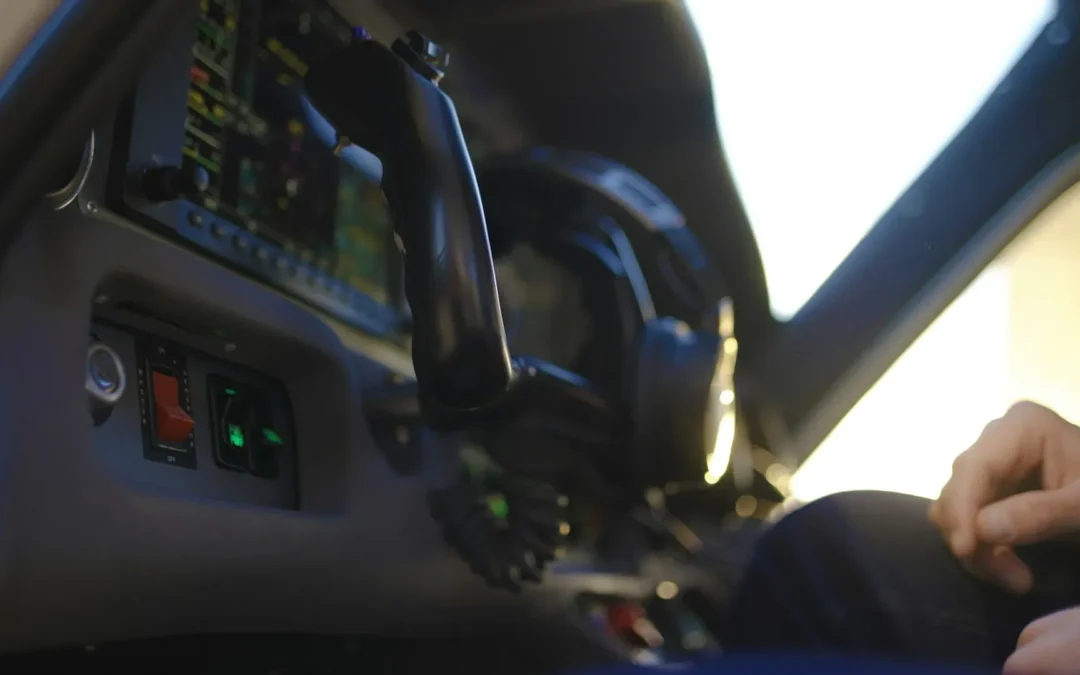
If your organization owns or operates a full flight simulator, you already know the challenge: these machines need more than a roof over them. A Level D full flight simulator requires precise environmental controls, uninterrupted power, trained maintenance technicians, and a facility that meets FAA standards. Finding the right housing partner can mean the difference between 99% uptime and costly operational gaps that disrupt your training schedule.
Learn more about flight simulator housing and maintenance services at Las Vegas Flight Academy, or call Ron Kelly directly at 818-489-1738 to discuss your organization’s needs.
This guide walks B2B decision-makers through everything involved in flight simulator housing: what it actually includes, why operators outsource it, the facility specifications that matter, and how to evaluate potential partners. Whether you represent an airline, a training organization, or a simulator OEM, the goal is the same: keep your device running at peak performance with minimal downtime.
What Is Flight Simulator Housing?
Flight simulator housing is a B2B service where a certified training facility provides dedicated space, environmental infrastructure, and ongoing maintenance for a client’s full flight simulator (FFS) or flight training device (FTD). The housing provider takes responsibility for the physical environment the simulator needs to operate correctly, while the client retains ownership of the device and control over its training schedule.
This arrangement is common among regional airlines, international carriers expanding into U.S. markets, and training organizations that need simulator access without building their own facility. The housing provider typically handles:
- Dedicated simulator bay space with proper structural support
- Climate-controlled environments (temperature and humidity regulation)
- Uninterruptible power supply (UPS) and backup generators
- On-site maintenance technicians for hardware and software support
- FAA regulatory compliance and inspection readiness
- Security, access control, and building management
Think of it as a data center model applied to aviation training. Just as companies colocate servers in specialized facilities rather than building their own, simulator operators can colocate their devices in purpose-built training centers.
Why B2B Operators Outsource Simulator Housing
Building a simulator facility from scratch is a serious capital investment. According to industry estimates, a single Level D full flight simulator costs between $15 million and $30 million, and the facility to house it adds another $5 million to $15 million in construction, electrical, and HVAC costs. For many operators, outsourcing the facility side of the equation makes financial and operational sense.
Here are the main reasons organizations choose third-party housing:
Capital avoidance. Instead of spending $10 million or more on a custom facility, operators pay a monthly or annual housing fee. This frees capital for fleet expansion, additional simulators, or other operational priorities.
Maintenance expertise. Full flight simulators require specialized technicians who understand hydraulic motion systems, visual display hardware, avionics emulation software, and FAA qualification standards. A dedicated housing facility already employs these technicians, so the client does not need to recruit and retain a separate maintenance team.
Regulatory compliance. Simulators used for FAA-certified training must operate within facilities that meet specific standards. An FAA Part 142 training center already has these certifications in place, including the inspection protocols and documentation practices that regulators expect.
Uptime guarantees. Reputable housing providers commit to uptime targets (often 98% or higher) because their own training operations depend on the same infrastructure. When a simulator goes down, the housing provider has a financial incentive to fix it quickly.
Speed to market. A new airline or training company can begin simulator operations within weeks by housing at an existing facility, compared to the 18 to 24 months it takes to build a purpose-built center.
What Are the Facility Requirements for a Level D Simulator?
A Level D simulator is the highest fidelity classification the FAA assigns to a full flight simulator. It replicates the flight deck of a specific aircraft type with enough accuracy that pilots can complete type rating checkrides without ever flying the actual airplane. Housing one of these machines requires a facility built to exacting standards.
Floor space and structural load. A single Level D FFS typically weighs between 20,000 and 35,000 pounds. The simulator bay needs reinforced concrete flooring rated for this load, plus overhead clearance of at least 20 feet to accommodate the motion platform at full extension. Most bays measure 40 by 50 feet or larger, with access doors wide enough for forklift and crane operations during installation.
Power supply. Each full flight simulator draws 150 to 300 kVA of power during operation. The facility needs dedicated electrical feeds with voltage regulation, plus an uninterruptible power supply to prevent data loss or hydraulic damage during outages. Backup generators should activate within 10 seconds of a power failure.
Climate control. Simulators generate significant heat from their motion systems, visual displays, and computing hardware. The bay temperature must stay between 65 and 75 degrees Fahrenheit, with humidity between 40% and 60%. Dedicated HVAC systems with redundancy are standard.
Vibration isolation. The motion platform produces vibrations that can affect adjacent simulators or sensitive equipment. Quality facilities use isolation pads or separate foundation slabs to prevent cross-talk between bays.
Data connectivity. Modern simulators require network connectivity for software updates, remote diagnostics, training record management, and sometimes real-time weather data feeds. The facility should provide redundant internet and local network infrastructure.
Key Services to Expect from a Simulator Housing Provider
Not all housing arrangements are the same. Some providers offer bare-bones bay rental, while others deliver a full-service package. Here is what to look for in a complete housing agreement.
Explore LVFA’s full-service simulator housing options or call 818-489-1738 to discuss what your organization needs.
Preventive and Corrective Maintenance
The most valuable part of a housing arrangement is often the maintenance. A good provider assigns dedicated technicians who know your specific simulator model inside and out. Preventive maintenance follows the OEM schedule (visual system calibration, motion system inspections, control loading checks), while corrective maintenance addresses unexpected failures. Ask about average response times and whether the provider maintains a parts inventory on-site.
FAA Qualification Support
Simulators used for FAA-certified training need to maintain their Level D qualification through regular evaluations. Your housing provider should coordinate with the FAA’s National Simulator Program office, prepare the device for qualification tests, and maintain all required documentation. At Las Vegas Flight Academy, for example, the maintenance team handles qualification support for the Boeing 737-800 Level D simulators on-site (FAA IDs #1168 and #2104).
Training Room and Briefing Space
Your pilots and instructors need more than a simulator bay. Look for providers that offer classrooms, briefing rooms, and instructor preparation areas. A facility with 4 classrooms and 8 briefing rooms, like LVFA’s 40,000 square foot Henderson campus, gives your training operation room to run full course programs without competing for space.
Simulator Relocation Support
Moving a full flight simulator is a specialized operation that involves disassembly, transport on air-ride trucks, reassembly, and recalibration. Some housing providers coordinate the entire relocation process, including rigging, crane operations, and post-move qualification testing.
Shared Infrastructure Access
Some housing providers also operate their own training programs, which means your organization can benefit from shared resources: instructor pools, student accommodations partnerships, hotel corporate rates, ground transportation arrangements, and administrative support. This is especially valuable for international clients setting up U.S.-based training programs.
How to Evaluate a Simulator Housing Partner
Choosing the wrong housing provider leads to downtime, regulatory headaches, and frustrated pilots. Here is a practical evaluation framework.
1. Verify FAA certifications. The provider should hold a current FAA Part 142 Training Center Certificate. This is not optional for facilities where simulators are used for type rating, recurrency, or ATP-CTP training. Ask for the certificate number and check it against FAA records.
2. Inspect the facility in person. Photos and brochures do not tell the full story. Walk the simulator bays, check the electrical and HVAC systems, meet the maintenance technicians, and observe a simulator in operation. Look for cleanliness, organization, and proper labeling of electrical panels and safety equipment.
3. Ask about expansion capacity. If your simulator needs grow, can the facility accommodate additional devices? A center with 8 simulator bays (2 occupied, 6 available) has more room for your growth than a facility running at full capacity.
4. Review maintenance staffing. How many technicians does the provider employ? What are their qualifications and experience levels? Instructors with 20,000+ hours of flight time and technicians with OEM training represent a higher standard of care for your equipment.
5. Check the location. Your pilots and instructors need to travel to the facility regularly. Consider proximity to major airports, hotel availability, ground transportation, and the local cost of living. Facilities near major airline hubs or in cities with strong hospitality infrastructure (like Las Vegas) reduce the logistical burden on your team.
6. Understand the contract structure. Housing agreements vary from month-to-month to five-year minimums. Understand what is included in the base fee versus what is billed separately. Common line items include: bay rental, power consumption, HVAC, maintenance labor, parts, and qualification support.
7. Request uptime data. A reputable provider will share historical uptime records. Industry benchmarks target 98% or higher availability for housed simulators.
Why Henderson, Nevada Is a Strategic Location for Simulator Housing
Location matters more than many operators realize when choosing a simulator housing partner. Henderson, Nevada, just minutes from Harry Reid International Airport, offers several distinct advantages for B2B simulator operations.
West Coast access. For airlines and training organizations based in California, Arizona, Oregon, Washington, Utah, Idaho, New Mexico, or Hawaii, Henderson is the closest FAA Part 142 training center option. Pilots from Los Angeles, San Diego, San Francisco, Phoenix, or Seattle can fly in and out the same day for short training events, or stay affordably for longer programs. LVFA also supports ATP-CTP training on the West Coast for pilots in the region.
Year-round operations. Nevada’s dry climate and minimal severe weather mean fewer facility disruptions from storms, flooding, or extreme humidity. This translates to more consistent simulator uptime and fewer travel cancellations for your crews.
Hospitality infrastructure. Las Vegas offers more hotel rooms per capita than almost any other U.S. city, with corporate rates available from $119 to $156 per night at LVFA’s partner hotels. Your pilots and instructors have access to dining, entertainment, and transportation options that make extended training stays more manageable.
Business-friendly environment. Nevada has no state income tax and a regulatory environment that supports business operations. For organizations evaluating long-term housing agreements, the cost structure in Henderson is often more favorable than equivalent facilities in California or other high-cost states.
Facility scale. Las Vegas Flight Academy operates from a 40,000 square foot purpose-built facility with 8 simulator bays, 4 classrooms, and 8 briefing rooms. Originally constructed for Pan Am International Flight Academy in 2005, the building was designed from the ground up for simulator operations, including the reinforced floors, dedicated electrical systems, and climate control that Level D devices require.
Contact the LVFA team to schedule a facility tour or discuss simulator housing availability. Call Ron Kelly at 818-489-1738.
What Training Programs Can B2B Clients Access?
One of the underappreciated benefits of housing your simulator at an active training center is access to the provider’s existing training programs. At LVFA, housed simulator clients can send their pilots through:
- Boeing 737 type rating programs, including initial, upgrade, recurrent, and differences training for 737-300/800 variants
- ATP-CTP certification, the FAA-required course for pilots pursuing their Airline Transport Pilot certificate, priced at $3,950
- 737 initial type rating courses with airline-experienced instructors averaging 20,000+ total flight hours
- Recurrent and requalification training for pilots returning after extended absences (12 to 59 months)
This bundled approach, combining simulator housing with on-site training programs, can significantly reduce per-pilot training costs compared to housing at one facility and flying pilots to another location for coursework. Pilots can also prepare for their simulator sessions using LVFA’s ground school resources before stepping into the device.
Frequently Asked Questions
How much does it cost to house a full flight simulator?
Flight simulator housing costs vary based on the level of service, facility location, and contract length. Monthly fees typically cover bay rental, power, climate control, and basic facility maintenance. Full-service agreements that include simulator maintenance, qualification support, and parts inventory cost more but reduce the client’s operational burden. Contact providers directly for custom quotes based on your specific device and service needs.
What is the difference between simulator housing and simulator leasing?
Simulator housing means the client owns the device and pays a provider to maintain the physical facility and support services. Simulator leasing means the client rents time on a simulator owned by the training center. Housing gives the client full schedule control and device customization rights. Leasing requires less capital but limits availability to scheduled blocks.
Can I house a non-Boeing simulator at a Boeing training center?
Yes, in most cases. The facility requirements (power, climate, space, structural load) are similar across manufacturer platforms. A housing provider with Boeing 737 experience can typically support Airbus, Embraer, or other devices, though maintenance support may vary. Confirm with the provider that their technicians have the relevant OEM training for your specific device.
How long does it take to relocate and install a simulator at a new facility?
A typical simulator relocation takes 8 to 16 weeks from disassembly at the origin to full operational status at the destination. This includes disassembly (2 to 3 weeks), transport (1 to 2 weeks), reassembly (3 to 4 weeks), and recalibration and FAA qualification testing (2 to 4 weeks). Experienced providers can often compress this timeline.
What FAA certifications should a simulator housing facility have?
At minimum, the facility should hold an FAA Part 142 Training Center Certificate if the simulator will be used for any FAA-certified training. The simulators themselves must maintain their Letter of Qualification (LOQ) through regular FAA evaluations. Your housing provider should have documented processes for both facility compliance and device qualification management.
Next Steps for Your Organization
Choosing the right simulator housing partner is a decision that affects your training quality, pilot readiness, and bottom line for years to come. Start by defining your requirements: device specifications, training volume, geographic preferences, and service level expectations. Then visit at least two or three facilities before signing a long-term agreement.
Las Vegas Flight Academy’s 40,000 square foot facility in Henderson, Nevada, was built specifically for flight simulator operations. With 8 simulator bays, FAA Part 142 certification (LVAX430K), Boeing 737-800 Level D simulators already on-site, and a maintenance team experienced in keeping these complex machines running, LVFA serves as both a housing provider and a full-service training partner for B2B clients.
Ready to explore simulator housing for your organization? Contact Las Vegas Flight Academy or call Ron Kelly at 818-489-1738 to schedule a facility tour and discuss availability.