
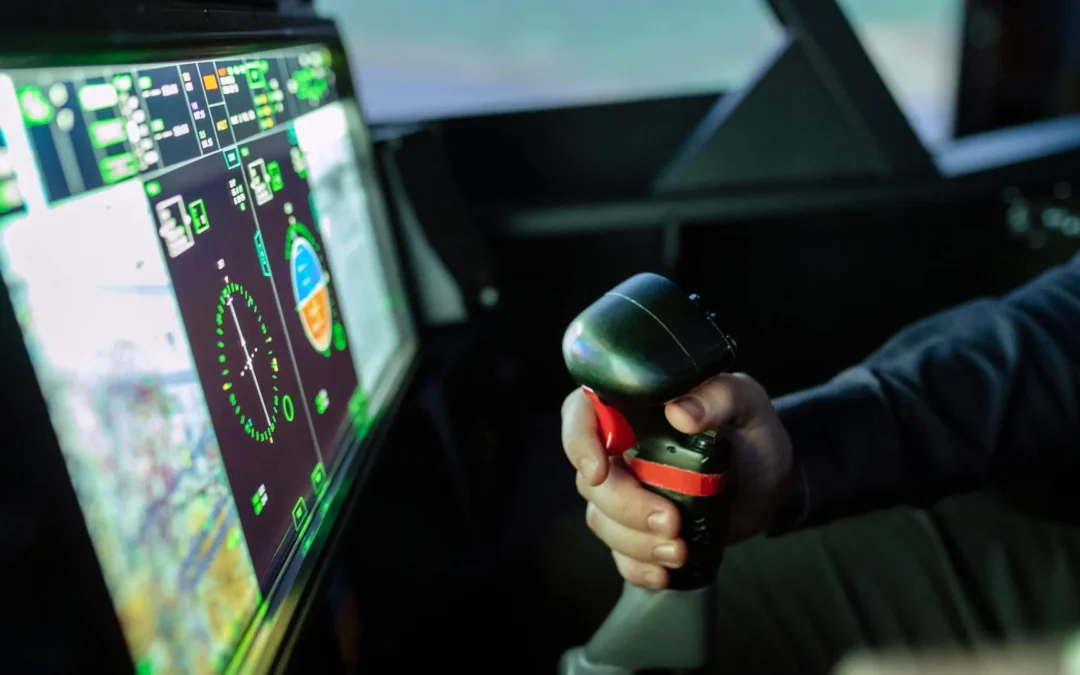
Your ATP-CTP program includes 10 hours of full-flight simulator time, split between 4 hours in a fixed training device and 6 hours in a Level D simulator. Those hours go fast. Pilots who walk in prepared get far more value from every session than those who try to learn systems and procedures on the fly.
Ready to book your ATP-CTP training? Contact Las Vegas Flight Academy or call 818-489-1738 to schedule your course dates.
This guide covers what you should study, how to practice at home, and what to expect once you strap into the sim. Whether you are weeks away from your start date or still comparing programs, the preparation strategies below will help you perform with confidence from the first session.
What to Expect in Your ATP-CTP Simulator Sessions
The ATP-CTP is an FAA-mandated course under 14 CFR 61.156 that every pilot must complete before taking the ATP knowledge test. The program at Las Vegas Flight Academy runs over 6 days, with 32 hours of ground school, 4 hours in a fixed training device (FTD), and 6 hours in a Level D full-flight simulator.
A Level D simulator is the highest fidelity flight training device certified by the FAA. It features a full-motion platform with six degrees of freedom, a visual system covering a 200-degree by 40-degree field of view, and a cockpit that replicates every switch, gauge, and system of the actual aircraft. At LVFA, you train on Boeing 737-800 simulators, which means you are working with the same cockpit environment used by airline pilots worldwide.
Each simulator session follows a consistent structure:
- Pre-brief (15-20 minutes): Your instructor reviews the day’s objectives, the maneuvers you will practice, and any areas from the previous session that need attention.
- Simulator time (2-3 hours per session): You fly the planned scenarios with a partner in a two-crew environment. Expect a mix of normal operations, abnormal procedures, and emergency scenarios.
- Debrief (15-20 minutes): The instructor reviews your performance, highlights strengths, identifies areas for improvement, and previews what comes next.
The simulator sessions build on the concepts covered in ground school. Your classroom days cover aerodynamics, high-altitude operations, crew resource management (CRM), advanced weather theory, and leadership topics. The sim is where you apply all of that in a realistic cockpit environment.
Key Maneuvers and Scenarios You Will Practice
ATP-CTP simulator training focuses on scenarios that commercial pilots encounter at high altitudes and during critical phases of flight. Knowing what is coming allows you to prepare your responses before you step into the cockpit.
The primary training areas include:
- Upset Prevention and Recovery Training (UPRT): You will practice recognizing and recovering from unusual attitudes, including nose-high and nose-low upsets. This training is conducted at altitude, where aircraft performance characteristics differ significantly from what you experienced during your commercial training.
- Stall Recognition and Recovery: The simulator replicates stall warnings, buffet, and full aerodynamic stalls. You will learn to recognize onset cues, apply the correct recovery procedure, and manage altitude loss during the recovery.
- High-Altitude Operations: You will fly scenarios involving operations above FL250, including high-altitude aerodynamics, mach buffet boundaries, and the coffin corner concept where stall speed and maximum operating speed converge.
- Emergency Procedures: Engine failures, rapid decompression, and system malfunctions at altitude. These scenarios test your decision-making, workload management, and CRM skills under pressure.
- Adverse Weather Operations: Wind shear encounters, icing conditions, and approaches in low-visibility environments. The Level D visual system reproduces realistic weather scenarios that demand precise instrument flying.
- Crew Resource Management Scenarios: Every simulator session is flown with a crew partner. You will rotate through pilot flying (PF) and pilot monitoring (PM) roles, practicing callouts, cross-checks, and collaborative decision-making.
None of these scenarios require prior 737 type-rated experience. The ATP-CTP is designed for pilots transitioning from single-pilot operations to multi-crew jet environments, and the instructors guide you through each maneuver step by step.
How to Prepare Before Your First Simulator Session
The most effective ATP-CTP students arrive with a foundation they can build on during ground school and sim sessions. You do not need to memorize 737 systems before you arrive, as all materials are provided on the first day. But there are several areas where advance preparation pays off.
Review these topics before your course start date:
- High-altitude aerodynamics: Refresh your understanding of mach numbers, compressibility effects, coffin corner, and how stall characteristics change above FL250. The FAA’s Airplane Flying Handbook (Chapter 16) covers these topics well.
- CRM principles: If it has been a while since you studied crew resource management, review the basic framework: communication, workload distribution, situational awareness, decision-making, and error management. In the sim, your CRM will matter as much as your stick-and-rudder skills.
- Standard callouts and flows: Familiarize yourself with standard two-crew callout procedures. Even if your specific training center uses slightly different phraseology, understanding the general pattern (challenge-response checklists, altitude callouts, configuration calls) will reduce your learning curve.
- Upset recovery techniques: Review the FAA Advisory Circular 120-111 on UPRT. Understanding the theory behind nose-high and nose-low recoveries before you attempt them in a full-motion simulator makes the physical experience far less disorienting.
- Instrument scan patterns: If you have been flying primarily VFR or have limited recent instrument time, spend time reviewing instrument scan techniques for jet aircraft. The panel layout and information density in a 737 cockpit is substantially different from what you may be accustomed to.
Check the ATP-CTP requirements checklist to confirm you meet all eligibility criteria before your start date. This includes holding a commercial pilot certificate with an instrument rating, or qualifying through equivalent military or foreign experience.
Chair-Flying and Mental Rehearsal Techniques
Chair-flying is a technique used by airline pilots, military aviators, and simulator instructors to mentally rehearse procedures and maneuvers without an actual cockpit. It is one of the most effective ways to prepare for simulator sessions, and it costs nothing.
How to chair-fly for your ATP-CTP:
- Set up your space: Sit in a chair and position your hands where the yoke (or sidestick) and throttles would be. Close your eyes or use a printed cockpit diagram if available.
- Talk through the flows: Verbalize every callout, every switch position, and every scan pattern as you move through a procedure. For example, walk through a normal takeoff from brake release through climb-out, calling out V-speeds, rotation, positive rate, gear up, and configuration changes.
- Rehearse emergency procedures: Mentally walk through an engine failure at V1, a rapid decompression at cruise altitude, or a wind shear encounter during approach. Focus on the sequence of actions rather than perfection.
- Practice CRM communications: If you have a study partner, chair-fly together. One person flies, the other monitors and runs checklists. This builds the communication rhythm you will need in the sim.
- Keep sessions short and focused: Two or three 20-minute chair-flying sessions spread across the week before your course are more effective than one marathon study session the night before.
Research from military flight training programs consistently shows that pilots who chair-fly before simulator sessions perform better and require fewer additional training hours. The technique works because it builds procedural memory, the same kind of memory you rely on when flying under workload.
Planning your ATP-CTP training budget? See our breakdown of ATP-CTP course costs to understand what is included in your investment. Contact us at 818-489-1738 to discuss scheduling and availability.
Common Mistakes to Avoid in ATP-CTP Simulator Training
Instructors at FAA Part 142 training centers see the same patterns among students who struggle in the simulator. Awareness of these pitfalls can help you avoid them.
- Trying to learn aircraft systems inside the sim: Your sim time is for applying knowledge, not acquiring it. Students who spend their simulator hours figuring out where switches are located fall behind those who reviewed cockpit layouts during ground school. Use classroom days to study systems so sim days can focus on flying.
- Flying as a single pilot: Many ATP-CTP candidates come from single-pilot backgrounds (flight instructing, Part 135 charter, or corporate flying). The biggest adjustment is moving from making every decision yourself to coordinating with a crew partner. If you catch yourself reaching for a checklist or making a radio call without coordinating with the other pilot, pause and reset.
- Neglecting the debrief: The post-session debrief is where the real learning happens. Students who rush through debriefs or fail to take notes miss the specific feedback that would improve their next session. Write down at least three takeaways after every debrief and review them before your next sim slot.
- Fixating on one instrument: In a complex cockpit with dozens of displays and gauges, it is tempting to lock onto the attitude indicator or the PFD. Effective pilots maintain a continuous scan pattern across all flight instruments. Practice widening your scan during chair-flying sessions.
- Underestimating physical fatigue: A full-motion Level D simulator session is physically demanding. The motion platform, the workload, and the concentration required over a 2-3 hour session can leave you more tired than a comparable flight in an actual aircraft. Plan for rest between sessions.
How to Maximize Your 10 Hours of Sim Time
Your 10 hours of simulator time represent a significant investment. At LVFA, the ATP-CTP course is $3,950, and those sim hours are where you build the skills that carry into your airline transport pilot certification checkride and beyond. Here is how to extract maximum value from every minute.
Before each session:
- Review your notes from the previous debrief. Identify the one or two items your instructor flagged and make them your priority.
- Chair-fly the planned maneuvers for 10-15 minutes. Even a brief mental rehearsal primes your procedural memory.
- Get at least 7-8 hours of sleep the night before a sim day. Fatigue degrades cognitive performance and reaction time, which shows up quickly in the simulator.
During each session:
- Communicate constantly with your crew partner. Verbalize what you see, what you are doing, and what you expect to happen next.
- When you make an error, acknowledge it and move on. Dwelling on a mistake during the session wastes valuable practice time.
- Ask your instructor to clarify anything you do not understand. Instructors at LVFA average over 20,000 flight hours and have seen every type of student. They are there to help you succeed.
After each session:
- Write down your debrief notes immediately while the details are fresh.
- Discuss the session with your study partner. Teaching a concept to someone else is one of the fastest ways to solidify your own understanding.
- Eat well, hydrate, and rest. Your brain consolidates procedural learning during sleep, so recovery between sim sessions is part of the training process.
What Happens After Your ATP-CTP Simulator Sessions
After you complete all ground school and simulator requirements, you receive your ATP-CTP completion certificate. This certificate has no expiration date, which means you can take the FAA ATP Airline Transport Pilot knowledge test on your own timeline.
The typical post-completion path looks like this:
- Study for the ATP knowledge test: The ATP-CTP course is not a test prep course. You will need to use a separate study program (such as Sheppard Air or ASA) to prepare for the FAA written exam. Most pilots schedule 2-4 weeks of self-study before their test date.
- Pass the ATP knowledge test: Take the exam at an FAA-approved testing center. The knowledge test authorization from your ATP-CTP certificate is required at sign-in.
- Complete your ATP practical test: The ATP checkride requires meeting the experience minimums under 14 CFR 61.159 (typically 1,500 hours total time) and must be conducted in a multiengine airplane or an approved simulator.
- Pursue a type rating: Many pilots who complete their ATP-CTP at Las Vegas Flight Academy continue directly into a Boeing 737 type rating program. Since you already have familiarity with the 737 cockpit from your ATP-CTP simulator sessions, the transition to type rating training is smoother. See our 737 initial type rating guide for details on program options.
For pilots weighing the full cost of the ATP pathway, our article on airline pilot requirements outlines every step from commercial certificate to airline employment.
Why Train at a Part 142 Center with Level D Simulators
Not all ATP-CTP programs are created equal. The quality of your training depends heavily on the facility, the simulators, and the instructors.
Las Vegas Flight Academy operates under FAA Part 142 certification (certificate LVAX430K), which represents the highest tier of flight training organization in the United States. There are approximately 40 Part 142 training centers authorized to conduct ATP-CTP training nationwide, and LVFA is one of the only providers on the West Coast.
Here is what sets a Part 142 center apart from Part 141 schools:
| Feature | Part 142 Center | Part 141 School |
|---|---|---|
| FAA oversight level | Direct FAA surveillance and quality audits | Standard FAA certification |
| Simulator equipment | Level C/D full-flight simulators | Varies; often lower-fidelity devices |
| Instructor qualifications | Airline-experienced pilots (20,000+ hours avg at LVFA) | Varies widely |
| Curriculum | FAA-approved standardized programs | FAA-approved but less structured |
| ATP-CTP authorization | Yes (required for ATP-CTP delivery) | Not authorized for ATP-CTP |
LVFA operates two Boeing 737-800 Level D simulators (FAA IDs #1168 and #2104), both with current Statements of Qualification. The facility spans 40,000 square feet in Henderson, Nevada, with 8 simulator bays, 4 classrooms, and 8 briefing rooms. Pilots traveling from the West Coast benefit from the Las Vegas location, which is a short flight from Los Angeles, San Francisco, Phoenix, Seattle, and other major cities.
If you are considering your path to becoming an airline pilot, training at a Part 142 center with Level D simulators gives you experience in the same cockpit environment you will encounter at the airlines.
Frequently Asked Questions
How many simulator hours are in the ATP-CTP program?
The ATP-CTP includes 10 hours of simulator time total: 4 hours in a fixed training device (FTD) and 6 hours in a Level D full-flight simulator. This is the FAA minimum required under 14 CFR 61.156.
Do I need to know 737 systems before starting ATP-CTP?
No. All training materials are provided on the first day of ground school. The course is designed for pilots who have never operated a 737 before. However, reviewing basic jet systems concepts and high-altitude aerodynamics ahead of time will help you absorb the material faster.
Can I fail the ATP-CTP simulator portion?
The ATP-CTP simulator sessions are training events, not check rides. There is no pass/fail evaluation during the sim sessions. Your instructors are there to teach, not test. As long as you attend all sessions and participate actively, you will receive your ATP-CTP completion certificate.
How long is the ATP-CTP completion certificate valid?
The ATP-CTP completion certificate does not expire. Once you complete the course, you can take the FAA ATP knowledge test at any point in the future without needing to retake the ATP-CTP.
What should I bring to my ATP-CTP simulator sessions?
Bring a notebook, a pen, comfortable clothing, and a good pair of headphones if you prefer using your own during ground school. No personal flight gear is required for the simulator. Wear comfortable shoes, as you will be on your feet during pre-briefs and debriefs. Arrive well-rested and hydrated.
Ready to start your ATP-CTP training at Las Vegas Flight Academy? Our 6-day program includes 32 hours of ground school and 10 hours of simulator time on Boeing 737-800 Level D simulators. Contact us today or call 818-489-1738 to check available dates and reserve your spot.