
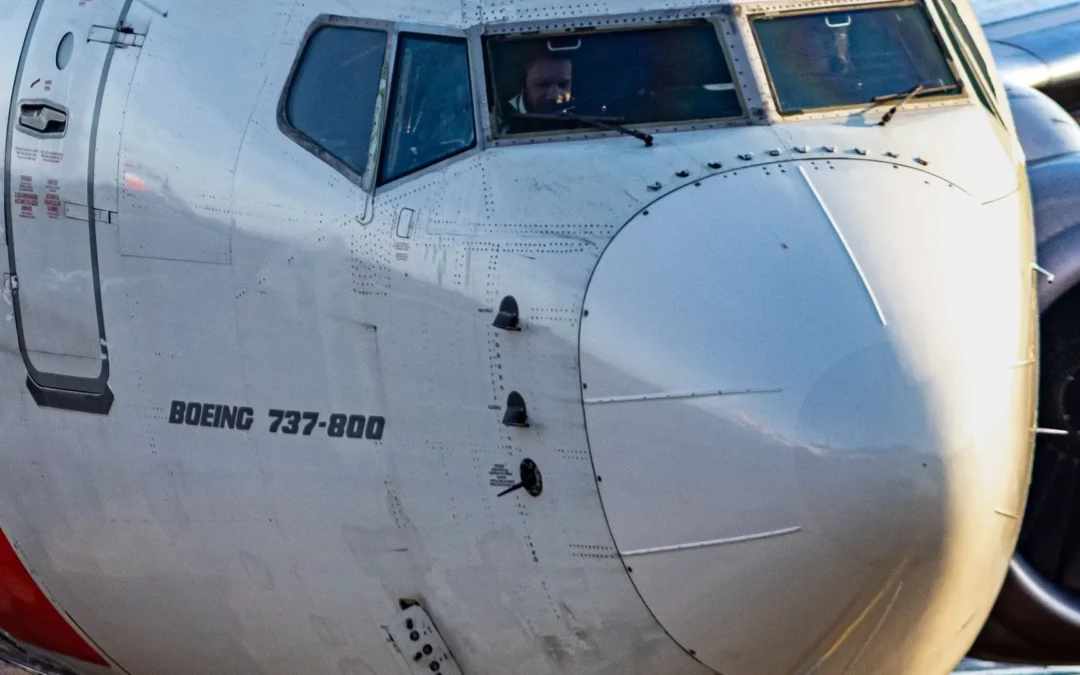
Moving from a Boeing 737-300 to a 737-800 is not simply a change of aircraft designation. It is a transition from the 737 Classic family to the 737 Next Generation family, with meaningful changes in the flight deck, engines, automation, and operating procedures. B737 differences training FAA approved programs are designed to address that gap through an approved curriculum, systems study, simulator work, and the checking required by the applicable operation.
This guide explains how to evaluate a differences-training course without assuming that every 737 pilot needs the same modules or receives the same qualification outcome. The exact requirement depends on your certificate, operator, aircraft configuration, and the approved training program.
What is B737 differences training FAA approved for?
Differences training is focused training for a pilot who is moving between related aircraft that share a type rating but do not have identical systems, procedures, or operating characteristics. It is not automatically a complete initial type-rating course. Its purpose is to close the gap between the aircraft the pilot already knows and the aircraft the pilot is expected to operate.
The FAA Flight Standardization Board report for the Boeing 737 identifies the 737-300, -400, and -500 as the 737 Classic group and the 737-600, -700, -800, and -900 as the 737 Next Generation group. The report also identifies differences-training requirements between related 737 aircraft. That is the regulatory and evaluation context a provider uses when building a course, but the report alone does not approve a specific provider’s individual schedule.
For a course to be described accurately as FAA approved, a pilot should confirm more than the words in a web page headline. Ask which FAA certificate or approved training-program authority supports the course, which aircraft variants and configurations are covered, what training and checking are included, and what records the provider issues. The answer should match the pilot’s operation and the provider’s current authorization.
When might a pilot moving from a 737-300 to a 737-800 need differences training?
A pilot moving from a 737-300 to a 737-800 may need differences training when the pilot’s existing qualification does not cover the systems and procedures of the 737-800 configuration. The need is not determined by the aircraft labels alone. The operator, governing regulations, approved training program, aircraft equipment, and the pilot’s qualification history all matter.
That means a pilot should not self-select a short course based only on having flown one Boeing 737 variant. A 737-300 with a particular avionics fit may not present the same transition questions as another 737 Classic aircraft. The 737-800 may also have configuration-specific equipment or operator procedures. An approved provider should review the relevant background before confirming the course path.
Training is also different from a promise of employment, a new airline qualification, or a guaranteed checkride result. A course can provide the approved instruction and evaluation specified by its program, while the pilot’s final qualification and operating privileges remain subject to the applicable authority, operator, records, and checking outcome.
Which 737-300 and 737-800 differences should systems study cover?
A strong systems-study phase gives the pilot a structured map of what changed instead of treating the transition as a collection of isolated cockpit facts. The exact syllabus must follow the approved course, but a 737 Classic to 737NG review commonly addresses the following areas:
- Flight deck and displays: Review the differences in instrument presentation, display logic, mode annunciation, alerts, and the pilot’s scan between the Classic and NG flight decks.
- Flight management and navigation: Study the applicable flight-management functions, navigation inputs, route entry, performance data, and mode selections for the 737-800 configuration.
- Engines and thrust management: Understand the engine-control architecture, indications, thrust modes, limitations, and normal and non-normal procedures that differ from the 737-300.
- Automation and flight guidance: Connect the new displays and mode logic to the aircraft’s normal procedures, crew callouts, mode awareness, and failure response.
- Electrical, hydraulic, pneumatic, and pressurization systems: Identify the architecture, controls, indications, limitations, and abnormal procedures that are not interchangeable between the two aircraft.
- Flight controls, braking, and performance: Review relevant system operation, configuration changes, performance data, and procedures without assuming that a memory item from one model transfers unchanged to the other.
The goal is operational understanding. Memorizing a list of component names is not enough if the pilot cannot connect the system to indications, crew coordination, checklist use, and simulator decisions. The best study plan follows the provider’s approved materials and the aircraft configuration the pilot will actually encounter.
How does FAA approval affect the B737 differences-training curriculum?
FAA approval provides a framework for the training center’s curriculum, instructors, facilities, records, and checking process. Under 14 CFR Part 142, the training center operates within an approved training-program structure. The applicable FAA evaluation material also uses differences tables to identify training and checking levels for related aircraft. These requirements help prevent a provider from treating a major aircraft transition as an informal orientation.
Approval does not mean that every provider teaches every 737 variant, every operator procedure, or every possible configuration. It also does not mean that a course is automatically right for a pilot because the provider has a Part 142 certificate. The course scope must still match the aircraft and the pilot’s intended operation.
Before enrolling, request the course outline or a clear scope summary. It should identify the transition, the ground or computer-based study, the flight-training device or full-flight simulator work, the checking event if applicable, instructor qualifications, and completion records. If the provider cannot explain those items, the pilot has not yet verified that the course matches the training need.
What happens during the systems-study portion?
Systems study normally comes before or alongside simulator work. It prepares the pilot to understand the model-specific indications and procedures before those differences are placed in a time-critical scenario. Depending on the approved program, study may use instructor-led ground training, computer-based training, manuals, procedures training, or a combination of formats.
Effective preparation should connect three questions for every major difference:
- What is different in the 737-800 system or interface?
- How will the difference appear during normal operation or a malfunction?
- What procedure, crew action, limitation, or decision follows from that indication?
Pilots should build a comparison sheet from the provider’s current materials rather than relying on an old cockpit guide or an aircraft memory item copied from another operator. The comparison can include display logic, mode behavior, system controls, circuit protection, limitations, checklist changes, and callouts. It should be a study aid, not a substitute for the approved course content.
How does simulator work reinforce the 737-300 to 737-800 transition?
Simulator work turns systems knowledge into observable cockpit performance. A pilot may understand the written difference and still need practice recognizing the new indication, selecting the correct mode, communicating with the other pilot, and completing the procedure while managing the flight path.
Depending on the approved course, simulator sessions may include normal procedures, automation and mode awareness, instrument and navigation tasks, system malfunctions, crew coordination, and non-normal checklist discipline. The scenarios should be tied to the differences that matter for the aircraft and operation, not used as a generic 737 session.
Las Vegas Flight Academy’s published training information identifies Boeing 737-300 and 737-800 Level D full-flight simulator capability. Its FAA Part 142 certificate and current course scope should be confirmed directly before enrollment. That distinction matters because equipment availability, qualification status, course dates, and approved program scope can change.
When comparing providers, ask whether the simulator represents the 737-800 configuration addressed by the course, whether the instructor can explain the transition from the 737-300, and how simulator objectives map to the approved training and checking plan. A simulator brand or motion system alone does not prove that the course is the right differences course.
What does checking mean in an FAA-approved differences course?
Checking is the evaluation portion of a training program. It may involve knowledge, procedures, simulator performance, or another assessment defined by the approved course and applicable operation. The exact event and standard should be explained before the course begins.
Pilots should ask four practical questions:
- Is checking included, or is the course training only?
- Which certificate, operator, or approved program defines the checking event?
- What records or completion documentation will the provider issue?
- What additional operator or authority steps remain after the course?
These questions help separate course completion from a broader qualification decision. Las Vegas Flight Academy can explain its current training path, but no provider should promise that an individual pilot will receive a particular airline qualification, pass a check, or obtain a job as a result of training alone.
For pilots who want to compare this regulatory and course-selection process with the aircraft systems themselves, LVFA’s 737 Classic to NG differences training guide provides a more detailed technical starting point. The two resources serve different purposes: this guide focuses on verifying an approved training path, while the linked guide focuses on the systems gap.
How should pilots verify a B737 differences training FAA approved course?
Use this checklist before sending records, booking travel, or assuming that a course satisfies an operator requirement:
- Define the transition: State the aircraft variant currently flown, the 737-800 configuration needed, and the operation in which the training will be used.
- Confirm the approval basis: Ask for the training center’s Part 142 information and the approved program or course scope that applies to the transition.
- Match the equipment: Verify whether the course uses a simulator or training device representing the aircraft and systems being studied.
- Review the curriculum: Confirm the systems-study topics, simulator objectives, instructor-led elements, and any required preparation.
- Clarify checking: Ask what evaluation is included and what additional operator or authority action may still be required.
- Confirm documentation: Ask what completion records are issued and whether they meet the receiving operator’s or authority’s requirements.
- Get the current answer in writing: Course dates, availability, equipment status, and approval scope should be confirmed directly with the provider.
This process protects the pilot from paying for a course that is technically related but not accepted for the intended operation. It also helps the provider identify the right training path before a travel or scheduling commitment is made.
What is B737 differences training FAA approved for if a pilot already holds a type rating?
It is intended to address aircraft-specific differences that are not covered by the pilot’s existing qualification, not to erase the pilot’s prior experience or automatically create a new qualification. The approved program and operation determine the training and checking needed.
Does B737 differences training FAA approved mean every pilot receives the same course?
No. The provider’s approved curriculum is standardized, but the correct course path still depends on the pilot’s aircraft history, configuration, operator, and applicable requirements. LVFA does not redesign its FAA-approved course around an individual student’s preferences, so pilots should confirm eligibility and scope before enrollment.
Is B737 differences training FAA approved the same as a new type rating?
Not necessarily. Differences training is focused on the gap between related aircraft. Whether a pilot needs additional type-rating, qualification, or checking action depends on the applicable rules, operator, and approved program.
Can a B737 differences training FAA approved course guarantee a pilot’s qualification?
No. Training providers can explain their approved curriculum, equipment, instructors, and records. They should not promise an individual pilot’s approval, checkride result, airline qualification, or employment outcome before reviewing the applicable requirements.
Where can pilots verify the FAA’s 737 differences framework?
The FAA’s Boeing 737 Flight Standardization Board report identifies related 737 aircraft groups and differences-training considerations. Pilots should use the current approved program and their operator or authority as the final source for an individual training decision.
What should pilots confirm with Las Vegas Flight Academy?
Ask LVFA to confirm the current B737-300 to 737-800 course scope, schedule, simulator availability, prerequisites, checking, and completion documentation for your operation. The academy’s 737 differences training guide is a useful starting point, but direct confirmation is essential before booking.
Sources: