
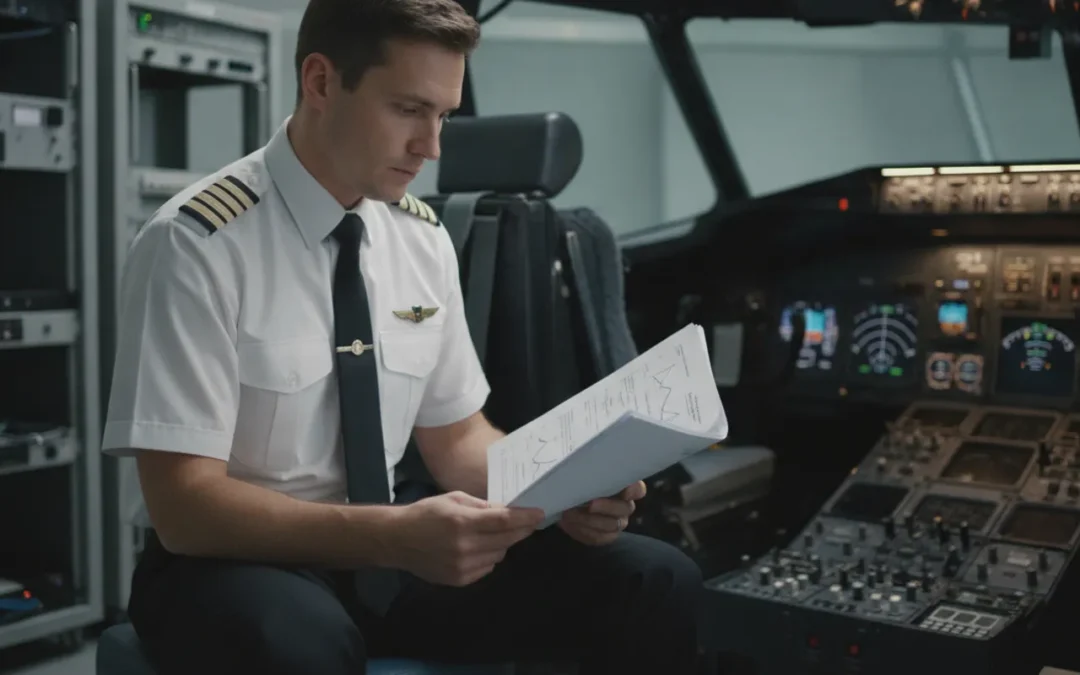
Preparing for a B737 simulator briefing after ATP-CTP is easier when you bring a focused set of records, study materials, and questions. The briefing is a chance to align on training objectives and the simulator session, not to guess at provider-specific requirements. Confirm required documents directly with your school before travel.
Ask about B737 training preparation
What should you bring to a B737 simulator briefing after ATP-CTP?
Begin with the provider’s checklist. Requirements can differ by course, enrollment status, and individual training plan. Keep requested paperwork together in a folder, and have permitted digital copies available as backup. A useful briefing kit is compact enough to manage easily but complete enough that you do not have to search through messages or bags while a discussion is underway.
- Government-issued identification: Bring the form of ID specified in your enrollment instructions. Check that it is current and accessible, rather than packed in checked luggage or stored in a file you cannot open.
- Training and pilot records: Carry the certificates, licenses, medical documentation, logbook details, or prior training records the provider has requested. Do not assume every item is required for every course.
- Enrollment correspondence: Save confirmation messages, schedule details, travel-related instructions, and any preparation checklist supplied by the training center.
- Assigned references: Bring manuals, notes, or electronic references identified for your course. Ask whether personal devices or printed material may be used during briefing or simulator periods.
- Writing tools: A notebook and pen can help capture instructor guidance, terminology, and follow-up study tasks.
- Questions: Write down uncertainties about objectives, session expectations, and what to review before the next event.
For program context, review the Boeing 737 type-rating information. If you are still clarifying where ATP-CTP fits into your plan, consult the ATP-CTP course page and confirm personal requirements with the training provider.
How can you organize briefing materials so they are easy to use?
Organization matters because a briefing is a conversation, not a document hunt. Separate administrative records from technical review material. Use labeled sections in a folder or clearly named digital folders, and keep the most time-sensitive items at the front. For digital files, test access before the appointment; a file that exists but requires an unavailable password or network connection is not a useful backup.
- Course information: Put enrollment instructions, schedule correspondence, and provider checklists first. Mark any item that requires confirmation.
- Personal records: Store requested pilot documents together. Keep originals secure and provide copies only as directed.
- Technical review: Group notes by aircraft system or subject rather than carrying an unorganized stack of printouts. Label the source and date of notes where practical.
- Questions and action items: Keep a short list on top. Leave room to record the answer, who owns the next step, and any deadline.
A simple index can make this structure more useful. For example, label a page “documents,” another “course references,” and another “questions.” If the instructor mentions a manual section or a follow-up item, note it immediately beside the relevant topic. Afterward, transfer action items into your study plan while the discussion is fresh.
Use the training center’s approved materials as the authority for the course. Independent notes can support study, but they should not replace current course references or instructor direction. If a document appears outdated or conflicts with supplied material, identify the discrepancy and ask which source to follow. Do not silently combine conflicting procedures from different editions.
What should you review before the briefing?
Review at a level that helps you participate and identify gaps. The goal is not to arrive with every system memorized. Your instructor can clarify the scope and sequence for the specific program. Start by reading the preparation material the provider supplied, then refresh relevant aircraft systems and operational concepts from authorized references.
- Read the course preparation material in the order provided, noting unfamiliar terms and references.
- Refresh relevant systems and operational concepts from current, authorized sources instead of relying only on memory.
- List topics that feel unfamiliar. An honest question is more useful than spending time trying to conceal a gap.
- Practice a concise explanation of your prior experience and current training goal.
- Check that materials are readable and accessible, including any files you plan to use electronically.
Make review active rather than simply rereading pages. After a topic, close the reference and summarize its main idea in your own words. Then reopen it to check what you missed. Keep the summary brief and mark questions for the instructor. This approach helps distinguish a concept you understand from one that only looks familiar on the page.
ATP-CTP and aircraft type-rating training serve different purposes in a pilot’s development. Completing one does not automatically set the study scope for another. The academy’s explanation of what ATP-CTP training covers offers background, while its ATP-CTP and B737 training guide discusses how the subjects relate.
How should you turn preparation into useful questions?
A good briefing question is specific enough to produce an actionable answer. Instead of asking only “What should I study?”, identify what you have reviewed and where you are uncertain. For example: “I reviewed the assigned system material and am unsure which reference applies to this event. Which source should I use?” This gives the instructor a clear starting point without presenting an outside source as authoritative.
- Which documents should I have available for this course and briefing?
- Which study references are current and applicable to my training?
- What should I review before the first simulator event, and what can wait until later?
- How does this briefing connect to the planned simulator objectives?
- How should I record instructor feedback and prepare for subsequent sessions?
- What is the correct process if I find a discrepancy in a record or preparation document?
Sort questions by urgency. Resolve enrollment or document issues before the session if possible, so they do not consume time intended for training discussion. Keep technical questions in a separate section and note the answer beside each one. If an answer depends on your course sequence or individual records, ask what information the provider needs to give a definitive response.
For a broader view of the academy’s training environment, see its about and facility information. Its overview of Part 142 training gives general context, but it is not a substitute for your course instructions.
How do ATP-CTP and a B737 type rating differ?
They are related steps for some professional pilots, but they are not interchangeable labels. ATP-CTP is a course associated with the Airline Transport Pilot certification pathway. A B737 type rating is aircraft-specific training and evaluation. Confirm the sequence and eligibility that apply to your circumstances with the relevant training provider and current FAA guidance.
| Preparation area | ATP-CTP context | B737 type-rating briefing |
|---|---|---|
| Main focus | Coursework within the ATP certification pathway | Aircraft-specific course objectives and simulator preparation |
| What to bring | Items listed in the ATP-CTP enrollment instructions | Items requested for the specific B737 course and briefing |
| Study reference | Current materials identified for ATP-CTP | Current aircraft and course materials identified by the provider |
| Questions to resolve | Course requirements and how the course fits your plan | Objectives, applicable references, and preparation for simulator events |
| Best next step | Confirm the applicable requirements and your plan | Ask the instructor to clarify objectives and preparation |
The FAA’s Airline Transport Pilot certification page is an authoritative reference for ATP-related requirements. Regulations and individual circumstances matter, so use current FAA information and confirm course-specific details with the provider.
What should you avoid bringing or assuming?
More material is not always better. Avoid presenting an unverified checklist as an official course document, relying on old notes without checking currency, or assuming that another pilot’s enrollment requirements apply to you. Do not record or photograph training content unless the provider permits it. Ask before using personal electronic devices or materials in a controlled training environment.
Do not plan around unsupported details such as a presumed session duration, route, or exact sequence. These can depend on the course and schedule. Ask the training center for current information before making travel or work arrangements. The contact page is a direct route for asking the academy about your situation.
How can you use a comparison checklist to find preparation gaps?
Before the appointment, compare what you have prepared with what still needs confirmation. This is not a replacement for the provider’s checklist; it is a way to identify unanswered questions. A pilot who has gathered documents but has not checked access to their references has a different gap from a pilot whose paperwork is complete but whose course objectives are unclear.
| Area | Ready when… | Follow up when… |
|---|---|---|
| Identity and records | Requested items are together and accessible | You are unsure which original or copy is needed |
| Course information | You can find the current schedule and instructions | Messages conflict or a detail is missing |
| Study references | You know which materials are current and permitted | You have outside notes but no confirmation they apply |
| Questions | Each question is specific and prioritized | A question assumes an unverified procedure or requirement |
| Next steps | You can record the answer and follow-up owner | You do not know whom to contact after the briefing |
Consider a practical example. Suppose your enrollment email lists identification and a current pilot document, while your personal study folder contains notes from a previous course. Place the requested records in the first section, but keep the older notes separate. Ask whether those notes remain applicable before treating them as a study source. If the instructor confirms that a reference has changed, record the title or edition they identify and remove the older material from your active review stack.
Another example is a digital manual that opens only through a personal account. Test it before the briefing and ask whether that device or access method is acceptable. If the answer is no, find out which approved alternative is available. The aim is not to arrive with every conceivable item; it is to make sure the material you rely on can be used in the way the course permits.
How can you make the briefing useful after it ends?
Before leaving, review your notes and separate answers from open items. Write down the next action for each unresolved question, such as sending a requested document, reviewing a named topic, or asking the training office for clarification. If a direction was important but you are unsure you recorded it accurately, repeat it back in your own words and ask for confirmation.
- Capture the objective: Record the purpose of the upcoming event in the instructor’s terms.
- Identify assigned review: Note specific references or subjects to revisit, including any edition information provided.
- Track unresolved items: Give each open question an owner and a next step rather than leaving it as a vague reminder.
- Update your materials: Move superseded notes out of the active folder and keep current course references easy to find.
- Prepare for the next discussion: Add new questions as you study, with enough context to explain what you already checked.
This brief review turns the meeting into a usable plan. It also prevents a common preparation problem: leaving with several useful comments but no record of which material to consult or which issue still needs a response. Keep the plan factual and course-specific. If priorities change, confirm the new direction rather than relying on a memory of an earlier conversation.
Contact the academy about your training plan
Frequently asked questions about ATP CTP and B737 type rating preparation
What to bring to a B737 simulator briefing after ATP CTP?
Bring the identification, records, and course materials specifically requested by the provider. A notebook and a prioritized list of questions are useful, but confirm the final checklist with your training center.
Can I use personal notes for ATP CTP and B737 type rating preparation?
Personal notes can help you review, but first verify that the references are current and suitable for your course. Follow the provider’s materials and instructor guidance when sources differ.
Does ATP-CTP complete a B737 type rating?
No. ATP-CTP and an aircraft-specific type rating are distinct training matters. Confirm the qualifications and sequence that apply to your goal with the training provider and current FAA guidance.
What if I am unsure which records are required for ATP CTP and B737 type rating training?
Contact the provider before traveling and request a written list of required documents. Do not infer requirements from another pilot’s experience or from a general checklist.
A focused briefing kit helps you arrive organized, spend less time searching for information, and use instructor guidance well. Confirm course-specific requirements in advance, then bring the materials that support your training objectives.