
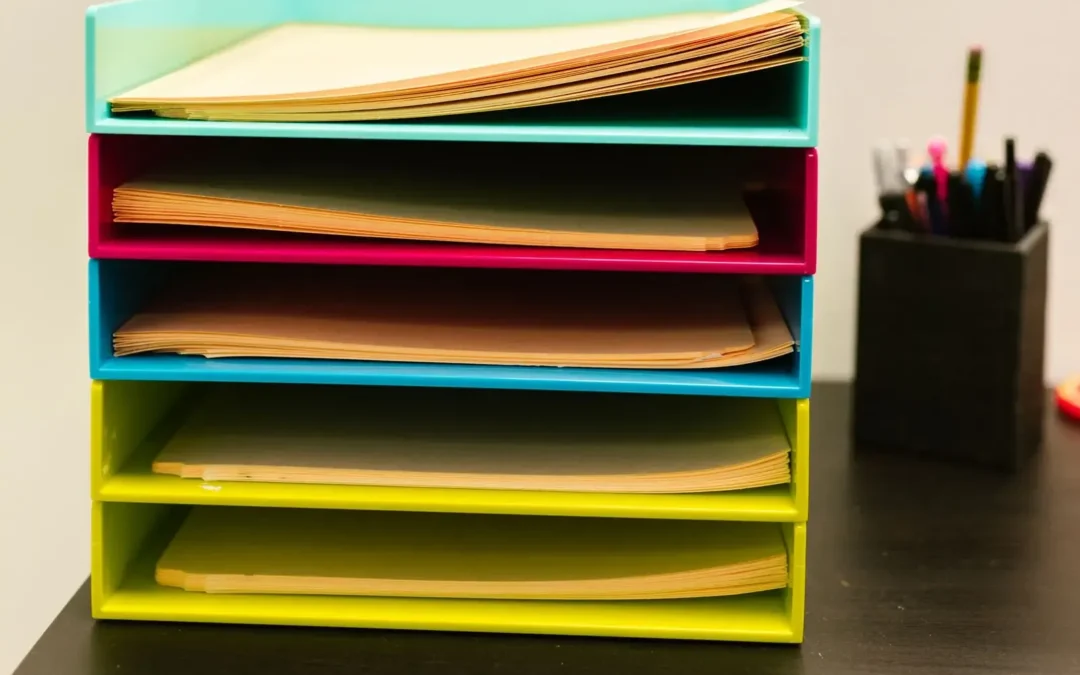
Here is how pilots organize airline training records after a course: split one stack into two files. The training center keeps the official record. You keep a personal packet with the course-completion paper you were given, the copies you were handed, and a short note of what you asked the school to resend. Do that before the paperwork goes into a suitcase pocket.
Ask Las Vegas Flight Academy which training records to keep
A course completion paper is not your whole file. A Part 142 training center has to keep its own trainee record, and it has to give you a copy if you ask. Your job is to make the personal copy easy to find the next time a testing center, an examiner, or an airline recruiter asks for it.
How do pilots organize airline training records after a course?
Start the same day you leave class. Put every page you were handed on a table and sort it into three piles before you scan anything.
- Prove the course. The completion paper you were given, plus any roster or sign-in page that shows your name and the course dates.
- Prove who you were when you enrolled. The pilot-certificate copy and medical copy the school collected. Keep your own copies. Do not treat the school’s file as your only set.
- Prove what you still need. A one-page note of anything missing, smudged, or spelled wrong, with the date you asked for a replacement.
Name the folder with the course, the month, and your name. “ATP-CTP March 2026 – Jordan Lee” is enough. Inside it, use the same three labels. Later, you should not have to open twelve PDFs to find the certificate.
Then make two backups. One stays in cloud storage you already use. One stays offline, on a drive or a printed set in the same place as your logbook. Airline training records are useless if the only copy is in an inbox you stop checking.
Do the sort before you travel home if you can. Hotel light is good enough to read a name and a date. A week later, the same pages are wrinkled in a side pocket. You will not remember which copy the instructor handed you and which one you printed yourself.
What does a clean folder look like the next morning?
Open it once before you close the laptop. You should see the certificate PDF, a scan of the paper original, and the request note if anything was missing. If you see a camera roll instead, you have not filed anything yet. Move the keepers into the folder and delete the blurry extras so the next search returns one file.
What happens after ATP-CTP covers the knowledge test and practical test that come next. This page stops at the file.
Which record does the school keep, and which copy is yours?
These are different files. Mixing them up is how pilots lose a certificate they thought the school would always reprint.
| Record | Who keeps the original | What you should keep |
|---|---|---|
| Trainee training record. | The Part 142 certificate holder keeps it at the training center. | Ask for a copy. |
| Course completion paper. | You keep it once it is issued to you. | Keep the original plus a clear scan. |
| Pilot certificate and medical copy. | You hold the originals. The school keeps copies in its trainee file. | Keep your own current copies outside the course folder. |
| Knowledge-test report. | You receive it after you take the test. | File the report itself. It is not part of the course file. |
Under 14 CFR 142.73, a training-center certificate holder keeps a record for each trainee. That record includes the trainee’s name, a copy of the pilot certificate and medical certificate if any, the course name, the training equipment, prerequisite experience, course time, lesson performance, and the instructor’s name. The center keeps that record for at least one year after the training, testing, or checking is finished. On request, and at a reasonable time, the center must give the trainee a copy.
That one-year rule is the center’s duty, not a promise that your personal packet can wait. Ask for the copy while the course is still easy to find. Do not assume a later airline, or a different training provider, can pull it for you.
For the multiengine ATP knowledge test, 14 CFR 61.156 says the applicant must present a graduation certificate from an authorized provider under part 121, 135, 141, or 142. That is an FAA document rule. It is not a statement about what any one school issues.
File the paper your own provider gave you as course proof. Do not file it as a test result. Ask that provider, in writing, what the paper is called and which later step it supports. Confirm current document rules with the academy or the FAA before you treat any page as test eligibility.
What should you check on the certificate before you file it?
Read the certificate once, slowly, before it goes in the folder. A bad scan of a correct certificate is easy to fix. A certificate with the wrong name is not.
- Confirm your name matches the pilot certificate you will show with it.
- Confirm the course name is the course you completed, not a different program taught in the same building.
- Confirm the completion date is the date you finished, and that the provider name is readable.
- Scan it in color, flat, with all four corners in the frame. Photographing it at an angle on a hotel desk is how names get cut off.
- File the paper original where you keep other certificates. Put the scan in the course folder and in the backup.
If a letter is wrong, ask the training center to correct it before you build the rest of the packet around it. Bring the certificate with you when you ask, or send the scan and point to the exact line. “My certificate looks off” is harder to fix. “The middle name is missing” is specific.
The same pass is the right time to note what the course did not give you. A course-completion paper does not include a knowledge-test report, an instructor endorsement for a practical test, or a type rating. Those show up later, from other events, and they belong in their own folders.
How should pilots label airline training records after a course?
Keep the packet thin. Four items cover almost every later request.
- Certificate scan. One PDF, named with the course and completion date.
- Identity copies that match it. A current copy of your pilot certificate and medical, only so the names line up. Your logbook prep for a specific program is a different job.
- Request log. The date you asked the school for a copy, who you asked, and what they sent.
- What this course is not. A one-line note that the knowledge-test report, practical-test endorsement, and any type-rating paperwork are filed elsewhere.
Paper order matters as much as the scan. Put the certificate on top. Put the request log behind it. Leave the bulky enrollment forms out of this packet. You can keep those in a second folder called “enrollment” if you want them, but do not make a recruiter dig through them.
If you train again later, do not drop the new pages on top of the old course. Open a new folder. Pilots who have done ATP-CTP, a type rating, and recurrent training need three packets, not one growing stack. 737 type rating logbook requirements is the separate guide for what to organize before a Boeing 737 type-rating course, including the logbook itself.
When should you ask the training center for a copy?
Ask in three cases. You never received a page you expected. A page you received is wrong. Or you are about to send the packet to someone and you cannot find the certificate in your own files.
Be specific. Give your name, the course, and the completion date you remember. Ask for the missing item, not for “everything you have on me.”
A Part 142 center has to provide the trainee record described in 142.73 when you request it. That request is not a claim that the center will rebuild your logbook. It also will not rewrite a knowledge-test report or confirm a hiring packet for an airline. You still leave with your own copies.
Write the request down in the same folder. One line is enough: the date, the desk you called, and what they said they would send. When the file arrives, replace the line with “received” and file the scan next to the certificate. A request you cannot find is the same as a request you never made.
Las Vegas Flight Academy runs an FAA Part 142 training center in Henderson, with an ATP-CTP course among its programs. Staff still need your name and course dates to find a record. Do not quote a certificate number as if it were a student lookup code. If a school gives you a number, ask that school what the number identifies before you put it in the folder.
Use the contact page for that request. Sales is Ron Kelly at (818) 489-1738. The training center line is Dana Ward at (702) 990-4090. Ask which desk handles record copies before you send identity documents.
What should stay out of this folder?
A clean course folder fails when it becomes a career folder. Leave these out.
- Knowledge-test study notes. Useful, but they are not a training record. The test report, once you have it, gets its own file because 14 CFR 61.39 makes you present that report at the practical test.
- The practical-test endorsement. That endorsement is a separate instructor statement. It is not the course completion paper, and it is not the 60-calendar-month knowledge-test window in 61.39.
- Airline application uploads. Send copies from this packet. Do not let the only original live inside an employer portal.
- Another course’s paperwork. Recurrent training, a type rating, and ATP-CTP each get a folder.
For the longer sequence after the course, use the ATP-CTP next-steps guide. For how a commercial certificate leads into the course in the first place, use commercial pilot certificate to ATP-CTP. The broader hiring path sits on the airline pilot requirements checklist. None of those pages is a filing system.
If a page in your packet still looks wrong after that check, stop and fix the page. Do not add more documents to hide it. One correct certificate beats a thick folder nobody can search.
Set a reminder for the week after class. Open the folder and confirm the certificate scan still opens. Confirm the paper original is where you said it was. That two-minute check is the whole system. How pilots organize airline training records after a course is mostly this habit, repeated once per class, not a new binder every year.
Contact Las Vegas Flight Academy about an ATP-CTP record question
Frequently asked questions
How do pilots organize airline training records after a course if the school already has a file?
Keep your own packet anyway. The school file is the official trainee record. Your folder is the copy you can produce without waiting on that office. Scan the completion paper, add a request log, and back it up in two places.
How long will a Part 142 school keep airline training records after a course?
14 CFR 142.73 requires the certificate holder to keep the trainee record for at least one year after the completion of training, testing, or checking. Ask for your copy before you need it. The rule sets a minimum for the school. It does not limit how long you should keep your own paper.
Does an ATP-CTP graduation certificate expire?
That is a different question from how you file the page. Read does the ATP-CTP certificate expire for the academy’s current answer, and confirm the document rules with the FAA or the school before a test. File the course paper and the knowledge-test report in separate folders either way. A passing ATP multiengine knowledge test has its own validity period under 14 CFR 61.39.
Can I use a training-center certificate number to look up my record?
No. A training-center certificate number, if a school publishes one, identifies the school. It is not a student lookup code. To ask for a copy, give your name, the course, and the dates you attended, then use the contact page.