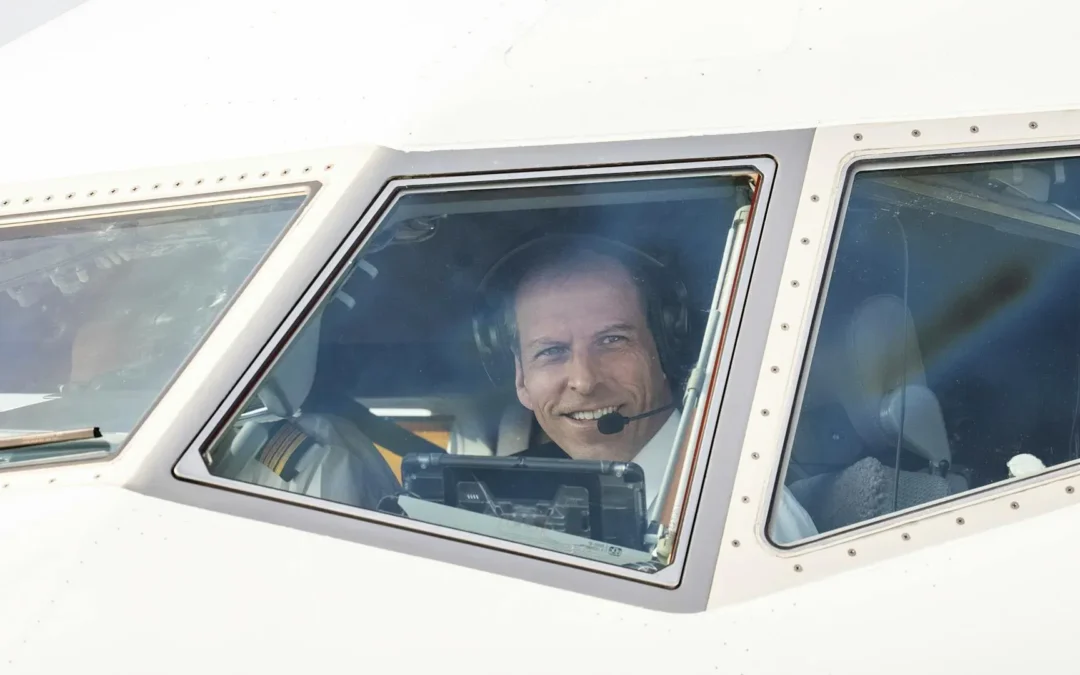
From Commercial Pilot to Airline Transport Pilot: Timeline and Expectations
You have your commercial certificate, your instrument rating, and hundreds of hours building time. The next milestone on your aviation career path is the Airline Transport Pilot certificate — the credential every major airline requires before you sit in that left seat as a captain. Understanding what the upgrade actually involves, how long it takes, and what you will encounter along the way removes uncertainty and helps you plan with confidence.
This guide walks through every stage: the prerequisites, the mandatory ATP Certification Training Program (ATP-CTP) course, the FAA written exam, and the practical expectations pilots should set before starting the process.
What Is the Airline Transport Pilot Certificate?
The Airline Transport Pilot certificate is the highest level of FAA pilot certification. It is required by federal regulation for anyone serving as pilot-in-command of a Part 121 air carrier aircraft — essentially every commercial airline operating in the United States. The ATP certificate is not optional for airline captains; it is a regulatory floor, established in part by the Airline Safety and Federal Aviation Administration Extension Act of 2010, which followed the 2009 Colgan Air Flight 3407 accident near Buffalo.
Before that legislation took effect in 2013, first officers at regional carriers could hold a commercial pilot certificate with fewer total hours. Today, both the captain and first officer seat at Part 121 carriers require at minimum a Restricted ATP (R-ATP) or full ATP certificate. Understanding the difference between those two pathways is where the timeline planning starts.
ATP Hour Requirements: Standard vs. Restricted
Not every commercial pilot needs the same number of hours to qualify for an ATP certificate. The FAA created a Restricted ATP pathway for pilots who completed structured, FAA-approved training programs or served in the military. Here is how the hour minimums break down:
| ATP Pathway | Total Flight Hours Required | Who Qualifies |
|---|---|---|
| Standard ATP | 1,500 hours | All eligible pilots |
| Restricted ATP — Military | 750 hours | U.S. military pilots meeting 14 CFR 61.160 |
| Restricted ATP — Part 141 (Bachelor’s) | 1,000 hours | Graduates of approved Part 141 programs with a bachelor’s degree |
| Restricted ATP — Part 141 (Associate’s) | 1,250 hours | Graduates of approved Part 141 programs with an associate’s degree |
The R-ATP carries a limitation: it authorizes you to serve as a second-in-command (first officer) at a Part 121 carrier, but it does not permit you to act as pilot-in-command of a Part 121 aircraft. For the left seat at a major airline, you eventually need the unrestricted ATP, which requires 1,500 total hours and meeting all the additional aeronautical experience requirements under 14 CFR 61.159.
Prerequisites Before You Enroll
The ATP process has a mandatory prerequisite course called the ATP Certification Training Program. Before you can sit for the FAA ATP written exam, you must complete an ATP-CTP at an FAA Part 142 certified training center. But before you enroll in the ATP-CTP itself, you need to confirm your eligibility.
To enroll in the ATP-CTP course, you must hold at least one of the following:
- A commercial pilot certificate with an instrument rating — the standard path for most civilian pilots
- Military pilot experience that meets the requirements under 14 CFR 61.73 for a commercial pilot certificate and instrument rating (rated or former rated U.S. Armed Forces pilots qualify)
- A foreign airline transport pilot license with instrument privileges, or a foreign commercial pilot license with instrument rating, issued by an ICAO contracting state with no geographical limitations
You must also read, write, speak, and understand English — the ATP-CTP course is conducted entirely in English, and the FAA ATP knowledge test is administered in English.
One important distinction: there is no minimum flight hour requirement to enroll in the ATP-CTP course itself. You can complete the course before you reach 1,500 hours. The ATP-CTP completion certificate has no expiration date, so finishing the course early is a smart move. It removes one item from your to-do list before your airline interview.
The ATP-CTP: Structure and What to Expect
The ATP Certification Training Program was mandated by Congress as a direct response to Colgan Air Flight 3407. Lawmakers and the FAA determined that pilots entering the airline cockpit needed structured training in advanced aerodynamics, crew resource management, and high-altitude operations before taking the ATP knowledge test. The ATP-CTP fulfills that requirement.
At Las Vegas Flight Academy, the ATP-CTP runs six days and covers the following:
- 32 hours of ground instruction — covering aerodynamics of jet aircraft, automation, adverse weather, crew resource management, air carrier operations, and meteorology at altitude
- 4 hours in a Fixed Base Simulator (FBS) — instrument procedures and simulator orientation in a non-motion environment
- 6 hours in a Boeing 737 Level D Full Flight Simulator — high-altitude operations, stall recognition and recovery, upset recovery, and complex systems management in the highest-fidelity simulator available
The six-hour Level D simulator block is where most pilots find the course most valuable. You are flying a full-motion, full-visuals Boeing 737 simulator — the same hardware used to train airline captains — and practicing maneuvers that general aviation flying rarely demands: high-altitude stall series, engine failures above FL250, TCAS resolutions, and Upset Prevention and Recovery Training (UPRT). The program schedule runs Monday through Saturday, with instruction starting each morning and running through the afternoon and into simulator sessions in the evening.
No pre-study is required before your first day. All course materials are provided on arrival. There are no written exams or checkrides administered during the ATP-CTP itself. The course ends with a completion certificate, which you will carry to a testing center to take the FAA ATP written exam.
What the ATP-CTP Is Not
A common misconception worth addressing directly: the ATP-CTP is not a preparatory course for the FAA ATP knowledge test. It does not cover ATP test questions, test-taking strategy, or the specific content weighting of the Airline Transport Pilot Multiengine exam. Those topics are covered by separate online study courses from providers like Sheppard Air or King Schools. Plan to complete an online ATP written prep course after the ATP-CTP and before your test date.
After the ATP-CTP: The Written Exam
Once you hold your ATP-CTP completion certificate, you can schedule the FAA Airline Transport Pilot Multiengine (ATM) knowledge test at any authorized testing center. The exam has 125 questions, and you need a score of 70 percent or higher to pass. Unlike most FAA knowledge tests, the ATM is not indefinitely valid — it expires 60 months from the date of the exam.
The written exam covers:
- Federal aviation regulations applicable to airline operations (Parts 1, 61, 91, 121, and 135)
- Meteorology at altitude, icing, thunderstorm operations
- Instrument operations and navigation
- Aircraft performance, weight and balance, aerodynamics
- Crew resource management and threat and error management
- Physiology at altitude, hypoxia, and human factors
Most pilots spend two to four weeks on focused ATP written prep after completing the ATP-CTP. Online courses compress the study load with question banks and review sessions. Scheduling the test within 30 days of completing the ATP-CTP helps while the material from the ground school component is still fresh.
Realistic Timeline for Commercial Pilots
One of the most common questions we hear from pilots planning their ATP upgrade: how long does this take? The answer depends largely on where you are in your flight hour building and how aggressively you pursue each step. Here is a realistic sequence:
- Build hours toward your minimums. If you are at 800 hours working as a flight instructor or charter pilot, expect 12 to 24 months to reach 1,500 hours depending on your weekly flying schedule. Military pilots and Part 141 graduates can reach their reduced minimums faster.
- Enroll in the ATP-CTP. This six-day course can be completed well before you hit your hour minimums — the certificate does not expire. Completing it early removes a scheduling variable later when you are ready to apply to airlines.
- Study for and pass the ATP written exam. Allow two to four weeks for focused prep. Schedule the exam, pass it, and hold that passing score. The 60-month clock starts from your exam date.
- Apply to airlines and complete your first officer training. With your ATP-CTP certificate and passing ATP written score, you are eligible to be hired as a first officer at a Part 121 carrier. The airline provides your type rating training as part of new hire ground school.
- Upgrade to captain and hold the full ATP. After accumulating the required experience at a carrier — typically 1,000 to 1,500 hours at a regional before a major airline upgrade opportunity opens — you will complete your captain upgrade, adding the type rating to your unrestricted ATP certificate.
For a pilot starting the hour-building phase today, a realistic timeline from commercial certificate to regional first officer is two to three years. The move from first officer to major airline captain typically adds another five to ten years depending on seniority and airline hiring cycles.
Why the ATP-CTP Provider Matters
The ATP-CTP curriculum is FAA-standardized — every authorized provider covers the same regulatory requirements. What differs between providers is the simulator quality, instructor experience, class size, and operational reliability of the program.
Las Vegas Flight Academy is one of approximately 40 FAA Part 142 certified ATP-CTP providers in the United States, and one of the only providers on the West Coast. The academy operates two Boeing 737-800 Level D full flight simulators — the highest certification level available — from a 40,000 square foot facility in Henderson, Nevada, adjacent to Harry Reid International Airport.
For West Coast pilots in California, Nevada, Arizona, Oregon, Washington, Utah, or Hawaii, completing the ATP-CTP in Las Vegas eliminates the need to fly to Dallas, Orlando, or the East Coast. The $3,950 course fee sits roughly 11 percent below the national market leader, and the geographic proximity compresses total trip cost for any pilot west of the Rockies.
The ATP-CTP requirements checklist on our site walks through enrollment eligibility in detail if you want to confirm your documents and certificates before booking a class date. For pilots ready to schedule, class dates and seat availability are posted on the enrollment page.
Frequently Asked Questions
Can I enroll in the ATP-CTP before I have 1,500 hours?
Yes. The ATP-CTP has no minimum hour requirement for enrollment. The only prerequisites are holding a qualifying pilot certificate (commercial with instrument rating, or qualifying military or foreign credentials) and meeting the English language proficiency requirement. Because the ATP-CTP completion certificate has no expiration date, enrolling early is a smart strategy — it eliminates one variable when you are ready to apply to airlines.
How long is the ATP-CTP completion certificate valid?
There is no expiration date on the ATP-CTP completion certificate. Once you complete the course, the certificate is valid indefinitely and satisfies the course requirement for any future ATP written exam.
Is the ATP-CTP the same as ATP written exam prep?
No. The ATP-CTP covers advanced aerodynamics, CRM, high-altitude operations, and simulator-based training — it satisfies the FAA prerequisite to sit for the ATP written exam, but it does not prepare you for the specific question content of the test. You will need a separate online ATP knowledge test prep course (Sheppard Air, King Schools, or similar) to study for the written exam after completing the ATP-CTP.
What score do I need to pass the ATP written exam?
You need a minimum score of 70 percent on the FAA Airline Transport Pilot Multiengine (ATM) knowledge test. The exam has 125 questions, and results are reported immediately at the testing center. The passing score is valid for 60 months.
Do I need a type rating to work as a first officer at a regional airline?
No. Airlines provide type rating training as part of new hire ground school. You arrive with your R-ATP or ATP certificate and ATP written score; the airline trains you on their specific aircraft type. The type rating is added to your certificate after you complete the airline’s initial operating experience.
What is the Restricted ATP and how long can I fly on it?
The Restricted ATP authorizes you to serve as a second-in-command (first officer) at a Part 121 carrier. It carries a limitation that prohibits you from acting as pilot-in-command of a Part 121 aircraft. The R-ATP limitation is removed when you meet the hour requirements for the unrestricted ATP — typically 1,500 total hours with the additional aeronautical experience specified under 14 CFR 61.159. Most pilots hold the R-ATP for several years as a regional first officer before upgrading.
What This Means for Your Career Plan
The path from commercial pilot to airline transport pilot is well-defined. The regulations are clear, the milestones are sequential, and every step is achievable with deliberate planning. The ATP-CTP is a week of your time. The written exam is a scheduled test date. The hour building is the longest phase, but pilots who stay disciplined about logging quality time — instrument approaches, cross-country navigation, complex aircraft experience — reach their minimums faster than those who accumulate hours without intention.
If you are within 12 months of your minimums, the right time to schedule the ATP-CTP is now. Completing the course removes a scheduling variable, builds simulator experience that makes your airline interview preparation easier, and puts you in a position to move the moment an airline extends an offer.
Las Vegas Flight Academy offers the ATP-CTP at $3,950 with flexible class dates, Level D simulator access, and instructors who averaged over 20,000 flight hours. Review the course details and upcoming dates, or contact the academy directly to discuss your specific timeline and eligibility.