
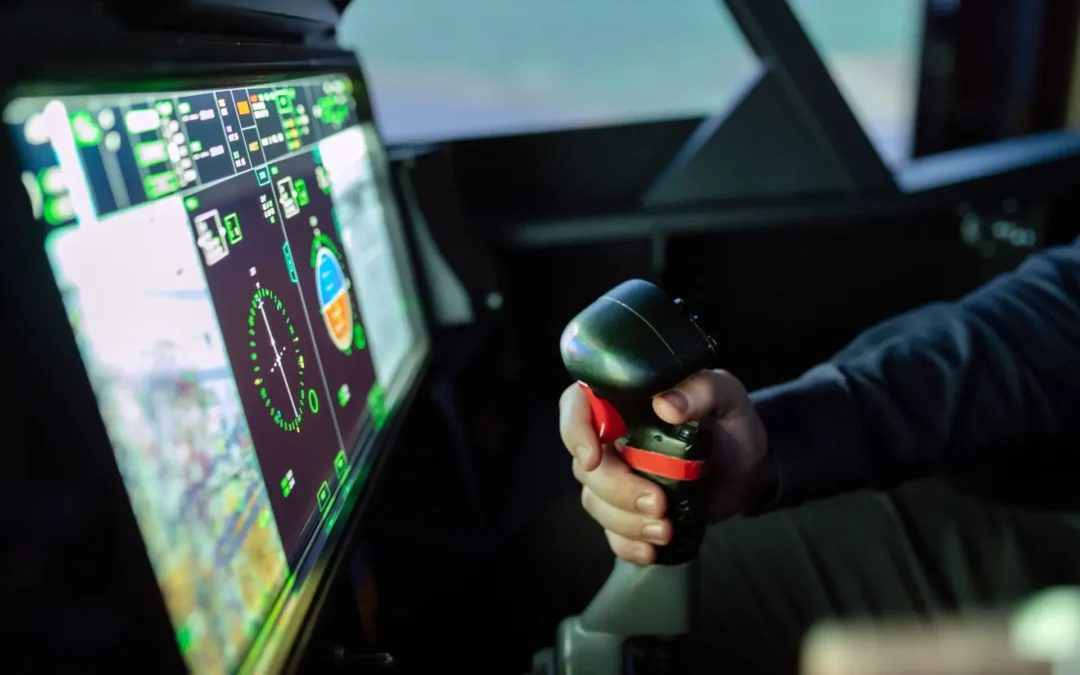
California pilots researching ATP CTP course requirements California need to separate two milestones: qualifying for the course and qualifying for the Airline Transport Pilot certificate. ATP CTP is a required training step for the applicable FAA ATP knowledge-test path. It does not issue an ATP certificate, replace the knowledge test, award a type rating, or create aeronautical experience.
Article author: Ron Kelly, Las Vegas Flight Academy.
Quick answer: Most civilian applicants begin with a commercial pilot certificate and instrument rating. Plan for the applicable first-class medical requirement for the ATP certificate path, but do not confuse it with the 1,500-hour experience rule. Gather your records, reserve six days, and confirm your specific path before traveling.
Contact Las Vegas Flight Academy to confirm your ATP CTP eligibility and course dates.
This guide takes a requirements-first approach. It explains the federal eligibility framework, the first-class medical point, the 1,500-hour distinction, and the six-day course structure. It also covers practical planning for pilots traveling from California to the academy’s Henderson, Nevada facility.
What Are the ATP CTP Course Requirements for California Pilots?
For California pilots, ATP CTP course requirements are based on federal FAA standards, not a separate California rule. The usual civilian route requires a commercial pilot certificate with an instrument rating. Military and foreign-trained pilots may qualify through accepted alternatives. Confirm certificates, ratings, medical status, and records with the provider before scheduling.
California does not have a separate state version of ATP CTP. The controlling question is whether your certificates, ratings, experience, and documents support the ATP path you plan to pursue. For the standard civilian route, that normally means a commercial pilot certificate and instrument rating, plus the airplane and multiengine qualifications relevant to the planned ATP application.
The FAA framework applies to applicants for an ATP certificate with an airplane category and multiengine class rating. It also applies to certain applicants pursuing an ATP issued concurrently with an airplane type rating. Review the FAA ATP guidance for the current federal framework.
Medical planning belongs in the same early review. A pilot pursuing ATP privileges should plan around the applicable first-class medical certificate requirement and confirm the certificate’s validity and timing with an aviation medical examiner or the appropriate FAA guidance. A course provider can review enrollment documents, but it does not replace an FAA medical determination.
Military pilots may qualify through applicable military aviation experience. Pilots who trained or were certificated outside the United States may qualify through an eligible foreign airline transport pilot license with instrument privileges or another accepted background. Those situations require careful record review. A military or foreign credential does not automatically replace FAA validation, conversion steps, or documentation.
ATP CTP completion is a required training component before the applicable FAA ATP multiengine knowledge test. It is not the ATP certificate and does not replace the practical test, medical requirements, certificate requirements, or aeronautical experience needed for final ATP issuance. Use the ATP CTP requirements checklist to organize your review.
Do You Need 1,500 Hours Before Taking ATP CTP?
No. The 1,500-hour figure generally belongs to the aeronautical-experience requirement for a standard ATP certificate, not ATP CTP enrollment. Eligible pilots may complete ATP CTP before reaching 1,500 hours. Certificate eligibility, restricted-ATP exceptions, medical requirements, and airline hiring standards should be evaluated as separate parts of the larger plan.
This distinction is one of the most important ATP CTP course requirements California pilots should understand. A pilot can need ATP CTP before taking the knowledge exam without yet meeting every experience requirement for an unrestricted ATP certificate. The course certificate documents completion of required training. It does not convert into flight hours or an ATP certificate.
Some graduates of eligible aviation degree programs may pursue a restricted-privileges ATP with reduced aeronautical experience. That option depends on the specific school, degree program, FAA authorization, flight experience, and other criteria. Do not assume that any aviation degree qualifies. Confirm the applicable rule before relying on a restricted-ATP pathway.
The 1,500-hour rule also should not be treated as a substitute for other requirements. A pilot may have enough total time and still need a particular certificate, rating, medical certificate, knowledge test, practical test, or documentation. Conversely, a pilot may be ready for ATP CTP while still building the experience needed for the final ATP certificate.
ATP CTP and the ATP knowledge test are separate steps. You must complete the required course before taking the applicable exam, but you do not have to take the test on the same day the course ends. Allow separate time for knowledge-test preparation and schedule the exam through an authorized testing provider when ready. Review the ATP CTP and type-rating sequence if you are planning both programs.
Think of the process as a sequence: establish course eligibility, complete ATP CTP, prepare for and pass the knowledge exam, and complete the remaining ATP certification steps that apply to your background. Keeping these milestones separate prevents a completed course certificate from being mistaken for the final certificate or a flight-hour credit.
What Does the Six-Day ATP CTP Course Include?
Las Vegas Flight Academy delivers ATP CTP over six days. The schedule includes 32 hours of ground training, four hours in a fixed-base training device, and six hours in a Level D Boeing 737-800 NG full-flight simulator. The 42-hour structure moves from transport-category academics to procedures, crew coordination, and scenario-based simulator training.
| Training phase | Hours | Purpose |
|---|---|---|
| Ground school | 32 | Transport-category aerodynamics, airline operations, weather, performance, automation, leadership, and crew resource management. |
| Fixed-base training device | 4 | Procedure practice, systems familiarization, instrument concepts, and crew coordination before full-flight simulation. |
| Level D full-flight simulator | 6 | Scenario-based training in a Boeing 737-800 NG Level D full-flight simulator. |
| Total | 42 | Complete ATP CTP training delivered across six days. |

The ground school covers the airline system rather than one aircraft checklist. Pilots study transport-category operations, high-altitude flight, aircraft performance, advanced weather concepts, automation, leadership, professionalism, and multi-crew decision-making. This foundation is useful for pilots moving from general aviation, instruction, or smaller aircraft into an airline-oriented training environment.
The fixed-base session provides a bridge between classroom concepts and full-motion simulation. Pilots can rehearse procedures and crew coordination before moving into the Level D device. The final simulator phase applies those concepts in a high-fidelity Boeing 737-800 NG environment. See the ATP CTP course information page for current program details.
ATP CTP does not include aircraft flight time. It also does not award a Boeing 737 type rating or guarantee employment, an airline interview, or a particular licensing result. Those outcomes involve separate training, testing, and hiring decisions.
How Should California Pilots Prepare for ATP CTP?
California pilots should prepare by confirming the certificate, rating, and medical path, gathering requested records, reserving the full six-day schedule, and planning travel to Henderson. LVFA provides ATP CTP course materials, so advance study is not required for enrollment. Separate preparation for the FAA knowledge test should follow course completion.
- Confirm your certificate path. Gather your commercial pilot certificate, instrument rating documentation, applicable first-class medical certificate information, government-issued identification, and any records requested during enrollment. If you have a military or foreign background, ask early which supporting documents are needed.
- Resolve verification questions before travel. Foreign licenses, military records, and unusual certificate combinations can require additional review. Send questions to the training provider before arrival rather than waiting until the first training day.
- Reserve all six days. Check the ATP CTP start dates and protect the full course window. Do not schedule work, airline training, or major travel during the six-day program.
- Plan Henderson logistics. Arrange lodging, airport transportation, and a travel buffer. Arriving rested gives you more flexibility during an intensive academic and simulator schedule.
- Use the provided course materials. LVFA does not require pre-study for enrollment. Reviewing basic ATP concepts can be useful, but it is not a substitute for the course or the separate knowledge-test preparation that follows.
- Schedule the knowledge test separately. Complete ATP CTP first, then allow focused study time before booking the FAA knowledge exam. The ATP CTP preparation resources page can help organize the next step.
For a broader planning view, read the West Coast ATP CTP training guide. That resource covers the travel decision, while this article focuses on eligibility, medical planning, and qualification.
Bring questions about your records to the provider early. The academy delivers its FAA-approved course as a defined program. It cannot adapt the course to a student’s individual experience level, so a pre-arrival review helps identify documentation questions without suggesting that the approved curriculum will change.
Why Do California Pilots Choose Las Vegas for ATP CTP?
Las Vegas can be a practical West Coast ATP CTP option because California pilots can complete the six-day program at an FAA Part 142 training center in Henderson, Nevada. The focused schedule and Level D Boeing 737-800 NG simulator access support a defined training plan. The location does not change federal eligibility standards.
Las Vegas Flight Academy operates from a 40,000-square-foot facility in Henderson, near Harry Reid International Airport. Its focused location gives pilots a defined place to complete ground and simulator training instead of dividing the course across multiple sites. California pilots should still compare dates, travel costs, lodging, and time away from work before booking.
The academy’s current program information is the source for course scheduling and delivery details. Contact the academy before booking if a certificate, rating, medical document, or travel plan needs review.
LVFA is an FAA Part 142 certified training center. The academy’s ATP CTP follows its approved course structure. Delivery includes 32 hours of ground training, four hours in a fixed-base training device, and six hours in a Level D full-flight simulator. The full-flight portion uses a Boeing 737-800 NG simulator.
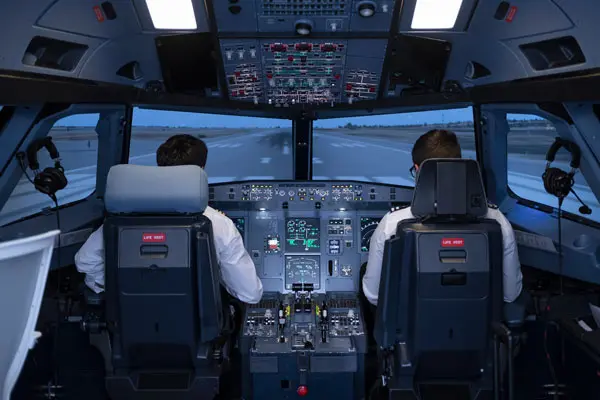
The location is a planning advantage, not a waiver of federal requirements. California pilots still need to meet the applicable certificate, rating, medical, and documentation standards, complete the course, and pass the relevant knowledge test. They must also satisfy the requirements for the ATP certificate they ultimately seek.
Before committing to a date, compare the benefits of pilot training in Las Vegas with your personal schedule. Build a plan for transportation, lodging, document review, course attendance, knowledge-test study, and the next licensing step. Clear sequencing reduces avoidable delays.
California pilots may also compare the academy with providers in other states. Focus on approval status, course dates, simulator equipment, instructor support, travel demands, and whether the program’s schedule fits your certificate plan. Do not choose solely because a location is closer if the available dates or training structure do not fit your timeline.
Contact Las Vegas Flight Academy to confirm your ATP CTP path, eligibility, and available dates.
Frequently Asked Questions About ATP CTP Course Requirements California
What Are the ATP CTP Course Requirements California Pilots Must Meet?
ATP CTP course requirements California pilots must meet are based on FAA standards. The usual civilian enrollment path includes a commercial pilot certificate and instrument rating. Plan around the applicable first-class medical certificate requirement for the ATP certificate path. Military and foreign-trained pilots may qualify through accepted alternatives, so review your records with the provider before scheduling.
Do ATP CTP Course Requirements Include 1,500 Hours?
No. The standard 1,500-hour figure generally applies to aeronautical experience for an unrestricted ATP certificate, not ATP CTP enrollment. A pilot may complete ATP CTP before reaching that total if the applicable course eligibility requirements are met. Restricted-ATP pathways are separate and depend on specific FAA criteria, including qualifying education and experience.
What Does the ATP CTP Six-Day Course Include?
The ATP CTP six-day course at Las Vegas Flight Academy includes 32 hours of ground school, four hours in a fixed-base training device, and six hours in a Level D Boeing 737-800 NG full-flight simulator. The program totals 42 training hours. It is not a type rating and does not itself issue an ATP certificate.
How Can I Prepare for ATP CTP Course Requirements?
To prepare for ATP CTP course requirements, organize your certificates, ratings, applicable first-class medical certificate information, identification, and requested records. Reserve the full six-day schedule and plan travel to Henderson. LVFA provides course materials, so advance study is not required for enrollment. Plan separate knowledge-test preparation after completing the course.
Can California Pilots Complete ATP CTP in Las Vegas?
Yes. California pilots can travel to Las Vegas Flight Academy’s facility in Henderson, Nevada, for ATP CTP. The course follows the same federal FAA standard that applies elsewhere in the United States. Confirm your eligibility, available dates, travel plan, medical documentation, and other records with the academy before booking the six-day program.