
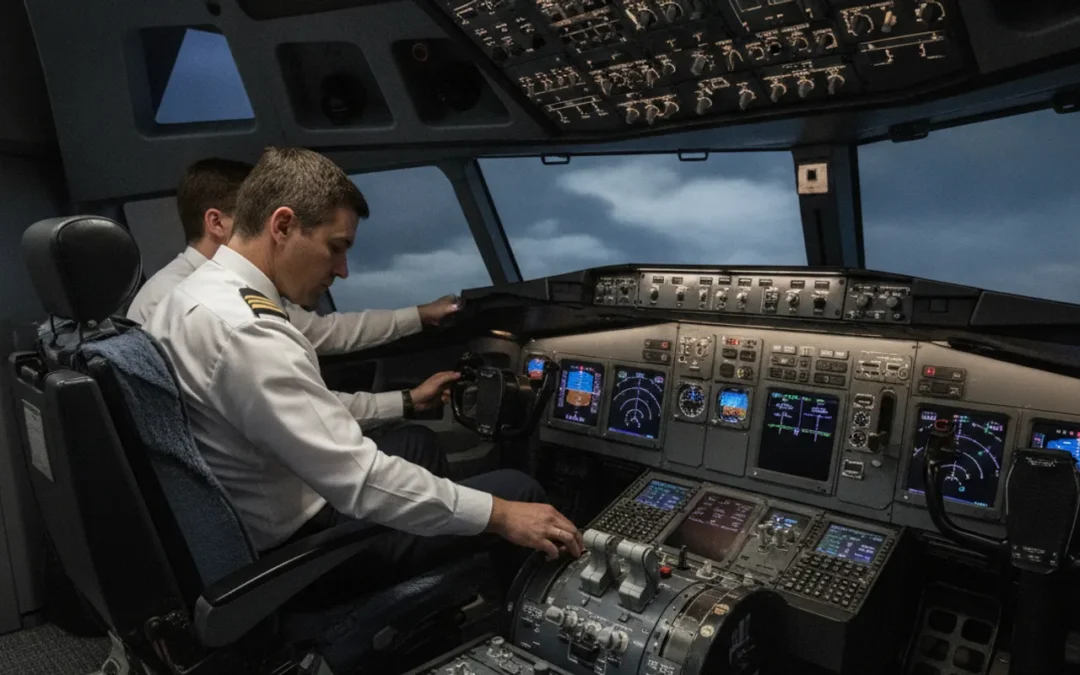
Pilots comparing type rating simulator training vs aircraft training are often asking whether simulator sessions can prepare them for the demands of operating a specific aircraft. The useful answer is not that one setting replaces the other in every case. Each provides a different kind of practice, and the right mix depends on the applicable training and checking requirements, the program, and the pilot’s goals.
Ask about type rating training options
What does type rating simulator training vs aircraft training actually compare?
The comparison is between two training environments, not simply two versions of the same lesson. Aircraft training takes place in the aircraft and involves its real operating environment. Simulator training uses a training device configured to represent an aircraft or aircraft family. Depending on the device, it can reproduce cockpit procedures, instrument indications, system behavior, and selected flight conditions without conducting a flight in the aircraft.
For a type rating, training is structured around learning and demonstrating competence with a specific aircraft type. The course’s authorized curriculum, device qualifications, training sequence, and required evaluations matter more than a broad claim that “simulator” or “aircraft” is automatically better. A training center’s certificate and scope also do not by themselves answer every question about a particular course or qualification. Pilots should confirm what the offered program covers and what records or outcomes it provides.
Las Vegas Flight Academy describes its work as advanced simulator-based professional pilot training and offers Boeing 737 type rating services. See its Boeing 737 type rating program information for the academy’s current course details, and ask the academy directly about the specific training path that applies to you.
What can a simulator teach especially well?
A simulator gives a pilot a repeatable place to learn and practice. An instructor can pause to explain a procedure, reset a scenario, or repeat a task. This can make it easier to work through cockpit flows, instrument interpretation, crew coordination, and decision-making without the time and operational constraints of an aircraft flight.
Practice can also include events that would be inappropriate to create deliberately in an aircraft. The instructor can introduce a scenario, observe how the pilot responds, and then discuss the choices made. Research on simulator-based pilot training has examined how adding unpredictability can help train responses to unexpected events; it supports the value of purposeful scenario design, rather than a claim that any simulator session guarantees real-world performance. Read the study on training pilot responses to unexpected events.
Simulator sessions can also help pilots build a methodical understanding of aircraft systems. A pilot can connect a system indication with a procedure, coordinate with another crewmember, and explain the reasoning behind an action. That is more useful than memorizing a sequence without understanding when it applies.
However, a device is only useful when the training objectives, instructor guidance, and pilot preparation are sound. A simulator does not make a weak briefing effective by itself. Pilots benefit from arriving ready to identify learning goals, review procedures, and ask questions. The academy’s 737 type rating study guidance can help frame preparation, while the exact expectations should be confirmed with the provider.
What is different about practicing in an aircraft?
Aircraft training gives a pilot experience in the real aircraft environment. It can involve the physical sensations, workload, sound, and operational context of a flight. Those factors can help a pilot connect procedures to the aircraft and its surroundings. The aircraft also provides direct exposure to the actual equipment and conditions of flight, rather than a simulated representation.
But aircraft practice is not a universal substitute for a training device. Some tasks are difficult to repeat consistently in a real flight, and the time available for a particular maneuver or scenario may be limited by operational considerations. Training in an aircraft also involves real-world risks and constraints. A lesson must be conducted within the applicable rules, approved training plan, and safe operating practices.
Aircraft access and the structure of a lesson can vary between training providers and programs. That means a pilot should not infer the amount of aircraft instruction from a course name alone. Ask whether aircraft time is planned, optional, or outside the quoted course, and request clarification about what it is intended to accomplish. If a provider proposes aircraft sessions, ask how those sessions fit the approved curriculum and how they relate to simulator work. The goal is to understand the whole training plan, not to count one environment as automatically superior.
Keep the comparison specific to the aircraft and your experience. Time in one aircraft may not answer every question about operating a different type, and a simulated session may be designed for a particular task rather than broad flight experience. Discuss relevant prior training with the provider. A clear conversation can help identify whether you are comparing like-for-like courses or very different offerings.
For that reason, it is more useful to ask what each setting is intended to teach than to decide that one setting is inherently more authentic. A pilot should establish whether aircraft sessions are part of the proposed program, why they are included, which learning objectives they serve, and how they relate to the required training and check. Do not assume aircraft flight time is included in a simulator-based type rating offer—or that it is required for every program—without confirming the details.
How should pilots compare the two training environments?
Use the comparison below as a question guide, not as a ranking. The specific device, aircraft, curriculum, and regulatory approval or qualification determine what a given course may deliver.
| Comparison point | Simulator training | Aircraft training | What to verify |
|---|---|---|---|
| Practice setting | A device represents the aircraft or systems to the degree supported by its configuration. | The lesson takes place in the actual aircraft. | Which device or aircraft is used, and what is its role in this course? |
| Repetition | Scenarios and procedures may be repeated or reset for focused practice. | Repetition depends on flight conditions, lesson goals, and operating constraints. | How does the instructor address a task that needs more practice? |
| Scenario flexibility | Instructors may be able to present selected abnormal or unexpected situations in a controlled setting. | Training must be conducted within real operating and safety limits. | Which scenarios are included, and how are they debriefed? |
| Real-flight context | Models aspects of aircraft operation, with fidelity depending on the device. | Provides direct exposure to the aircraft and flight environment. | What practical learning objective does each environment serve? |
| Program scope | May form a substantial part of advanced aircraft training, subject to the program and device approvals. | May or may not be included in a particular type rating path. | Request the written course outline, prerequisites, schedule, and stated completion outcomes. |
| Cost and logistics | Price and availability depend on the program, device, and schedule. | Aircraft operation adds different logistical and operating considerations. | Ask for a current itemized quote and identify any additional expenses or sessions. |
Which details should you verify before enrolling?
Before comparing providers, make sure you are comparing the same training objective. An initial type rating, recurrent training, differences training, and other training needs are not interchangeable. Explain your current qualifications and intended outcome, then ask the provider which course is appropriate. If your path also involves ATP-CTP, treat it as a separate training question; the academy’s ATP-CTP and B737 training overview explains the relationship at a high level.
- Training-center and course scope: Ask what certificate or authorization applies to the center and the training being offered. Las Vegas Flight Academy provides information about what Part 142 training means; use the relevant FAA requirements and the provider’s documentation to verify the specifics of your own course.
- Device identity and use: Ask which aircraft configuration the device represents, what device is used for each phase, and what the program’s device time is meant to accomplish. The academy’s 737-800 type rating guide offers additional context about that aircraft-specific training topic.
- Curriculum and evaluation: Request a clear outline of ground study, instructor-led sessions, simulator or aircraft sessions, and any evaluations. Ask how a pilot can get help if a learning objective needs further work.
- Eligibility and prerequisites: Confirm the required certificates, experience, documents, and preparation with the provider and the applicable authority. Avoid relying on a generic checklist when your qualifications or training history may change what applies.
- Price and inclusions: Request current written pricing. Find out what is included, what might be charged separately, and whether rescheduling, lodging, travel, or additional training could affect your budget. Do not assume an online price or a previous quote is still current.
- Completion documentation: Ask exactly what documentation is issued, what it records, and whether it meets the requirements for your next step. Do not treat course completion as a guarantee of a separate certificate, airline job, or qualification.
- Schedule and location: Confirm available dates, expected attendance, and any variable logistics directly with the training center. A published program description may not answer individual scheduling questions.
For pilots comparing the academy with other options, its Part 142 regulatory guide and initial 737 type rating information can provide useful background. Check the exact program details rather than assuming that pages for different course types describe identical training.
How do you decide which option fits your training goal?
Start with the qualification or proficiency goal you need to meet, then work backward. Identify which curriculum applies, what training setting it specifies, and what a particular provider can deliver. If the goal is type-specific aircraft training, ask how the simulator portion is organized and whether aircraft sessions are included or relevant to your path. If the goal is to gain experience in an aircraft, ask whether that experience is part of an approved course or a separate activity.
Next, compare course outlines—not just marketing labels. One provider’s use of “simulator training” may describe a different device, course structure, or purpose from another provider’s offer. Ask for the aircraft or device type, the training stages, prerequisites, evaluation plan, and stated completion documentation in writing. You can also compare the academy’s Boeing 737 type rating details with the questions in the table above.
Finally, consider how you learn. Some pilots value repeatable practice and focused debriefing; others want direct aircraft exposure when it is appropriate and available. Neither preference changes the course requirements. Use it to ask better questions about the training design, and do not let a preference replace verification of the program’s scope.
Contact Las Vegas Flight Academy about your training path
Frequently asked questions about type rating simulator training vs aircraft training
Does type rating simulator training vs aircraft training mean I can choose either one?
Not necessarily. The applicable requirements and the specific course determine what training is appropriate. Ask the provider which training settings are part of the program and verify that its stated scope meets your intended goal.
Is type rating simulator training vs aircraft training a question of realism?
Realism is only one consideration. An aircraft provides direct flight experience, while a simulator can support repeatable practice and structured scenarios. The device’s capabilities, instructor, curriculum, and learning objective all affect the value of a session.
How can I compare the cost of type rating simulator training vs aircraft training?
Ask each provider for current written pricing and an itemized list of what is included. Confirm whether aircraft sessions, extra instruction, travel, lodging, or other costs apply. Do not compare a quoted course price with an estimate that covers a different scope.
What should I ask a provider about type rating simulator training vs aircraft training?
Ask what course applies to your goal, which device or aircraft is used, how training and evaluations are structured, what prerequisites apply, and what documentation you receive. Confirm details directly with the provider and relevant authority before making a decision.
Simulator and aircraft training serve different purposes, so compare the course requirements and learning objectives before you choose a type rating program.