
A stack of Boeing flight manuals signals that your 737 type rating transition has begun. The fast pace of professional training starts the moment you walk through the door. This first shift from light planes to heavy jets needs a clear focus on systems and flight rules.
The 737 type rating day 1 schedule at an FAA certified training center focuses on classroom welcome tasks and basic ground school classes. During this first training session, you will get your training plan, flight records, and key aircraft books like the digital Quick Reference Handbook. Your ground school teachers will guide you through cockpit panels, flight limits, and standard flight rules to build your core systems knowledge. You will not fly the Level D simulator on this first day, but these classroom hours prepare you well for simulator training. Knowing what to expect during these initial hours helps you manage the fast pace of this tough pilot training course with confidence.
What actually happens during those critical first hours of your class? Knowing each step helps you prepare for the busy days ahead. The walk through the front doors and into the training center is where your day begins.
Schedule your free consultation to plan your 737 type rating day 1 at Las Vegas Flight Academy.
How Does Your First Morning Unfold at the Henderson Facility on 737 Type Rating Day 1?
The walk from the parking lot to the training center is where the nerves usually hit. That is normal for any pilot. When you step through the doors for your 737 type rating day 1, you are starting a path to a major airline career.
Our Henderson center sits at 1771 Whitney Mesa Drive in Nevada. The building is a forty thousand square foot FAA Part 142 certified space built to train pilots to the highest safety standards.
Checking In and Meeting Your Instructor
Your first hour is about check-in and meeting the team. You will meet the support staff and your ground instructor in the lobby. We do not run a pilot factory where you are just a number.
The lobby is quiet, and the focus is on you. After a quick cup of coffee, you will sit down for your first morning briefing. Your instructor will lay out the training schedule and what you need to master each day.
This briefing sets a calm tone for the weeks ahead. You will go over the training syllabus and flight crew manuals. The goal is to turn the huge pile of aircraft data into a clear plan.
We follow the guidelines found in the FAA type rating training advisory circular to build our course structure. This ensures your training meets strict federal standards from the very first hour.
A Boutique Focus for Career Success
Large training centers often treat pilots like parts on a line. They push hundreds of students through a fast-paced ground school. We take a different path at our Henderson center.
We keep our class sizes small so you get direct time with our trainers. This boutique approach gives you a safe space to ask questions and work through tricky flight flows. You are here to learn how to fly a heavy jet, and we give you the exact support you need.
You will spend your day in modern rooms built for focused study. The center has everything you need to earn your 737 type rating without the stress of a crowded campus.
By noon, you will feel the first-day jitters start to fade. You will see that the program is tough, but you have a team of pros backing you up at every step.
What Do You Receive on Your 737 Type Rating Day 1: Syllabus, Records, and QRH?
When you start your training, the first morning is all about getting ready. Walking into the classroom, you feel the energy and focus in the room. Your 737 type rating day 1 begins with a formal onboarding session designed to set you up for success.
We start with a short talk about the school and you will meet the key staff who will guide your training. You will meet your teachers, the schedulers, and our managers. You will also get your new uniforms and a company iPad loaded with your digital flight bags and tools.
The onboarding and welcome session
Our goal during this first meeting is to make sure you have everything you need. The staff will walk you through the center and let you meet the teachers. You will sit down with other pilots, review the course papers, and do your first check-in.
Getting these details sorted out early helps clear your mind. It lets you focus on the massive amount of systems knowledge ahead. Our team is here to support you at every step of this journey.
Syllabus, records, and training manuals
Once the welcome talks are over, you will get the core papers that will govern your life for the next few weeks. These papers form the basis of your training outline. They align with the FAA guidelines for type ratings under FAA Advisory Circular 61-89E. Your training pack holds your personal log book, a detailed course syllabus, and the real flight manuals.
Your training record is a vital document that tracks every hour of ground school and simulator time you complete. The instructors use it to log your progress and verify you meet every standard. Along with this record, you will get a digital copy of the Quick Reference Handbook, or QRH. This handbook is your lifeline in the cockpit.
This handbook lists the checklists for normal and non-normal events. Knowing where to find these items quickly is key to passing your checkride. We suggest you learn how to prepare for your type rating before you arrive. This prep makes your 737 type rating day 1 feel much less stressful.
What Does Ground School Orientation Cover on Your First Day?
What Ground School Day 1 Covers
Ground school is the bedrock of your training. On your 737 type rating day 1, we start with the core systems and limitations of the aircraft. This first day looks at systems knowledge, aircraft performance, and standard operating procedures. You must learn how each system works and how they connect to keep the flight safe.
Day one covers some key areas of the aircraft:
- Electrical and fuel systems, with power routing and pump work.
- Pneumatic and air systems, with a focus on pressure control.
- Engine and backup power limits, which are vital for safety.
We do not just learn facts by heart; we learn how to think like a 737 pilot. Having this solid base will help you master your 737 checkride. Our trainers guide you through the manual so you know how to handle both normal and non-normal flights.
FAA Curriculum and Training Standards
Our program follows a strict training structure. The Federal Aviation Administration provides a clear training outline in the FAA Advisory Circular AC 61-89E. Schools use this guide to build their type rating programs under Part 142 rules.
This training outline ensures that every pilot meets the same high safety and skill standards. You will study FAA rules, flight paths, weight and balance, and cockpit flows. Learning these details on day one sets the tone for the entire course.
It helps you build the right habits to fly a heavy jet safely. We make sure you learn these rules fast. Our team is with you at every step of the way.
Managing the 8-to-10-Hour Training Pace
You should expect a full day in the classroom. Ground school training often runs eight to ten hours daily. This time is split between classroom lessons, cockpit drills, and study groups.
It is a lot of facts to take in, but our team helps you stay on track throughout the day. You will not feel left behind as you learn.
The pace is fast, but it is designed to build your knowledge step by step. We focus on aircraft limits and systems to prepare you for the simulator. Setting this standard early helps reduce stress in later flight sessions.
By the end of day one, you will have a clear path to success. This training gives you the skill and confidence to fly. You will be ready to take on the rest of the course.
How Do You Meet the 737 Cockpit: FMS, MCP, and Flows for the First Time?
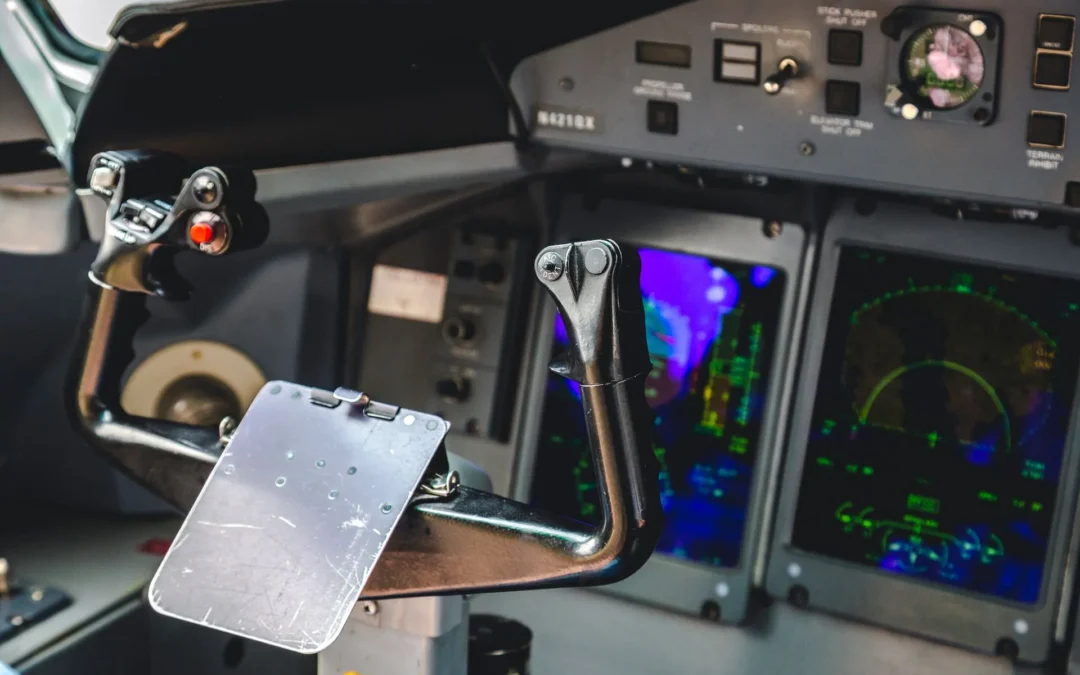
Walking into the B737-800 cockpit for the first time is a big moment. The classic Boeing yoke sits right in front of you. Your eyes trace the massive overhead panel, filled with switches for fuel, hyds, and bleed air. It looks like a maze, but there is a clear logic to it. Every system is placed where it makes sense. To prepare for your type rating, you must learn to navigate this space with speed and accuracy.
The CDU and flight management system
The Control Display Unit, or CDU, is your main link to the Flight Management System. The keyboard has stiff keys that need a firm press. On day one, entering flight plan data feels slow. You will type in the origin, the route, and the departure runway. The screen displays pages of legs, speeds, and altitudes. Your instructor will show how a typo can break your flight route. Learning this interface is a core part of standard pilot training.
Mode control panel and autopilot settings
Just below the glare shield sits the Mode Control Panel, or MCP. This is where you manage the autopilot and flight director. You will spin dials to set your target speed, heading, and altitude. Every knob clicks with a precise feel. On day one, you must learn to select these modes while keeping your scan on the primary flight display. It takes practice to match your physical inputs with what the flight instruments show.
Drilling the cockpit flows
Standard flows are the core of 737 flight. A flow is a set sequence of actions you perform across the panels from memory. You do not just read a checklist. Instead, you move your hands in a structured path across the cockpit to set up each system. Only after the flow is complete do you run the checklist to verify your work. This standard is why training begins with intense flow drills from your very first session.
Federal guidelines stress this system-based training for type ratings. As outlined in the FAA type rating curriculum standards, pilots must show mastery of both automated systems and basic flight tasks. This is why you spend so much time on day one drilling these flows. By the time you step into the actual flight simulator, these movements must be second nature so you can focus on flying the aircraft.
What Happens in Your First Full-Flight Simulator Block: Preflight to the Pattern?
Ground school is only the first step. After long hours reading about systems, you at last walk out to the simulator bay. The massive motion legs look imposing. This is where your classroom knowledge meets real flight controls.
The Level D cockpit layout
You climb the bridge and step into the cab. The flight deck of our Boeing 737-800 is a precise copy of the real aircraft. You will spend your next training blocks in a lifelike Level D simulator training deck.
The FAA outlines strict training curriculum standards under FAA AC 61-89E for type rating courses, making sure you are ready for motion flight. The full-motion system tilts and rolls to match your control inputs. You can feel every bump on the runway. The dome screens wrap around the nose, showing a vivid view of the runway lights.
Preflight flows and cockpit setup
You sit in the left seat, and the heavy yoke tells you this is a big jet. You and your partner begin the preflight duties. This starts with the overhead panel, where you check power, fuel pumps, and air systems. You work through each step line by line.
Next, your fingers tap the keys of the Flight Management Computer to enter the flight plan, load fuel weights, and set speeds. Once this setup is done, you run the checklists. Working as a team is key to keeping the cockpit safe. Each pilot must cross-check the other’s work.
First takeoff and visual pattern work
Once the instructor clears you for takeoff, you push the throttles forward and feel the simulated thrust. The engines roar, and the motion base rumbles beneath you. You pull back on the yoke at rotation speed, and the nose rises into the sky. The feel of climbing is very real.
Once in the air, you practice basic turns. You quickly learn how the big jet reacts to your small hand-flying inputs. Then, you fly a visual pattern. You must track your speed, adjust the flaps, and keep the runway in sight.
Lining up with the runway centerline is a real test. The visual system shows every light and line. You guide the big jet down for a smooth touchdown, completing this first simulator block. It is a tough block, but you leave with high confidence.
Why Does Your 737 Type Rating Day 1 Set the Tone for the Whole Course?
How you handle the very first day sets your pace. A type rating course is like drinking from a fire hose. If you fall behind on day one, it is hard to catch up. Walking in with a clear mind and a solid plan makes a huge difference. It helps you stay calm when the training gets tough.
| Training Phase | Primary Focus | Simulator Time | Daily Pace |
|---|---|---|---|
| Your 737 type rating day 1. | Onboarding, systems overview, and ground school basics. | None, ground school only. | Focused intro with a steady build. |
| Ground school days. | Aircraft systems, limitations, performance, and SOPs. | None, classroom and panels. | Eight to ten hours of class and study. |
| First simulator blocks. | Flows, preflight, and basic maneuvers. | First full-flight blocks. | Split classroom and simulator time. |
| Checkride prep. | Profiles, maneuvers, and oral review. | Full profiles and checks. | A high-intensity final sprint. |
Pre-course study habits
The best way to win on day one is to start before you arrive. You should use any learning management system (LMS) or e-learning platform access given to you before the course starts. This early access lets you learn the basics at your own speed. You can look at cockpit layouts and system guides from home. If you want to prepare for your type rating early, this is where you start.
You must also study your flight crew operating manual (FCOM) and standard operating procedures (SOPs). Learn your memory items for non-normal events before day one. Doing this will lower your workload and stress once class begins. The FAA outlines standard training rules in FAA Advisory Circular 61-89E. Early study means your first day will feel like a review instead of a shock.
In-class habits for success
Once class starts, your daily routine must support your learning. Get enough rest each night. Ground school is fast and takes a lot of focus. If you are tired, you will miss small but key details about the aircraft. Many pilots choose to combine their training with ATP-CTP and type rating training to save time. This path is fast, so staying sharp from the start is key.
Here is a quick daily checklist to keep you on track:
- Review the syllabus before each day to see what is coming next.
- Mark any complex systems that you do not fully grasp yet.
- Get to the school early to review panels with your simulator partner.
You also need to ask questions as soon as they come up. Do not wait for the end of the day or week. Your teachers are there to help you master the systems. Asking early prevents small doubts from turning into big gaps in your knowledge. Staying on top of things from day one will help you master your 737 checkride when the course ends.
Contact Las Vegas Flight Academy to book your slot and start your 737 type rating day 1.
Frequently Asked Questions
What materials do I receive on my 737 type rating day 1?
On your first day, you get your main course documents to help you learn. According to a B737 training syllabus guide, you will get the class schedule, your personal training record, and aircraft manuals. You also receive a digital Quick Reference Handbook to study. These tools help you track your progress and learn the cockpit steps.
Is there a simulator session during my 737 type rating day 1?
No, you will not fly the simulator on your first day. According to the FAA Advisory Circular 61-89E, training centers use approved outlines that build systems knowledge first. You must learn the aircraft systems and safety rules before you enter the Level D simulator. Day one is for classroom learning to prepare you for the flight deck.
How many hours of ground school should I expect on my 737 type rating day 1?
You should expect to spend about seven to ten hours in ground school on your first day. As noted by KC the Pilot’s training guide, ground school usually runs eight to ten hours daily. This time is filled with lectures on systems, performance, and limitations. It is an intense day, but it helps you build a strong safety foundation.
How should I prepare before my 737 type rating day 1 starts?
You can prepare by studying your Flight Crew Operating Manual and standard operating procedures ahead of time. According to KC the Pilot, learning your memory items for non-normal events before class starts will lower your stress. You can also get more study tips in our 737 type rating preparation guide.
Ready to Start Your Boeing 737 Type Rating Training?
Waiting to secure your class seat can set your airline pilot career back by many months. Every day of delay is a day of lost seniority and pay. Training slots at our boutique center fill up quickly, and putting off your start date means losing senior spots at your airline. When you book your training early, you get your home study guides and training software right away. This extra time helps you master aircraft systems and limitations before you ever step foot in the classroom. Starting your path today means you walk into ground school feeling relaxed, prepared, and ready to succeed.
Ready to book your training? Contact Las Vegas Flight Academy to schedule a free consultation about your 737 type rating training.