
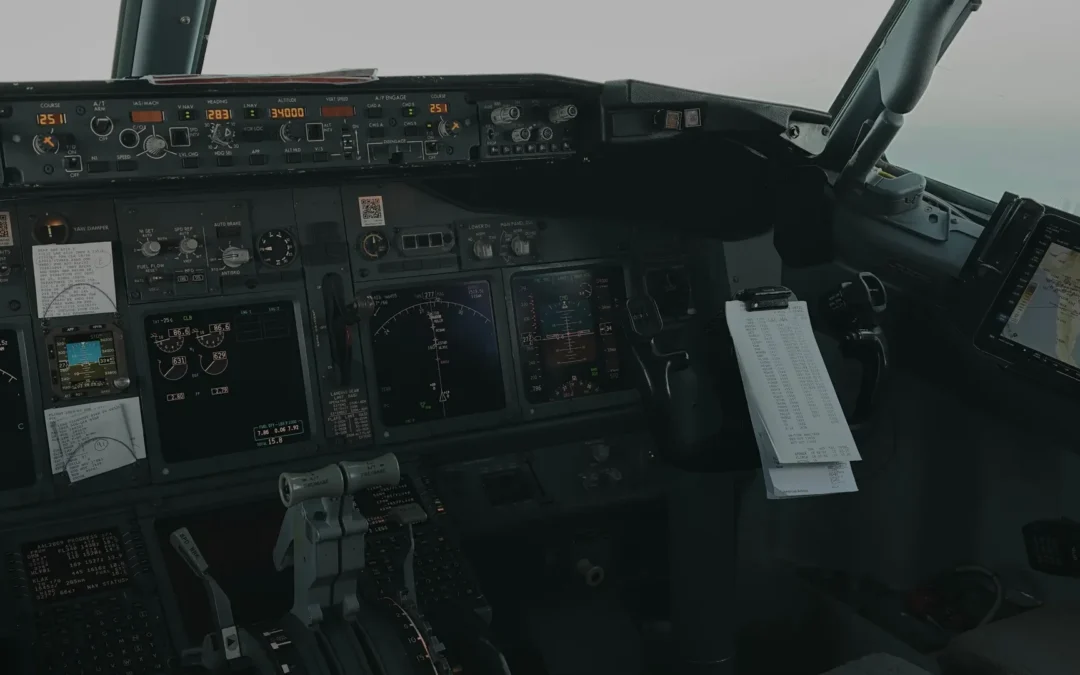
Every twelve months, professional Boeing 737 pilots must return to the simulator for required proficiency checks. This cycle ensures you are ready for high-pressure flight operations. Staying compliant with FAA rules keeps your career on track.
Schedule your B737 recurrent training at Las Vegas Flight Academy.
B737 recurrent training is a required FAA rule for pilots to maintain their type rating and flying skills within a 12-month window. Under 14 CFR 121.433, flight crew must complete this training to handle normal and non-normal tasks in the Boeing 737 cockpit. Most programs take place at a Part 142 training center using a Level D full flight simulator to copy real-world flight conditions. The training covers systems review, emergency maneuvers, and crew resource management skills to meet federal safety standards. Successful completion keeps your pilot certificates active and prepares you for upcoming checkrides. These training programs are needed for maintaining the high safety standards required in airline aviation.
Preparing for your next simulator session requires a clear grasp of the rules that govern pilot skill. Understanding the FAA Regulatory Framework for B737 Recurrent Training is the first step toward a successful checkride. This guide breaks down the legal rules and provides a practical checklist. The path begins here.
Understanding the FAA Regulatory Framework for B737 Recurrent Training
The Federal Aviation Administration (FAA) uses a strict system to keep air travel safe. For pilots who fly the Boeing 737, this system ensures their skills stay sharp over time. The rules focus on regular checks and structured learning. Every professional pilot must follow these guidelines to keep their right to fly. Staying legal in the cockpit starts with knowing which rules apply to your seat.
The 12-Month Rule for Training
The primary rule for staying current is 14 CFR 121.433. This law states that flight crew members must finish ground and flight training every 12 months. This ensures that every pilot has the latest knowledge and skill for their specific aircraft. You must complete this training within the preceding 12 calendar months to serve on a flight crew. If you miss this window, you lose your currency and cannot fly for your airline.
This yearly check covers both basic flight steps and rare emergencies. It is the core of the B737 recurrent training requirements for most commercial pilots. The goal is to make sure no pilot goes too long without a formal review. By practicing in a safe setting, pilots can fix small habits before they cause issues. This cycle of learning is a key part of the global safety record for jet travel.
Part 142 Training Center Power
Most pilots do not train at their own airline for every check. Instead, they use Part 142 training centers. The FAA gives these centers the power to host approved training programs. These facilities must meet high standards for their instructors and their gear. They often use Level D flight simulators to give pilots the most real experience possible without leaving the ground.
Las Vegas Flight Academy operates as a boutique Part 142 center. This means they follow a strict FAA-approved syllabus for the B737 NG. Choosing an approved center is vital because the FAA tracks every hour of your training. These programs are not just a review of the manual. They are a deep dive into how to manage a complex jet in a busy sky. Using an expert center gives you the best tools to stay at the top of your field.
Staying in Line with FAA Rules
Recurrent training helps pilots keep up with new FAA standards and safety rules. The aircraft stays the same, but the way we fly it can change as the FAA learns from new data. These sessions ensure you are always using the best and safest methods. Pilots must show they have full control of the Boeing 737 during both normal and non-normal events. This proof of skill is what keeps your license valid and your career moving forward.
- Ground training covers aircraft systems like hydraulics and flight controls.
- Flight training in a simulator tests how you handle stalls or engine failures.
- Review sessions look at how crews talk and work together in the cockpit.
- Oral checks test your memory of vital limits and memory items.
Following this framework is the best way to stay safe in the air. Regular training makes sure that your reactions are fast and correct. It builds the muscle memory needed to handle a crisis. By staying on top of your training dates, you show that you take safety seriously. This commitment to skill is what defines a professional pilot in the modern era.
Recency of Experience: FAA Requirements Before You Fly
Expert flight crews must meet high standards to keep their status. The FAA sets these rules to ensure that every pilot in the cockpit has the skills to handle the job. The main rule is in 14 CFR 121.433. It says crew members must finish ground and flight training every 12 months. This 12-month cycle is the base of B737 recurrent training and is vital for safety.
The standard 12 month training cycle
The FAA says you must finish a full training cycle within the past 12 months to serve on a plane. This cycle covers ground school and flight training for your plane type. It ensures you are still ready for the jet and your crew role. If you let this time pass, you might need a deep recurrent training and renewal course. This helps you get back in the air. This rule keeps pilot skills fresh for everyone in the sky.
Extra rules for the pilot in command
Being a Pilot in Command (PIC) comes with more duties and more rules. The FAA asks that PICs finish extra flight training within every six months. This rule helps the lead pilot stay sharp on the most vital tasks in the cockpit. These six-month checks are a core part of flight work. They help keep safety high in all Part 121 flight paths. According to FAA rules, this ensures you are ready for any flight event.
Using skill checks instead of training
Not every pilot follows the same path for their yearly training. The law gives a way to use a skill check to meet these goals. Under 14 CFR 121.441, a good skill check can take the place of flight training. This check is a hard test of your power to perform all needed moves and drills. It proves you have mastered the jet and are ready for any flight event. Using this path shows you are ready to fly at the highest level.
Why recency of experience matters
Staying current is about more than just checking a box. The FAA wants to make sure you are skilled in the plane you fly. Flight training centers use these cycles to review normal and crisis steps in a safe place. By going through these checks, you keep your muscle memory sharp and your flight knowledge high. This work helps you lead your crew and protect your passengers every time you take off.
- Every flight crew member must finish ground and flight training every 12 months.
- PICs must meet an extra six-month flight training rule for their plane.
- A skill check under 121.441 can be used to meet flight training rules.
- Training ensures you stay skilled in your plane type and crew role.
- Meeting these rules is a must for any pilot working under Part 121 standards.
B737 Recurrent vs Requalification Training: How to Know Which Path You Need
Staying current in a Boeing 737 is a core duty for any pro pilot. You must choose the right path to keep your skills sharp and stay legal. Most pilots follow the recurrent training program and requalification path based on how long it has been since their last check. These programs are made for pro pilot needs. They help you stay ready for any flight event.
When to choose recurrent training
You need recurrent training if you have stayed active but your yearly check is due. The FAA sets clear rules for this. Under 14 CFR 121.433, flight crew members must finish ground and flight training every 12 months. This path keeps your skill level high. It checks that you can still fly the jet safely in bad weather.
These sessions focus on things you do every day plus some emergency drills. The goal is to show you still have the skills to handle the plane. A good course will test how well you know the systems. It also checks how you work with your crew. You will work on takeoffs with engine failures and landings in bad weather. These drills build the muscle memory you need to stay safe. It gives you a safe place to practice tough maneuvers before your real checkride.
When to choose requalification
Requalification is for pilots who have been away from the 737 for a long time. If you have not flown the type in over two years, a simple review is not enough. You need a deeper dive into the systems and flight rules. This path helps you get back to pro standards after a long break. It covers ground school and many hours in a Level D simulator.
This training is more intense than a standard check. You will spend more time on basic flying and system quirks. Experts will help you find any gaps in your knowledge. A long break can lead to rust in your scans and flows. Requalification fixes this by going back to the basics of the B737 NG. You will spend time on cold-dark starts and complex flight paths. This ensures you are ready for a line check at your airline.
Comparing your training options
The main difference between these paths is the time you spend in class and the simulator. Recurrent training is a quick check to keep you current. Requalification is a full restart for your skills. Both paths help you show that you can do the required maneuvers for the job. You can see the key differences in the table below.
| Topic | Recurrent Training | Requalification |
|---|---|---|
| Main Goal | Keep current skills | Restore lost currency |
| Time Limit | Every 12 months | Over 24 months since last flight |
| Flight Focus | Review and check | Deep drills and flight skills |
| Ground School | Quick review | Full systems class |
| Sim Time | Short sessions | Longer training blocks |
Choosing the right path saves you time and keeps you safe. LVFA gives you programs that fit FAA Part 142 standards. Our instructors help you get the exact training you need. Whether you are due for a check or coming back after a break, we have the tools to help you finish.
Pre-Arrival Systems Review Checklist for B737 Recurrent Training
Staying sharp on aircraft systems is the first step toward a smooth recurrent check. Before you step into the simulator, a deep dive into your manuals helps you stay ahead of the airplane. This review ensures you can handle both routine flights and sudden failures with ease.
Master your manuals and memory items
Success in B737 recurrent training starts with the books. You must be fluid with your Flight Crew Operations Manual (FCOM) and Quick Reference Handbook (QRH) to move quickly through the session. At Las Vegas Flight Academy, we see that pilots who study these files ahead of time perform much better in the seat.
Start by memorizing your memory items. These are the steps you must take right away without looking at a list. For the B737 NG, this includes engine fires, cabin altitude issues, and flight control problems. Being fast and right on these saves lives and keeps your checkride on track.
- Review the FCOM and QRH: Read through the latest FCOM and QRH to refresh your knowledge of how the systems work and how to fix faults.
- Drill normal and non-normal checklists: Run through your simulator prep by practicing both standard flows and emergency checklists.
- Study B737 NG systems: Focus on the core parts of the B737 NG systems, such as hydraulics, electrical paths, and fuel.
- Memorize limitations: Know the max and min speeds, weights, and temps for the aircraft to ensure you stay within safe flight bounds.
- Refresh emergency procedures: Walk through the steps for engine failures, smoke in the cabin, and rapid descents.
Deep dive into NG flight systems
The B737 NG has unique quirks that you must know well. Check your notes on how the standby power system works and how the flight controls feel in manual reversion. Knowing how the airplane acts when a system fails will help you stay calm during your LOFT scenarios.
Pay close attention to the pneumatics and air conditioning. These systems often cause small issues that can lead to big problems if you do not catch them early. Reviewing the cooling paths and valve logic now will save you time when you are in the box.
Check your understanding of the glass cockpit displays. Make sure you know how to read the primary flight display and the navigation display during a total failure. This skill is vital for keeping the wings level when things go wrong.
B737 Simulator Session Prep Checklist for the Checkride
Preparing for B737 recurrent training requirements involves more than just showing up at the flight center. You must approach your simulator sessions with the same discipline you use on the flight deck. Proper simulator prep checklist steps can help lower your stress and ensure you meet FAA standards during the checkride. Under 14 CFR 121.433, crewmembers must complete both ground and flight training every 12 months to stay current.
Master your aircraft knowledge
Before you step into a Level D simulator, you need to know your manuals. Review the latest Flight Crew Operating Manual (FCOM) and the Quick Reference Handbook (QRH) to refresh your memory on B737 NG systems. Focus on both normal and non-normal checklists so you can act quickly when a problem arises. Having this technical base ready allows you to focus on flying the simulator rather than searching for procedures. Pilots who prepare well often see better results and feel more confident during their session.
Crew resource management
Flight training in a simulator is meant to build crew coordination and safety. You should review your Crew Resource Management (CRM) skills before you start. Clear talk and good teamwork are vital when things go wrong in the cockpit. During your simulator session preparation, think about how you will brief your partner. Good CRM helps you manage the workload during busy phases of flight. It also ensures that both pilots are aware of the aircraft state at all times.
- Study LOFT scenarios. Recurrent training often uses Line-Oriented Flight Training (LOFT) to mimic real-world flights from gate to gate.
- Practice engine failure drills. You must be ready for a critical engine failure during takeoff, as this is a core checkride task.
- Review emergency procedures. Go over how to handle fires, rapid losses of air, and other major failures before you arrive.
- Use pre-flight briefings. A good brief sets the tone for the session and helps you and your partner stay on the same page.
- Engage in the debrief. Take notes after the flight to find areas where you can improve your skills for the next time.
- Focus on CRM. Use active crew coordination to keep the flight safe and follow all standard rules.
- Manage your stress. Getting ready early can help you stay calm and perform your best when the checkride starts.
Prepare for high-stress events
The checkride will test your ability to handle engine failures and other emergencies. You must be able to fly the plane while running the proper checklists. Simulator sessions provide a safe place to practice these tough tasks. By going through these drills early, you ensure your reactions are fast and correct. This level of prep is what helps professional pilots maintain their B737 recurrent training records. Stick to the plan, trust your training, and stay focused on the task at hand.
What to Expect During B737 Recurrent Training at Las Vegas Flight Academy
Pilots who choose Las Vegas Flight Academy for their B737 recurrent training can expect a focused and expert setting. As an FAA Part 142 training center, our academy provides programs that meet high safety and FAA rules. We offer a boutique stay at a single location in Henderson, Nevada. This approach allows us to give each pilot more attention than large factory-style schools.
A Streamlined Training Schedule
The standard B737 recurrent training program at our academy often takes two to three days to complete. This short window is designed for skilled pilots who need to maintain their skills without taking long breaks from work. The course includes a mix of ground school and flight teaching in our full-motion units. Our team provides all training tools on the first day, so you do not need to do any prep work before you arrive.
During the ground session, you will review aircraft systems and safety tasks for the Boeing 737 NG. This part of the course ensures you stay sharp on normal and non-normal checklists. After the ground school, you will move to the flight sims to practice maneuvers and handle various flight drills. The program ends with a proficiency check to verify your skills and maintain your Boeing 737 type rating status.
Advanced Level D Tech
Our center houses two advanced Boeing 737-800 Level D full-flight sims. These machines have FAA IDs #1168 and #2104. They provide a very true environment that mimics real flight conditions. You will experience high-detail visuals and motion that make the training feel like you are in a real cockpit. This level of tech is vital for practicing complex tasks like engine failures during takeoff or low-visibility landings.
The units allow us to run line-oriented flight training (LOFT) drills. These sessions help you improve your crew resource work (CRM) skills and choices. By using Level D tech, we ensure that every hour you spend in the sim translates directly to safer flights in the air. We focus only on the B737-800 and NG variants to provide the best possible training for these specific models.
Expert Teaching in Las Vegas
The quality of your training depends on the people who lead it. At Las Vegas Flight Academy, our instructors are former airline and military pilots. They have an average of over 20,000 flight hours. Their deep skill means they know the real-world challenges you face in the cockpit. They use this knowledge to help you master the B737 systems and stay current with FAA rules.
Our training center is located in Henderson, Nevada. We are very close to Harry Reid International Airport in Las Vegas. This makes our center easy to reach for pilots traveling from the West Coast or other parts of the world. The local area offers many options for housing and travel, making your stay simple and efficient. We work hard to provide a focused training path that gets you back in the air with confidence.
Contact Las Vegas Flight Academy to plan your next B737 recurrent training session.
Frequently Asked Questions
How often must pilots complete B737 recurrent training?
According to 14 CFR 121.433, pilots must finish recurrent ground and flight training every 12 months. This FAA rule helps pilots stay sharp and keep their knowledge of aircraft systems fresh. For pilots in command, more training is often needed every six months. Taking this course at a Part 142 center ensures you meet all safety goals through expert lessons and simulator time.
Can a proficiency check replace B737 recurrent training?
Yes, a proficiency check under 14 CFR 121.441 can be used to meet the flight training rules. This check lets pilots show they can handle the aircraft and follow all safety steps. It covers both normal and emergency flight tasks in a simulator. Pilots must still finish ground school to stay current. This path is often chosen by working pilots who need to prove their skills for their job.
How long does a B737 recurrent training course last?
A B737 recurrent training course usually takes two to three days to finish. This time includes both classroom lessons and sessions in a Level D simulator. The exact length depends on the school’s approved plan and the pilot’s experience. At Las Vegas Flight Academy, the program focuses on core skills and FAA rules. This short time frame allows pilots to renew their currency and return to work quickly.
Do I need to hold a B737 type rating for recurrent training?
Yes, you must already have a B737 type rating to take recurrent training. This course is for pilots who have their rating but need to stay current under FAA rules. It is not for pilots who want to get a new rating for the first time. If your rating has been expired for a long time, you might need a different path. You should check the initial vs recurrent training guide to see which one fits you.
Ready to Schedule Your B737 Recurrent Training Session?
FAA rules for B737 recurrent training are very strict and leave no room for error. If you miss your window, you cannot fly for pay, which leads to lost wages and career delays. Do not let your skills slip when your license is on the line. Starting your prep today gives you plenty of time to study systems and checklists. Our B737 recurrent training program helps you practice all normal and safety steps. A calm mind is the best tool for your checkride. The right training makes the difference for your next airline interview. Booking now ensures you stay current and safe in the sky.
Ready to book? Schedule your B737 recurrent training session to keep your pilot career safe and on track today.