
Level D Simulator Training for Emergency Procedures
Level D simulator training gives airline pilots a realistic place to rehearse emergency procedures that would be unsafe, impractical, or impossible to reproduce in an aircraft. Instead of only discussing an engine failure, rejected takeoff, low-visibility approach, or abnormal system indication in a classroom, pilots can work through the event in a full flight simulator while managing aircraft control, checklists, communication, and cockpit workload at the same time.
Planning Boeing 737 training? Review Las Vegas Flight Academy’s Boeing 737 type rating programs to see how Level D simulator sessions fit into aircraft-specific training.
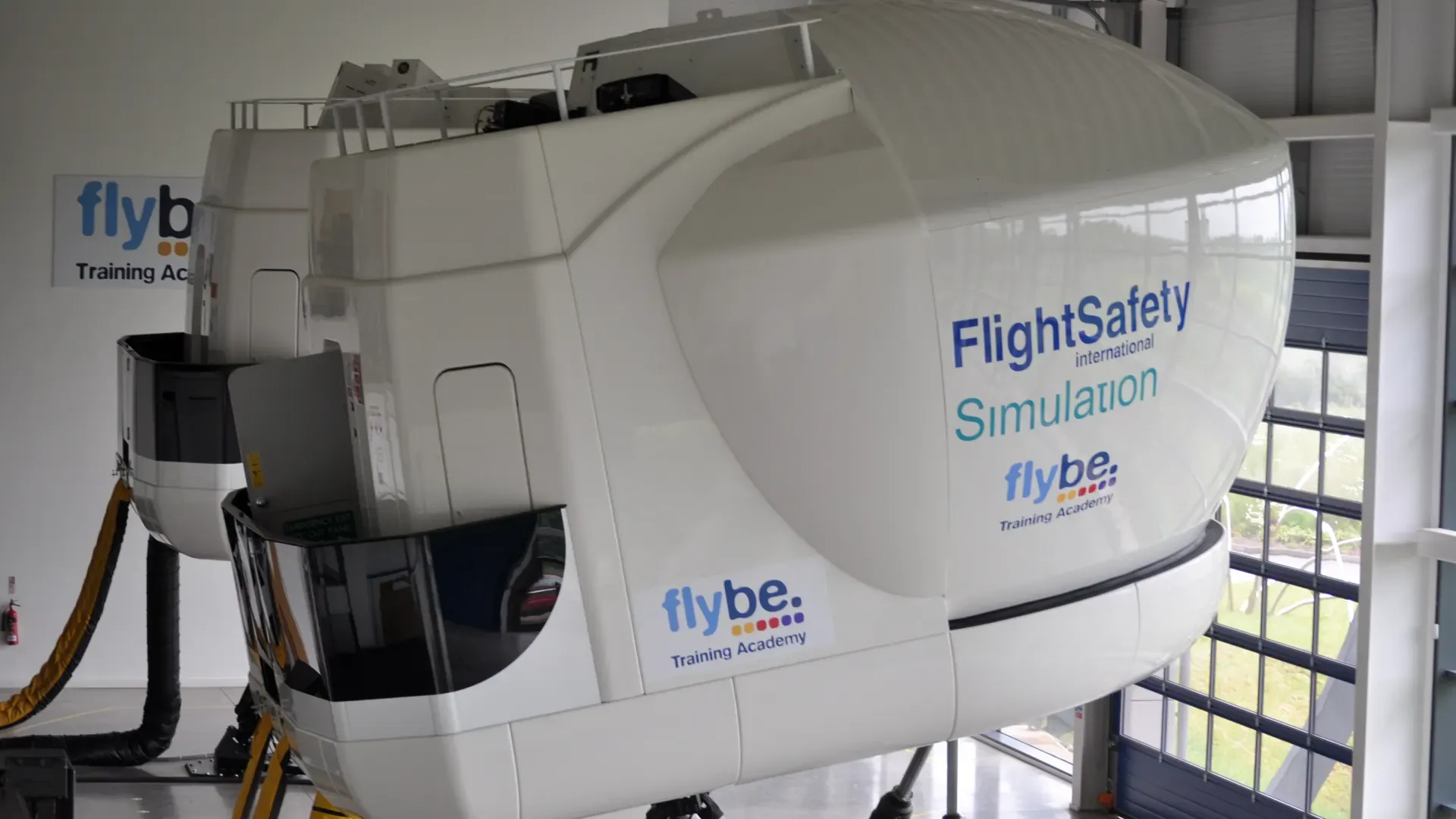
For airline-oriented training, the value is not simply that the simulator moves or looks convincing. The value is that a qualified simulator allows instructors to build a complete operating context around the event. The crew must recognize the problem, maintain a safe flight path, apply the correct procedure, divide duties, and decide what happens next. That is much closer to real line flying than memorizing a checklist in isolation.
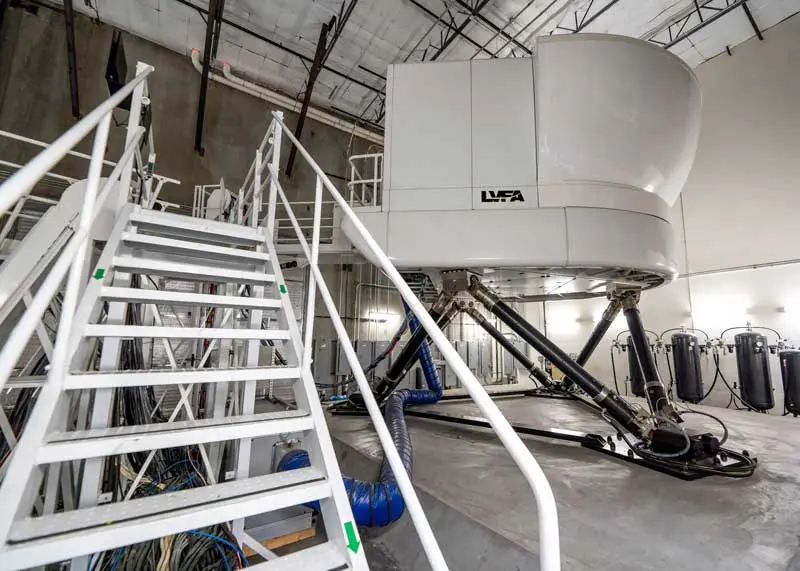
Las Vegas Flight Academy trains pilots in Boeing 737 programs supported by Level D simulator environments in Las Vegas. Its training center overview explains the school’s FAA-approved focus, while its Boeing 737 type rating page details simulator-backed training options for pilots pursuing aircraft-specific qualifications.
What Is Level D Simulator Training?
Level D simulator training is pilot training conducted in a top-tier full flight simulator that is qualified to represent a specific aircraft configuration for approved training, checking, and procedure practice. In practical terms, it places a crew in a cockpit environment with aircraft-relevant controls, instruments, visuals, and flight responses so that training can test more than book knowledge.
That distinction matters. A desktop trainer may help a pilot study flows. A non-motion device may support certain procedures. A Level D full flight simulator is designed for the high-fidelity sessions where realistic timing, crew workload, outside visual cues, and aircraft response influence the training outcome. It is particularly useful when the learning objective is to manage a complex situation from recognition through resolution.
Las Vegas Flight Academy’s published FAA simulator qualification material identifies its Boeing 737-300 device as a Level D full flight simulator, and its type rating information highlights additional Boeing 737 Level D training resources. Pilots evaluating a training center should always confirm the exact aircraft variant, course approval, simulator availability, and simulator housing in Las Vegas for the program they need.
Why Emergency Procedures Belong in a Level D Simulator
Emergency procedure training has a simple challenge: the most important events to practice are often the least appropriate to create in a real aircraft. A school cannot safely induce a real engine failure at the worst possible moment on takeoff, fill a cockpit with the pressure and pace of a late abnormal indication during an approach, or repeatedly test a high-energy reject on a runway until a pilot’s decision making becomes consistent.
A simulator changes that equation. Instructors can present the abnormal event at a precise time, pause for debriefing after the profile, reset the scenario, and vary the conditions when repetition needs to become application rather than rote memorization. The aircraft remains safe because there is no aircraft at risk, but the pilot still experiences the time compression and task loading that make the procedure meaningful.
- Safety: High-risk conditions can be practiced without exposing an aircraft, crew, or passengers to danger.
- Repeatability: Instructors can repeat the same profile or adjust it to test whether the pilot recognizes the situation rather than memorizes one script.
- Integration: Aircraft control, checklist discipline, crew resource management, and communication are evaluated together.
- Debrief quality: The session can be reviewed around specific decisions, callouts, flight path control, and procedure timing.
This is why simulator-based emergency procedure work is central to airline pilot preparation, type rating programs, and recurrent proficiency training. Pilots do not just need to know the correct answer. They need to produce the correct response while flying.
How Pilots Train for Engine Failures
Engine failure scenarios are one of the clearest examples of why Level D simulator training matters. The same words, “engine failure,” can create very different demands depending on when the event appears. An engine issue during takeoff roll is not managed the same way as an event after liftoff, during climb, or later in the flight.
Recognition Comes Before Procedure
The first training objective is recognition. Pilots identify what has changed, maintain directional control or flight path control, and avoid rushing into a checklist before the airplane is stabilized. In a realistic simulator, that recognition happens alongside noise, alerts, motion cues, changing airspeed, and crew callouts. The simulator does not let a pilot train in slow motion unless the instructor intentionally pauses the scenario for teaching.
Control, Crew Coordination, and the Next Decision
Once the event is recognized, pilots have to keep the aircraft under control, manage assigned duties, apply the applicable non-normal procedure, and decide the next operational step. Depending on the profile, that can include continuing a takeoff, returning for a landing, or coordinating with air traffic control. A useful simulator session tests the entire chain rather than treating the emergency as a quiz question.
For pilots preparing specifically for a Boeing qualification path, LVFA’s 737 type rating curriculum explains how ground school, systems work, simulator sessions, and checkride preparation fit together. That sequence matters because procedural understanding should be built before the simulator asks a pilot to apply it under pressure.
What Does a Rejected Takeoff Scenario Teach?
A rejected takeoff is not just a braking exercise. It is a decision exercise. The crew has to interpret the abnormal cue, act within the applicable takeoff framework, maintain runway alignment, use the appropriate stopping technique, and communicate clearly when the cockpit becomes busy very quickly.
That makes the simulator especially valuable. The runway environment, acceleration, cockpit workload, and timing of the event influence how the decision feels. A clean classroom explanation may make the response sound obvious. A realistic profile demonstrates why crews must be disciplined about briefings, callouts, speed awareness, and task division before the takeoff roll begins.
| Training element | What the pilot practices | Why the simulator helps |
|---|---|---|
| Abnormal cue recognition | Identifying a condition that may require stopping | The cue arrives in context, not as a written prompt |
| Aircraft control | Maintaining directional control during a high-workload roll | Visuals, timing, and cockpit workload affect execution |
| Crew communication | Clear callouts and confirmation of the decision | Both pilots must operate as a coordinated crew |
| Post-event management | Stopping, assessing, and transitioning to the next checklist or instruction | The event continues after the initial reject decision |
Want training that connects procedure knowledge to cockpit execution? Explore Boeing 737 training options at LVFA and compare the pathway that fits your experience level.
How Low-Visibility Approaches Build Better Instrument Discipline
Low-visibility approach training challenges a different set of habits. The pilot may have the airplane configured correctly and still need to prove that scan discipline, stable approach criteria, crew coordination, and go-around judgment remain sharp when outside cues are limited. A Level D simulator can build an approach environment where limited visibility is part of the decision process rather than a sentence in a lesson plan.
That training is useful because approach problems rarely arrive one at a time. A crew may be managing workload from a system message, a runway change, weather considerations, or timing pressure while still protecting the approach. Simulator profiles let instructors layer the scenario without jeopardizing safety, then debrief whether the crew preserved the fundamentals.
- Was the approach brief clear and relevant?
- Did both pilots maintain a shared understanding of the plan?
- Were configuration and stabilization standards protected?
- Was the go-around decision treated as a normal safety tool rather than a failure?
Pilots who are earlier in the airline pathway may also need to understand how advanced training stages fit together. LVFA’s ATP-CTP course page outlines a separate FAA-approved step that supports ATP written exam eligibility, while the Boeing 737 type rating page covers aircraft-specific training. Keeping those pathways distinct prevents confusion during planning.
Abnormal Procedures Are More Than Memorized Checklists
Abnormal procedure training often exposes the difference between recognizing a checklist title and managing the whole flight deck. A pilot may know the next item on a procedure but still need practice deciding when to transfer control, when to communicate with the other pilot, how to confirm the correct non-normal path, and how to prevent the event from breaking basic flight path management.
A simulator session can combine those variables in a way that preserves realism. The instructor can build a system abnormality, weather challenge, or operational distraction into the profile, then observe whether the crew keeps priorities in order:
- Fly the aircraft and maintain a safe flight path.
- Identify the abnormal condition accurately.
- Use disciplined crew communication and checklist technique.
- Make the next operational decision with the whole situation in view.
That is also where training providers with an airline-centered focus matter. The Las Vegas Flight Academy overview emphasizes a focused pilot training environment in Nevada, and its West Coast ATP-CTP page explains why pilots from western states often choose Las Vegas for advanced training logistics.
Why Scenario Variation Matters for Airline Pilots
The strongest simulator sessions do not reward only one memorized version of an event. They teach pilots to recognize principles that hold up when a scenario changes. Research on abnormal-event pilot training has noted that responses can become less consistent when an event appears in a less expected form than the one repeatedly practiced. That does not mean repetition is bad. It means high-quality repetition should eventually become thoughtful variation.
In practical training, variation can mean changing the phase of flight, workload, weather context, runway environment, or timing of the abnormal cue. The objective is not to surprise pilots for the sake of surprise. It is to help them carry a procedure into an operating context where the cockpit does not announce which chapter of the manual is about to appear.
Level D simulator training is well suited to that work because the instructor can maintain aircraft relevance while adjusting the scenario. Pilots see whether their habits survive when attention is divided, whether a briefing made the crew faster or calmer, and whether they continue to protect fundamentals under pressure.
Where Level D Simulator Training Fits in a Boeing 737 Pathway
For a Boeing 737 candidate, simulator sessions are not an isolated attraction. They sit inside a broader learning sequence. Pilots need systems knowledge, limitations awareness, procedure familiarity, and cockpit preparation before they can get full value from scenario work. Simulator time then turns that preparation into performance.
A typical aircraft-specific training progression may include:
- Ground school and systems study.
- Procedure review and cockpit flow preparation.
- Level D simulator sessions that apply normal, abnormal, and emergency profiles.
- Checkride or proficiency preparation based on the approved program.
LVFA describes this sequence on its Boeing 737 type rating page, including initial, upgrade, recurrent, and differences training pathways. Pilots comparing programs should look for a course that matches their qualification goal rather than assuming every simulator session serves the same purpose.
What Pilots Should Look for in a Simulator Training Provider
A polished simulator photo should not be the deciding factor. Pilots should evaluate the training provider, the course fit, and the simulator context together. Useful questions include:
- Which Boeing 737 variant or simulator configuration supports the course?
- Is the program appropriate for initial type rating, recurrent work, upgrade training, or differences training?
- How does the course combine classroom instruction, simulator sessions, and checkride preparation?
- What FAA approvals and training-center details are available for review?
- What scheduling, travel, or housing logistics matter for an out-of-state pilot?
Those questions help pilots choose based on training outcome rather than a vague promise of realism. For a fuller picture of LVFA’s facility, training focus, and location, start with the About Us page. For aircraft-specific planning, move next to the Boeing 737 type rating program.
Ready to connect emergency procedure training with a Boeing 737 qualification goal? Review LVFA’s type rating options and contact LVFA about training availability.
The Bottom Line
Level D simulator training helps airline pilots practice emergency procedures with the realism required for meaningful cockpit decision making and the safety required for responsible instruction. Engine failures, rejected takeoffs, low-visibility approaches, and abnormal procedures become more than concepts. They become complete scenarios that require aircraft control, communication, procedural discipline, and sound judgment.
That is why full flight simulator work remains central to advanced pilot training. It gives instructors a controlled way to recreate demanding moments, gives pilots a place to sharpen professional habits, and gives training programs a bridge between knowledge and performance. For pilots pursuing Boeing 737 training in Las Vegas, LVFA’s simulator-supported programs offer a clear next step for evaluating the pathway that fits.