
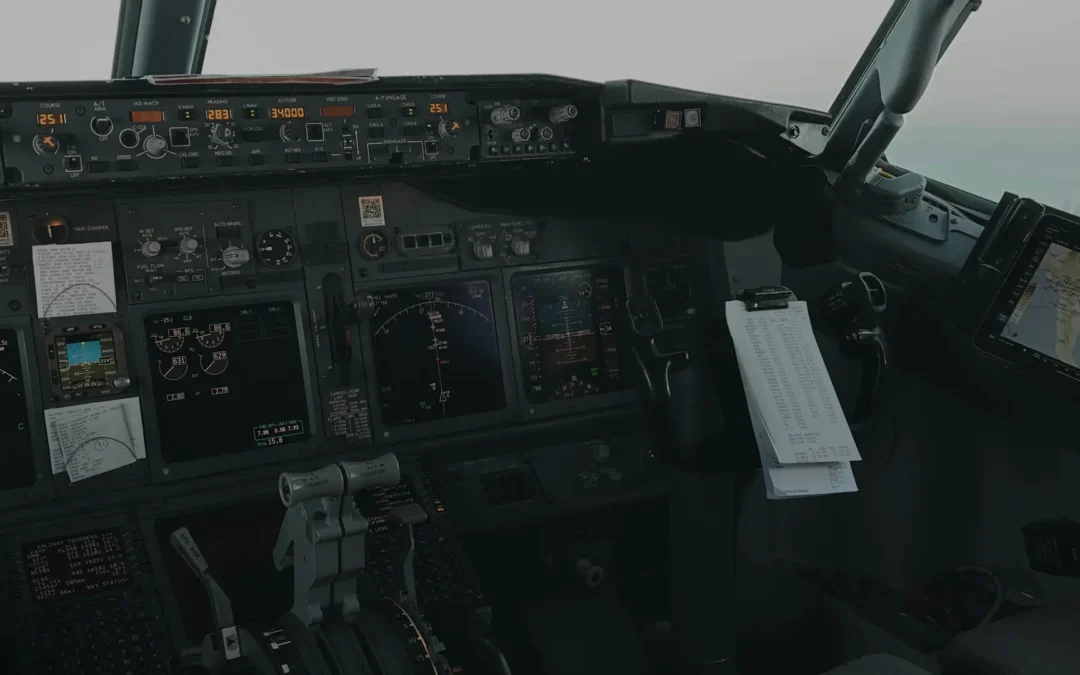
Moving from a propeller cockpit to a commercial jet demands more than a faster instrument scan. This transition requires a complete reset of your aerodynamic knowledge, engine management skills, and crew coordination habits. Jet transition training is the specialized bridge that prepares certified pilots for the aerodynamic, systems, and operational demands of flying transport-category jets like the Boeing 737.
Jet transition training focuses on mastering three distinct areas: high-altitude aerodynamics, swept-wing handling, and turbine engine performance. According to the FAA Airplane Flying Handbook, transitioning to jets requires pilots to adapt to fundamentally different systems and operational procedures. You must learn to manage higher airspeeds, narrower energy margins, and multi-crew cockpit dynamics that have no parallel in piston aircraft.
Ready to bridge your prop experience to the flight deck of a Boeing 737? Call (818) 489-1738 to schedule your jet transition training at Las Vegas Flight Academy.
Understanding how these changes affect your daily cockpit workflow is the first step toward a successful airline career. We begin with the fundamentals of what jet transition training covers and why it matters for your professional roadmap.
What Is Jet Transition Training?
Jet transition training is a specialized course designed for pilots moving from piston or turboprop aircraft to high-performance jets. Most pilots accumulate their early flight hours in slower, low-altitude aircraft such as the Cessna 172, Piper Seminole, or King Air turboprops. These aircraft operate in a significantly different aerodynamic and systems environment compared to transport-category jets. According to the FAA Airplane Flying Handbook, this training addresses new systems, procedures, and flight characteristics specific to turbine-powered aircraft. It is the structured entry point for pilots pursuing an airline career.
The course bridges the operational gap between light general aviation aircraft and high-performance jets. Unlike primary flight training, jet transition focuses on professional-level knowledge: swept-wing aerodynamics, turbine engine theory, high-altitude flight characteristics, and multi-crew coordination. These concepts are not covered in private or commercial pilot training and require dedicated study.
A Bridge to Professional Flight Operations
Jet transition training differs fundamentally from initial flight training. It targets the specific knowledge areas required for jet operations. Pilots must complete ATP-CTP certification training before qualifying for an airline transport pilot certificate. This transition course prepares pilots for that milestone by covering high-altitude aerodynamics where air density decreases significantly. Swept-wing handling characteristics that change stall behavior, and jet engine performance parameters. Mastering these elements is essential before stepping into a Level D simulator for type rating training.
The training also addresses how turbine engines differ from reciprocating powerplants. Jet engines produce greater thrust but have longer spool-up times, requiring pilots to plan power changes well in advance. This represents a significant cognitive shift from the instant throttle response of a piston engine. Understanding these spool-up cycles is central to staying ahead of the aircraft. Classroom instruction and simulator sessions build these habits before a pilot ever enters a real jet.
Training to Airline Operating Standards
The typical candidate holds a commercial pilot certificate with instrument rating and substantial flight time, the majority in propeller-driven aircraft. Jet transition training addresses the knowledge gap between that experience and the demands of a commercial jet flight deck. The curriculum includes extensive ground school covering complex aircraft systems: bleed air, pressurization, advanced flight management computers, and automated flight guidance systems. It also introduces multi-crew operations, as nearly all transport-category jets require two pilots.
By course completion, pilots are prepared to enter type rating training with a solid foundation in jet-specific knowledge. This path aligns with the FAA type rating requirements for aircraft such as the Boeing 737 and positions pilots for success in airline training programs.
Key Aerodynamic Differences Between Propeller Aircraft and Jets
Jet transition training devotes significant time to aerodynamic differences that directly affect handling and safety. These differences span three categories: wing design, engine effects on lift, and energy management at altitude.
| Aspect | Piston/Turboprop | Jet Aircraft |
|---|---|---|
| Wing design | Straight wings (typical) | Swept wings for high-speed efficiency |
| Stall behavior | Root stalls first; clear buffet warning | Tip stalls possible; less natural aerodynamic warning |
| Propeller slipstream | Provides additional lift at low speed with power application | No slipstream effect; power does not generate instantaneous lift |
| Power-on vs power-off stall speed | Significant difference (lower with power applied) | Minimal difference |
| Engine drag at idle | High (propeller windmilling acts as aerodynamic brake) | Low (clean airframe requires speed brakes or spoilers) |
| High-altitude speed margin | Wide margin between stall and Mach buffet | Narrow margin (coffin corner) at cruising altitudes |
| Engine response | Near-instant throttle response | Spool-up delay requires anticipatory power management |
These aerodynamic differences require pilots to develop new scan patterns and energy management strategies. What works instinctively in a piston aircraft can be dangerous in a swept-wing jet.

Swept-Wing Behavior and Stall Characteristics
Swept wings allow jets to cruise efficiently at high subsonic speeds by delaying the onset of Mach-induced drag. However, this design introduces handling qualities that differ substantially from straight-wing aircraft at low speeds. A swept-wing airplane may not provide the same aerodynamic stall warning as a straight-wing trainer. The natural buffet that precedes a stall on a straight wing is less pronounced on many swept-wing designs. Pilots must recognize these differences through dedicated 737 differences training guide programs.
The stall progression on a swept wing is a critical subject in jet transition training. On a straight wing, the stall typically initiates at the root, producing airflow separation that shifts the lift center and provides a nose-down pitching moment. On many swept wings, stall onset occurs near the tips first, shifting the lift vector forward and inducing a nose-up pitch. This can lead to a deep stall condition from which recovery is difficult without specific procedures.
The Slipstream Effect and Low-Speed Handling
Propeller aircraft benefit from slipstream airflow over the wings and tail. When a prop pilot adds power, accelerated air from the propeller increases lift almost immediately, independent of airspeed. Jets lack this effect entirely. A jet engine produces thrust by accelerating a mass of air rearward, but it does not direct that airflow over the wings. Consequently, stall speeds in a jet remain relatively constant regardless of power setting. Pilots transitioning from propeller aircraft must learn to manage approach speeds and landing energy without relying on propeller-induced lift augmentation.
Energy Management at High Altitude
High-altitude jet operations present unique energy state challenges. At cruising altitudes above 30,000 feet, the margin between the low-speed stall buffet and the high-speed Mach buffet narrows considerably. This operating environment, often called the coffin corner, demands precise airspeed control. A deviation of just a few knots can trigger aerodynamic stall or overspeed conditions. Bank angle restrictions become more restrictive because load factor increases stall speed.
Jets also feature much lower drag characteristics than propeller aircraft at idle power. A windmilling propeller creates significant parasitic drag that slows the airplane rapidly when power is reduced. In a jet, retarding the throttles to idle produces minimal deceleration. Pilots must plan descent profiles earlier and use speed brakes to manage energy. This shift in energy management philosophy is a cornerstone of FAA-recommended jet flight training.
Jet Engine Systems and Performance Characteristics
Turbofan engines operate on the Brayton cycle: intake, compression, combustion, expansion, and exhaust. Unlike a piston engine with discrete power strokes, a jet engine produces continuous thrust through a smooth, high-velocity airflow. During jet transition training, pilots learn how this continuous-flow design generates thrust efficiently at high altitude, where piston engine performance degrades significantly.
Spool-Up Delay and Power Management
The most immediate operational difference for prop pilots is the spool-up delay inherent to turbine engines. A piston engine responds to throttle movement within a fraction of a second. A turbofan engine requires several seconds to accelerate from idle to full power as the compressor and turbine spool up. This lag has major implications for go-around procedures, missed approaches, and low-altitude power recovery. Pilots must anticipate power requirements seconds before they are needed, a skill that requires deliberate practice to develop. FAA guidance on jet engine performance management emphasizes this anticipatory mindset.
Foreign Object Damage and Ground Safety
Jet engines present ground safety hazards that differ from propeller aircraft. A running turbofan inlet can ingest loose objects, debris, or even personnel, causing catastrophic engine failure. Foreign object damage (FOD) is a serious operational risk around jet aircraft. The exhaust blast also poses dangers: high-velocity, high-temperature exhaust can damage ground equipment, vehicles, or nearby aircraft. Transition training covers these ground safety protocols, including proper marshalling signals, taxi procedures, and FOD prevention. These topics are covered in preparation for 737 type rating programs.
Engine Start Procedures and Hot Starts
Starting a turbine engine follows a strict sequence: introducing airflow through the starter, engaging the igniters, and introducing fuel at the correct N2 RPM. Once combustion is established, the engine is self-sustaining as long as fuel flow continues. Pilots must monitor exhaust gas temperature (EGT) closely during the start sequence. A hot start occurs when EGT exceeds limits, which can cause immediate turbine damage. These procedures are distinct from piston engine starting and require dedicated training in a simulator environment.
From Single-Pilot to Multi-Crew Operations
Transitioning from single-pilot to multi-crew operations represents one of the most significant professional shifts in a pilot’s career. Certified airline pilots operate with two crew members who share flying and monitoring responsibilities according to Standard Operating Procedures.
- Learn the PF/PM model. The Pilot Flying controls the aircraft trajectory while the Pilot Monitoring handles radios, checklists, and cross-verification. Both roles carry equal authority for flight safety.
- Adopt standard callouts. Standardized phraseology removes ambiguity during critical phases of flight. Both pilots maintain the same mental model of the aircraft state through disciplined callouts.
- Practice CRM principles. Crew Resource Management encompasses communication, decision-making, and workload distribution among team members. It is a core competency assessed during every airline simulator checkride.
- Build inter-cockpit trust. You are no longer the sole decision-maker. Learn when to assert and when to support. This balanced communication flow prevents errors from escalating.
- Follow SOPs without deviation. Standard Operating Procedures allow any two qualified pilots to operate the same aircraft type safely, regardless of prior familiarity. This consistency is the hallmark of professional jet operations.
These crew concepts are integral to jet transition and pilot development programs. According to the FAA, multi-crew training is now a required element of professional pilot certification.
Crew Resource Management in Practice
CRM transforms how pilots interact with each other, with automation, and with the operational environment. It emphasizes using all available resources: the other pilot, automation systems, flight dispatchers, and air traffic control. In a multi-crew jet cockpit, effective CRM distinguishes professional crews from amateurs. Pilots learn to differentiate minor anomalies from genuine emergencies, to speak up when they identify a threat, and to listen actively when their partner raises a concern. This two-way information flow prevents the chain of small errors that can lead to significant incidents.
Pilot Flying and Pilot Monitoring Roles
In a two-crew operation, the PF controls the aircraft flight path and power settings. The PM handles communications, completes checklists, and monitors the PF actions for errors. These roles are clearly defined at the start of each leg and can be transferred between pilots. Transition training builds proficiency in performing either role and in managing the handover smoothly during critical phases such as approaches or go-arounds.
Standard Operating Procedures
In single-pilot general aviation, pilots often develop personal techniques and informal workflows. Jet operations demand strict adherence to manufacturer-developed SOPs covering every phase of flight from cockpit setup to engine shutdown. SOPs ensure that any two pilots can operate together safely, even if they have never met. This standardization reduces cognitive load, allowing crews to focus on managing threats and errors rather than wondering what the other pilot intends to do next.
Why Level D Simulation Is Critical for Jet Transition
The transition from piston aircraft to high-performance jets requires practice that cannot be safely conducted in a real aircraft. Level D flight simulators provide the bridge, offering full-motion, full-visual training environments that replicate the aircraft with extraordinary fidelity.
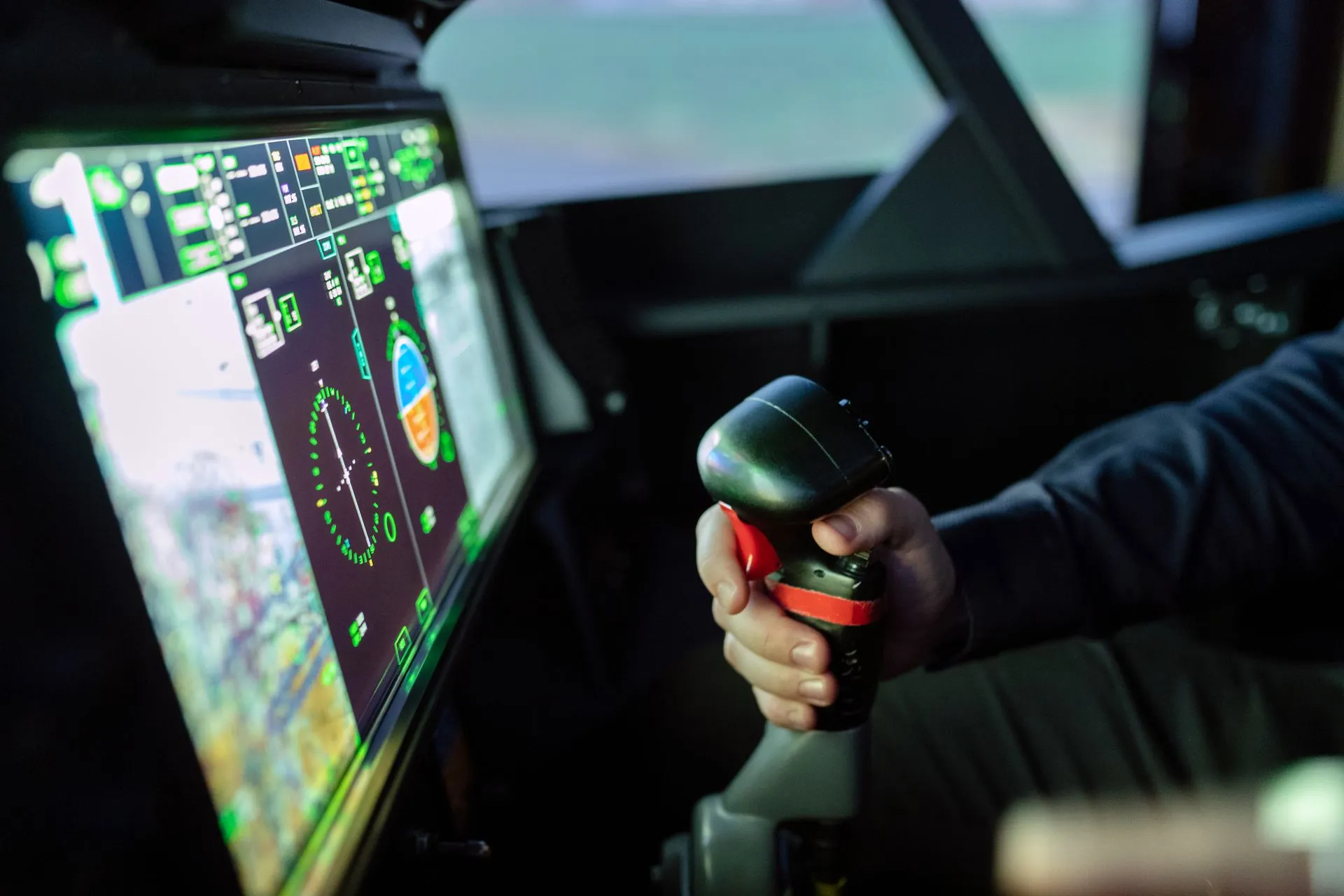
The Highest Standard of Simulation Fidelity
Level D is the FAA highest qualification for flight simulation training devices. These systems use six-degree-of-freedom motion platforms and high-resolution visual systems with a 200-degree horizontal field of view to create an immersive training environment. At Las Vegas Flight Academy, two Boeing 737-800 Level D simulators with FAA IDs 1168 and 2104 support zero flight time training. Meaning pilots can satisfy certification requirements without ever operating the actual aircraft. This approach is safer, more cost-effective, and allows concentrated practice of maneuvers that would be impractical or hazardous in a real airplane. The simulators support Boeing 737 type rating training and jet transition courses.
Safe Exposure to High-Risk Scenarios
Jet transition training must address rare but critical emergency situations: full aerodynamic stalls, severe icing encounters, engine failures at high altitude, and windshear recovery. Practicing these events in a real jet is prohibitively expensive and operationally risky. Level D simulators excel at providing safe, repeatable exposure to these scenarios. Pilots can practice upset recovery techniques until responses become instinctive. Weather conditions can be dialed in on demand: Category IIIa instrument approaches in zero visibility, crosswinds at max demonstrated values, and microburst encounters. This control over the training environment ensures consistent learning outcomes regardless of weather conditions at the physical training location.
Systems Integration Practice
Modern jets integrate multiple complex systems: flight management computers, auto-throttle, flight directors, and electronic checklist systems. Pilots must learn to manage these systems while maintaining situational awareness of aircraft state and position. Level D simulators replicate these systems with sufficient fidelity that skills transfer directly to the aircraft. The Boeing 737-800 simulators at LVFA allow pilots to practice engine starts, system failures, and abnormal checklist procedures in a realistic but forgiving environment.
Jet Transition Training at Las Vegas Flight Academy: The Boeing 737 Advantage
Las Vegas Flight Academy (LVFA) provides Boeing 737-specific jet transition training at a dedicated Part 142 facility. As a West Coast ATP-CTP certification training provider, LVFA offers a direct path from propeller experience to jet qualification. The training curriculum is built around the Boeing 737-800, the world most widely operated narrow-body airliner.
Experienced Airline and Military Instructors
Training quality depends directly on instructor expertise. LVFA instructor team averages over 20,000 flight hours. Many are former airline captains and military aviators who bring real-world operational experience to the classroom. This means students learn not just regulatory requirements but practical crew coordination techniques, airline interview preparation, and operational decision-making. Instructors understand the specific challenges of jet transition training and tailor instruction to each pilot experience level. The small-group format provides personalized attention that large training centers cannot match.
Advanced Level D Simulation Technology
LVFA operates two Boeing 737-800 Level D simulators, FAA IDs 1168 and 2104. These full-motion, full-visual devices replicate the 737NG cockpit with complete systems fidelity. Students practice the full spectrum of flight operations: normal procedures, abnormal checklists, and emergency scenarios. The training conducted in these simulators meets all FAA requirements for type rating qualification and transition training.
The West Coast Training Advantage
Las Vegas is a strategic training hub for pilots across the western United States and Pacific Rim countries. LVFA Part 142 certification means the school operates under FAA-approved training programs that airlines recognize and trust. Pilots can complete jet transition training at a dedicated facility without traveling across the country, saving time and reducing logistical complexity.
Ready to make the jump from prop to jet? Call (818) 489-1738 now to speak with an enrollment advisor about your jet transition training at Las Vegas Flight Academy.
Frequently Asked Questions
Do I need jet transition training for my airline application?
Most airlines do not require a specific jet transition course before applying, but completing one strengthens your resume. It demonstrates readiness for the pace of airline training and bridges the knowledge gap between light aircraft and transport-category jets.
How long does jet transition training take?
Programs typically run three to five days of full-time training, combining ground school with simulator sessions. At LVFA, the curriculum covers jet aerodynamics, engine systems, and multi-crew operations within this timeframe.
What is the difference between jet transition training and a type rating?
Jet transition training covers the fundamental aerodynamic and operational differences between propeller aircraft and jets. A type rating is FAA certification to operate a specific aircraft model. Transition training is often completed before pursuing a type rating.
Can I use a Level D simulator for jet transition training?
Yes. Level D simulators provide the highest FAA qualification for training devices, supporting zero flight time training. Significant portions of jet qualification can be completed without a real aircraft.
How much does jet transition training cost?
Costs vary by school and curriculum scope. Contact Las Vegas Flight Academy directly for current pricing on jet transition training programs.