
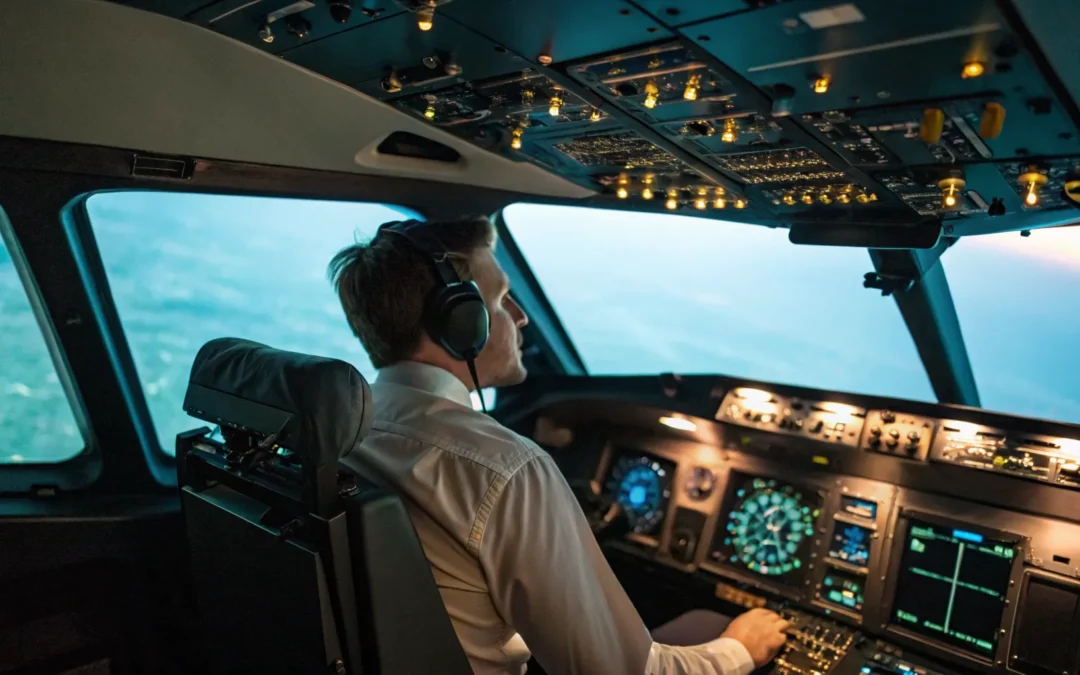
It’s the ultimate question for every serious flight sim enthusiast. After countless hours mastering complex procedures and navigating digital skies, you’ve probably wondered if you have what it takes. The realism of modern simulators is incredible, making the jump to a real cockpit feel closer than ever. But how much of that skill truly translates when real physics and real pressure are involved? Could you handle the controls of a real airliner during a simulated flight in a professional, full-motion simulator, let alone in the actual sky? This article explores the gap between your home setup and the flight deck, breaking down the real-world skills, sensory experiences, and mental fortitude required to turn your passion into a profession.
Key Takeaways
- Master the basics with simulators: Use your home simulator to get a head start by learning procedures, navigation, and complex aircraft systems, which builds a fantastic base for professional training.
- Recognize a simulator’s limits: A desktop setup cannot teach you how to manage the physical sensations of flight, the intense mental pressure of real-world responsibility, or how to work within a flight crew.
- Bridge the gap with certified training: Professional programs like the ATP-CTP are the necessary next step, designed to convert your foundational knowledge into the real-world decision-making and hands-on skills required for an airline career.
Flight Sim vs. Real Airliner: What’s the Real Difference?
If you’ve spent hours mastering takeoffs and landings in a high-end flight simulator, you might wonder how different it really is from the real thing. Modern sims are incredibly realistic, helping you learn complex procedures and aircraft systems from the comfort of your home. They are a fantastic tool for building a foundational knowledge of aviation. However, the gap between a home setup and the flight deck of a Boeing 737 is wider than you might think. The experience of flying a real airliner involves a whole new level of physical sensation, mental workload, and real-world responsibility that a computer simply can’t replicate. While a sim can teach you the “what,” it can’t fully prepare you for the “how” and “why” of being a professional pilot. Understanding these differences is the first step in turning your passion for simulation into a career in the sky.
The Feel of Real Flight
The most immediate difference you’ll notice in a real cockpit is the physical feedback. A real aircraft is a living, breathing machine that communicates through vibrations, sounds, and motion. You feel the rumble of the engines spooling up, the subtle bumps from turbulence, and the firm touchdown of the tires on the runway. These physical cues are vital for situational awareness, giving you an intuitive sense of the aircraft’s energy state and its interaction with the air. Even the most sophisticated full-motion simulators can’t perfectly mimic the G-forces of a steep turn or the precise feeling of the controls responding to your inputs. This tactile connection is something you can only develop through actual flight hours.
Sensory Overload in the Cockpit
Flying a real airliner is an exercise in managing an immense amount of information all at once. In a home simulator, you can often focus on one task at a time. In a real cockpit, you’re constantly juggling tasks: hand-flying the aircraft, communicating with air traffic control, monitoring dozens of instruments, navigating your route, and planning for the descent, all while working with your co-pilot. This environment can create a sensory overload that is difficult to prepare for without structured training. The ability to prioritize tasks, filter out distractions, and maintain a clear head under pressure is a core skill that separates a sim enthusiast from a professional aviator.
The Weight of Real-World Consequences
Perhaps the biggest difference is the psychological pressure. In a simulator, a mistake might mean restarting the scenario. In a real aircraft, the stakes are infinitely higher. The knowledge that you are responsible for the safety of your passengers, your crew, and a multi-million dollar aircraft adds a weight that simulators can’t reproduce. This pressure fundamentally changes how you make decisions. There is no pause button at 35,000 feet, and every choice has real-world consequences. This responsibility is a heavy burden, but learning to manage it is a critical part of becoming a competent and confident airline pilot. It’s a mental fortitude built through experience and rigorous professional training.
Aviation Rules You Can’t Ignore
In a simulator, you can often jump right into the action, bypassing the meticulous preparations that precede every real-world flight. In reality, flying is governed by a strict set of rules and procedures that you simply cannot ignore. Before the wheels ever leave the ground, pilots perform detailed pre-flight inspections, work through extensive checklists, and file official flight plans. Every phase of flight is conducted according to federal regulations designed to ensure safety. This procedural discipline is non-negotiable. As an FAA Part 142 certified training center, we emphasize this from day one, because following the rules isn’t just about compliance; it’s about creating a culture of safety.
Common Flight Simulator Misconceptions
Flight simulators are incredible tools. They let you practice complex procedures and explore the world from the captain’s seat, all from your desk. But it’s easy to blur the line between a realistic game and the reality of the flight deck. Believing your sim skills translate directly to the cockpit can lead to some common, and potentially risky, misconceptions. Let’s clear the air on a few of them.
“I Know the Procedures, So I Can Fly”
It’s a common thought: “I’ve memorized the checklists and can program the FMS, so I could handle the real thing.” While that procedural knowledge is a fantastic foundation, it’s only part of the picture. A home simulator, no matter how advanced, can’t replicate the intense, high-pressure environment of flying a real airliner. The physical feedback, the subtle aircraft movements, and the sheer mental load are different. Knowing the steps for landing is one thing; actually feeling the aircraft respond to your inputs with hundreds of lives on the line is another. This is where professional training, like an ATP CTP course, becomes critical to bridge that gap.
The Problem with False Confidence
Confidence is key in aviation, but false confidence can be a problem. Many dedicated sim enthusiasts might believe they could safely land an airliner in an emergency, but the reality is quite different. Home simulators don’t prepare you for the sensory and task overload that happens in a real cockpit during a high-stakes situation. Your heart is pounding, alarms might be blaring, and you’re trying to process information from multiple sources at once. This gap between simulated calm and real-world intensity is why real pilots train relentlessly. Our experienced instructors know that true confidence comes not just from knowledge, but from hands-on experience in a certified training environment.
Bad Habits Learned from Simulators
One of the biggest risks of self-guided simulator training is developing bad habits that can be difficult to unlearn. For example, it’s easy to become fixated on instruments and forget to look outside, a habit known as “head-down flying.” You might also learn incorrect techniques for using trim or rudder because a home setup doesn’t provide accurate physical feedback. These shortcuts might work in the sim, but they can be dangerous in a real aircraft. Professional training in a B737 Type Rating course is designed to instill correct procedures and muscle memory, ensuring your habits are built for the real flight deck, not just a desktop replica.
How Effective Are Sims for Real-World Training?
Flight simulators are incredible tools, and there’s no denying the fun of firing one up on your home computer. They can give you a fantastic head start on your aviation journey and help you practice complex concepts from the ground. But how well do those skills actually transfer to the cockpit of a real airliner? The answer is a bit more complex than a simple yes or no. The effectiveness of a simulator really depends on what you’re trying to learn and, just as importantly, the type of simulator you’re using. Think of it as the difference between reading a cookbook and actually cooking a meal; one prepares you for the other, but they are not the same experience.
While a home setup can teach you the basics of flight theory and procedures, it can’t replicate the physical sensations and high-stakes environment of actual flying. This is where professional training makes all the difference. By using advanced, FAA-certified simulators that are worlds apart from what you can buy in a store, flight academies create a highly realistic training environment. These are the tools that help turn a passionate enthusiast into a competent, confident pilot ready for the flight deck. Understanding the role of simulators is key to building a solid foundation for your career. Let’s break down what sims do well, where they have limitations, and how they fit into a professional pilot’s career path.
What Flight Sims Teach Effectively
Flight simulators are fantastic for building your “mental cockpit.” They are excellent for learning procedural knowledge without the pressure of being in the air. You can take your time to understand the layout of the instruments, what each gauge means, and how to follow a checklist from start to finish. This is the perfect environment to practice core concepts like navigation, flight theory, and radio communication routines. Running through emergency procedures in a sim builds muscle memory for the correct sequence of actions, so you can react calmly and correctly if a similar situation ever arises in a real aircraft.
Where Home Simulators Fall Short
The biggest limitation of a home simulator is that it can’t teach you how to feel the airplane. Real flying is a full-body, sensory experience. You feel the rumble of the tires on the runway, the subtle bumps of turbulence, and the physical feedback through the controls as the aircraft responds to your inputs. A desktop setup simply can’t replicate these kinesthetic sensations. This disconnect can also lead to developing bad habits, like relying too heavily on the instruments instead of looking outside the cockpit to maintain situational awareness, a critical skill for any pilot.
FAA-Certified Simulators vs. Home Setups
There is a massive difference between a home flight simulator and the full-motion, FAA-certified simulators used in professional training. The simulators used in an ATP-CTP course are designed to be incredibly realistic, mimicking the specific flight characteristics and cockpit environment of an aircraft like the Boeing 737. More importantly, only flight time in these certified devices can be logged toward your pilot certificates. A home setup is a great study aid, but an FAA-approved simulator is a required tool for professional licensure and type ratings, providing a level of realism that is essential for airline-level training.
Using Sims to Keep Your Skills Sharp
For licensed pilots, simulators are an indispensable tool for maintaining proficiency. Flying is a perishable skill, and regular practice is key. Simulators provide a safe and cost-effective way to keep your instrument flying skills sharp and practice complex procedures. They allow you to fly through challenging scenarios, like engine failures on takeoff or approaches in bad weather, which helps build confidence and keeps your emergency response skills ready. This is why recurrent training in a certified simulator is a standard practice for airline pilots throughout their careers, ensuring they are always prepared for any situation.
What Skills Do You Need to Fly an Airliner?
Transitioning from a flight simulator enthusiast to a professional airline pilot involves more than just logging hours in front of a screen. While sims are fantastic tools for learning procedures and basic controls, flying a real airliner requires a deep, integrated skill set that can only be developed through professional, structured training. It’s about combining technical knowledge with practical application and a specific mindset geared toward safety and precision.
Think of it this way: a sim can teach you the notes of a song, but a flight academy teaches you how to be a musician. You learn to feel the instrument, work with the orchestra, and perform flawlessly under the spotlight. The skills you need go far beyond memorizing checklists. They involve a comprehensive understanding of the machine, the environment, and yourself. Let’s look at the core competencies you’ll need to develop to sit in the right or left seat of a modern jet like the Boeing 737.
Master Complex Aircraft Systems
A modern airliner is a web of interconnected hydraulic, electrical, pneumatic, and computer systems. While a home simulator can help you learn procedures, it often simplifies how these systems interact. In a real aircraft, you need to understand the why behind every switch and action. What happens to the electrical system if a specific generator fails? How does that affect your hydraulic pumps and flight controls? Professional training, especially during a B737 Type Rating course, drills you on these complex interactions. You learn to diagnose problems and manage failures in a way that a simplified sim can’t replicate, preparing you for the pressures of real-world challenges.
Understand Advanced Aerodynamics
Flying a 150,000-pound aircraft is a full-body, sensory experience that a desktop setup can’t reproduce. Real pilots talk about feeling the aircraft through the “seat of their pants.” You need an intuitive grasp of advanced aerodynamics to understand how the jet will behave at different weights, altitudes, and speeds. Home simulators don’t prepare you for the “sensory overload” that can happen in a real cockpit, where physical sensations are critical data points. This feel for the aircraft is essential for smooth hand-flying and for recognizing when the plane isn’t responding as it should, a skill honed only through real flight hours and training in high-fidelity, full-motion simulators.
Navigate and Communicate with ATC
While flight sims are great for practicing basic radio calls, real-world Air Traffic Control is a different ballgame. In busy airspace, communication is rapid, precise, and relentless. You’re not just talking; you’re actively managing your aircraft’s energy, planning your descent, and coordinating with your fellow pilot, all while responding to ATC instructions. The ATP CTP course is specifically designed to bridge this gap, preparing you for the multi-tasking and high-level communication required in a professional airline environment. It’s about moving from practicing communication routines to performing them flawlessly as part of a larger operational picture.
Make Critical Decisions Under Pressure
One of the biggest skills that separates a professional pilot from a sim enthusiast is effective aeronautical decision-making (ADM). When something goes wrong at 35,000 feet, you don’t have a reset button. You have to rely on your training, knowledge, and judgment to make critical decisions under immense pressure. Real pilots emphasize that simulators can’t fully replicate the weight of these real-world factors. Certified training programs use scenario-based exercises to build your decision-making muscles, forcing you to assess complex situations, manage risk, and choose the safest course of action when the outcome truly matters.
Work as a Team with Crew Resource Management (CRM)
Flying an airliner is a team sport. You are never flying alone. Crew Resource Management (CRM) is the bedrock of modern aviation safety, focusing on how the flight crew communicates and works together. This includes everything from managing workloads and cross-checking actions to speaking up if you see a potential error. Home simulators are typically a single-player experience, so this crucial skill is completely absent. A Part 142 certified training center puts a heavy emphasis on CRM, teaching you to function as a cohesive unit in the cockpit. This collaborative skill is non-negotiable for a career with any airline.
Could a Sim Enthusiast Really Land an Airliner?
It’s the ultimate question for every serious flight simulator enthusiast: if the worst happened, could you step into a real cockpit and safely land a 737? The hours you’ve spent mastering procedures, navigating complex airspace, and handling simulated emergencies feel like real experience. While that dedication is a fantastic foundation, the jump from a desktop setup to a real-world flight deck is wider than you might think.
The truth is, landing an airliner involves much more than just procedural knowledge. It requires a deep well of situational awareness, muscle memory, and the ability to perform under immense pressure, factors that home simulators can’t fully replicate. Let’s break down what sims get right and where the critical gaps lie between a passionate hobbyist and a certified pilot. Understanding these differences is the first step in turning your simulator passion into a professional career.
What Sims Get Right About Emergencies
Modern flight simulators are incredibly detailed, especially when it comes to procedures. Many sim pilots correctly believe they could, with a lot of help from air traffic control, set up an autoland sequence. In a state-of-the-art aircraft, knowing the correct buttons to push and the right sequence to follow is a huge part of the battle. Sims are excellent for memorizing these checklists and workflows. This procedural practice is a core component of how real pilots train, forming the basis for handling both normal operations and emergencies in a controlled environment before they ever step into the real aircraft.
The Gap Between Knowing and Doing
Knowing the steps and executing them under pressure are two different things. Real-world flying can trigger sensory and task overload, a feeling that home simulators simply don’t prepare you for. Imagine alarms blaring, the aircraft vibrating, and an ATC controller giving you instructions, all while you’re trying to manage the flight path. This is where the gap between knowing and doing becomes a chasm. Professional training, like a B737 Type Rating course, is designed to bridge this gap by putting you in high-fidelity, certified simulators that replicate this intense environment and teach you to manage the immense cognitive load of real flight.
Why You Can’t Simulate Situational Awareness
Situational awareness is the mental picture a pilot maintains of the aircraft’s position, condition, and environment. While a sim can show you instruments, it can’t fully teach you how to build and maintain this picture. Real-world flying requires you to constantly scan for other aircraft, interpret weather patterns, communicate with ATC, and anticipate what might happen next. Sims often simplify these variables. They don’t prepare you for the complex, dynamic decision-making needed during a real flight, where you are responsible for pre-flight checks, passenger safety, and handling unexpected challenges that aren’t programmed into a scenario.
The Importance of Muscle Memory and Flight Hours
One of the biggest differences between a sim and a real cockpit is the physical feeling of flight. Pilots develop muscle memory and a “seat-of-the-pants” feel for how the aircraft responds to control inputs and atmospheric changes. This tactile feedback is completely absent in a home simulator. Without it, you can easily develop bad habits, like over-relying on instruments instead of looking outside or using the rudder incorrectly. There is no substitute for the flight hours required to build this intuitive connection with an aircraft, which is a cornerstone of any FAA-approved training program.
What Real Pilots Say About the Sim-to-Cockpit Jump
It’s one thing to talk theory, but what do pilots who have made the jump from simulator to a real airliner cockpit actually say? The consensus is clear: while home simulators are an incredible tool, they are just one piece of a much larger puzzle. Experienced aviators will tell you that the gap between a desktop setup and the flight deck is significant, filled with physical sensations, mental pressures, and responsibilities that simply can’t be replicated at home. Let’s break down what skills transfer and which ones you can only gain through professional training and real-world experience.
Skills That Transfer from Sim to Cockpit
Pilots agree that flight simulators are excellent for building a strong foundation. They help you learn and practice essential procedures, from startup sequences to programming the flight management computer. You can get comfortable with the layout of the cockpit and what all the gauges and controls do. Simulators are also fantastic for understanding core concepts like flight theory and navigation. This procedural knowledge is a huge head start and is a key reason why professional training, like an ATP CTP course, integrates certified simulators. They provide a safe, controlled environment to master the “what” and “how” before you ever leave the ground.
Skills That Don’t Make the Jump
The most significant thing missing from a home simulator is the physical feeling of flying. You don’t feel the subtle feedback through the controls, the rumble of the tires on the runway, or the G-forces in a steep turn. This lack of physical sensation can lead to bad habits, like relying too heavily on instruments instead of looking outside. Pilots call this “flying the numbers” instead of flying the plane. Real-world flying requires a connection to the aircraft that you develop by feel, something a desktop joystick and rudder pedals can’t provide. This is a skill you build with hours in the air and in professional, full-motion simulators.
The Mental and Physical Demands of Real Flight
Flying a real airliner involves a level of pressure that home simulators don’t prepare you for. Pilots often talk about the “sensory overload” of a busy cockpit, with radio calls, alarms, and changing weather all demanding your attention at once. The stakes are real, and the weight of that responsibility adds a mental load that can’t be simulated. Even pilots with multiple licenses admit that landing an airliner manually is incredibly challenging. This is why a B737 Type Rating focuses so intensely on decision-making under pressure and managing high-workload situations, preparing you for the true demands of the job.
How Certified Training Bridges the Sim-to-Sky Gap
So, how does a passionate simulator enthusiast make the leap to the professional flight deck? The answer lies in certified, structured training. This is the formal pathway that takes the foundational knowledge you’ve built and refines it into the real-world skills required to safely command an airliner. It’s not just about logging more hours; it’s about learning within a system designed to produce competent, confident, and qualified pilots. This professional training environment is the essential bridge that closes the gap between a high-end simulator and the actual cockpit.
Why FAA Part 142 Training Is Essential
When you see a flight school is FAA Part 142 certified, it means their training programs are held to the highest standards. This isn’t just a suggestion; it’s a rigorous approval process that ensures the curriculum, instructors, and simulators meet the FAA’s strict requirements for airline-level training. Part 142 training centers are specifically designed for commercial pilots who have the experience needed to get their ATP certificate or a new type rating. This certification guarantees a standardized, high-quality education that you can’t get from unstructured practice. It’s the official seal of approval that confirms a training center is equipped to prepare you for a career with the airlines.
ATP-CTP: Your Path from Simulator to Cockpit
Before you can even take the Airline Transport Pilot written exam, you must complete the Airline Transport Pilot Certification Training Program (ATP-CTP). This program is the first official step in transitioning your skills to a multi-crew airline environment. The ATP-CTP course is designed to prepare you for the real-world challenges you’ll face, both in the air and on the ground. It combines academic instruction with time in a full-flight simulator, focusing on aerodynamics, automation, and operating in a complex airspace system. This is where you move beyond basic stick-and-rudder skills and begin to think, act, and communicate like a professional airline pilot.
What to Expect in a B737 Type Rating Course
Earning a type rating is what legally qualifies you to act as a pilot for a specific type of large aircraft, like the Boeing 737. A B737 type rating course is an intensive program that immerses you in the aircraft’s specific systems and procedures. You’ll spend significant time in both ground school and a Level D full-flight simulator, which is the most realistic simulator available. The training covers everything from the plane’s complex systems and performance characteristics to emergency procedures and crew resource management. This is where all your training comes together, and you prove you can safely and proficiently operate the aircraft in any situation.
Turn Your Simulator Passion into a Pilot Career
If you’ve spent countless hours mastering takeoffs, landings, and emergency procedures in a home flight simulator, you’ve already built a strong foundation of aviation knowledge. That passion for flying is the perfect launchpad for a professional pilot career. The dedication it takes to learn complex aircraft systems and flight patterns on your own shows you have the drive to succeed in the real cockpit. Many of the concepts you’ve learned are directly applicable to what professional pilots do every day.
Home simulators are fantastic tools for getting a handle on the fundamentals. They can help you learn important aviation ideas like flight theory, navigation, and instrument readouts. You can also practice procedures and develop the smooth, precise control inputs that are essential for flying a real aircraft. Mastering these elements in a sim gives you a significant head start before you ever step into a professional training environment. It means you’ll arrive with a solid understanding of the “what” and “why” behind many of the tasks you’ll be asked to perform.
However, it’s crucial to understand what a home simulator can’t teach you. While you can simulate emergencies, you can’t replicate the intense, high-pressure feeling of managing a real one. Simulators lack the physical feedback of a true flight deck; you don’t feel the subtle vibrations of the airframe, the push of acceleration, or the weight of the aircraft responding to your commands. This sensory input is a huge part of a pilot’s situational awareness. The gap between knowing the steps and performing them under real-world stress is where professional training becomes essential.
This is exactly where a certified training program comes in. It’s designed to take your foundational knowledge and build upon it with hands-on experience in an environment that mirrors airline operations. At an FAA Part 142 certified center, you’ll learn to apply your procedural knowledge under the guidance of experienced instructors who will challenge you to think and act like a professional pilot. If you’re ready to make the leap from enthusiast to professional, the Airline Transport Pilot Certification Training Program (ATP-CTP) is your official entry point. Our ATP-CTP course is specifically designed to bridge the gap between theory and practice, preparing you for a successful career in the airlines.
Related Articles
Frequently Asked Questions
Is spending time on my home flight simulator a waste if I want to be a professional pilot? Absolutely not. The time you invest in a home simulator is incredibly valuable for building a strong foundation. You can learn procedures, get familiar with cockpit layouts, and understand complex aviation concepts without the pressure of being in the air. Think of it as giving yourself a significant head start. When you enter a professional training program, you’ll already have a solid grasp of the fundamentals, which allows you to focus on mastering the more advanced skills.
What’s the single biggest skill I can’t learn from a home simulator? The most critical skill that a home simulator can’t teach is how to manage the immense mental and physical load of real-world flight. This includes processing the physical sensations of the aircraft, like turbulence or the feeling of deceleration, while also handling the psychological pressure of knowing you are responsible for the aircraft and everyone on board. There is no pause button in a real cockpit, and learning to make clear, critical decisions under that kind of stress is something you can only develop through structured, professional training.
Can I log the hours I fly on my home simulator toward my pilot certificates? No, you cannot log flight time from a home simulator for any FAA certificate or rating. The FAA has very strict standards for what counts as loggable time. Only flight hours in an actual aircraft or in an FAA-certified flight simulator (like the ones used in our ATP-CTP and Type Rating courses) can be logged. While your home sim is a fantastic study aid, it is not considered a certified training device for the purpose of licensure.
I’m a serious sim enthusiast with the required flight experience. What’s the first official step to becoming an airline pilot? Your first official step is to complete the Airline Transport Pilot Certification Training Program, or ATP-CTP. This is a mandatory course required by the FAA before you can even take the ATP written exam. The program is specifically designed to bridge the gap between your existing experience and the demands of a multi-crew airline environment, focusing on advanced aerodynamics, automation, and crew resource management.
My home simulator is very advanced. Why do I still need to train in a certified simulator at a flight school? An advanced home setup is great, but it’s fundamentally different from an FAA-certified, full-flight simulator. A certified sim is an exact replica of a specific aircraft’s cockpit and is programmed with a flight model that has been rigorously tested and approved to match the real aircraft’s performance. More importantly, training in a certified simulator is part of a structured curriculum led by experienced instructors who will push you, test your decision-making, and teach you to work as part of a crew, which is something you simply can’t replicate on your own.