
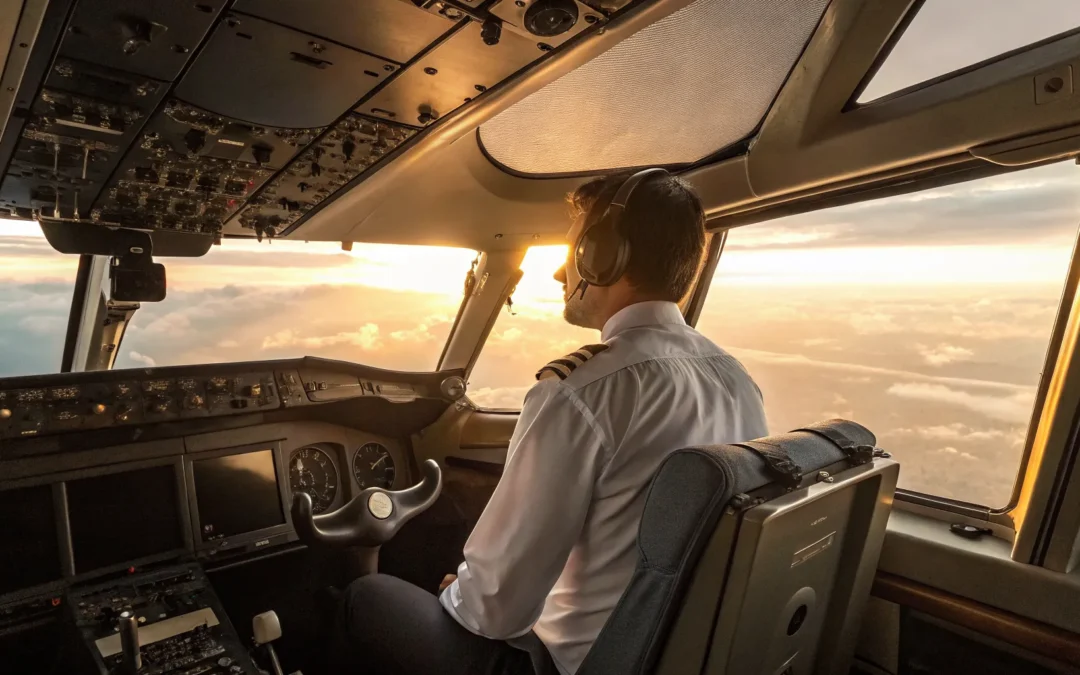
You’ve probably looked out the window from seat 22B, watching the wing cut through the clouds, and wondered what it’s like in the cockpit. The path to the captain’s seat is long, requiring years of training and thousands of flight hours. But what if you could get a taste of it right now? Can an everyday person experience the thrill of flying a commercial aircraft? The answer is a definitive yes, and you don’t need a pilot’s license to do it. At Las Vegas Flight Academy, you can step into a real Boeing 737 full-motion simulator, the same kind professional pilots use for their training. It’s your chance to sit in the captain’s seat, take the controls, and feel the power of a modern jetliner.
Key Takeaways
- Your pilot career is built step by step: The journey from passenger to pilot is a structured process that involves earning a series of licenses, building flight hours, and completing advanced airline-specific training like the ATP-CTP.
- Experience the cockpit before you commit: You don’t need a license to get a feel for flying; book a discovery flight for a real-world lesson or try a full-motion simulator to experience the complexities of a commercial jet.
- Simulators build knowledge while flying builds instinct: Modern training uses simulators to safely master procedures and emergencies, which is essential for certification, but real-world “stick time” is irreplaceable for developing the true feel of flying.
What Does It Take to Fly a Commercial Jet?
So, you’re picturing yourself in the captain’s seat, guiding a jet through the clouds. It’s an incredible goal, and it’s more achievable than you might think, but it does require dedication and a clear plan. Flying a commercial jet isn’t something you can just pick up; it’s a profession built on a foundation of specific training, experience, and certifications. Let’s walk through exactly what that path looks like, step by step.
The Basic Requirements: Age and Medical Fitness
Before you even think about logging flight hours, everyone starts at the same place: meeting the basic eligibility criteria. To begin your commercial pilot journey, you need to be at least 18 years old. You’ll also need to pass a medical exam to get a second-class medical certificate from an FAA-authorized examiner. This isn’t just a routine check-up; it ensures you have the physical and mental fitness required for the high-stakes environment of the cockpit. These foundational requirements are non-negotiable and set the standard for safety across the entire aviation industry, which is a core part of our mission at Las Vegas Flight Academy.
Earning Your Licenses and Flight Hours
Once you’ve met the basic requirements, your real training begins. The journey to the airline cockpit is a ladder of certifications. You’ll start by earning your Private Pilot License (PPL), which allows you to fly solo and with passengers. Next, you’ll add an Instrument Rating (IR) to fly in various weather conditions. After that, you’ll work toward your Commercial Pilot License (CPL), which lets you get paid to fly. Each of these licenses requires passing written exams and practical flight tests, all while you steadily build your flight hours. It’s a structured process designed to build your skills and confidence layer by layer, ensuring you’re prepared for each new challenge.
Why the ATP Certificate Is the Final Step
The final hurdle before you can command a commercial airliner is earning the Airline Transport Pilot (ATP) certificate. This is the highest level of pilot certification in the United States. To even qualify, you typically need at least 1,500 hours of flight time. Before you can take the ATP written exam, you must complete the ATP Certification Training Program (ATP-CTP). This essential course bridges the gap between your commercial pilot experience and the complexities of airline operations. Earning your ATP certificate proves you have the expertise, judgment, and professionalism to be responsible for an aircraft and all its passengers, making it the true key to the flight deck.
How Can You Experience Flying Without a License?
The path to the captain’s seat of a commercial jet is long, but your journey into the world of aviation doesn’t have to wait until you have your Airline Transport Pilot certificate. If you’ve ever wondered what it feels like to command an aircraft, there are incredible ways to get a taste of the experience right now, no license required. These opportunities are more than just fun, they’re a fantastic way to confirm your passion for flying before you commit to a full training program.
Getting a feel for the controls can help you decide if a career in aviation is the right fit for you. You can choose between taking the controls of a small aircraft for a real-world lesson or stepping into a hyper-realistic simulator to experience the complexities of a commercial airliner. Each option gives you a unique perspective on what it means to be a pilot. A discovery flight offers the raw, visceral feeling of flight, while a session in a professional simulator provides a window into the high-tech environment of an airline cockpit. Both are invaluable first steps that can ignite your ambition and set you on the right course.
Get in the Air: Discovery Flights
A discovery flight is exactly what it sounds like: your first chance to discover the joy of flying from the pilot’s seat. It’s a short, introductory flight lesson with a Certified Flight Instructor in a small, single-engine plane. This isn’t a passive sightseeing tour. You’ll sit in the cockpit, learn the basics of the flight controls, and, under the careful guidance of your instructor, you will actually fly the airplane. You’ll feel the aircraft respond to your inputs as you practice simple maneuvers like turns, climbs, and descents. It’s the most direct and hands-on way to experience the fundamentals of aviation and a perfect first step for anyone considering a Private Pilot License.
Step into a Boeing 737 Simulator in Las Vegas
While a discovery flight gives you a feel for a small plane, what if your dream is to fly a commercial jet? You can get remarkably close to the real thing by booking time in a full-motion flight simulator. Here at Las Vegas Flight Academy, you can book a Boeing 737 flight simulator experience and take the controls of one of the world’s most popular airliners. With an experienced instructor by your side, you’ll learn how to handle the aircraft during takeoff, cruise, and landing. This isn’t a video game, it’s a session in the same level of simulator that professional pilots use for their training, giving you an authentic look into the life of an airline pilot.
From VR Goggles to Full-Motion Simulators
The term “flight simulator” covers a wide range of technology, from home computer setups with VR goggles to the sophisticated machines used by airlines. While home simulators are great for practicing procedures, they can’t replicate the physical sensations of flight. A professional, full-motion simulator is different. It uses a detailed replica of a real cockpit mounted on a powerful hydraulic system that moves and tilts to mimic the forces of acceleration, turbulence, and turns. Combined with high-resolution displays that create a lifelike view from the cockpit, these advanced simulators provide an incredibly immersive experience that feels just like flying the real aircraft.
How Realistic Are Flight Simulators?
Flight simulators are much more than just sophisticated video games. They are a critical part of modern aviation training, allowing pilots to practice complex scenarios in a completely safe environment. But if you’re wondering just how close they come to the real thing, it’s a fair question. The answer depends on the simulator and what you’re trying to learn. Let’s look at where simulators shine and where real-world flying experience is still irreplaceable.
What Simulators Get Right (and What They Can’t)
Simulators are incredible tools for building procedural knowledge. Think of them as a high-tech classroom where you can master flight instruments, navigation, and emergency checklists without burning a single drop of fuel. They are excellent for practicing situations you hope to never face in a real aircraft, like engine failures or system malfunctions. However, a simulator can’t fully replicate the physical feedback of piloting a plane. That “seat-of-the-pants” feeling, the subtle shifts from changing weather, and the full sensory experience of real-world situational awareness are things you can only get from actual flight. They build your knowledge, but stick time builds your instincts.
Sim Time vs. Stick Time: What’s the Difference?
“Sim time” is your hours in a simulator, while “stick time” is your time physically flying an aircraft. Both are essential. Simulators provide a safe, controlled setting where you can learn and practice, which is fundamental to the high safety standards of modern aviation. In fact, today’s Full Flight Simulators are so advanced that they allow pilots to earn an entire aircraft type rating without ever flying the real plane. This process, known as Zero-Flight-Time Training (ZFTT), is approved for specific aircraft and is a core part of advanced programs like the Airline Transport Pilot Certification Training Program. It’s a testament to how valuable and realistic this training has become.
What Does It Feel Like to Fly a Commercial Plane?
Ever looked out the window from seat 15A and wondered what it’s really like up front? Flying a commercial jet is a unique blend of incredible thrill and profound responsibility. It’s a job that demands constant focus, precision, and a calm head, but the rewards are unlike anything else. Many pilots describe it as having the best office view in the world, combined with the satisfaction of mastering a complex and powerful machine.
It’s far from the “set it and forget it” job some people imagine. From pre-flight checks to managing complex airspace, every moment requires active engagement. You’re not just a passenger with a better seat; you are the commander of a multi-million dollar aircraft, responsible for hundreds of souls. This duality of excitement and duty is what defines the experience. It’s about the adrenaline of takeoff, the quiet focus at cruising altitude, and the immense pride of a perfectly executed landing. For those who pursue it, becoming an airline pilot is less of a job and more of a calling, one that our team of instructors understands deeply.
The Thrill of Takeoff and Landing
Takeoff and landing are the moments that truly get your heart pumping. There’s nothing quite like the feeling of pushing the throttles forward and feeling the immense power of the engines as the aircraft hurtles down the runway. As you rotate and the wheels leave the ground, you’re in complete control of a massive machine soaring into the sky. It’s a rush that never gets old.
Landing brings a different kind of satisfaction. It’s a delicate dance of precision and skill, guiding the aircraft smoothly back to earth. Every landing is a test of your training and focus, and sticking a perfect touchdown is a moment of pure professional pride. These critical phases of flight are where you feel most connected to the aircraft.
The Responsibility of Having Lives in Your Hands
With the thrill comes a deep and constant sense of responsibility. From the moment the cabin door closes, the safety of every single passenger and crew member rests on your shoulders. This isn’t a fleeting thought during a bit of turbulence; it’s the foundation of the entire profession. This weight is something every pilot carries on every flight, and it shapes every decision you make in the cockpit.
This profound duty is what makes the training so rigorous and the standards so high. It’s the reason pilots are committed to lifelong learning and constant improvement. Knowing that people are trusting you with their lives is a powerful motivator to be at your absolute best, which is a core principle of the ATP CTP course and all professional pilot training.
How Pilots Stay Focused at 35,000 Feet
The long stretches at cruising altitude might look calm from a passenger’s perspective, but the cockpit is a hub of quiet activity. Pilots are constantly monitoring flight systems, checking fuel consumption, interpreting weather data, and communicating with air traffic control. There’s always something to do, and maintaining situational awareness is key.
Staying mentally sharp is a huge part of the job. Pilots learn to manage their focus over long hours, but they also know the importance of having a life outside the cockpit. Many pilots have hobbies that keep them engaged and prevent burnout, from flying smaller planes on their days off to pursuing interests completely unrelated to aviation. This balance is crucial for a long and successful career in the airlines.
Common Myths About Flying a Commercial Jet
Hollywood has given us some thrilling, and often wildly inaccurate, ideas about what happens in the cockpit of a commercial jet. While these stories make for great entertainment, they can create a lot of confusion for aspiring pilots and the flying public. It’s time to clear the air and separate the movie magic from the realities of aviation. Understanding these distinctions is a key part of your journey into the professional world of flying.
As a pilot, you’ll be the calm, knowledgeable expert that passengers and crew rely on. That expertise starts with a solid foundation of facts, not fiction. Let’s look at a few of the most common myths you’ll hear about flying a commercial plane and what the truth really is. From bumpy air to the role of simulators, getting these facts straight will give you a clearer picture of what life as a pilot is actually like. Our team of instructors has heard them all, and we’re here to set the record straight.
What Really Happens During Turbulence?
For many passengers, turbulence is the scariest part of a flight. It’s easy to imagine the plane is in trouble when you’re bouncing around at 35,000 feet. The truth is, turbulence is a completely normal and expected part of flying. Think of it like driving over a bumpy road. It might be uncomfortable, but it’s rarely a safety concern.
Modern aircraft are engineered to withstand forces far greater than anything turbulence can dish out. More importantly, pilots receive extensive training on how to anticipate, manage, and fly through or around turbulent air. It’s a core part of the curriculum in an advanced ATP CTP course, where you learn to read weather patterns and handle the aircraft with precision in all conditions. For a trained pilot, turbulence is simply a matter of managing passenger comfort, not a crisis.
Can a Passenger Actually Land a Plane?
We’ve all seen the movie scene: the flight crew is incapacitated, and a brave passenger with a little video game experience is talked through landing a Boeing 737 by air traffic control. It’s a dramatic and inspiring moment, but it’s pure fiction. Landing a commercial airliner is an incredibly complex task that requires hundreds of hours of hands-on training, in-depth systems knowledge, and a deep understanding of procedures.
Even a private pilot would be completely overwhelmed by the sophisticated flight deck of a modern jet. The skills needed to manage the aircraft’s energy, configure it for landing, and execute a safe touchdown are developed over years of dedicated practice. This is why earning an Airline Transport Pilot certificate is such a demanding process. It ensures that the person in the pilot’s seat has proven they have the skill and judgment to handle the job.
The Limits of What a Simulator Can Teach You
Flight simulators are amazing tools. They allow pilots to practice emergency procedures, learn complex systems, and fly instrument approaches in a safe, controlled environment. In fact, high-fidelity simulators are a mandatory part of any FAA Part 142 certified training program. They are essential for building procedural memory and confidence. However, a simulator can’t fully replicate the experience of actually flying an airplane.
Simulators lack the subtle physical feedback, the unpredictable nature of real-world weather, and the immense responsibility that comes with piloting a real aircraft. While you can learn the “what” and “how” in a sim, the true art of flying is learned in the air. Simulators are a critical piece of the training puzzle, but they are designed to supplement, not replace, real-world flight experience.
The Real-Life Demands of a Pilot
The view from the cockpit is incredible, but the journey to get there and the responsibilities that come with it are significant. Being an airline pilot is one of the most rewarding careers you can pursue, but it’s important to understand the real-life demands of the job. It’s a lifestyle that requires resilience, sharp decision-making, and a lifelong commitment to learning.
Managing Long Hours and Time Away from Home
The pilot lifestyle isn’t a typical 9-to-5. Your schedule can be unpredictable, with early morning departures, late-night arrivals, and periods on standby where you need to be ready to fly at a moment’s notice. This career often means spending significant time away from home, family, and friends. While you get to explore new places, it requires a great deal of personal discipline and a strong support system back home. It’s a trade-off many pilots happily make for a career they love, but it’s a crucial aspect to consider as you plan your future in aviation.
Making Critical Decisions Under Pressure
As a pilot, you are the ultimate decision-maker. From pre-flight checks to managing weather and in-flight systems, the role demands constant vigilance and the ability to think clearly under pressure. This is where your training becomes second nature. High-fidelity simulators provide a safe, controlled environment to practice handling complex scenarios you might encounter in the real world. The goal of the ATP CTP course is to build the skills and confidence you need to lead, communicate effectively, and make critical command decisions when it matters most. This preparation is what ensures the highest standards of safety in aviation.
Why a Pilot’s Training Never Really Ends
Earning your wings is just the beginning. Aviation is a field of continuous learning, and a pilot’s training is never truly complete. While simulators are exceptional tools for procedural training, they can’t fully replicate the physical sensations and dynamic variables of actual flight. That’s why pilots regularly undergo recurrent training to stay sharp and adapt to new technologies and regulations. This ongoing commitment to education is not just a requirement; it’s a core part of the professional pilot’s identity. It reflects a dedication to excellence and an unwavering focus on safety that every passenger and crew member depends on.
Your Path from Passenger to Pilot
The journey from the passenger cabin to the flight deck is a structured path built on training, dedication, and accumulating experience. It’s not something that happens overnight, but every airline captain started with a single first step. Thinking about your own journey can feel overwhelming, but it’s really just a series of manageable stages. Whether you’re just curious about what it takes or you’re a seasoned pilot ready for the major leagues, understanding the path is key. It starts with getting a feel for the controls and progresses through licenses and ratings, culminating in the advanced training that qualifies you for an airline career.
Start with a Simulator or Discovery Flight
Your first move is to see if you truly love flying. A discovery flight with a local flight school is a fantastic way to get into a small aircraft with an instructor and take the controls for the first time. It’s a low-commitment way to experience the fundamentals of flight. If your sights are set on the airlines, you can get an even more specific taste of your future career. You can book a real Boeing 737 flight simulator experience right here in Las Vegas. With an instructor by your side, you can fly our full-motion 737-800 simulator, no pilot license required. This gives you a direct feel for what it’s like to manage a complex commercial jet.
Charting Your Course from Private to Airline Pilot
Once you’re hooked, the official journey begins. The first major milestone is earning your Private Pilot License (PPL), which allows you to fly small aircraft on your own. From there, you’ll build flight hours and earn additional ratings. An Instrument Rating (IR) is next, teaching you to fly solely by reference to your instruments, a critical skill for flying in clouds or low visibility. After that, you’ll work toward your Commercial Pilot License (CPL), which allows you to be paid for flying. Most aspiring airline pilots also get a Multi-Engine Rating (MER) to learn how to operate aircraft with more than one engine. Each step builds on the last, turning you into a more capable and confident pilot.
How ATP-CTP Training Prepares You for the Airlines
The final step before you can apply to a major airline is earning your Airline Transport Pilot (ATP) certificate. To even qualify for the ATP knowledge test, you must complete an FAA-mandated Airline Transport Pilot Certification Training Program (ATP-CTP). This course bridges the gap between your commercial pilot experience and the demands of operating in an airline environment. Our ATP-CTP course includes academic instruction and simulator training focused on aerodynamics, automation, adverse weather, and crew resource management. As one of the only FAA Part 142 ATP-CTP providers on the West Coast, we are a key destination for pilots from California, Arizona, and beyond who are ready to finalize their qualifications.
Why Your Choice of Flight School Matters
The school you choose for your advanced training has a huge impact on your career. While many local schools can get you your private and commercial licenses, preparing for the airlines requires a different level of instruction and technology. For airline-focused training, you need a school that specializes in it. Las Vegas Flight Academy is an FAA Part 142 training center, which means our curriculum, instructors, and simulators are certified to the highest federal standards for advanced pilot training. This certification is specifically for institutions providing sophisticated, airline-oriented programs like the ATP-CTP and B737 Type Ratings. Choosing a Part 142 school ensures you’re getting the exact training airlines expect their new pilots to have.
Take Your First Step into the Cockpit
Have you ever sat in a passenger seat, looked toward the front of the plane, and wondered what it’s like to be in control? Flying a commercial jet is a dream for many, but it often feels out of reach. The good news is, you don’t need years of training or a pilot’s license to get a feel for the flight deck. Thanks to incredible advances in flight simulation, the experience is more accessible than you might think.
This isn’t about a video game on your computer. We’re talking about full-motion simulators that replicate the real thing with stunning accuracy. At Las Vegas Flight Academy, you can book a real Boeing 737 flight simulator experience and sit in the captain’s seat. An experienced instructor will guide you through everything from takeoff to landing, giving you a genuine taste of what it takes to command a modern airliner. It’s the perfect way to see if a pilot’s life is for you or simply to fulfill a lifelong curiosity.
These simulators are the same tools professional pilots use to train and maintain their skills. They use sophisticated technology and hydraulics to mimic the sights, sounds, and sensations of flight. While nothing can fully replace the experience of flying a real aircraft through the open sky, a high-fidelity simulator provides a safe and controlled environment to learn the fundamentals. You get to handle the controls and make decisions without the real-world pressure. Whether you’re seriously considering a career in aviation or just looking for an unforgettable adventure, stepping into a simulator is an amazing first move. It demystifies the process of flying a large aircraft and gives you a newfound appreciation for the skill involved.
Related Articles
- The Ultimate Commercial Pilot Flight Training Guide – Las Vegas Flight Academy
- Commercial Pilot: Your Ultimate Career Guide
Frequently Asked Questions
Do I need any experience to try the Boeing 737 simulator? Absolutely not. Our Boeing 737 flight simulator experience is designed for anyone curious about what it’s like in the captain’s seat. You don’t need any prior flight training or knowledge. An experienced instructor will be right there with you, guiding you through every step from takeoff to landing. It’s the perfect way to get a real feel for commanding a commercial jet without any pressure.
What’s the real difference between training in a simulator and flying an actual plane? Think of it as the difference between studying a recipe and actually cooking the meal. Simulators are incredible for mastering procedures, learning complex systems, and practicing emergency situations in a completely safe setting. However, they can’t fully replicate the physical sensations of flight or the dynamic nature of real-world weather. Actual flying, or “stick time,” builds your instincts and feel for the aircraft. Both are critical parts of becoming a well-rounded professional pilot.
I have my Commercial Pilot License. What is the ATP-CTP course and why do I need it? The ATP-CTP is the mandatory course you must complete before you can take the Airline Transport Pilot (ATP) written exam. It’s designed to bridge the gap between your experience as a commercial pilot and the specific demands of airline operations. The course focuses on advanced topics like high-altitude aerodynamics, automation, and crew resource management, preparing you for the final step toward an airline career.
Is being an airline pilot really as glamorous as it seems? While the office view is unbeatable, the job is far more than just travel and cool uniforms. It’s a demanding lifestyle that requires significant time away from home, a deep sense of personal responsibility, and the ability to make critical decisions under pressure. Pilots find immense satisfaction in their work, but it’s a career built on discipline, continuous learning, and a profound commitment to safety, not just glamour.
Can a passenger with no experience really land a plane in an emergency? In short, no. While it makes for a great movie plot, landing a modern commercial airliner is an extremely complex skill that takes hundreds of hours of dedicated training to develop. A pilot must manage the aircraft’s speed, altitude, and configuration with precision, all while communicating with air traffic control. This is why the training to become an airline pilot is so rigorous; it ensures the person in command has the proven expertise to handle the aircraft safely in all phases of flight.