
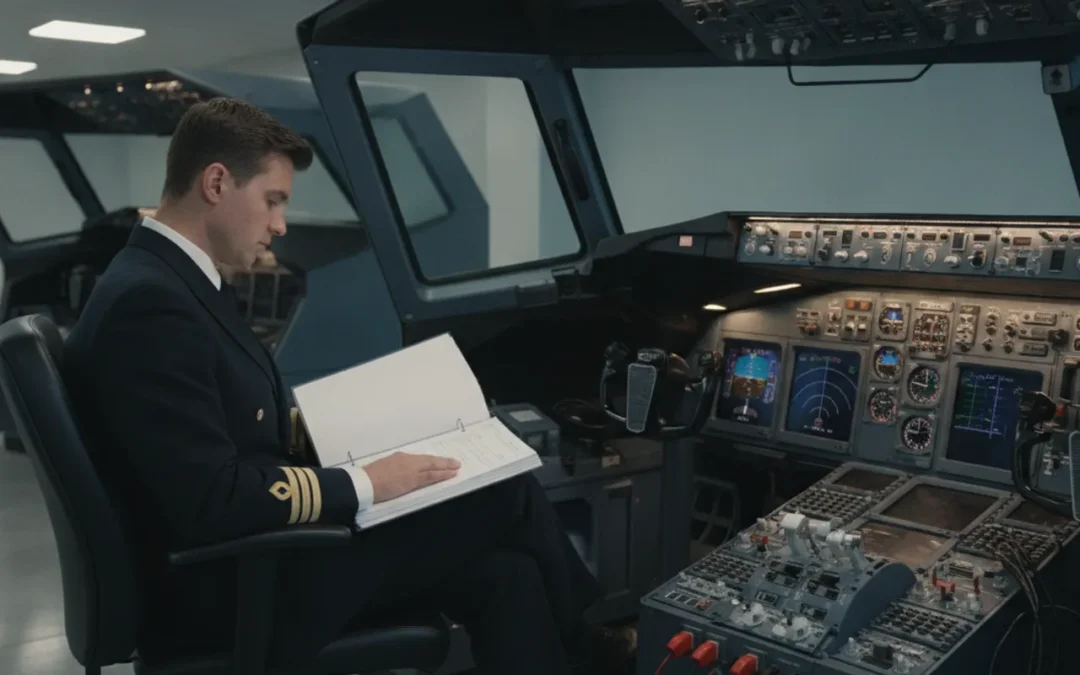
If you need to enroll in part 142 b737 recurrent training west coast, the best first step is not booking a flight or choosing a date. Start by confirming your qualification status, gathering your records, and asking the provider questions that affect eligibility, training fit, and timing. A clear plan helps you arrive ready for focused simulator work and reduces surprises for you, your operator, and the training team.
What should you confirm before enrolling in Part 142 B737 recurrent training on the West Coast?
Begin with the exact training outcome you need. Recurrent training may be connected to an operator’s qualification program, a regulatory requirement, a proficiency event, or a return-to-duty plan. Those situations can involve different records, approvals, and scheduling needs. Describe your current role, aircraft variant, seat position, operator, and the date by which you need to complete the event.
Las Vegas Flight Academy is an FAA Part 142 certified aviation training center with Boeing 737-800 Level D full flight simulators. Its Boeing 737 type rating and recurrent training page is a relevant starting point for program-specific questions. Verify that the current offering matches your aircraft, qualification, and objective before arranging travel; do not assume that a listing confirms a date or fit for every operator.
Part 142 describes requirements for approved training centers and training programs. It does not remove your responsibility to check what your operator, certificate holder, or authority requires in your case. The 14 CFR Part 142 regulations provide the governing framework. Ask the training provider and operator how their program and your records apply to the event you plan to take.
A useful first inquiry is concise but specific. State your training objective, aircraft variant, operator relationship, last relevant event, and deadline. Then ask what information the team needs to confirm eligibility and program fit. If a detail is not known, say so plainly; an accurate question is more useful than a confident guess.
How does your currency status affect recurrent-training planning?
Make currency status one of the first topics in the conversation. Create a short timeline of your most recent relevant training, checking, line activity, aircraft qualification, and any due dates that apply. Use logbook, training, or operator records rather than memory alone. The purpose is not to decide your regulatory status independently, but to give the people responsible for the program a reliable starting point.
Tell the provider if your event is approaching a due date or has already passed one; if you changed operators, aircraft variants, seat positions, or fleet assignments; or if you completed training or checking elsewhere since the last recurrent event. Also mention a long absence from flying, additional modules or special emphasis items, and records that are incomplete or still awaiting operator approval. Each can change the questions that need to be answered before a date is finalized.
For example, a pilot transferring between operators may have a recent training record but still need the new operator to confirm which program applies and which documents it will accept. A pilot returning after a leave may need to explain the length and nature of the break and share the available records. In either case, disclose the situation early and ask who will review it. Do not treat a calendar reservation as a decision about eligibility.
When the status is unusual, ask what documentation is needed before the reservation is treated as confirmed. Keep a copy of the answer with your planning notes. If the operator’s requirements and provider’s intake process appear to differ, ask the operator’s training contact to resolve the question directly with the provider rather than relying on an informal interpretation.
Which records should you prepare before you enroll in Part 142 B737 recurrent training?
Prepare an organized digital folder and, where requested, a printed set. The precise list depends on the program, so use this as a prompt for discussion rather than a universal checklist:
- Government-issued identification and pilot certificate information.
- Medical certificate information, if requested by the provider or operator.
- Aircraft type-rating and qualification details, including the variant and seat position relevant to the event.
- Recent training, checking, and qualification records.
- Relevant logbook pages or a concise summary of recent experience.
- An operator training request, approval, or purchase-order details, when applicable.
- Previous training records, including open items or instructor notes that require follow-up.
- Company manuals, notices, bulletins, or special-emphasis material assigned for this event.
- Contact information for the person responsible for training coordination at your company.
Label files by type and date, and make it easy to see which document is current. If the provider requests a specific format or secure transfer method, follow that instruction. Ask what should be sent in advance and what should be carried to the facility. Avoid sending sensitive personal information through an unapproved channel.
Before transmitting a record, check that pages are legible and complete. A scanned certificate with an obscured date or a training record missing a signature may prompt follow-up and delay review. If you cannot supply an item, identify it in your message and ask whether an alternative is acceptable. Do not silently substitute an old document or assume a missing record is unnecessary.
Keep a simple status tracker with three columns: requested, sent, and confirmed received. This prevents a common coordination problem: believing that an attachment was received because it was sent. Note who acknowledged each item and when. If the operator must approve or forward a document, track that handoff separately from the provider’s receipt.
What scheduling questions should you ask a West Coast Part 142 provider?
Scheduling involves more than finding an open slot. Instructor availability, simulator configuration, operator approval, document review, and any related evaluation may affect the sequence. Ask questions that clarify the path from inquiry to completion, not just the date you hope to attend.
| Planning area | Question to ask | Why it matters |
|---|---|---|
| Eligibility | What information do you need to review my request? | Identifies missing records before travel. |
| Aircraft fit | Does the current program and simulator match my B737 variant and operator requirements? | Checks alignment between qualification and planned event. |
| Calendar | Which dates are under consideration, and when is the reservation confirmed? | Separates a request from a final booking. |
| Operator | What must my airline or operator approve or provide? | Keeps company coordination in the plan. |
| Evaluation | Is an evaluation part of this event, and who determines the applicable standard? | Clarifies the purpose and preparation. |
| Travel | What reporting time, identification, and facility instructions apply? | Helps you arrive prepared without guessing. |
| Changes | What should I do if records, assignment, or travel plans change? | Establishes a prompt reporting process. |
Ask for written confirmation of the training objective, aircraft configuration, date, arrival instructions, documentation requirements, and coordination contact. A form submission or tentative date may not confirm every element. If the date is still pending one approval, record which approval remains outstanding and who is responsible for it.
Compare proposed dates against your work roster, required preparation, and travel plan before accepting. If you have two possible windows, provide both and identify which is preferable. Ask how the provider handles changes rather than assuming that a date can be moved without consequence. Do not rely on unconfirmed claims about availability or program duration.
What should pilots expect from a B737 recurrent simulator session?
Simulator work is shaped by the approved program and the pilot’s operating context. Sessions may address normal procedures, aircraft systems, instrument procedures, crew coordination, and abnormal or emergency scenarios selected by the applicable program. The sequence, maneuvers, and evaluation criteria can vary, so avoid preparing from an online checklist that may not match your operator’s requirements.
Use the time before training to refresh material that supports sound cockpit decisions. Review the aircraft manuals and company procedures you are authorized and expected to use. Refresh memory items and limitations against current operator guidance. Study how systems relate to indications and procedures instead of memorizing isolated switch positions. Practice duties, callouts, communications, and cross-checks with your seat partner when practical. Review current notices, fleet differences, and special emphasis material supplied by the operator.
Make a short question list. For instance, note a system indication you have found difficult to interpret, a procedure revision you want to verify, or a scenario where you are unsure how the operator expects the crew to divide tasks. Bring the question to the briefing rather than letting uncertainty become a guess during the session. Use only authorized, current material as your reference.
The simulator is a learning environment as well as a performance environment. If an indication, procedure, or scenario is unclear, ask for clarification during the briefing or debrief. After the session, turn feedback into a small follow-up plan: identify the topic, the reference to review, and any question that still needs an instructor or operator answer. Do not invent a preferred technique where the approved operator procedure controls.
How should you coordinate recurrent training with your operator?
Operator coordination can affect whether records are accepted and whether the event meets its intended purpose. Identify the training manager, chief pilot, fleet manager, or other company contact who owns your request. Ask that person what the provider needs and how completion will be recorded. Keep the provider and operator aligned on one clear objective.
Before the event, confirm the objective and whether the event concerns recurrent qualification, checking, or another purpose. Confirm aircraft variant, seat position, differences or additional modules, and the manuals and revisions to use. Ask whether the provider needs an operator letter, authorization, or other company document. Clarify how completion records, evaluation results, and unresolved items will be returned, and who should be notified if your assignment changes.
One practical approach is to send a single coordination message to the operator contact, copying the provider only when appropriate. State the requested event, proposed date range, known qualification details, records already available, and questions requiring a decision. Ask the operator to confirm its approval and the reporting path for the final records. This reduces conflicting instructions and makes ownership visible.
If you are an independent pilot rather than an airline employee, explain that status at the outset. The provider can identify the information needed and whether an operator-specific document remains necessary. If a new employer is involved, ask whether the employer must approve the event before booking. Clear communication is safer than forcing an unusual situation into a standard intake process.
What should you confirm before traveling to West Coast recurrent training?
Once the training plan is clear, verify practical details with the provider. Ask for the facility address, reporting time, identification requirements, parking or access instructions, and documents to carry. Confirm the local time zone and whether a pre-course briefing or online material must be completed before arrival. Save the instructions somewhere accessible while traveling.
Build a travel plan that leaves room for ordinary disruption without assuming the training schedule can absorb a late arrival. Keep the provider’s contact details available and report delays as soon as you know about them. Confirm whether the provider needs an update if a flight is delayed or a document is unavailable. Do not assume a missed connection or late arrival will have no effect on the event.
Ask what equipment or study material will be available. If you plan to bring a tablet, headset, notes, or other aids, confirm they are suitable for the provider’s procedures. Pack documents in the order you may need them: identification, requested records, operator material, and personal study notes. Separate originals from working copies if the provider has given instructions about which to present.
Finally, confirm the person to contact if you cannot find the facility, if arrival instructions are unclear, or if a last-minute change occurs. That small step is more useful than relying on assumptions about local access or timing. Aim to arrive organized and ready to work, not burdened with irrelevant paperwork.
How can you compare a Part 142 recurrent-training provider beyond price?
When pricing and dates are not confirmed, compare the factors that affect fit and execution. Consider the provider’s approval status, aircraft and simulator match, communication process, operator coordination, instructor relevance to your event, document workflow, and clarity about what the program includes. A low quote is not useful if the program does not address your aircraft, records, or operator requirement. Ask for the scope in writing rather than comparing vague descriptions.
For context on the training-center framework, read this guide to what Part 142 means for pilots. The airline pilot guide offers broader career context, while the ATP-CTP program page addresses a separate training need and should not be confused with recurrent B737 training. Las Vegas Flight Academy’s training center information provides further background.
International pilots can review the SEVP flight-school information if it applies to their circumstances. For recurrent B737 questions, use the Boeing 737 program information and contact the team to confirm current fit. These pages help frame the inquiry; they do not establish availability, pricing, or a guaranteed completion outcome.
Confirm your recurrent-training plan
Frequently asked questions about enrolling in Part 142 B737 recurrent training on the West Coast
What does it mean to enroll in part 142 b737 recurrent training west coast?
It means arranging recurrent B737 training with an FAA Part 142 training center on the West Coast and confirming that the program, simulator, records, and operator requirements match your situation. Contact the provider before travel to verify the current offering and next steps.
Can I enroll in part 142 b737 recurrent training west coast without an airline?
That depends on the event’s objective and required documentation. Explain whether you are affiliated with an operator, changing employers, or seeking training independently so the provider can identify the applicable records and approvals.
How early should I contact a provider for Part 142 B737 recurrent training?
Contact the provider as soon as you know training is needed. Early communication allows time to review records, coordinate with an operator, discuss dates, and resolve travel questions. The provider must confirm actual availability.
Does Part 142 approval guarantee that every B737 recurrent program fits my needs?
No. Confirm the aircraft variant, simulator configuration, approved program, operator requirements, and event purpose. Part 142 status is important, but it does not replace program-specific confirmation.
What should I do if my currency or records are unclear?
Tell both the provider and your operator contact before scheduling is finalized. Share available records, identify what is missing, and ask what additional review is required. Do not make assumptions about eligibility or completion.
A careful enrollment process gives you a clearer path from currency review to simulator preparation and operator recordkeeping, so confirm the details with the training team before you travel.