
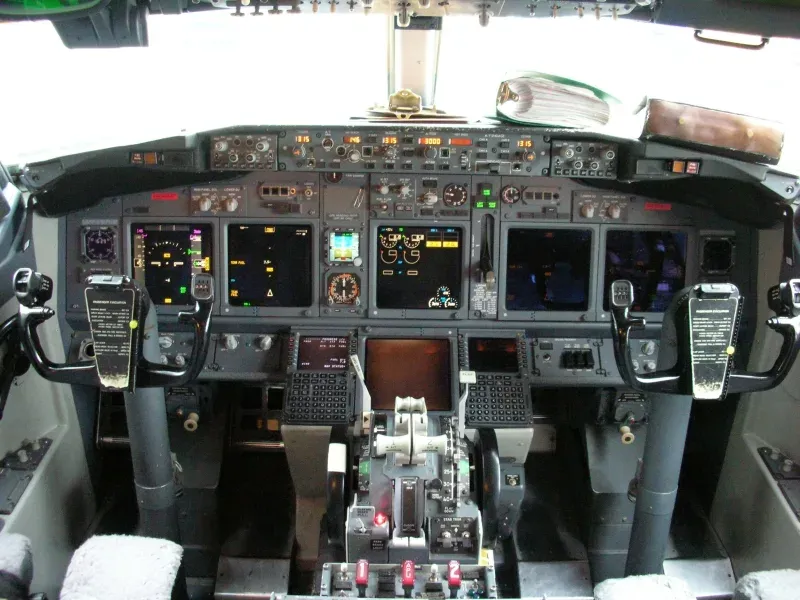
Choosing a B737 training center is not simply a matter of finding the nearest simulator or the shortest advertised course. The right comparison starts with your training objective, then tests whether each provider can document the authorization, aircraft variant, device qualification, curriculum, schedule, and logistics that apply to your situation.
Contact Las Vegas Flight Academy at 818-489-1738 to discuss your B737 training objective, current program details, and scheduling.
The best B737 training centers west coast pilots should consider are those that clearly match the required program. Use an appropriately qualified simulator for the specific 737 variant, and explain what is included before enrollment. Compare Part 142 credentials, initial or recurrent scope, check-event preparation, available dates, travel time, and the provider’s process for confirming current details.
This guide uses those criteria rather than assigning an unsupported universal ranking. It begins with the evidence pilots should request from every center, then applies the same framework to aircraft configuration, program fit, scheduling, and travel.
How Should Pilots Compare the Best B737 Training Centers West Coast Options?
A serious comparison starts with documentation, not marketing language. Ask each provider to identify its FAA Part 142 authority, the specific curriculum that matches your training objective and the aircraft make, model, series, or variation represented by the device. Part 142 rules require approved curricula to define their syllabi, equipment requirements, and instructor and evaluator qualifications. Review the applicable Part 142 curriculum requirements rather than relying on a generic claim of FAA approval.
What Part 142 evidence should you request?
Request the center’s current certificate or training specifications, the relevant course or curriculum scope, and a clear explanation of which Part 61 requirements the program satisfies. The FAA describes document compliance, system assessment, validation, and surveillance as parts of the Part 142 certification process. Its Part 142 oversight materials provide useful context for evaluating how a center documents compliance.
How should you evaluate the simulator and its upkeep?
A qualified device should be approved for the specific aircraft type and, when applicable, the particular variation, maneuver, or procedure being trained. That matters when a provider uses a broad “B737” label without explaining whether the device represents a 737-800 NG or another configuration. Ask to see current qualification evidence for your course, not an undated or expired record. Under the applicable Part 142 simulator requirements, the device must be maintained for reliable performance, receive a functional preflight check each day before use, and have a discrepancy log for instructors or evaluators. Components involved in training, testing, or checking generally must be operative unless otherwise authorized by the FAA.
Use this short checklist when comparing centers:
- Can the provider document current Part 142 authority and the applicable curriculum?
- Does the device qualification match your exact 737 variant and planned event?
- What maintenance, daily-check, and discrepancy-record process supports device reliability?
- Which training, testing, and checking activities are included, and which require separate arrangements?
- Can the center explain how FAA oversight and current qualification status are verified?
These answers give you a defensible baseline for comparing the best B737 training centers west coast options without treating a broad superlative as proof of program fit.
Why Does the Exact B737 Variant and Simulator Qualification Matter?
A general “B737 simulator” label does not tell you enough about the training device or the course it supports. Under FAA Part 142 requirements, a simulator used for training, testing, or checking must be specifically qualified for the applicable aircraft make, model, series, or type, including a particular variation when applicable. The approval also identifies the maneuvers, procedures, or crewmember functions the device may support. Pilots should therefore ask for the exact device and variant before treating a provider as a suitable match.
For a pilot seeking 737-800 NG training, the distinction affects the value of the cockpit procedures, systems work, limitations review, and scenario practice. It also matters when a course involves differences training rather than an initial type rating. A provider should be able to explain how its curriculum maps the device to the training objective, not simply describe the simulator as “full motion” or “Level D.”
What should you verify about the device?
Ask the training center for documentation showing the applicable qualification and the course or maneuvers it covers. You should also ask how the device is maintained, how daily functional checks are completed, and how discrepancies are recorded after sessions. FAA rules require qualified devices to preserve the performance and characteristics needed for qualification, receive a functional preflight check before daily use, and maintain a discrepancy log. Components essential to training, testing, or checking generally must be operative unless the FAA authorizes otherwise. See the FAA Part 142 simulator requirements for the governing framework.
LVFA is one documented Henderson, Nevada option for pilots evaluating this fit. Its published materials identify an FAA Part 142 training center with Level D full-motion Boeing 737-800 NG simulators, plus ground training and realistic simulator scenarios involving system failures and approach procedures. Review the B737 Level D simulator training details, then ask LVFA to confirm the current qualification status and the precise course scope before enrollment. This verification step is essential because a qualification record with an old or undated status should not be treated as current.
Which B737 Training Program Fits Your Career Objective?
The right course depends on the credential, aircraft transition, or proficiency event you need to complete. Initial type-rating training is designed for a pilot adding the B737 type rating. An upgrade program addresses a move into a new role or level of responsibility. Recurrent training supports a pilot maintaining required proficiency, while requalification addresses a pilot who must regain qualification after a lapse or other circumstance. Differences training is narrower, covering the transition between specified B737 variants, such as the documented 737-300 to 737-800 pathway.
| Objective | What it addresses | What to confirm before enrollment |
|---|---|---|
| Initial type rating | Adding the B737 type rating through ground, simulator, and checkride preparation. | Prerequisites, included check events, aircraft variant, and current course scope. |
| Upgrade | Preparing for a transition to a different operating role or qualification level. | Upgrade-specific syllabus, evaluation requirements, and relevant operator procedures. |
| Recurrent | Maintaining proficiency and completing the applicable recurrent training or checking event. | Required event, device qualification, recurrent interval, and documentation provided. |
| Requalification | Restoring qualification after a lapse or other training need. | Eligibility requirements, additional training, and the check required for return. |
| Differences training | Addressing differences between specified B737 variants. | Exact origin and destination variants, syllabus, and whether checking is separate. |
| ATP-CTP | Completing the ATP certification training program when it is part of the pilot’s pathway. | Course prerequisites and how it fits with the ATP knowledge test and certificate process. |
ATP-CTP should not be treated as a B737 type rating. Completing ATP-CTP does not, by itself, grant an ATP certificate, pass the FAA ATP knowledge test, or add an aircraft rating. Review the West Coast ATP-CTP location separately, then match it to your broader certification plan.
LVFA documents initial, upgrade, recurrent, and differences options, along with ground training, CBT, simulator sessions, oral and preflight preparation, and checkride support. Pilots comparing 737-300 to 737-800 differences training should confirm the current option that fits their experience and objective. No provider should be selected from the course label alone. Ask what the syllabus includes, which B737 variant the device represents, and which training or check event the program is intended to support.
How Do Schedule and Travel Logistics Affect a West Coast Training Choice?
A training center can be a strong technical fit and still create avoidable operational problems if its schedule, location, or support process does not match your work commitments. Before comparing dates, ask how the provider assigns simulator sessions, handles schedule changes, and coordinates ground school, briefings, checking, and any required preparation. Confirm the full sequence in writing rather than planning around a general course description.
Travel planning should include more than the flight to the region. Check the distance from the airport to the training facility, likely transportation needs, lodging options, and the amount of time you may need to remain local between sessions. Also ask whether staff can help coordinate scheduling, housing, and logistics. That support can simplify planning, but it should be treated as assistance rather than a promise of a particular hotel, date, or result.
Las Vegas Flight Academy’s facility is in Henderson, Nevada, near Harry Reid International Airport, at 1771 Whitney Mesa Drive. The academy identifies Los Angeles, San Diego, San Francisco, Sacramento, Phoenix, Seattle, Portland, Salt Lake City, and Honolulu among common departure points. Henderson may be practical for West Coast pilots, but each pilot should verify current route availability, fares, ground transportation, and lodging before committing.
Estimated training duration is another planning input, not a guarantee. LVFA publishes planning estimates for initial type-rating and recurrent training, while differences-training timing should be confirmed directly. Confirm the current timeline, prerequisites, check-event scope, and scheduling process with the provider, since your experience and training objective can affect the plan.
For a closer look at the program scope you are evaluating, review the B737 type-rating programs and compare the travel commitment with the training you actually need.
What Should a Provider Comparison Include Before You Enroll?
A useful comparison looks beyond location or marketing language. It should show whether each training center can support your exact aircraft variant, training objective, and check event. Ask for documentation rather than relying on broad labels such as “B737 training” or “full-motion simulator.”
Part 142 rules require approved curricula to identify the syllabus, equipment requirements, and instructor or evaluator qualifications. The FAA Part 142 curriculum requirements provide a useful baseline for the evidence a provider should be able to explain.
| Criterion | Evidence to request |
|---|---|
| Regulatory authorization | Current Part 142 certificate information and confirmation that the proposed course is approved for your objective. |
| Aircraft variant | The exact make, model, series, or variation represented by the device, such as Boeing 737-800 NG. |
| Simulator qualification | Current qualification details showing the relevant maneuvers, procedures, and course use. Ask how status is verified before training. |
| Device reliability | An explanation of daily functional checks, maintenance controls, discrepancy logging, and how equipment issues affect sessions. |
| Curriculum scope | A syllabus covering the needed ground, simulator, CBT, oral, preflight, maneuver, or checkride-preparation elements. |
| Program fit | Written confirmation that the course is initial, upgrade, recurrent, requalification, or differences training, rather than a different pathway. |
| Instructor and evaluator qualifications | The qualifications relevant to the course, plus an explanation of who conducts training, checking, and preparation. |
For example, LVFA documents Boeing 737-800 NG simulator resources and lists initial, upgrade, recurrent, and differences options. Those descriptions identify scope, but you should still confirm current device status, prerequisites, course dates, and included check events directly with the provider. If your goal is ATP-CTP rather than a B737 type rating, review the ATP-CTP course with a B737 simulator separately. The two training paths should not be treated as interchangeable.
What Questions Should You Ask Before Choosing a B737 Training Center?
Before enrolling, ask each provider for specific answers in writing. A polished sales conversation is not a substitute for confirming the authorization, device, curriculum, and logistics that apply to your training objective.
- Is the center operating under an FAA Part 142 certificate, and can it identify the applicable training specifications? Ask which curriculum and syllabus satisfy your intended training or checking requirement. Part 142 rules address curriculum, equipment, and instructor requirements. Review the applicable FAA regulations.
- Which exact 737 variant and series does the simulator represent? Do not accept a general B737 description if your preparation depends on a particular flight deck or differences path. Ask whether the device represents the Boeing 737-800 NG or another variant.
- Is the simulator qualification current for the maneuvers and procedures in my course? Ask the provider to confirm current FAA approval, the relevant variation, and the course-specific scope. Also ask how daily functional checks, maintenance, discrepancy logging, and essential-component status are managed.
- What events and preparation are included? Request a written outline covering ground training, CBT, simulator sessions, system failures, approaches, oral preparation, preflight walkthroughs, maneuver practice, and any check event. Confirm what is included versus what you must arrange separately.
- Which program matches my objective and prerequisites? Initial, upgrade, recurrent, requalification, and differences training are separate paths. Ask what experience, documents, certificates, or prior training the center requires before enrollment, and confirm whether ATP-CTP is a separate need.
- What dates and daily schedule can the center confirm? Ask for available start dates, expected training sequence, rescheduling rules, and the conditions that could change the schedule. Treat estimated timelines as planning information, not guarantees.
- What travel, lodging, and quote details should I plan for? Confirm the facility address, airport access, housing support, transportation expectations, and every item covered by the written quote. Make sure the scope identifies training resources, instructor support, checkride preparation, and any exclusions without relying on verbal assumptions.
Use the answers to score each center on four essentials: regulatory fit, aircraft and simulator match, program scope, and practical execution. Eliminate any option that cannot document the first two. Then compare curriculum completeness and schedule reliability against your deadline and travel constraints. For example, LVFA documents Part 142 B737 programs, 737-800 NG simulator resources, and initial, upgrade, recurrent, and differences options on its B737 type-rating program page. Ask the academy to confirm the current option for your experience and objective before enrolling.
Contact Las Vegas Flight Academy at 818-489-1738 to confirm your B737 program fit, current simulator details, and available training dates.
Frequently Asked Questions
What are the best B737 training centers west coast pilots should compare?
There is no universal best center. Compare each provider’s FAA Part 142 status, current simulator qualification for the exact 737 variant, curriculum scope, instructor and evaluator qualifications, schedule, and travel logistics. FAA Part 142 rules require training devices to be specifically qualified for the aircraft type or applicable variation and the maneuvers or procedures being conducted (14 CFR 142.59).
How can I verify that a B737 simulator matches my training objective?
Ask the provider to identify the simulator’s exact aircraft model, series or variation, qualification status, and approved uses. Confirm that the device supports the maneuvers, procedures, and check event required for your course, rather than relying on a general “B737 simulator” description. Also ask how daily checks, maintenance, and discrepancy records are managed.
Which B737 course should I choose for my career objective?
Initial type rating, upgrade, recurrent, requalification, differences training, and ATP-CTP address different needs. Confirm your prerequisites and required check event before enrolling. ATP-CTP is a separate training path and should not be treated as the same thing as a B737 type rating, the ATP knowledge test, or an ATP certificate.
How far in advance should I plan travel for B737 training?
Start by confirming the provider’s actual training dates, expected course length, lodging options, and contingency process for schedule changes. LVFA publishes planning estimates for initial type-rating and recurrent training, while differences-training timing should be confirmed directly. Verify the current timeline before planning travel (LVFA B737 type-rating program).
Ready to Discuss Your B737 Training Fit?
Comparing training centers is easier when you can confirm the aircraft variant, program scope, simulator details, schedule, and enrollment requirements directly with the provider. Contact Las Vegas Flight Academy to discuss your B737 training fit, current program details, and scheduling. You can contact the LVFA team through the online form or call 818-489-1738.