
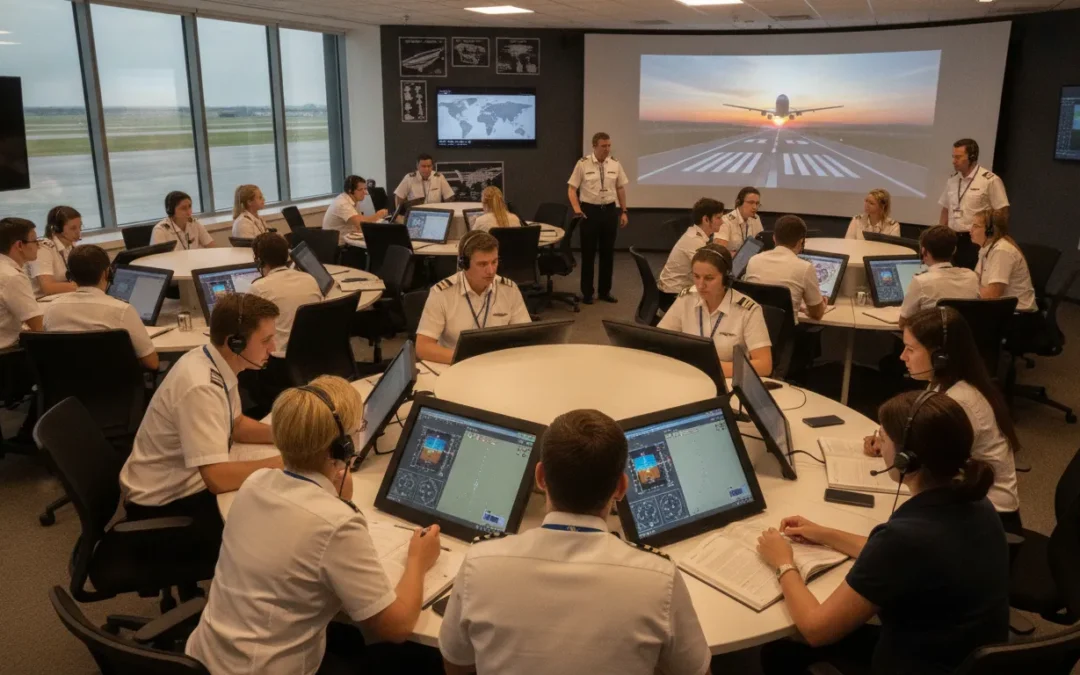
A single failing grade on the FAA ATP written exam can delay a pilot’s airline career for months. You need a clear plan to master the complex material and pass on your first attempt.
ATP-CTP practice tests are the best way for pilots to find knowledge gaps before they take the real FAA written exam. These mock exams act like the real test and help pilots control their time during the tough 125-question session. While the FAA needs 30 hours of ground training, Las Vegas Flight Academy gives a 32-hour course to make sure every pilot is ready.
Passing an FAA-approved ATP-CTP course is a requirement for the multi-engine test as shown in Sporty’s pilot training guides. Focused software lets many pilots finish their hard prep work in two or three days. Steady testing builds the trust needed to pass the exam on the first try. This plan makes sure you are ready for the hard topics in the air carrier operations and aerodynamics lessons.
Getting ready for this exam needs a deep look at the topics the FAA wants you to know. You must see how the class hours are split between aerodynamics, meteorology, and airline work. Your success starts with Understanding the 32-Hour ATP-CTP Ground School Structure. The path to your graduation certificate begins with.
Understanding the 32-Hour ATP-CTP Ground School Structure
Before you can take the Multi-Engine ATP written exam, you must finish a specific training course. This ground school bridges the gap between flying light planes and flying large passenger jets. While federal rules set a base, our 32-hour ATP-CTP course curriculum goes past the lowest mark. This ensures you have the skills needed for a high-stress cockpit and a good airline job.
Core classroom topics
The ground school covers four main areas every airline pilot must know. These topics help you pass the written test and prepare you for your first day at a new airline. You will spend time in a class with expert pilots who share tips that go far beyond a book. This time in person lets you ask deep questions about how jets work in the real world.
To sign up for your test, you will need a valid Federal Tracking Number (FTN). You can get this by setting up a file in the FAA IACRA system before you start. Having your FTN ready makes the move to the testing center easier. It also ensures your test scores link to your pilot file without any errors.
The value of extra training hours
The FAA asks for at least 30 hours for this part of the course. We choose to give 32 hours to provide more depth in key areas like high-altitude flight. This extra time allows for better talks and time to answer your own questions. We want you to feel sure of yourself before you step into the flight simulator. That extra time is the key to truly knowing the work.
- Aerodynamics and High Altitude. You will spend at least 8 hours studying how jets fly at high levels. This includes learning about stalls, high-speed shakes, and the physics of heavy planes in thin air. You will learn how to spot a problem and fix it fast. Knowing these facts keeps your passengers safe during every flight.
- Air Carrier Operations. This 14-hour block covers how airlines run daily flights. You will learn about pilot health, how to use checklists, and how to talk to dispatch and crew. It also covers the laws for air carriers and how to fly in low-sight spots.
- Leadership and CRM. Modern flying relies on teamwork. You will spend 6 hours learning about crew resource management and career growth. This step focuses on how to lead a crew and solve tough problems under pressure. It helps build a strong safety culture in a complex flight deck.
- Meteorology and Adverse Weather. This 2-hour block focuses on bad weather jet pilots face. You will study wind shear, volcanic ash, and how to avoid storms. Knowing these weather risks is vital for any pilot who wants to fly a large multi-engine jet safely.
Completing these steps prepares you for the simulator sessions and the final written exam. By going past the basic time rules, we help you build a base for a safe career. This full approach is why so many pilots choose our training center for their ATP needs. We focus on the quality of your learning so you can fly for the airlines.
Why ATP-CTP Practice Tests Are Essential for Success
The path to your Airline Transport Pilot (ATP) certificate is one of the most vital steps in your career. To reach this goal, you must pass the ATP Multi-Engine (ATM) knowledge test. The 32 hours of ground school at Las Vegas Flight Academy give you the core facts you need.
But taking regular practice tests is the best way to bridge the gap between study and passing. These tests do much more than just review the books. They show you how to use your knowledge in a high-pressure setting. By making these tests a part of your daily routine, you can walk into the testing center with the tools you need to win.
Mirroring the real exam experience
A big part of test success is knowing what to expect when you sit down at the screen. High-volume practice testing helps you feel like you are at the real exam. When you take these tests often, you become used to the way the FAA asks questions. This type of study mirrors the real test state you will find on the day of your check.
It helps you get used to the pace and the way you must move through different parts of the test. By the time you reach the real test site, the layout and the clock will feel like second nature. This level of comfort lets you focus on the answers instead of the test format.
Finding and fixing knowledge gaps
Study time is a small resource for busy pilots. You want to make sure every hour you spend with your books helps you move forward. Practice tests for the ATP knowledge test help pilots find knowledge gaps and manage test time well. Instead of trying to learn every detail at once, you can use your test scores to see where you are weak.
If you find that you are missing questions on weather but acing the part on high-altitude flights, you know where to put your work. This plan keeps you from wasting time on things you already know. You can see how ATP-CTP content prepares you for these topics by comparing your test results to your class notes.
Building trust and managing time
The FAA written exam is a test of both knowledge and strength. It covers a wide range of topics, and the clock is always running. Good practice test plans help pilots build trust in themselves before the real FAA knowledge test. When you see your scores rise from one day to the next, you start to feel ready for the task. This mental prep is just as vital as the facts themselves.
You also learn how to use your time so that you have enough room to check your work on the hardest problems. Before you can sit for the exam, you will need to set up your profile and get a Federal Tracking Number (FTN). You should do this through the Integrated Airman Certification and Rating Application (IACRA) system. Taking care of these setup steps early ensures that nothing stands in the way of your success on test day.
Proven Study Strategies Using ATP-CTP Practice Tests
Passing the FAA airline transport pilot written test takes a solid plan. You must learn many topics, from high flight paths to crew safety. Most pilots find that using atp-ctp practice tests is the best way to get ready. These tests show you just what to expect on your exam. They help you find your weak spots so you can focus your study time on what matters most.
Using Software for Fast Study
Many pilots use focused test tools to speed up their learning. These tools use pattern matching to help you learn the test bank. Most pilots finish their deep study in just two to three days by using these tools. This fast pace works well for pilots who are now busy with flight work. You can see your score in real time and gain the faith you need for the real test.
Tools from names like Sheppard Air or Gleim are common in this field. These programs break down hard rules into simple parts. You can take short quizzes on certain topics or full timed exams. This method helps you plan your time well. It also keeps you from wasting hours on topics you now know. By the time you sit for the real test, the questions will feel known.
Online Resources and Practice Exams
Easy study options are a great fit for busy pilots. Many firms now offer full online ground school and test prep sets. These sets often come with long 12-month access. This lets you start your work long before you arrive for your class. You can review the ATP-CTP course curriculum to see how each part fits into the test. This early start makes the 32 hours of ground school much easier to finish.
- Use study modes to learn the logic behind each answer.
- Take at least three full practice tests to check your speed.
- Focus on math and flight plan questions that take more time.
- Review the questions you miss until you get them right twice.
Managing Your Test Paperwork
A good study plan also includes getting your forms ready. You should set up your Federal Tracking Number (FTN) before you book your exam. This is done through the FAA IACRA system. This number stays with you for your whole career. It is a key part of your flight record. Having your FTN ready lets you sign up for the test as soon as you finish your class. Good study means being ready for the test and the forms too.
Mastering the Classroom Material
The 32 hours of ground school give you the base you need for airline work. While practice tests help with the exam, the class focus is on safety and team work. You will learn about air carrier rules and how to lead a crew. This deep look at the work helps you know the “why” behind the test items. Mixing these lessons with practice exams is the best way to ensure a pass. You will leave the course ready for the test and for your new job.
Linking Simulator Sessions with Written Exam Prep
Turning Class Theory into Real Skills
Ground school gives you the rules, but the simulator gives you the feel. The 32 hours of ground training cover big topics like air carrier rules and high flight. In the trainer, these vague ideas become clear. You see how a heavy jet reacts to weather or system failures. This makes the facts you study for the exam stick in your mind. Instead of just learning a chart, you learn why the data matters in a cockpit.
A pilot who only reads about wing stalls may have a hard time on the test. But a pilot who sees one in the sim will know the right answer. This hands-on time turns dry facts into useful skills. It helps you see the “why” behind the FAA rules. When you get the reason for a rule, you do not have to work as hard to keep it in your head. This link between the book and the box is what makes the training work.
Meeting the FAA Simulator Standard
The FAA has clear rules for how you train in a simulator. According to federal rules, each pilot needs at least 10 hours of simulator time. This time is not just for general flight. It follows a set plan to build your skills. You will spend at least 6 hours in a Level C or higher full flight simulator (FFS). These high-tech machines move and feel like a real jet. You also get 4 hours in a flight training device (FTD).
The FTD helps you focus on checklists and cockpit logic. These sessions are perfect for learning the flow of a flight deck. The FFS time adds motion and sight to the mix. Both tools help you master the facts needed for the ATP multi-engine knowledge test.
By using both types of tools, you get a full view of how a crew works in a high-pressure setting. This mix of tools is a core part of our FAA-approved ATP-CTP training. It gives you the depth you need to move from flight school to an airline job.
How Simulation Helps with atp-ctp practice tests
Getting ready for the written exam takes focus and the right tools. Many pilots use atp-ctp practice tests to get ready for the 125-question test. The FAA testing matrix shows you need a 70 percent score to pass. The simulator helps you hit that goal by making the study facts real. When you see a question about crew resource management, you can think back to your FFS session. You learn how to work with a crew and manage safety under pressure.
You can use your time in the sims to test the ideas you read about in your study books. This cycle of reading and doing helps you find gaps in your knowledge early. It also builds the belief you need to walk into the testing center and pass on your first try. By the time you finish your hours, you will know exactly how ATP-CTP content prepares you for the cockpit.
Prerequisites, Medical Certificates, and Exam Registration
Meeting the rules for the FAA ATP written exam is a vital step for any pilot. You must follow a set path to earn your multi-engine rating. This path starts with training and ends with a test. Knowing what you need helps you plan your flight training without delays. The right steps keep your career moving forward.
Required Training Needs
The FAA requires pilots to finish the ATP-CTP course before they take the written test. This course is a stand-alone program. It serves as the base for multi-engine airline work. Finishing an FAA-approved ATP-CTP course is a required first step for the knowledge test (F002). At Las Vegas Flight Academy, we give this training in a clear setting. You will spend 32 hours in ground school and 10 hours in simulators. This ensures you have the skills to pass the exam.
Medical Certificate Facts
Many pilots ask about health rules before they start their training. You do not need a current FAA medical certificate to take the ATP-CTP course. You also do not need one to sit for the ATP written test. But, you must have a valid medical certificate for your practical checkride.
This is the flight test for your full license. If you want to finish your ground school now, you can do so without a medical visit. This helps you plan your flight time and costs while you wait for a doctor.
Written Exam Registration
Signing up for your test needs a few key items. First, you must get a Federal Tracking Number (FTN). You get this by joining the IACRA system before your test (F006). When you finish your course, you get a graduation paper (F020). You must show this paper from an approved school to take the test. Also, check your ID. It must be current and show your photo and home address. Using atp-ctp practice tests will show you how ATP-CTP content prepares you for the actual exam.
Photo ID and Proof
Your ID must meet strict FAA rules at the testing center. It must be valid and not past its end date. The ID needs to show your full name and a clear photo. It also must show your birth date and your current home address.
If your license has an old address, you may need a second form of proof. A bill for your home or a lease can work as back up. Being ready with the right papers makes the test day go fast. This lets you focus on the questions instead of the paperwork.
| Phase Detail. | ATP-CTP Course. | ATP Written Exam. |
|---|---|---|
| Main Need. | Commercial pilot license. | Course graduation paper. |
| Medical Required. | No. | No. |
| FAA Sign Up. | Direct with school. | FTN via IACRA system. |
| Required Proof. | Valid pilot ID. | Grad paper and photo ID. |
Frequently Asked Questions
Do I need an FAA medical certificate to take the ATP-CTP course?
You do not need an FAA medical certificate to join the ATP-CTP course or to take the multi-engine ATP written test. This training stays on ground school and how you fly the simulator. You will need a valid medical certificate before you take the final flight check for your ATP license. Per Sporty’s, the course is a set rule before you can take the exam.
How long does it take to prepare for the ATP knowledge test?
Most pilots can finish their study for the written exam in just two to three days. Using focused atp-ctp practice tests and study tools helps you learn the facts fast. This time starts once you finish your required ground school hours. Deep study lets you find weak spots and learn the large amount of data you need to pass.
What is the best way to use ATP-CTP practice tests?
The best plan is to take many atp-ctp practice tests that look like the real FAA test. These tools help you use your time well and build your trust in your skills. Based on facts from Las Vegas Flight Academy, using these tests helps you find facts you do not know yet. This keeps your study on the parts that need the most work.
What happens after I finish the ATP-CTP course?
Once you finish your ground and simulator work, you will get a graduation certificate. You must show this paper at an FAA test site to sign up for the ATP written test. This certificate proves you did the required 32 hours of class and 10 hours of simulator time. Per FAA rules, you cannot take the test without this proof of your training. Not sure what happens after ATP-CTP? Our next-steps guide walks you through the timeline from completion to checkride.
Ready to schedule your FAA-approved ATP-CTP training course?
Waiting for your FAA-approved training can stall your career and keep you from getting the high paying airline jobs that are open to you today. You will save weeks of stress and gain the focus to pass your written exam by starting your official ground study path right now. Taking this step today makes sure you stay on track and helps you move into a jet cockpit and airline seat much faster than before.
Ready to begin your path to the airline flight deck and secure your career as a pilot? Call (818) 489-1738 today to speak with our expert team in Las Vegas and schedule your FAA-approved ATP-CTP training course.