
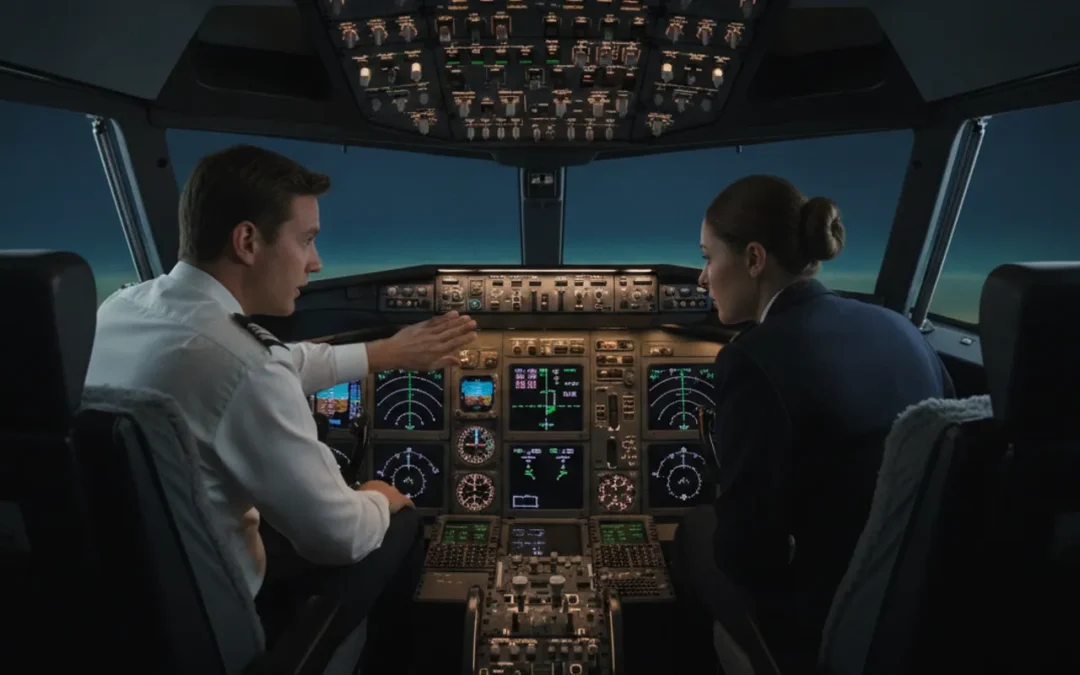
737 unstable approach simulator training is practice for a decision, not a script of numbers. Pilots use the session to spot an approach that is no longer stable, say so in time, and follow the go-around their operator already requires. The useful prep is the policy, the callouts, and a short plan for the debrief that follows.
Ask about 737 simulator training
What should 737 unstable approach simulator training cover?
Cover four skills, in this order: monitor the approach, compare it with the operator’s stabilized-approach policy, say the deviation out loud, and go around when that policy says to. Exact gates, speeds, and callouts belong to the operator and the approved procedure. They do not belong in a generic study sheet.
The simulator is for judgment when the picture changes. A useful run asks each pilot what changed, what they will say, and whether continuing still fits the criteria in use. Reaching the runway is not the lesson by itself. Applying the operator’s policy is the lesson.
The Flight Safety Foundation ALAR Task Force treated unstabilized approaches as a causal factor in 66 percent of 76 approach-and-landing accidents and serious incidents it reviewed from 1984 through 1997. Its recommended minimum stabilization heights are 1,000 feet above airport elevation in instrument conditions and 500 feet in visual conditions. Below that height, or if the approach becomes unstable later, the Task Force says to go around. Those figures are a safety reference, not an LVFA limit and not a substitute for the operator’s SOP. Read the FSF ALAR stabilized approach briefing.
The same review split the problem into energy states. Low and slow often showed up as poor vertical awareness. High and fast showed up as overruns, excursions, and loss of control. In the simulator, name which state you are in before you decide. A high, fast approach and a low, slow approach do not call for the same correction, but both can require a go-around under the operator’s policy.
Which concepts should pilots review before the session?
Start with the operator’s stabilized-approach policy and the aircraft procedure for the event. Do not borrow gates from another airline, a forum, or a different type. If a callout is unclear, write the question and ask the instructor before the session starts.
- Stabilized approach: Know which conditions the policy checks, and the height where they are assessed.
- Go-around duties: Review the approved procedure, task split, and callouts for the seat you will occupy.
- Monitoring: Compare flight path and aircraft state with the planned approach and the criteria in use.
- Communication: Use standard callouts early enough for the other pilot to act.
- Threats: Note how workload, weather, or a late change can shrink the time left to decide.
For how a full-flight simulator supports emergency procedure practice, see the academy’s Level D simulator training overview. This article stays on the approach decision. It is not a systems course and not an operating manual.
How should pilots structure a scenario review?
Follow the order of the event. Before the brief, read the objective and name what the instructor wants practiced: recognition, communication, the decision, the go-around, or some mix. If the point is to catch a developing problem, success is not “we landed.”
Build a cue-and-response map from approved material only. On one side, list what to watch: flight-path trend, configuration, energy, and crew workload. On the other, write the communication or decision step you will confirm in the manual or with the instructor. Leave every number blank until the approved reference supplies it. The map is only a reminder to observe, compare, speak, and act in that order. It is not a new checklist and it is not an SOP.
Suppose the scenario adds workload while the crew is already on the approach. The useful question is not “Can I still land?” It is “What changed, what does the policy require us to assess, and what do I say now?” The monitoring pilot describes the trend. The flying pilot acknowledges it and states the next action. The instructor can then see whether the crew shared one picture.
Use a second pass to separate a normal correction from a condition that requires discontinuing the approach. That line lives in the operator’s policy. In prep, find where it is written and how the crew is expected to call it. In the simulator, do not wait for perfect certainty when the procedure already calls for action.
- Set the reference. Name the policy and procedure that govern the exercise, and confirm them with the instructor.
- Predict the decision points. Note what information would prompt a call, a correction, or a go-around.
- State what you see. Make the monitoring callout while there is still time to respond.
- Decide on purpose. Apply the criteria. Do not salvage the approach to force a landing.
- Debrief the evidence. Ask which cues mattered, when they appeared, and whether the call helped.
Keep scenarios instructor-led. Do not invent aircraft limits or rehearse a procedure from memory when the reference is in the brief. For program context, see Boeing 737 type rating training and confirm current details with the academy.
What can a comparison table add before the session?
A table keeps prep organized without pretending one set of limits fits every operation. Use it to list what you still need to verify.
| Review area. | What to confirm. | Practice focus. |
|---|---|---|
| Stabilized-approach policy. | Criteria, assessment height, and required response in the operator’s material. | Recognize the cue and speak early. |
| Go-around procedure. | Approved steps, callouts, and crew duties for this exercise. | Decide, then fly the published procedure. |
| Monitoring and communication. | Standard words and the task split for each seat. | State the deviation and confirm it was heard. |
| Debrief. | The instructor’s objective and what was actually observed. | Tie the decision to a cue and one follow-up. |
If a cell would require a number you have not verified, leave it as a question for the brief. Filling it from memory is how a study aid becomes an unofficial SOP.
How should crews talk through the decision in the simulator?
Brief the roles before the motion starts. Know who is flying, who is monitoring, which callouts are expected, and how a concern is raised. Those roles do not replace the manuals. They are a plan for using them. If the event changes the normal task split, say so before the scenario begins.
Make the callout concrete. “Something feels off” does not tell the other pilot what to look at. When the procedure allows it, name the condition or the trend and state the concern. The other pilot should acknowledge, so both of you know the message landed. Required words still come from the operator’s material, not from an improvised script.
Ask the instructor to vary who sees the cue first. In one run the flying pilot calls the change. In the next, the monitoring pilot raises it while keeping the assigned scan. Both seats then practice listening, not only talking. After each run, check whether the information was timely and understood.
When the policy requires a go-around, fly the approved actions. Save the longer debate for the debrief, when there is time to look at the evidence. A go-around can be the correct result of a risk-management scenario. Treating it as a failed landing pushes crews to continue when the policy says otherwise.
In the debrief, cover the process as well as the outcome. Was the cue noticed? Was it said clearly? Did the response match the policy? A landing does not prove the decision was sound. A go-around is not a failure when it was the required action.
Pilots comparing pathways can also read the academy’s notes on Part 142 training and the ATP-CTP course. Those pages cover different needs. Ask which program matches your qualifications.
Which preparation mistakes should pilots avoid?
- Importing another operator’s gates. Policies differ. Use the material that applies to this training.
- Chasing the landing. The exercise includes discontinuing the approach when the policy says so.
- Speaking too late. An early call gives the crew time to respond.
- Memorizing a universal trigger. Confirm limits in the current approved reference.
- Skipping the debrief. Write down the cue, the call, and the decision, not a vague grade.
Recurrent pilots preparing for a check can use the academy’s 737 recurrent simulator checkride prep for that separate goal. It is not a replacement for the approach-decision work in this article.
How can the debrief drive the next study session?
End with a small plan. Do not write “improve approach judgment.” Write the cue or the crew action that slipped. A late monitoring call, a missing item in the verbal update, or no confirmation of the next step are useful notes. Keep each note factual and tied to that run.
Tie each note to a reference or to something the instructor said. If the question is a criterion, open the governing policy. If it is task sharing, review the callouts. If it is timing, ask when the cue became actionable in that run. That is targeted prep. It is not a homemade procedure.
Split individual technique from crew process. One pilot may need a better scan or a clearer call. The crew may need to decide who watches a given item. Those are different lessons. Writing them apart makes the next brief easier.
Then test whether the lesson still holds when the setup changes. A repeat of the same scenario can lock in a habit. A different configuration or workload can change which cues matter. Let the instructor choose the variation. The aim is the same decision framework, not a prediction of every event.
What should pilots confirm with a 737 training provider?
Name the training objective before you compare providers. A type rating, a recurrent event, and a standalone simulator session can differ in purpose, prerequisites, and how the scenario fits the rest of a pilot’s training. Say what you need to practice. Ask which offering covers it. “737 simulator training” is not, by itself, a promise of a checkride result or an operating authorization.
Ask how briefing works. Which study material is expected, whether it arrives before the session, and which manuals you should bring if the event is tied to an operator. Ask how objectives are stated and how feedback is given. A clear answer also says what the session does not cover.
Confirm aircraft scope. Ask which 737 variant and simulator environment are used, and whether the scenario can be aimed at approach decisions. Do not assume every session uses the same setup, or that a simulator can reproduce every line condition. A day-in-the-box account of Boeing 737 Level D simulator training shows one student’s sequence. It is context, not your syllabus.
Confirm practical terms directly. Eligibility, schedule, and documents depend on the training and on the pilot’s background. For a plain description of the academy, see about Las Vegas Flight Academy. Then use the contact channel for any detail that could change by the time you train.
- Which 737 variant and simulator environment are used?
- Is this an initial type rating, recurrent training, or another defined program?
- What should the participant review or bring?
- How are scenario objectives and debriefs handled?
- Which prerequisites and program terms should be confirmed before enrollment?
Contact the academy about your training goals
Frequently asked questions about 737 unstable approach simulator training
What is the main goal of 737 unstable approach simulator training?
The goal is to practice spotting relevant cues, saying the deviation, applying the operator’s stabilized-approach policy, and flying the approved response. The simulator adds a structured place for instructor feedback. It does not replace the operator’s manual.
Should pilots use generic stabilized-approach limits in 737 unstable approach simulator training?
No. Use the current approved policy for the operation and the training event. The Flight Safety Foundation heights cited above are a published safety reference, not a limit to fly. Confirm anything unclear with the instructor.
Does an unstable approach always require a go-around?
The required response depends on the applicable policy and the circumstances. Follow the operator’s criteria and procedures. This article does not set operating limits and does not replace training guidance.
How can pilots make an approach-scenario debrief more useful?
Ask which cues were present, when they were recognized, how they were said, and whether the decision followed the procedure. Write one or two follow-up questions for the instructor instead of a general self-grade.