

737 Recurrent Training: Simulator Checkride Prep for Current Pilots
737 recurrent training is not a repeat of an initial type rating. For a current pilot, it is a focused opportunity to sharpen aircraft-specific judgment, restore rhythm in the flight deck, and arrive ready to perform when the simulator session turns from routine flows to high-workload decision-making. If you are preparing for a recurrent event, the best use of your study time is not memorizing every page of a manual. It is knowing what the training is built to evaluate, how a Level D simulator supports that evaluation, and where current pilots most often lose precision.
Planning your next Boeing 737 recurrent event? Review Las Vegas Flight Academy’s Boeing 737 training options to discuss recurrent, requalification, and simulator needs.
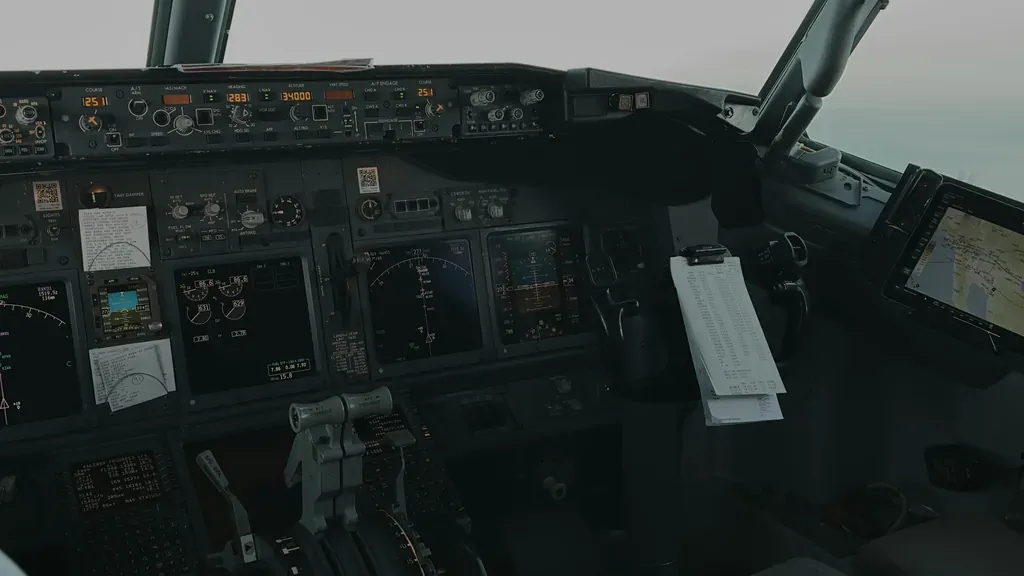
What 737 recurrent training is designed to confirm
Recurrent training serves pilots who already hold a Boeing 737 qualification or operate within a professional training cycle. The purpose is to confirm that essential knowledge, aircraft handling, crew coordination, and abnormal procedure management remain usable under realistic workload. In other words, recurrent training asks a practical question: can the pilot still apply the aircraft, checklist, and judgment habits expected in a line-oriented environment?
The exact curriculum depends on the approved program, the pilot’s background, and the operator or individual training objective. Still, most 737 recurrent training centers on a familiar set of priorities:
- Normal flight deck setup, briefings, and procedural discipline
- Automation management and flight mode awareness
- Takeoff, approach, landing, and go-around execution
- Recognition and handling of non-normal conditions
- Checklist use, callouts, and crew resource management
- Threat and error management when the profile changes quickly
This is why recurrent preparation should be deliberate. Current pilots usually do not struggle because they have forgotten what a 737 is. They struggle when a small gap in systems recall, briefings, or scan discipline compounds inside a compressed simulator profile.
Who needs recurrent training, and when does requalification apply?
Pilots often use recurrent training as a broad term, but training needs can differ. A currently qualified pilot returning for a scheduled proficiency cycle is in a different position than a pilot who has been away from 737 operations for an extended period. Las Vegas Flight Academy lists Boeing 737 offerings that include recurrent training as well as requalification pathways for longer gaps, so the starting point matters.
| Training path | Typical purpose | Prep emphasis |
|---|---|---|
| Recurrent training | Maintain and verify current 737 proficiency | Profiles, procedures, non-normal handling, checkride rhythm |
| Requalification training | Restore qualification after a longer lapse or program-defined interruption | Deeper systems review, flows, handling rebuild, then evaluation prep |
| Initial type rating | Build first-time aircraft qualification | Foundational systems, aircraft procedures, simulator progression, practical test prep |
A pilot with a longer absence from the aircraft should not prepare as if recurrent training is only a quick refresher. Likewise, a pilot pursuing a first 737-800 type rating needs a broader learning plan than this recurrent-focused guide covers. Confirm the correct training category early so your study plan matches the event on the schedule.
How recurrent differs from an initial 737 type rating
Initial type rating training teaches a pilot to assemble the Boeing 737 picture from the ground up. Recurrent training assumes that picture exists and checks whether it remains organized, accurate, and operationally useful. That distinction changes how pilots should prepare.
Initial training builds the framework
During initial type rating training, pilots spend substantial time building aircraft systems knowledge, learning standard flows, understanding limitations, and converting classroom concepts into simulator habits. The study curve is steep because the aircraft, procedures, and performance expectations are all being layered together.
Recurrent training tests access to the framework
During recurrent training, the instructor or evaluator is not looking for a pilot to relearn the flight deck from zero. The priority is whether knowledge can be retrieved on time and applied correctly. For example, can you recognize that an unstable approach needs correction or discontinuation before it becomes a poor landing setup? Can you run the appropriate checklist without rushing ahead of the event? Can you maintain communication when the non-flying pilot is also saturated?
That means recurrent study should focus on recall, sequencing, and decision triggers. Review what must be automatic, then practice explaining why you would take an action. That habit helps in both oral discussion and simulator execution.
What to expect in a Level D simulator session
A Level D full flight simulator gives recurrent training its most valuable feature: realistic consequences without real-world risk. Visuals, motion cueing, cockpit layout, aircraft response, and scenario control allow instructors to create conditions that test more than rote procedure. Pilots can see how workload rises during a rejected takeoff decision, a late runway change, a system event, or an approach that no longer fits the brief.
Las Vegas Flight Academy uses Level D Boeing 737 simulators in its 737 training environment. For a deeper comparison of simulator fidelity, see the academy’s guide to Level D versus Level C flight simulators. For recurrent pilots, the key takeaway is simple: train in the device as if it is an aircraft. Chair-flying is useful before the session, but once the simulator starts, posture, scan, callouts, and checklist discipline should match operational expectations.
A recurrent simulator event often emphasizes four phases
- Briefing: objectives, profile expectations, roles, and standards.
- Normal operations: setup, taxi or flight entry point, departures, arrivals, and baseline crew rhythm.
- Abnormal or emergency scenarios: recognition, flight path control, communication, checklist use, and safe resolution.
- Debrief: technical corrections, decision review, and repeatable improvement points.
Do not treat the debrief as an afterthought. A strong recurrent session often turns on one or two corrections that make the next event cleaner. Write those down while they are specific.
What should pilots review before the recurrent checkride?
The best checkride prep begins with likely performance categories, not with random rereading. Your training provider will control the final program details, but the following checklist helps pilots structure a practical review.
1. Limitations and memory-critical knowledge
Review limitations and immediate-action knowledge required by your approved training materials. The goal is prompt, accurate retrieval, not simply recognizing the page when it is open in front of you. If a number, condition, or prohibition governs a decision, rehearse it until it is dependable.
2. Flows, callouts, and checklist discipline
Recurrent profiles expose weak transitions. A pilot may remember a flow in isolation but stumble when moving quickly from briefing to setup, or from a normal sequence into a non-normal event. Practice transitions out loud. If training is paired, rehearse division of duties and concise cockpit language.
3. Automation management
Know what the airplane is doing, what it will do next, and what you will do if that no longer supports the desired flight path. A recurrent session is not a contest to keep automation on at all costs. It rewards clear mode awareness and timely intervention.
4. Manual handling basics
Current pilots still benefit from reviewing hand-flying expectations, pitch and power relationships, stabilized approach criteria, and go-around discipline. The simulator can quickly reveal whether a pilot is relying on automation to hide a degraded raw-data scan.
5. Non-normal procedure logic
Do not study non-normal events as disconnected script lines. Rehearse a pattern: fly the aircraft, define the problem, complete the appropriate checklist, communicate, and make a conservative plan. The order matters under workload.
6. Oral explanation, not just silent recognition
If a checkride or training evaluation includes discussion, practice concise explanations. State the condition, the operational concern, and the action you would take. Clear explanations show that you understand the procedure instead of only memorizing a prompt.
Mid-course study check: compare your recurrent plan with LVFA’s broader Boeing 737 type rating and training overview, then ask which recurrent or requalification path best fits your current status.
Why FAA Part 142 training matters for recurrent pilots
FAA Part 142 certification matters because it signals a structured training center environment with approved curriculums, qualified instructors, defined records, and simulator-centered delivery for advanced aviation training. It does not remove the pilot’s responsibility to prepare, but it gives that preparation a formal training framework.
For recurrent 737 training, this matters in three ways:
- Standardization: The course has defined objectives rather than improvised simulator time.
- Appropriate equipment: Training can use full flight simulation suited to aircraft-specific scenarios.
- Professional accountability: Instructors, records, and approved course elements support meaningful evaluation.
The academy’s explanation of FAA Part 142 certification gives additional context for pilots comparing advanced training providers. If the recurrent event affects career timing, employer expectations, or readiness after time away from the aircraft, choosing a serious training environment is part of checkride preparation.
Common recurrent training mistakes that reduce simulator performance
Many checkride problems are preventable because they begin before the pilot enters the simulator. Watch for these patterns during preparation.
- Studying broad topics but skipping sequences: Knowing systems is useful, but simulator execution depends on organized action.
- Rushing checklists: A fast checklist that misses aircraft state is not better than a deliberate checklist that confirms the situation.
- Neglecting communication: Crew resource management is visible when the profile gets busy.
- Assuming currency equals readiness: Recent flight time does not automatically mean the current recurrent profile will feel sharp.
- Waiting too long to discontinue a weak approach: Stabilization standards exist so pilots can make the safe call early.
- Over-preparing rare details while under-preparing fundamentals: Recurrent success is usually built on strong basics under pressure.
A useful practice habit is to close each study block with one scenario prompt. Ask yourself: What would I see first? What must I control first? What checklist or communication follows? That keeps preparation operational.
A seven-day 737 recurrent training prep plan
If your event is approaching, a short structured plan can outperform scattered cramming. Adjust the timeline to your provider’s materials and your current operating experience.
| Day | Focus | Output |
|---|---|---|
| 1 | Confirm recurrent versus requalification path, collect current course materials | Written study scope |
| 2 | Limitations, memory-critical items, flight deck setup | Self-quiz list |
| 3 | Normal flows, callouts, departure and arrival sequencing | Chair-flying script |
| 4 | Approach, go-around, landing, and stabilized criteria | Profile notes |
| 5 | Non-normal logic and checklist pacing | Scenario response outline |
| 6 | Automation awareness, mode transitions, manual handling review | Verbal explanations |
| 7 | Light review, rest, logistics, questions for briefing | Ready-to-train checklist |
This approach protects the day before training from becoming a panic review. Pilots usually benefit more from entering rested with organized questions than from pushing late-night memorization.
How to decide whether you need recurrent or requalification support
If you are current and preparing for a planned recurrent cycle, focus on standards, profiles, and clean execution. If you have had an extended gap, changed operating environments, or feel that core aircraft procedures are no longer fluent, ask the training center whether requalification is the more accurate route. Las Vegas Flight Academy’s Boeing 737 program information identifies recurrent and requalification training as distinct offerings, which is helpful when describing your status to scheduling staff.
Be specific when you inquire. State your aircraft background, recency, certificate status, and training objective. That allows the provider to point you toward the program that fits the gap instead of starting with a vague request for simulator time.
Ready to map the right next step? Use Las Vegas Flight Academy’s Boeing 737 training page for program details, then contact Las Vegas Flight Academy about 737 recurrent training availability, requalification timing, and available simulator preparation.
Frequently asked questions about 737 recurrent training
Is 737 recurrent training the same as an initial type rating?
No. An initial type rating builds first-time aircraft qualification. Recurrent training is meant for pilots returning to a periodic training or proficiency event with existing 737 background. The learning load, preparation strategy, and evaluation context are different.
Does recurrent 737 training use a Level D simulator?
Level D full flight simulators are highly relevant for aircraft-specific recurrent training because they allow realistic line-oriented profiles and controlled abnormal scenarios. Confirm the simulator and course details with the training provider for your exact event.
What is the difference between recurrent and requalification training?
Recurrent training supports ongoing proficiency for pilots in an active or scheduled qualification cycle. Requalification training generally addresses a longer interruption or a program-defined lapse that requires a deeper return-to-qualification process. The provider should confirm which path applies.
How should I study for a 737 recurrent simulator checkride?
Prioritize limitations, required memory knowledge, flows, checklists, automation awareness, approach and go-around discipline, and calm non-normal procedure logic. Practice speaking through decisions so oral discussion and simulator actions are connected.
Why choose a Part 142 training center?
An FAA Part 142 training center offers an approved, structured environment for advanced training. For recurrent pilots, that means a defined curriculum, appropriate simulator use, trained instructors, and a professional framework for evaluating proficiency.
Build recurrent confidence before the simulator starts
737 recurrent training rewards disciplined preparation. Current pilots do not need to reinvent their aircraft knowledge, but they do need to make it available at simulator speed. Review the training category that matches your status, organize your checkride prep around practical performance areas, and arrive ready to use the Level D session as a professional training event rather than a memory test.
If your next recurrent event is on the horizon, Las Vegas Flight Academy can help you compare Boeing 737 recurrent, requalification, and advanced simulator training options in an FAA Part 142 environment.