
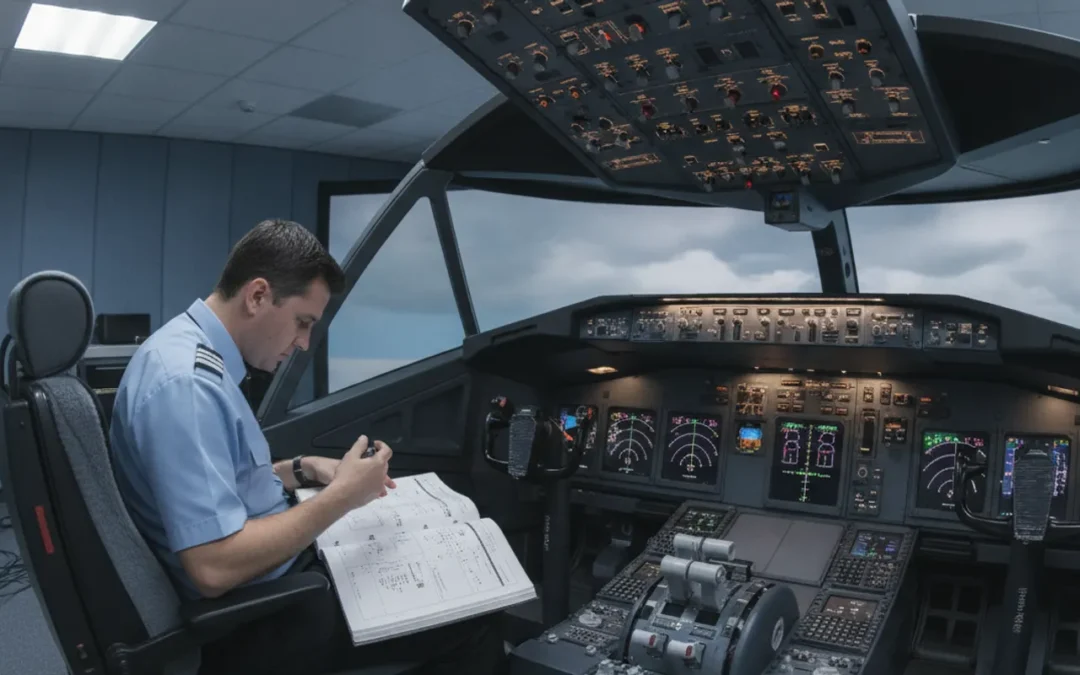
Good 737 FMC training preparation starts before you enter the simulator. The goal is not to memorize a generic sequence of button presses. It is to arrive with the right aircraft and course materials organized, key concepts refreshed, and clear questions for your instructor. That approach helps you use instructor-led time well while leaving aircraft-specific operation to the approved training materials and procedures for your course.
Ask about 737 training options
What should 737 FMC training preparation accomplish?
Preparation should make the training objectives easier to understand, not replace formal instruction. A flight management computer is part of a larger aircraft system and operating environment. The details a pilot needs to study can depend on the aircraft configuration, course scope, operator procedures, and the materials supplied by the training provider.
Before the session, aim to:
- Identify which aircraft variant and training context the course covers.
- Gather the current manuals, study guides, and course instructions that the provider authorizes.
- Refresh the underlying concepts in those materials without assuming every 737 or operator uses identical procedures.
- Write down questions and learning objectives to discuss with the instructor.
- Arrive ready to learn from briefings, demonstrations, and simulator feedback.
This is a study-planning guide, not a checklist or operating procedure. Do not use it to configure or operate an aircraft. Follow the course’s approved materials and the instructor’s direction. For background on how structured simulator instruction fits into professional training, review the academy’s guide to Part 142 training.
Which materials should you confirm before studying?
Start by asking the training provider which materials apply to your course. A manual found online may be out of date, may describe another aircraft configuration, or may not match the procedures used in the training environment. A familiar-looking display or acronym is not proof that its associated technique is applicable to your session.
Confirm the following items with the provider or instructor:
- Aircraft and course scope: Ask which 737 variant, training device, and learning objectives are relevant. Do not assume that material for a different variant or course will transfer without qualification.
- Authorized references: Ask which manuals or course documents you should use, which revision applies, and whether any pre-course study guide is provided.
- Operator context: If you are training for an operator, clarify which operator-approved procedures and documents are part of the course. Separate those from general study material.
- Preparation expectations: Check whether the course expects specific background knowledge, pre-reading, or a particular way to submit questions.
- Device and session details: Confirm what the training session will cover and what you should bring. Course formats and schedules can vary.
Keep a simple source list with document title, revision or date if shown, and the reason you are using it. This small step makes it easier to spot conflicting notes later. It also gives you something precise to reference when an instructor asks where a question came from.
How can you organize an FMC study plan?
Use a short, repeatable process instead of trying to review every topic at once. First, list the course objectives that the provider has actually confirmed. Then organize your notes under those objectives and mark anything that remains uncertain. This keeps independent study focused and reduces the risk of spending hours on material outside the course scope.
- Read the course information first. Pull out the stated objectives, required references, and any preparation instructions. Mark questions that need an answer from the provider rather than guessing.
- Make a topic map. Use headings from the authorized materials to create a one-page outline. Keep the outline descriptive. It should help you find information, not become an improvised procedure.
- Review concepts in context. For each topic, note what system or training objective it relates to, which source explains it, and what you do not yet understand.
- Separate facts from assumptions. Label uncertain interpretations as questions. Do not convert a remembered technique from another aircraft, operator, or simulator into a rule.
- Schedule brief review blocks. A few focused sessions with a specific question to answer are more useful than an unstructured reread. Stop to check the source when notes conflict.
- Prepare a concise briefing for yourself. Summarize what you understand, what remains unclear, and what you want to practice or discuss with the instructor.
Las Vegas Flight Academy publishes a 737 NG FMS guide that can help readers identify relevant background topics. Treat any general guide as a starting point for questions, not a substitute for the applicable course materials or operator procedures. For a broader systems refresher, the academy also has a 737 systems overview.
Which concepts are useful to review before simulator time?
Review the concepts named in your course materials and be ready to explain them in your own words. The most useful preparation often concerns relationships: how a topic connects to the aircraft’s broader systems, what information a pilot needs to interpret, and what assumptions must be confirmed. Avoid studying isolated button sequences without understanding the course context.
Depending on the material your instructor assigns, your concept review may include:
- Purpose and terminology: Make sure you can identify the terms used in your course documents and describe the general purpose of the functions being discussed.
- Information flow: Consider where relevant information originates, how it is represented in the training materials, and what cross-checks the approved procedure calls for.
- Planning context: Understand how the topic fits into the broader flight or training scenario presented by the instructor, without assuming a particular route or operational setup.
- System relationships: Note connections to other aircraft systems or crew tasks that the assigned material explicitly identifies.
- Limitations and dependencies: Mark any conditions, configuration differences, or prerequisites stated in the applicable documents.
If a detail depends on a particular aircraft configuration or operator, record that dependency rather than trying to generalize it. In simulator training, the instructor can explain which details apply to the scenario and why. For a course-specific view of aircraft training options, see the academy’s Boeing 737 type rating information. Pilots who want more regulatory context can also review the academy’s 14 CFR Part 142 guide.
How can you make your study notes useful to an instructor?
Notes are most useful when another person can understand what you reviewed and where your question came from. Keep them short and traceable. A useful entry can include the topic, the source and section, your current understanding, the point that remains unclear, and the question you want to ask. Avoid copying long passages or writing down a procedure from memory when you are not sure it applies.
For example, rather than writing “review FMC,” create a note with a clear subject heading and identify the assigned source you consulted. Under that, distinguish three things: what the source explicitly states, what you infer from it, and what you need the instructor to confirm. This separation helps prevent an interpretation from turning into an assumed rule. It also makes a briefing conversation more efficient because the instructor can address the exact point of uncertainty.
After a simulator session, add feedback to the same topic map. Record the objective discussed, the concept you need to revisit, and the source or instructor direction for follow-up. Keep personal observations separate from formal feedback. If two references appear to disagree, do not resolve the difference by choosing the one that seems familiar; bring both references to the instructor and ask which applies to the course. This habit supports learning while keeping the authorized training material at the center of your preparation.
How should you turn questions into simulator learning goals?
A useful question is specific enough to discuss, but open enough to let the instructor explain the approved method. Instead of writing, “What buttons do I press?”, identify the underlying point of confusion: which source applies, how a concept relates to the scenario, or what cue you should use to assess your understanding. Bring the source and page or section reference when possible.
Sort questions into three groups:
- Clarify before training: Which revision should I study? What aircraft context does this objective assume? What should I bring?
- Discuss in the briefing: What is the learning objective for this scenario? Which assumptions should I verify? How will the instructor evaluate my understanding?
- Review after a simulator session: Which decision or concept should I revisit? What source should I use to close the gap? What should I focus on during the next session?
After each session, write down the feedback in plain language and connect it to the relevant course objective. Separate instructor feedback from your own interpretation. Then verify the next study task with the instructor, especially when it concerns an aircraft-specific method or operator procedure.
What should you avoid when preparing for 737 FMC training?
More preparation is not always better if it is based on the wrong source. Common problems include mixing materials from different aircraft variants, relying on an unverified online checklist, memorizing steps without understanding the objective, and treating a past operator’s practice as universal. These habits can make it harder to identify what the current course actually expects.
| Preparation approach | Potential problem | Better next step |
|---|---|---|
| Use an old or unidentified manual | The content or revision may not match the course. | Ask the provider which document and revision apply. |
| Copy a procedure from a forum or video | The source may omit aircraft, operator, or scenario context. | Use assigned references and ask the instructor to resolve differences. |
| Memorize keystrokes alone | Recall may not transfer when the scenario or configuration changes. | Study the stated objective and understand the rationale in approved materials. |
| Study every available topic indiscriminately | Time may go to topics outside the course scope. | Prioritize confirmed objectives and flag additional questions. |
| Assume a prior operator’s method applies | Procedures and training contexts can differ. | Confirm which operator-specific guidance governs the course. |
For general regulatory background, consult the Federal Aviation Administration and follow the current documents and instructions that apply to your training. Regulatory information does not replace the provider’s course materials or an operator’s approved procedures.
What should you confirm with a 737 training provider?
Before you commit to a training plan, make sure you understand the course scope and how preparation is handled. Ask direct questions and keep the answers with your study notes. If you are comparing training paths, compare the scope and support rather than assuming that similarly named courses deliver identical content.
- Which 737 variant and training device are covered?
- Which manuals or study materials should I use, and what revision is current for my course?
- Are any course objectives or prerequisite knowledge expected before arrival?
- How can I raise questions about differences between my previous experience and the course material?
- What feedback or study guidance should I expect after simulator sessions?
- Which requirements are specific to my employer or operator and should be confirmed separately?
The answers can help you avoid last-minute uncertainty and tailor your review. They also help you distinguish a type-rating course from recurrent or other training. Pilots comparing recurrent preparation can review the academy’s 737 recurrent simulator checkride preparation guide. To learn more about the training center’s background, see Las Vegas Flight Academy.
How can you make a final preparation checklist?
In the days before training, keep the final checklist simple. It should help you arrive organized, not create a second set of operating instructions. Confirm that your reference documents match the course direction, that your questions are easy to find, and that you understand what the provider expects from you.
- Recheck course logistics and confirm what materials to bring.
- Review the objectives and source list supplied by the provider.
- Mark unresolved questions clearly; do not fill gaps by guessing.
- Refresh the concepts tied to the course scope and make a short list of learning goals.
- Get enough rest and arrive ready to listen, ask questions, and use instructor feedback.
Useful preparation is focused, source-based, and flexible. It gives you a stronger foundation for learning without pretending that a general article can replace formal instruction, current manuals, or approved procedures.
Contact the academy about 737 training
Frequently asked questions about 737 FMC training preparation
How early should I begin 737 FMC training preparation?
Begin when the provider gives you the course scope and applicable materials. That gives you time to organize references and ask questions without relying on assumptions about what the course will cover. Confirm any specific timeline directly with the provider.
Can a general online guide replace course materials for 737 FMC training?
No. A general guide may help you identify concepts or form questions, but it may not match your aircraft configuration, course objectives, or operator procedures. Use the references confirmed for your training.
What is the best way to prepare for 737 FMC training if I have used a different aircraft?
Make a list of concepts that seem familiar and details that may differ. Ask the instructor which prior knowledge transfers and which topics should be approached according to the course materials. Do not assume that a technique from another aircraft applies unchanged.
Should I memorize FMC procedures before simulator training?
Study only the procedures and material assigned or authorized for your course. Focus on understanding the objectives and source material rather than memorizing an unverified sequence. Your instructor can explain the methods that apply to the training scenario.
What should I bring to a 737 FMC training session?
Follow the provider’s instructions. Bring the required course documents and organized questions, and confirm whether any other materials or equipment are expected. Requirements can vary by course and provider.
A clear study plan helps you arrive prepared to learn, while your instructor and authorized course materials remain the right sources for aircraft-specific guidance.