
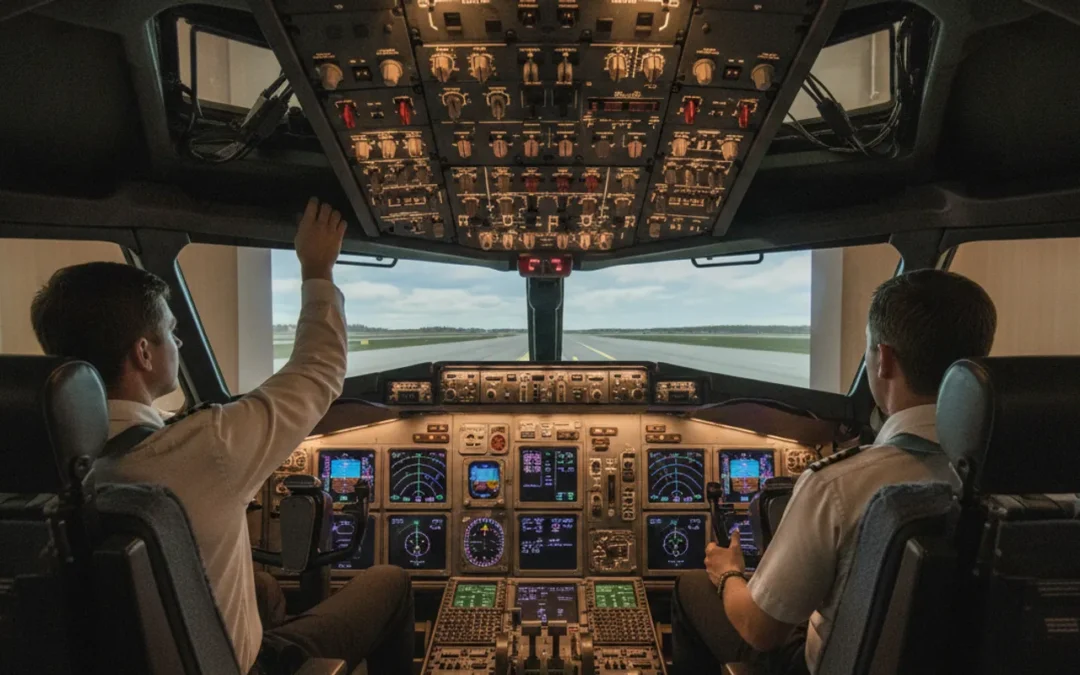
Choosing among FAA approved B737 simulator training centers takes more than checking a website for the words “FAA approved.” A useful evaluation confirms what the FAA qualification applies to, which 737 variant the device represents, what training the center is authorized to provide, and whether the course fits your specific training goal. Use the checklist below to ask for verifiable details before you commit time or travel.
Ask Las Vegas Flight Academy about B737 training
What does FAA approval mean for a B737 simulator?
“FAA approved” can refer to different things, so ask the provider to name the specific authorization or qualification it is describing. A training center’s certificate, an individual training course, and a particular flight simulation training device are related but distinct items. One does not automatically establish the details of the others.
Request the center’s current FAA certificate information and the device’s qualification documentation. Check the exact device identifier, aircraft model or variant, qualification level, and any stated limitations. Ask the provider to explain how those details apply to the training you plan to take. If the records use technical terms you do not recognize, request a written explanation rather than relying on a general marketing claim.
For background on the training-center framework, see this guide to what Part 142 means and the more detailed 14 CFR Part 142 overview. These resources can help you prepare questions; the center’s current documents remain the evidence to review for its own status.
How can you verify the exact device qualification?
Ask for documentation that identifies the simulator by its formal name or identifier, not just a photo of a cockpit or a statement that it is “full motion.” Confirm whether the device is qualified for the intended aircraft and training task, and ask the provider to show the scope and any conditions attached to that qualification. If you are comparing more than one center, ask each one for the same categories of information so you can compare like with like.
Do not treat a device’s visual realism, motion capability, or “Level D” label as a substitute for its current qualification records. Those features may matter to your experience, but your question is whether the device’s documented qualification and the center’s training offering match your needs. Request the date or revision of the records and ask how the center communicates changes that could affect a scheduled course.
When you review a document, check that the device name matches the one the provider says you will use. Ask whether any limitations affect the maneuvers, functions, or training tasks described in your syllabus. If the center schedules students across multiple simulators, confirm which device is reserved for your sessions and whether a substitution is possible. If it is, ask how the substitute device’s qualification and configuration compare with the planned one. These details matter because a center may operate more than one device, and a broad facility description may not identify your assigned equipment.
Keep the answers together in one place. A simple comparison sheet can record the device identifier, aircraft variant, qualification evidence and date, course name, and any conditions the provider explained. Mark any item that is still unanswered and ask for clarification before paying a deposit or arranging travel. This process is not a substitute for the FAA’s records or professional advice; it helps you identify the exact questions that need an authoritative answer.
Simulation is a training method, not a blanket guarantee of identical results in every aircraft situation. A study record hosted by Southeastern University describes FAA-funded research investigating transfer of learning between simulator and aircraft pilot training; the description identifies the research question, not a certification of any particular center or device. Read the study record as background, then verify a provider’s actual qualifications and course scope directly.
Why does the B737 variant matter?
“B737 simulator” is not specific enough for a careful comparison. Ask which aircraft generation and variant the device represents and whether the course is designed for that aircraft. A Boeing 737 NG device, for example, should not be assumed to represent a 737 MAX or another 737 variant. The differences can affect the systems, procedures, and training objectives involved.
Confirm the exact model in writing and compare it with the aircraft type or transition relevant to your plans. Ask whether the training is initial, recurrent, differences, or another defined course, and what aircraft configuration the curriculum assumes. If you are preparing for a particular airline or operator, confirm its requirements with that organization too; a general course description cannot establish what an employer will accept.
For a focused look at the aircraft-specific training pathway, review the Boeing 737 type-rating program information and this guide to 737-800 type-rating considerations. A separate 737 MAX and 737 NG comparison can help you frame variant questions, but it does not replace your course’s official syllabus.
How should you compare FAA approved B737 simulator training centers?
Use a consistent checklist rather than comparing headlines or promotional claims. The table below shows what to ask and what useful evidence can look like. Requirements vary with the course and the pilot’s circumstances, so ask the provider to explain any item that does not apply.
| Evaluation area | Questions to ask | Evidence to request |
|---|---|---|
| Center oversight | What FAA certificate and training scope cover this course? | Current certificate details and a written description of the applicable course authorization |
| Simulator qualification | What exact device will I use, and what qualification and limitations apply? | Device identifier and current qualification documentation |
| Aircraft variant | Which 737 generation and configuration does the device and syllabus represent? | Course outline naming the aircraft variant and training objectives |
| Instructor assignment | Who will teach and evaluate the course, and what relevant experience or qualifications do they have? | Instructor qualification summary and explanation of how instructors are assigned |
| Training scope | Is this initial, recurrent, differences, or another course, and what is included? | Written syllabus, prerequisites, evaluation approach, and completion criteria |
| Device availability | How are maintenance events or an unavailable device handled? | Rescheduling, delay, and student-notification policies in writing |
| Completion records | What records will I receive, and when? | Sample or description of completion documentation and record-delivery process |
Ask for answers that are specific enough to compare. “Our simulator is FAA approved” does not tell you which device, variant, or course the statement covers. “Our instructors are experienced” does not tell you who will teach your class, how their qualifications relate to the course, or who will evaluate your performance. Good questions make the training plan concrete without asking a provider to promise an employment outcome.
What should you ask about Part 142 oversight?
Confirm whether the training center operates under FAA Part 142 and ask how that oversight applies to the particular program you are considering. Request the center’s current certificate information and ask who can explain the relationship among the certificate, the course, and the simulator. If the course is delivered through a partnership or at a different facility, ask which organization is responsible for each part of the training.
Part 142 status is useful context, but it is not a replacement for course-level questions. Check the training objectives, prerequisites, device configuration, instructor assignments, evaluation process, and the records you will receive. If you need a type rating, start by reading the center’s initial 737 type-rating information and ask how its stated scope matches your circumstances. For a wider look at the relationship between ATP-CTP and aircraft-specific training, see ATP-CTP and B737 training.
How can you assess instructor credentials and course scope?
Ask who will conduct ground instruction, simulator sessions, and evaluations. Then ask what qualifications and recent experience are relevant to those roles. A center may not share private personnel records, but it should be able to explain how instructors are selected and assigned and how instructional or evaluation responsibilities are handled.
Request a syllabus or course outline before you enroll. It should identify the training purpose, prerequisites, major subject areas, expected activities, and how completion is determined. Ask whether the course is initial, recurrent, differences, or another program; whether briefings and ground sessions are included; and what preparation you are expected to complete. Do not assume that two courses with similar names cover the same scope.
If you are transitioning from another aircraft or returning for recurrent training, state that clearly when you contact the center. Ask what experience or records it needs to determine whether the course is appropriate. You can also review the B737 systems overview as general preparation, while following the official course materials for required study.
What does simulator maintenance support tell you?
Training depends on an operational device and a workable plan when maintenance affects availability. Ask how the center monitors and maintains its simulator, who communicates delays, and what happens if a device is unavailable on a scheduled day. Clarify how a delay could affect your remaining sessions, travel, lodging, or other arrangements. Get the center’s rescheduling policy in writing before making nonrefundable plans.
Maintenance capability can be a helpful operational signal, but it does not prove a device’s qualification or guarantee uninterrupted availability. Treat these as separate questions: the qualification records show the device status and scope; the maintenance discussion helps you understand how the provider handles operations. Las Vegas Flight Academy describes its simulator housing and maintenance services separately from pilot training. Ask directly how any facility or service details relate to the course you are considering.
Which records should you request before and after training?
Before enrolling, keep copies of the written course description, syllabus, prerequisites, device and variant information, center certificate details, and applicable policies. Ask the provider which pilot documents it needs to confirm eligibility and what format it accepts. Share only the information requested through the provider’s appropriate channel, and clarify who will review it and when you should expect a response.
Before training ends, confirm what completion records the center will provide, how the records identify the course and device, when they will be available, and how corrections are handled. The documents you need can depend on your objective and applicable requirements, so ask the center and, where relevant, your employer or licensing authority. Do not rely on an informal verbal assurance when a formal record or written confirmation is needed.
Las Vegas Flight Academy identifies two Boeing 737-800 Level D full-flight simulators in its company information. That is a description of its stated B737-800 NG capability, not a claim that every device, course, or pilot objective is interchangeable. Ask the academy for current, course-specific documentation and details. Its about page provides additional context about the organization.
How can you make a decision after reviewing the evidence?
Start by writing down your objective in plain terms: for example, an initial type rating, recurrent training, or preparation for a specific transition. Then confirm what document or outcome you need from the course and who will accept it. This keeps the comparison focused on your actual requirement rather than on a center’s general list of capabilities. If an airline, employer, or authority has given you a specific requirement, ask that organization to clarify it before you enroll.
Next, group your questions into three checks:
- Verify authorization and device qualification. Which organization, course, and simulator are covered?
- Check instructional fit. Does the aircraft variant and syllabus match your objective, and are prerequisites and completion criteria clear?
- Check logistics and documentation. What happens if the device is unavailable, what is your rescheduling option, and which completion records will you receive?
A provider’s written answer should make each step understandable without relying on broad terms such as “approved,” “advanced,” or “comprehensive.”
Finally, note open items rather than filling gaps with assumptions. A missing answer about the specific simulator, an unclear course scope, or uncertainty about records is a reason to ask a follow-up question, not proof that a center is unqualified. Keep the written responses with your enrollment documents so you can refer to the agreed details if your schedule or training plan changes. This measured approach lets you distinguish what is verified from what still needs confirmation.
Request current B737 course and simulator details
What questions should pilots ask about FAA approved B737 simulator training centers?
What is the first thing to verify with FAA approved B737 simulator training centers?
Ask for the current documentation that identifies the specific simulator, its qualification scope, and any limitations. Then confirm that the device and the course apply to the B737 variant and training objective you need.
Does a Level D label prove that a B737 simulator is right for my course?
No. Ask for the device’s current qualification details and confirm the aircraft variant, course scope, and applicable limitations. A level label alone does not answer whether a particular course meets your needs.
How do I compare instructors at FAA approved B737 simulator training centers?
Ask who will teach and evaluate the course, what relevant qualifications apply, and how the center assigns instructors. Also request the syllabus and evaluation approach so you can understand the full training plan.
What records should I get after B737 simulator training?
Ask the provider in advance what completion records it issues, what course and device information they include, and when you will receive them. Confirm any additional documentation needs with your employer or licensing authority.
What is a practical next step?
Before you choose, send each provider the same short list of questions: which device and variant will I use; what current qualification documents can you share; what course and center authorization apply; who will instruct and evaluate; what happens if maintenance affects the schedule; and what records will I receive? Save the written answers and compare them against your own training objective. Las Vegas Flight Academy states that it offers B737-800 NG Level D simulator capability; contact the academy to confirm current details and determine whether a specific course fits your plans.