
Choosing where to complete ATP CTP training affects more than your travel plans. The right location should combine FAA-compliant instruction, a realistic simulator environment, and a schedule that fits your path toward airline operations. Pilots comparing atp ctp course locations will find authorized providers concentrated in major aviation hubs, including Florida, California, Texas, Nevada, and other cities with established airline-training infrastructure.
The FAA ATP CTP is required for eligible pilots pursuing an Airline Transport Pilot certificate with an airplane multiengine rating or a type rating issued concurrently. The course bridges the knowledge gap between commercial-pilot training and airline operations. It combines at least 30 hours of ground instruction with simulator training.
Providers operate in several U.S. hubs. Las Vegas Flight Academy offers a practical West Coast option. Its six-day FAA Part 142 program includes 32 hours of ground training, four hours in a fixed-base simulator. And six hours in an in-house Level D Boeing 737-800 NG full flight simulator.
That combination matters when you are balancing travel, preparation, and the quality of your simulator experience. Las Vegas also gives West Coast pilots a straightforward alternative to traveling across the country. While the six-day structure keeps the course focused without compressing the required training into an unsuitable pace. Before comparing individual providers, it helps to understand how the national location landscape is organized and what each hub may offer.
Where Can You Complete ATP CTP Course Locations Across the U.S.?
Choosing among ATP CTP course locations starts with the regulatory requirement, not the city on the itinerary. The FAA applies the ATP CTP to applicants seeking an Airline Transport Pilot certificate with an airplane category multiengine class rating. Or to applicants earning an airplane type rating concurrently with the ATP certificate. The course is intended to prepare pilots for the safety demands of operations that require an ATP certificate. Review the FAA ATP CTP requirements before comparing providers.
Applicants must already hold a commercial pilot certificate before starting ATP CTP. The program then builds on commercial-level knowledge with transport-category subjects and simulator training. The FAA curriculum includes a minimum of 30 hours of ground instruction. That baseline is important, but it does not make every course identical. Training centers may organize the required material, instructor time, and flight simulation into different schedules.
Authorized providers operate in several of the country’s major aviation hubs. Pilots can find options in Florida, California, Texas, and other locations that support airline-oriented training. A provider’s footprint may include multiple centers, while another school may concentrate its ATP CTP operation at one facility. The right choice depends on more than geographic convenience. Consider the aircraft represented in the simulator, the availability of training dates, the provider’s approval status, and how the course fits around your airline hiring or type-rating timeline.
Course length also varies. Some providers, including ATP Academy and ATP Flight School, present a five-day format. Other programs use six days, while CAE lists a seven-day structure. Las Vegas Flight Academy delivers its ATP CTP in six days. With 32 hours of ground training followed by 4 hours in a fixed-base simulator and 6 hours in a full-flight simulator. That schedule exceeds the FAA ground minimum while keeping the classroom and simulator phases within one focused visit.
For pilots comparing locations, the practical question is whether a site offers the training depth. Simulator access, and schedule reliability needed for the next step in an airline career. Location matters, but the quality and structure of the approved program matter more.
How Do ATP CTP Course Locations Differ in Schedule and Cost?
Comparing ATP CTP course locations requires more than looking at the city on a map. Providers can organize the same FAA-required training into different calendar formats, with different simulator allocations, instructor models, and travel demands. Those details affect both the number of days you must be away from work and the total cost of attending.
CAE advertises a 7-day program with 32 hours of ground school, three training centers, and more than 3,000 pilots certified. ATP Academy advertises a 5-day format, while ATP Flight School also presents a 5-day program. FTI highlights multiple dates and locations, which may give pilots more opportunities to match training with an airline hiring timeline. These are provider-specific schedules, not a universal ATP CTP timetable.
| Provider | Published format |
|---|---|
| CAE | 7-day program |
| ATP Academy | 5-day program |
| ATP Flight School | 5-day program |
| FTI | Multiple dates and locations |
A shorter calendar is not automatically the lower-cost choice. Compare tuition alongside transportation, lodging, meals, time away from work, and the risk of extending a trip if a seat or simulator session changes. Ask whether the quoted price includes all ground instruction, fixed-base simulator work, full-flight simulator time, testing support, and course materials.
Calendar flexibility also matters because the ATP CTP completion certificate does not expire. After completing the course, you can schedule the FAA knowledge test later rather than forcing the exam into the final day of training. That flexibility may let you choose the provider and location with the best overall fit, not simply the first available date.
What Makes a Provider Choice Matter for Your Airline Career?
Not all atp ctp course locations deliver the same training experience. The FAA establishes the required curriculum, but the provider determines how effectively that curriculum is taught, practiced, and connected to airline operations. For a pilot moving from the 250-hour commercial level toward the 1,500-hour airline environment, that difference matters. The ATP CTP is intended to bridge that knowledge and experience gap, not simply satisfy a box on an employment checklist.
Simulator fidelity should be a primary criterion
Level D full flight simulator access is one of the most important factors to evaluate. High-fidelity equipment allows pilots to work with transport-category automation, flight management systems, high-altitude operations, abnormal situations, and crew coordination in a realistic setting. A simulator session should be more than a demonstration. It should give you meaningful practice applying the concepts taught in the classroom, with instructors who can explain how those decisions translate to airline flying.
Ask what aircraft model you will operate, how much time is scheduled in the full flight simulator. And whether the device is available in-house or subject to outside scheduling. The quality and continuity of that experience can influence how prepared you feel when discussing systems, decision-making, and airline operations during an interview.
Look beyond the advertised course length
Instructor-to-student ratio affects the amount of individual feedback you receive. Ask how large the ground-school groups are, how simulator crews are formed, and whether instructors have relevant airline or transport-category experience. Scheduling flexibility matters as well. Confirm the available start dates, the likelihood of completing the course on schedule, and the provider’s process if travel, weather, or simulator maintenance disrupts a session.
FAA compliance is non-negotiable. Confirm that the school is authorized to conduct ATP CTP training and that the course includes the required ground and simulator components. Also ask what support remains after graduation. Clear documentation, guidance on the knowledge-test process, and responsive answers about next steps can prevent avoidable delays as you move toward airline applications.
You do not need to take the FAA ATP knowledge test on the same day the course ends. The completion certificate does not expire, so you can schedule the exam when you are properly prepared rather than rushing into it after a demanding training week. That extra planning discipline is part of choosing a provider that supports your airline career, not just your course completion.
Why Las Vegas Is a Practical West Coast ATP CTP Location
For pilots comparing West Coast ATP CTP option providers, Las Vegas offers a practical balance of access, scheduling, and airline-focused training. Harry Reid International Airport provides direct air access for pilots traveling in from across the United States. While the city’s generally reliable weather can help keep ground, simulator, and training plans moving as scheduled. That matters when you are setting aside a week for a required certification course and coordinating travel, lodging, and work or airline commitments.
Las Vegas Flight Academy operates as an FAA Part 142 training provider. That framework gives the program a structured, compliance-focused environment for commercial pilots completing ATP CTP requirements. The academy’s training model combines 32 hours of ground instruction with 4 hours in a fixed-base simulator and 6 hours in a full flight simulator. The result is a focused course that connects regulatory knowledge with the operational demands pilots encounter in transport-category aircraft.
Airport access supports a focused training week
Travel logistics can affect the value of any ATP CTP location. A convenient airport reduces the number of connections and ground-transfer variables pilots must manage before training begins. Once in Las Vegas, pilots can plan around a single local training base rather than moving between distant facilities for classroom and simulator sessions. This is especially useful for pilots arriving with a defined return date or combining ATP CTP with related professional training.
An in-house Level D simulator keeps the training airline-focused
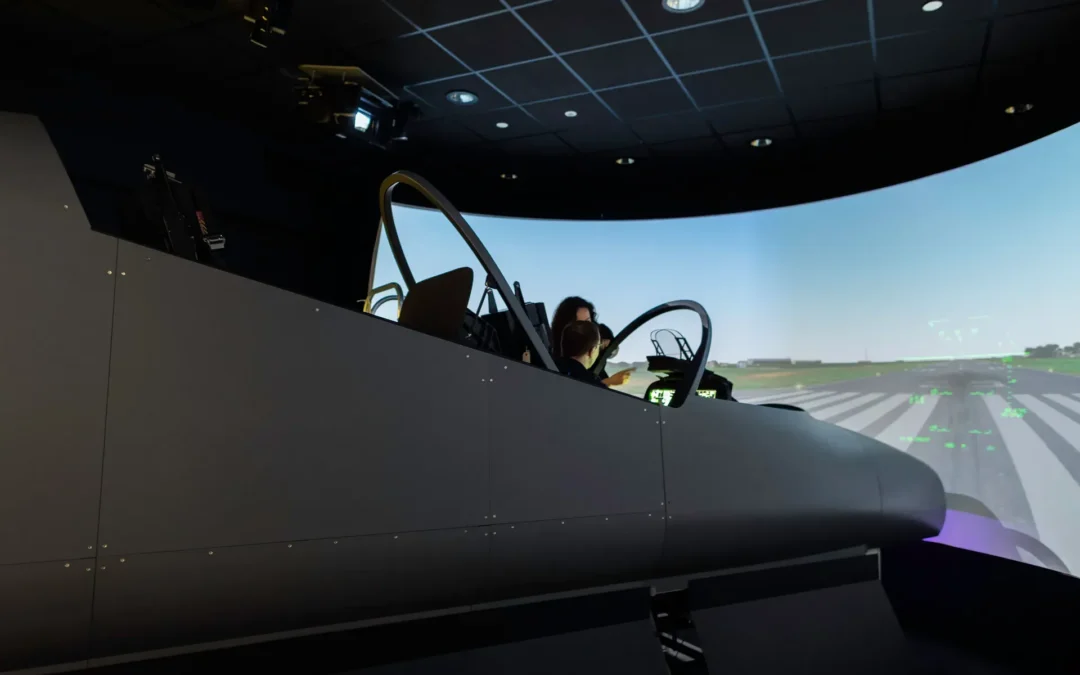
LVFA’s in-house Level D B737-800 NG full flight simulator is a central advantage for pilots who want high-fidelity airline preparation. Level D simulator quality is critical because it supports realistic practice with aircraft systems, automation, flight deck procedures, and operational decision-making. Pilots who also need 737 type rating training can evaluate a training location where the aircraft-specific environment is already part of the academy’s core capability.
Choosing among ATP CTP course locations is ultimately a scheduling and training-quality decision, not simply a question of geography. Las Vegas gives West Coast and traveling pilots a direct-access airport, weather that supports dependable planning, FAA Part 142 oversight, and an in-house simulator built around airline operations.
What Does the LVFA 6-Day ATP CTP Program Include?
Las Vegas Flight Academy delivers its FAA ATP CTP course through an FAA Part 142 training model built for commercial pilots who need a focused, complete qualification path. The six-day schedule combines academic instruction with progressively more realistic simulator work, allowing pilots to connect regulatory knowledge with airline operating procedures.
The program includes 32 hours of ground school. That exceeds the FAA curriculum minimum and gives instructors time to cover the aeronautical knowledge required for the Airline Transport Pilot Certificate. Including high-altitude operations, weather, crew resource management, advanced navigation, and airline-level decision-making. The ground portion is structured instruction, not a self-study substitute, and no pre-study is required before arrival.
After ground school, the training moves into two simulator environments.
- Four hours in a fixed-based training device. This phase lets you apply procedures and reinforce cockpit flows before the full flight simulator.
- Six hours in a Level D B737-800 NG full flight simulator. This high-fidelity device supports airline-style scenarios, crew coordination, and operational decision-making.
This progression matters because the simulator time is not an isolated demonstration. It is the practical component of the course, connecting the concepts taught in ground school to the workload, procedures, and discipline expected in commercial flight operations. Training on an in-house Level D B737-800 NG simulator also keeps the program centered on a consistent aircraft platform and facility.
The six-day format is designed around working pilots and candidates coordinating training with employment, travel, or other professional commitments. LVFA maintains flexible start dates and aims to keep wait times minimal, so pilots can select a course window without an unnecessarily long gap between planning and attendance. Review the current ATP CTP start dates before booking, since availability can change.
For a closer look at the sequence from classroom instruction through simulator sessions, see how the LVFA 6-day program is structured. This format gives pilots comparing ATP CTP course locations a clear way to evaluate both the required academic hours and the quality of the hands-on training included in the schedule.
Frequently Asked Questions
How do I compare ATP CTP course locations in the United States?
Start with the FAA’s list of authorized ATP CTP providers, then compare course dates. Total training hours, simulator availability, instructor experience, airport access, and the provider’s aircraft-specific training environment. Confirm that the schedule fits your ATP Knowledge Test and airline hiring timeline. The FAA explains that ATP CTP applies to applicants pursuing an ATP certificate with an airplane multiengine class rating or an airplane type rating. FAA ATP CTP guidance
Are ATP CTP course locations available on the West Coast?
Yes. Las Vegas is a practical West Coast option for pilots who want FAA-approved Part 142 training without traveling to an East Coast or central U.S. facility. Las Vegas Flight Academy delivers the course in a dedicated training environment with an in-house Level D Boeing 737-800 NG full flight simulator. Airport access, a concentrated six-day schedule, and generally reliable flying weather can also simplify trip planning.
What should I expect from ATP CTP course locations and their curriculum?
Every authorized program must meet the FAA’s ATP CTP curriculum requirements. The baseline includes 30 hours of ground instruction, followed by training in a flight training device and full flight simulator. Topics commonly address aerodynamics, meteorology, air carrier operations, automation, high-altitude operations, adverse weather, and crew resource management. LVFA provides 32 hours of ground training, four hours in a fixed-base simulator, and six hours in a full flight simulator.
How should I choose among ATP CTP course locations before booking?
Choose the location that balances regulatory compliance with practical training value. Ask whether the provider has an in-house simulator, which aircraft platform you will use, how frequently courses start, and what happens if your travel plans change. Also verify prerequisites before reserving a seat. Applicants must hold a commercial pilot certificate before beginning ATP CTP. After completion, plan your knowledge test deliberately rather than assuming it must be taken the same day.
Ready to Complete Your ATP CTP in Las Vegas?
Choosing the right ATP CTP course location can make the training process easier to coordinate with your schedule and career plans. Las Vegas Flight Academy provides a focused West Coast option for pilots who want to complete the required program in a structured six-day format with an in-house Level D Boeing 737-800 NG simulator.
Contact Las Vegas Flight Academy to enroll in the FAA ATP CTP course.
Talk to the LVFA team about start dates, eligibility, and how the course fits your airline timeline, then reserve your seat for the next available session.