
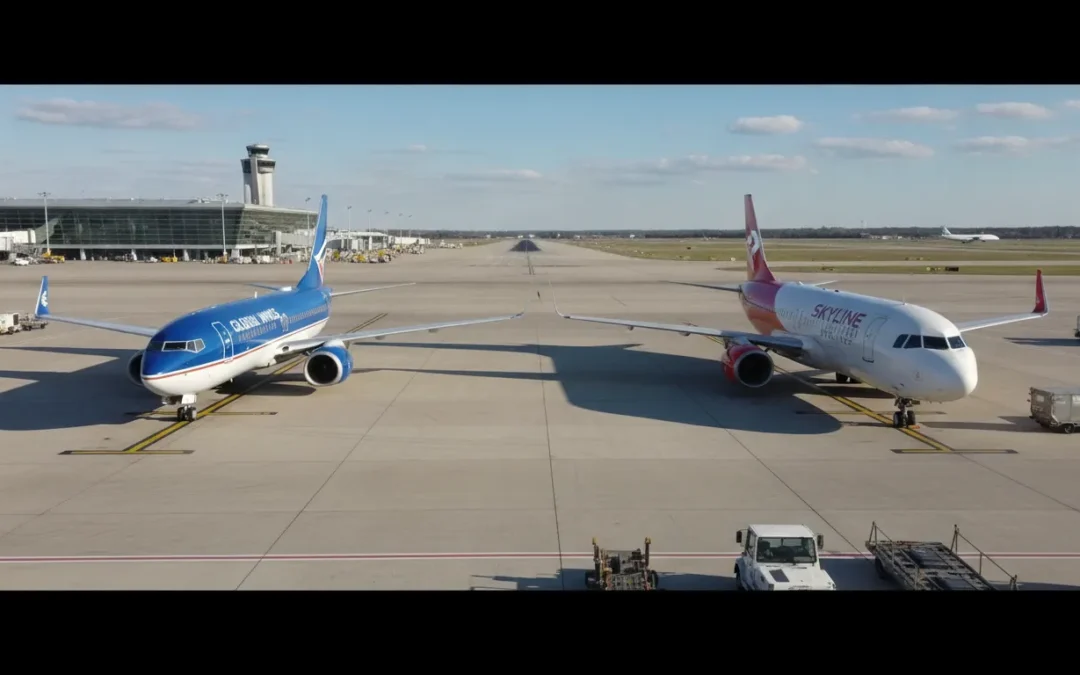
The decision to fly a Boeing 737 or an Airbus A320 shapes a pilot’s entire career path. These two jets make up most of the world’s airline fleets, but they demand very different piloting skills.
A 737 vs a320 type rating is the primary career choice pilots face when preparing to move to major commercial narrowbody airline fleets globally. The Boeing 737 relies on traditional yoke controls and manual backup systems, which demand excellent hands-on piloting skills and a steeper training curve. Meanwhile, the Airbus A320 uses highly automated fly-by-wire side-sticks and flight computers that help the pilot fly the jet safely during airline operations. Both jets see massive global hiring demand and comparable pilot pay scales, but the Airbus rating offers single-license options across several variant models. Your choice ultimately depends on whether you prefer direct mechanical control or advanced automation, and which carrier’s fleet you plan to join.
Determining which narrowbody path fits your personal pilot career goals means comparing their technical, logistical, and financial details. To find the best option, let us examine the core differences between the B737 and A320 type ratings.
B737 vs A320 Type Rating: What Are the Core Differences?
Flight controls and cockpit design
The most famous difference between these two jets is how you control them in flight. The Airbus A320 uses a fly-by-wire side-stick on the side panel to send signals to flight computers. In contrast, the Boeing 737 uses a classic yoke with steel cables as a manual backup. While this manual link gives you a direct feel for the aircraft, it also means you must use more force to fly.
Because of this design, the Boeing 737 has a steeper learning curve than the A320. The Boeing cockpit uses an older style of automation, which means you must manage many systems by hand. By contrast, the Airbus computer systems handle more of these routine tasks for you. This major difference in cockpit layout means you must prepare well when you start a 737 type rating program.
Fleet models and rating scope
The scope of each license is also a key point when you compare. A single A320 type rating covers several family models, such as the A318, A319, A320, and A321. This broad scope is due to the Airbus cross-crew qualification system. This system lets pilots switch between other Airbus models with minimal training, making crew planning much easier for large airlines.
In contrast, the Boeing 737 has its own system of shared ratings, where a standard Next Generation rating covers the -600 through -900 series. To fly the newer MAX models, a pilot only needs to take a short differences course. Under federal rules, pilots must hold a valid type rating to act as pilot in command of these heavy jet aircraft. This rule is set by the Federal Aviation Administration in 14 CFR 61.31.
Aviation career paths and choices
Choosing between these two paths often comes down to your career goals. Many cargo firms and major airlines in the United States operate large fleets of Boeing aircraft. Learning the classic yoke and manual systems can make you a flexible pilot. It helps you build strong hand-flying skills that are useful throughout your career.
At the same time, the Airbus A320 is a very common choice for airline fleets around the world. Its advanced computer systems offer a new way to fly. Whichever path you choose, you will spend many hours in a Level D flight simulator. This training ensures you are fully ready to manage the aircraft safely in any weather.
Airline Hiring Demand: Which Type Opens More Doors?
Global fleet sizes and market share
Pilot demand is growing fast around the world. Data from the U.S. Bureau of Labor Statistics shows about 18,200 pilot openings each year on average. The Airbus A320 is the most common fleet type at U.S. major airlines and around the world. In fact, the Airbus A320neo family holds about a 60% market share in this class.
This massive market share means Airbus pilots are always in high demand. But Boeing is not far behind, and the 737 family remains a powerhouse in the industry. Most major airlines need to keep both types of pilots in their ranks. This creates a steady stream of jobs for those with a 737 vs a320 type rating.
The Boeing 737 backlog advantage
Boeing is ramping up overall 737 production to 52 jets per month to meet demand. At the same time, the company has a massive order backlog. There is a backlog of nearly 5,000 aircraft for the 737 line alone. This huge backlog ensures that airlines will need 737 pilots for decades to come.
In the United States, five major carriers operate large 737 fleets. These airlines include Southwest, United, American, Delta, and Alaska Airlines. Southwest Airlines flies only the 737, making it a prime destination for 737-rated crews. Since these major carriers keep expanding their fleets, hiring remains strong.
Pilot shortages and career pathways
The demand for trained pilots is not limited to the United States. A study by Oliver Wyman projects that the European pilot shortage will reach 19,000 by 2032. This shortage is mirrored in other regions, forcing airlines to compete for talent.
As a result, airlines are offering great bonuses and rapid career growth. Whether you choose the 737 or A320, your skills will be highly valued. But the specific airline you want to join often dictates your choice. For example, Southwest Airlines flies only the 737, while other lines use both types.
A type rating helps you stand out in the global job market. Having this rating shows airlines that you are ready to fly heavy passenger jets. This reduces their training costs and speeds up your path to the cockpit. It is a key asset that makes you a top candidate during interviews.
Before you can earn either type rating, you must complete your ATP-CTP course. This training is a needed step for any pilot who wants to fly for a major airline. Once you pass, you can start simulator training for your chosen jet. Both paths are excellent, but the 737 family remains a safe and reliable choice for long-term job security.
Type Rating Costs and Training Pathways Compared
When you plan your airline pilot career, comparing the 737 vs a320 type rating cost is a key step. Both of these narrow-body jets fill the global sky, which makes either rating a great asset for any pilot. But the paths to get these ratings have other costs, training stages, and long-term fees depending on where you choose to train.
Comparing training costs and timelines
In Europe, standard type rating training costs for either jet range from EUR 14,000 to EUR 35,000. This price depends on the flight school you choose and how much simulator time is in the contract. The entire course usually takes four to six weeks of full-time study. During this busy training block, you must finish ground school, fixed-base simulator (FBS) sessions, and full-flight simulator (FFS) checks.
Ground school covers jet systems, weight and balance, and flight plans. The simulator stages then teach you how to handle normal and emergency situations under real-world flight rules.
| Training Feature | Boeing 737 Pathway | Airbus A320 Pathway |
|---|---|---|
| Average Cost (Europe) | EUR 14,000 to EUR 30,000 | EUR 15,000 to EUR 35,000 |
| Standard Duration | 4 to 6 weeks | 4 to 6 weeks |
| Key Simulator Phases | Ground school, FBS, FFS | Ground school, FBS, FFS |
| Initial Rating Validity | 1 year | 1 year |
| Renewal Requirement | Simulator check (LPC) | Simulator check (LPC) |
Initial currency and base training fees
Once you pass your checkride, your new type rating is valid for only one year. To keep it active, you must pass a license proficiency check (LPC) in a simulator each year.
Also, you cannot fly real passengers right away until you complete your base training. This training consists of six actual takeoffs and landings in the real aircraft. Because you must lease a real jet, base training can cost an extra EUR 5,000 or more on top of your simulator school fees. These extra costs can catch new pilots by surprise, so you should budget for them before you start.
A focused alternative in las vegas
If you want to train in the United States, you do not have to pay European fees or travel overseas. Instead, you can choose a focused, local option that gets you into the cockpit fast.
Las Vegas Flight Academy offers professional pilot training using a level D simulator in a modern training facility. As one of the approved Part 142 training centers, the academy gives you structured, tough lessons that meet major airline hiring standards. You can read about the entry rules and course phases on our boeing 737 type rating page. By training in Las Vegas, you save on housing and travel while learning from expert pilots.
Career Progression: From Type Rating to Captain
Choosing a 737 vs a320 type rating shapes your career path and speeds up your growth as a pilot. Both options open doors to major airlines, but the fleet you choose shapes your daily routes and your upgrade track. Landing a job as a first officer is just the first step on your journey to the left seat.
Airlines and fleet choices
Once you secure your first job, your path to captain depends on seniority and fleet size. Pilots with a Boeing rating find many job openings at U.S. airlines. Airlines like Southwest, United, American, Delta, and Alaska run large Boeing fleets. If you choose the Airbus path, you will likely fly for United, Delta, American, JetBlue, Spirit, or Frontier.
The Airbus A320 is the most common fleet type at U.S. major airlines and is widely used across the globe. Because of this massive market share, pilots on both fleets are in high demand. Choosing between these two fleets changes where you will be based and the routes you will fly. A Boeing pilot might fly long ocean routes, while an Airbus pilot might fly shorter local legs.
Upgrade timelines to captain
Upgrade times to captain can vary from three to ten years depending on airline growth and pilot retirements. Strong demand for air travel keeps upgrade timelines short for new first officers. As shown by the U.S. Bureau of Labor Statistics, the job market for airline pilots keeps growing each year. This growth, plus a global crew shortage, means airlines must promote first officers quickly to fill open captain seats.
Pilot pay and major airline pay scales
Earnings are high for both aircraft types, and captain pay scales are about the same at major U.S. airlines. First officer pay starts around ninety thousand dollars per year but rises fast with each year of service. Within a few years, a senior first officer can make over one hundred fifty thousand dollars. When you upgrade to captain, your hourly rate rises fast.
Captains at major airlines often earn over two hundred fifty thousand dollars each year. Many captains at top-tier majors earn more than three hundred fifty thousand dollars each year. Seniority is the main driver of your pay and your schedule as an airline pilot.
To protect these high earnings, captains must keep their skills sharp and pass regular tests. Pilots use a recurrent training checklist to prepare for required simulator checkrides. Staying current on your own aircraft type is vital for long-term career growth. Whether you fly a Boeing or an Airbus, hard work in training keeps you safe and highly paid.
Making the Choice: Factors Every Pilot Should Consider
Airline fleets and cockpit philosophies
Choosing your path requires careful thought and planning. You must look at where you want to work and how you prefer to fly. Some airlines use only one brand of jet, while others mix their fleets to serve different routes. You should also think about the layout and controls of each cockpit before you make your final decision.
Each aircraft line has its own style of design and flight handling. For example, some pilots love the hands-on feel of classic flight controls. Other pilots prefer advanced computer systems that manage more of the work. Understanding these differences will help you choose the program that fits your career goals.
Career goals and training logistics
Your long-term career goals must guide your choice of rating. Different ratings offer distinct paths for career growth and skill-building. You will want to look at hiring demand, regional routes, and training logistics. To help you choose between a 737 vs a320 type rating, look at these five key factors.
- Assess your target airline’s fleet: Southwest Airlines flies only Boeing 737 jets, while other major carriers mix both types. If you want to fly for Southwest, you must get a Boeing rating. For other major lines, holding either rating gives you a strong edge.
- Evaluate your cockpit controls: The Airbus A320 uses a side-stick with fly-by-wire tech. In contrast, the Boeing 737 uses a classic yoke with steel cables for manual control. The 737 has a steeper learning curve due to traditional cockpit automation.
- Consider regional reach: The Airbus A320 is popular with global lines in Europe and Asia. However, the Boeing 737 remains the leading choice for U.S. domestic routes. A Boeing rating gives you the strongest job options close to home.
- Calculate training logistics: You must plan for the total cost and location of your training. You will need to spend several weeks in ground school and simulator sessions. Make sure to find a training center that meets FAA Part 142 rules.
- Think about career growth: Airbus offers a cross-crew qualification that lets you switch between models with ease. This system reduces transition training when you move to a new model. But the massive backlog of nearly 5,000 aircraft for the 737 line keeps demand for Boeing pilots high. Flying the 737 also builds great manual skills that stay with you.
No matter which path you select, you must invest in high-quality instruction. If you decide that the Boeing path is right for you, Las Vegas Flight Academy offers focused training. Earning a 737 type rating is a solid way to secure your future in the sky. Our team provides the expert guidance and simulator time you need to succeed.
Frequently Asked Questions
Do pilots prefer the Airbus A320 or the Boeing 737?
Pilot choices often depend on cockpit space and flight design. Many pilots prefer the Airbus A320 for its quiet, roomy cabin, side-stick controls, and handy sliding tray table. Other pilots prefer the Boeing 737 because they like its classic control yoke and mechanical links to the flight surfaces. This traditional setup gives them a direct feel of the jet during flight, which some pilots love.
Does a single Airbus A320 type rating allow you to fly multiple variants?
Yes, the Airbus common type rating design is a major benefit. Under FAA training rules, a single A320 type rating lets you fly multiple jets. These include the A318, A319, A320, A321, and the newer A320neo family. This shared rating means airlines can schedule you across different jet models with very little extra training, which boosts your career options.
Does a Boeing 737 type rating allow you to fly the 737 MAX?
A standard Boeing 737 Next Generation (NG) type rating covers the -600 through -900 series. To fly the newer 737 MAX, you must take a short differences course first. FAA rules in 14 CFR 61.31 require this extra class to safely handle the new flight software and systems on the MAX. You must finish this step before you can act as pilot in command.
Is the Boeing 737 or Airbus A320 type rating harder to earn?
Many pilots agree that the Boeing 737 type rating has a steeper learning curve than the Airbus A320. The Boeing 737 uses an older cockpit style with manual switches and a mechanical control yoke that needs physical force to fly. The Airbus A320 relies on advanced flight computers and automatic systems that handle many daily tasks for you. This modern setup makes the jet slightly easier for new pilots to learn.
Ready to start your Boeing 737 type rating?
Putting off your training can set your pilot career back. It can also cost you a prime seniority slot at your target airline. As older captains retire, the best jobs go to those who already have their rating. Starting your simulator course today keeps you ahead of the major hiring wave. You will protect your timeline, build critical skills, and gain confidence in the cockpit. Do not let other pilots take your spot because you waited too long to train. Our professional B737 training programs prepare you for long-term career success.
Ready to start? Call (818) 489-1738 to talk to a flight training advisor at Las Vegas Flight Academy to discuss your 737 type rating training.