
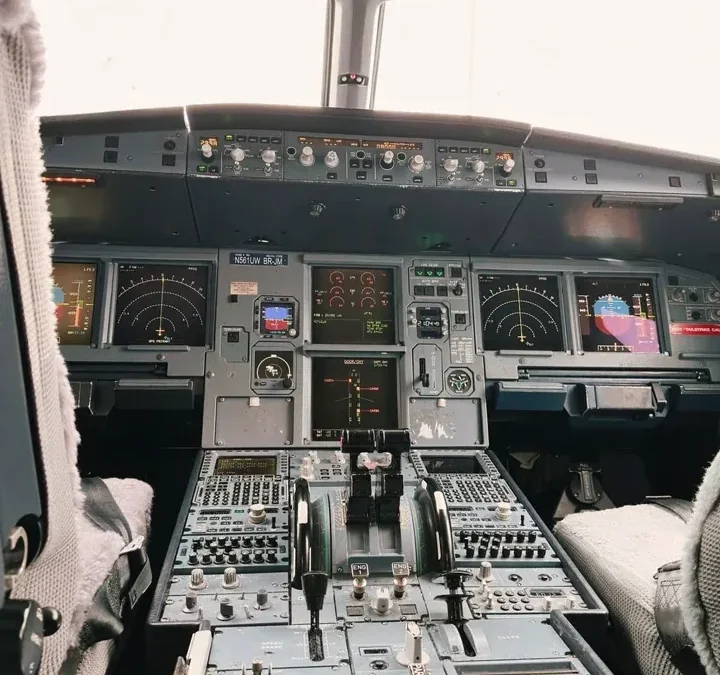
The thirteen-year engineering gap between the Boeing 737 Classic series and the Next Generation (NG) platform represents one of the most significant technology jumps within a single type rating in commercial aviation. For pilots holding a current 737 type rating on the Classic series, differences training is the mandatory bridge to the -800’s fully integrated digital flight deck, FADEC-controlled CFM56-7B powerplant, and redesigned airframe systems.
Call (818) 489-1738 today to enroll in your FAA Part 142 737 Classic to NG differences training at Las Vegas Flight Academy.
737 Classic to NG differences training equips pilots transitioning from the 737-300/400/500 series to the 737-800 NG with the specific systems knowledge and simulator proficiency required under FAA Part 142. The curriculum covers the six-panel LCD glass cockpit replacing traditional analog/CRT displays, dual Flight Management Systems with GPS navigation, CFM56-7B engines with Full Authority Digital Engine Control (FADEC), redesigned wing architecture with blended winglets, carbon brakes, upgraded 90 kVA electrical generation, and digital cabin pressurization. Las Vegas Flight Academy delivers this training at its Henderson, Nevada facility using Level D full-flight simulators for both the 737-300 and 737-800.
What Are the Critical Systems Differences Between the 737 Classic and the NG?
The FAA places the Classic (300/400/500) and NG (600/700/800/900) under a single B-737 type rating, yet the operational gap is wide. Differences training exists precisely because the systems architecture, flight deck interface, and powerplant management diverged so substantially between the 1984-certified -300 and the 1997-certified -800. Below is a summary of the primary changes every transitioning pilot must master.
- Flight deck: Analog synchro-style instruments and CRT EFIS replaced by six 8×7-inch LCD displays with integrated EICAS
- Powerplant: CFM56-3 hydro-mechanical fuel control upgraded to CFM56-7B with full-authority digital engine control (FADEC)
- Navigation: Single FMS (when installed) replaced by dual FMS units with GPS and RNP/AR capability
- Braking: Steel disc brakes superseded by carbon-carbon composite brakes saving 250-300 kg per aircraft
- Wing: Original 312 sq ft airfoil replaced by a redesigned 342 sq ft wing with optional blended winglets
- Electrical: 60 kVA integrated drive generators upgraded to 90 kVA IDGs supporting increased digital loads
The Classic to NG Evolution: A 13-Year Leap in Design
The Boeing 737 Classic series first entered revenue service in 1984 with the 737-300. When the 737-800 followed in 1998, thirteen years of aerodynamic research, engine development, and avionics innovation separated the two designs. The result is an airplane that shares a type rating with its predecessor but flies, handles, and operates like a fundamentally different machine.
The 737 NG wing spans 342 square feet versus the Classic’s 312, producing measurably higher lift-to-drag ratios and extending the type’s unrefueled range by over 400 nautical miles. The structure uses fewer individual parts and greater composites content, reducing empty weight while increasing maximum takeoff weight capability.
Redesigned Wing Aerodynamics
The NG wing represents a clean-sheet redesign rather than a modification of the Classic planform. Boeing increased the wing area by nearly 10 percent and extended the span, adding a second wing fence and, on the 737-800, an optional blended winglet installation. These changes yielded a measurable improvement in climb performance and cruise efficiency.
The certified service ceiling rose from 37,000 feet on the Classic to 41,000 feet on the NG, letting crews overfly weather and operate in more fuel-efficient airspace. The higher ceiling, combined with the redesigned wing, gives the NG a maximum takeoff weight of 174,200 pounds versus the Classic’s 149,500 pounds. Pilots transitioning through B737 type rating training at Las Vegas Flight Academy practice these performance differences in the Level D simulator before flying the aircraft.
Structural Refinements and Weight Reduction
Boeing reduced the NG’s empty weight through selective use of composites and a reduction in total part count. The forward and aft pressure bulkheads, wing leading and trailing edges, and various fairings transitioned to composite construction. The NG airframe also received a revised landing gear with improved oleo strut damping and short-field performance capability as an option.
- Maximum takeoff weight: NG 174,200 lbs vs Classic 149,500 lbs (16.5% increase)
- Service ceiling: NG 41,000 ft vs Classic 37,000 ft (10.8% increase)
- Range: NG 2,935 NM vs Classic 2,550 NM (15% increase with winglets)
- Empty weight reduction: Approximately 700 kg saved through composites and simplified manufacturing
Las Vegas Flight Academy also offers 737 differences training specifically structured around these aerodynamic and structural deltas, ensuring pilots understand how the NG handles differently from the Classic in cruise, approach, and go-around configurations.
How Does the 737 NG Flight Deck Differ from the Classic?
For pilots stepping into the 737-800 after flying the -300, the cockpit is the most immediately visible difference. The Classic’s analog synchro instruments and monochrome CRT displays are replaced by six active-matrix LCD screens arranged in a T-format common across Boeing’s next-generation and long-haul products.
The NG flight deck integrates six LCD displays. The two outer primary flight displays sit in front of each pilot. The two center multifunction displays present navigation and systems data. The lower center panel houses the engine-indicating and crew-alerting system (EICAS) display and a secondary display for auxiliary systems. Two Flight Management Systems with GPS provide redundancy the Classic never offered.
Display Architecture and Workflow
The Classic’s EFIS configuration used cathode-ray tube displays with limited color depth and resolution. The NG upgrades to AMLCD technology with higher contrast, wider viewing angles, and improved reliability. The outer displays are primary flight displays (PFDs); the center multifunction displays (MFDs) can show navigation maps, weather radar, terrain, and traffic. The lower center EICAS replaces the Classic’s engine gauges and annunciator panel with a single integrated display.
The transition from monitoring individual instruments to interpreting integrated display symbology is one of the primary skill items addressed during 737 NG Flight Management System training at the academy. The FMS on the NG uses dual CDUs with full QWERTY keypads and six-line data fields, a marked improvement over the Classic’s single CDU and limited alphanumeric entry.
Navigation and Automation Upgrades
The NG introduced capabilities the Classic platform never supported:
- Dual Flight Management Systems with automatic cross-talk and independent navigation source selection
- GPS primary navigation enabling RNP/AR approach procedures down to 0.1 NM accuracy
- Integrated autothrottle linked to both FMS units for full profile-coupled climbs and descents via VNAV and LNAV
- Predictive windshear detection and terrain awareness with forward-looking terrain avoidance (FLTA)
- Electronic flight bag compatibility via the aircraft interface device (AID) on later builds
The autothrottle on the NG is fundamentally different from the Classic. The Classic offered a basic speed-hold mode; the NG’s autothrottle integrates fully with the FMS to manage thrust targets across all flight phases, including reduced takeoff thrust and idle reverse on landing rollout.
CFM56-3 Versus CFM56-7B: What Changed Under the Cowling?
The powerplant difference between the Classic and NG is one of the most operationally significant transitions. The Classic’s CFM56-3 engine uses a hydro-mechanical fuel control unit. The NG’s CFM56-7B introduces Full Authority Digital Engine Control (FADEC), changing not only how the engine is managed but how the pilot interacts with the thrust levers during normal and abnormal operations.
The CFM56-7B produces 27,300 lbf of thrust at its maximum rating versus the CFM56-3’s 23,500 lbf, a 16 percent increase. Despite the higher thrust output, the -7B achieves approximately 7 percent better specific fuel consumption. FADEC replaces the pilot’s manual fuel scheduling with an automatic closed-loop control system that protects engine limits while delivering commanded thrust.
| Parameter | Classic CFM56-3 | NG CFM56-7B |
|---|---|---|
| Fuel control type | Hydro-mechanical | Full-authority digital (FADEC) |
| Maximum thrust | 23,500 lbf | 27,300 lbf |
| Specific fuel consumption | Baseline | ~7% improvement |
| Engine indication | Stand-alone analog gauges | Integrated EICAS on LCD |
| Autothrottle integration | Basic speed-based | Full FMS-coupled profile |
| N1 fan diameter | 60 inches | 61 inches |
| Bypass ratio | 5.0:1 | 5.5:1 |
FADEC eliminates the manual fuel-lever manipulation required on the Classic for engine start, acceleration control, and limit protection. On the NG, the pilot moves the thrust levers to a detent and the FADEC schedules the fuel flow. This automation reduces pilot workload but requires a conceptual understanding of FADEC logic, especially during failure scenarios such as an uncommanded thrust lever movement or a failed FADEC channel. Differences training at Las Vegas Flight Academy devotes dedicated ground-school time to these scenarios.
What Systems Changed Under the Hood Between the Classic and the NG?
Beyond the flight deck and powerplant, Boeing revised multiple airframe systems for the NG. These changes affect how pilots plan fuel, manage electrical loads, and handle pressurization — all of which are covered in depth during differences training.
The NG electrical system upgraded from 60 kVA integrated drive generators to 90 kVA units, providing 50 percent more electrical capacity for digital avionics and cabin amenities. The APU was redesigned for faster starts and bleed-air delivery at higher altitudes, while the pressurization system transitioned from analog outflow-valve control to fully digital cabin pressure management.
Electrical Generation Redundancy
The Classic’s electrical system relies on two 60 kVA IDGs driven by the accessory gearboxes. The NG doubles the electrical margin with 90 kVA IDGs, reflecting the higher parasitic load of six LCD displays, dual FMS units, and expanded avionics. The additional capacity also supports greater galley and cabin loads, which matters for airline operators running multi-segment days.
- Classic IDG rating: 60 kVA per channel (120 kVA total)
- NG IDG rating: 90 kVA per channel (180 kVA total)
- NG automatic load shedding: Prioritizes flight-critical buses when a generator fails
Braking and Landing Gear
The NG’s carbon brakes represent a material and performance upgrade over the Classic’s steel brakes. Carbon-carbon composite brakes weigh approximately 250-300 kg less per shipset, reducing unsprung weight and improving taxi, takeoff, and landing performance. The carbon brakes also demonstrate better peak-temperature tolerance during rejected takeoffs, allowing a greater number of high-energy stops before cool-down becomes necessary.
The landing gear geometry remained similar between the Classic and NG, but Boeing introduced a redesigned shock strut with improved damping characteristics. The short-field performance option, available on the 737-800, uses increased trailing-edge flap deflection and revised brake-thrust scheduling to reduce landing distances on runways as short as 4,500 feet. Pilots can work through these differences in the Level D simulator at the academy.
Pressurization and Bleed Air
The NG replaced the Classic’s analog pressurization controller with a digital cabin pressure control system (CPCS). The digital system modulates the outflow valve with finer granularity, producing smoother cabin altitude changes during climb and descent. The NG also receives upgraded bleed-air precooler and ducting materials that improve reliability on long-haul rotations.
While the Classic required the pilot to manually set the landing field elevation on the pressurization panel, the NG’s CPCS can auto-identify the destination elevation from the FMS navigation database. This automation reduces the pressurization error chain during descent planning and is a specific item covered during ground school at Las Vegas Flight Academy’s Part 142 programs.
How Is 737 Classic to NG Differences Training Structured at Part 142 Schools?
The FAA mandates differences training under 14 CFR Part 61 and Part 121 when a pilot transitions between 737 variants with different systems, equipment, or handling characteristics. At an FAA Part 142 training center like Las Vegas Flight Academy (LVFA), the training follows a structured curriculum combining ground-school theory with hands-on simulator sessions.
A typical 737 Classic to NG differences training course runs two to three days. Ground school covers flight deck modernization, the CFM56-7B FADEC system, NG electrical/pneumatic architecture, and regulatory requirements for the transition. Simulator sessions focus on flight deck familiarization, FMS programming, FADEC normal/abnormal operations, and landing technique differences arising from the NG wing and carbon brakes.
Ground School Curriculum
The academic phase of differences training covers the systems architecture changes in detail:
- Flight deck transition: Six-panel LCD layout, PFD/MFD symbology, EICAS interpretation, and failure annunciation philosophy
- FADEC operations: Start sequence, thrust management, autothrottle coupling, FADEC failure modes, and single-channel operations
- Flight Management System: Dual FMS configuration, database management, RNP/AR procedures, and FMS cross-talk logic
- Electrical system: 90 kVA IDG load management, automatic bus-tie logic, and alternate power configuration
- Braking and landing gear: Carbon brake characteristics, autobrake modes (the NG adds the rejected-takeoff autobrake function), and short-field landing technique
Each topic concludes with an oral assessment to confirm comprehension before the student progresses to the simulator phase. All materials are provided by the academy on the first day with no pre-study requirement.
Simulator Sessions
LVFA operates two FAA-qualified Level D full-flight simulators — one configured as a 737-300 and one as a 737-800. The differences training program typically allocates four hours of simulator time for the transition. Each session is one-on-one with an instructor who holds a current 737 type rating and airline operational experience.
The simulator scenario begins with flight deck preflight and FMS programming, then progresses through normal operations including EFIS control panel setup, VNAV-coupled departure, and LNAV navigation. Abnormal scenarios include FADEC failures, display-source switching, and simulated carbon brake degradation during landing rollout. The training concludes with a proficiency check against the FAA Part 142 standards.
Classic to NG Versus Other 737 Transition Paths
Understanding where differences training fits in the broader 737 training framework helps pilots plan their career progression. The Classic-to-NG transition is distinct from other common 737 training events.
| Training Type | Purpose | Typical Duration | FAA Requirement |
|---|---|---|---|
| Differences (Classic to NG) | Transition between variant families | 2-3 days | Part 61/121 required |
| Recurrent training | Annual proficiency on current variant | 2 days | Part 61/121 required |
| Upgrade (SIC to PIC) | Pilot-in-command qualification | 5-7 days | Part 61 or Part 142 |
| NG to MAX differences | Transition to MAX variant | 2-4 hours (computer-based) + 1 sim | FAA AD 2018-23-13 |
The Classic-to-NG path is one of the largest single technology transitions within the 737 family. By contrast, the NG-to-MAX transition is shorter and primarily computer-based because the MAX retains the NG display architecture and many common systems. Pilots exploring both paths can reference the academy’s 737 differences training guide and B737 type rating page for detailed program information.
Las Vegas Flight Academy is one of the few West Coast training centers offering the complete Classic-to-NG differences track. With both a 737-300 and 737-800 Level D simulator on-site, transitioning pilots train on the exact equipment they will encounter in the line environment. The academy’s FAA Part 142 certificate (LVAX430K) allows the training to be conducted entirely in the simulator with no aircraft time required, reducing cost while maintaining regulatory compliance.
How Las Vegas Flight Academy Delivers Your Differences Training
Founded by Ron Kelly — holder of the FAA Wright Brothers Master Pilot Award with 50-plus years of aviation experience — Las Vegas Flight Academy operates from a 40,000-square-foot training center in Henderson, Nevada. The facility houses two Level D full-flight simulators, four classrooms, and eight briefing rooms, all dedicated to professional pilot training under FAA Part 142 certification.
The differences training program is available by enrollment. Pilots holding a current 737 type rating on the Classic series can complete the transition to the NG in a focused two- to three-day curriculum. The academy provides all training materials, access to the Level D simulators, and a completion certificate recognized under Part 142.
Frequently Asked Questions
Is 737 differences training required when moving from the Classic to the NG?
Yes. The FAA requires differences training under 14 CFR 61.31 and 121.417 when transitioning between 737 variants whose systems, equipment, or handling characteristics differ from the pilot’s previous qualification. Even though the Classic and NG share a single B-737 type rating, the FAA considers the systems gap significant enough to mandate structured training at a Part 61 or Part 142 training provider.
How long does 737 Classic to NG differences training take?
Most programs are completed in two to three days. The first day focuses on ground school covering flight deck, powerplant, and systems differences. The remaining sessions deliver simulator-based hands-on training in a Level D full-flight simulator under the supervision of an instructor holding a current 737 type rating.
What are the main flight deck changes from the 737 Classic to the NG?
The NG replaces the Classic’s analog instruments and CRT displays with six active-matrix LCD screens. The outer screens serve as primary flight displays (PFDs), the center screens as multifunction displays (MFDs), and the lower center screens as the engine-indicating and crew-alerting system (EICAS). The NG also introduces dual Flight Management Systems with GPS navigation, replacing the Classic’s single FMS configuration.
Can I complete Classic to NG differences training without flying a real aircraft?
Yes. Under FAA Part 142 regulations, all training and proficiency checking can be conducted in a Level D full-flight simulator. Las Vegas Flight Academy’s two 737 Level D simulators (FAA IDs 1168 and 2104) are qualified for zero-flight-time training, meaning the entire transition from Classic to NG can be completed in the simulator.
Does Las Vegas Flight Academy offer training on both the Classic and NG simulators?
Yes. LVFA operates both a 737-300 and a 737-800 Level D full-flight simulator. This allows pilots to train on the specific platform they are transitioning from and the one they are transitioning to, providing an accurate representation of each variant’s handling characteristics, system behavior, and cockpit configuration.
Ready to Transition from the 737 Classic to the NG?
Differences training is the only approved path between the Classic and NG platforms under FAA regulations. Las Vegas Flight Academy delivers this training at its FAA Part 142 facility in Henderson, Nevada, using Level D simulators for both aircraft variants. The curriculum is structured around the operational differences that matter most on the line and is taught by instructors with current airline experience.
Call (818) 489-1738 or visit our B737 type rating page to enroll in your Classic to NG differences training.