
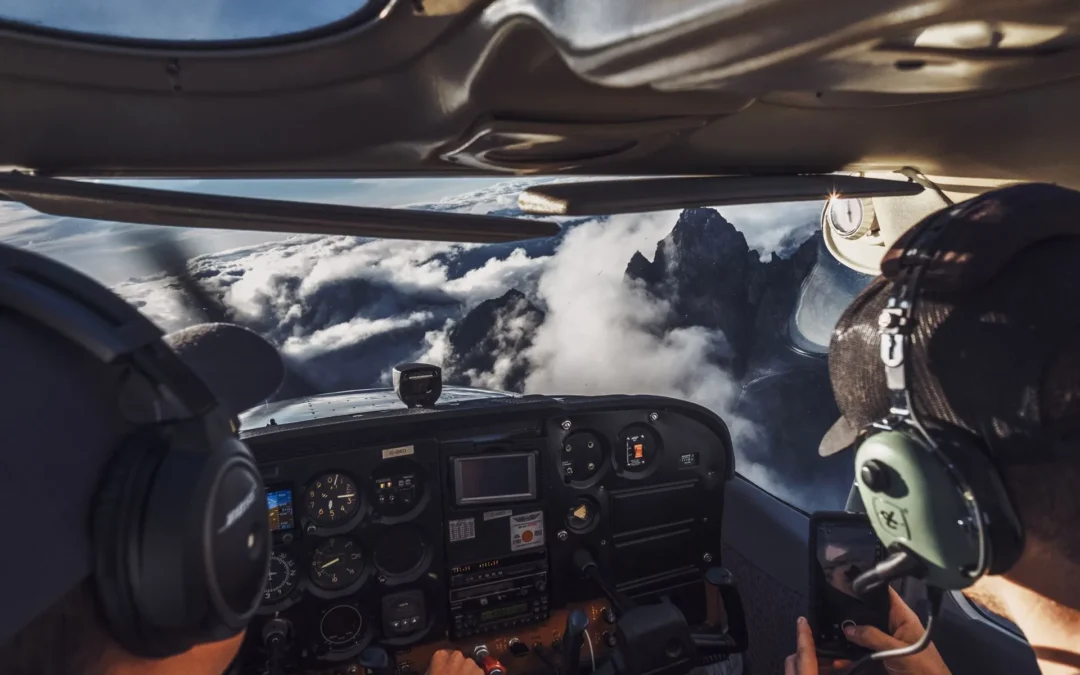
ATP CTP ground school gives airline-track pilots the required academic foundation for large, transport-category aircraft before simulator training. Across 32 hours, the fixed FAA-approved curriculum covers aerodynamics, high-altitude operations, weather, air carrier operations, leadership, and professional development. The goal is not to teach one airline’s procedures. It is to build the judgment and technical understanding pilots need before applying those concepts in a full flight simulator.
Review Las Vegas Flight Academy’s ATP-CTP course details and request upcoming dates.
The ATP CTP ground school is a required thirty-two hour program that pilots must finish before taking the ATP multiengine knowledge test. As noted in FAA Advisory Circular 61-138A, students study high-altitude operations, aerodynamics, weather, air carrier operations, leadership, and professional development. These lessons build the knowledge needed for the simulator portion of the fixed FAA-approved course. Completing the class does not award an ATP certificate. It prepares applicants for the next stages on the path to that certificate.
Pilots often ask what they will study during these days of academic work. Knowing the specific lessons can help you prepare for the pace of the course. The path begins with the required classroom curriculum.
What is covered in the required 32 hours of ATP CTP ground school?
The path to an airline job starts in the classroom. Under the rules of 14 CFR 61.156, every pilot must finish a set training program before they can take the multi-engine ATP written test. This course is known as the Airline Transport Pilot Certification Training Program, or ATP-CTP. At Las Vegas Flight Academy, this phase involves 32 hours of ground training. This training became law in 2013 to help pilots gain the skills they need for large jets. The time is spent learning how to fly heavy aircraft for a major airline. The lesson plan is fixed and follows strict FAA rules. It is not a test prep class. Instead, it builds the base of knowledge you need to move from small planes to heavy jets.
Aerodynamics and high altitude operations
A big part of the ATP CTP ground school focuses on how heavy jets fly. You will learn about high altitude aerodynamics. This has the physics of flight at high speeds and the risks of high altitude stalls. Pilots must know how to handle these events before they ever step into a full flight simulator. Since LVFA uses Boeing 737 simulators, the lessons apply to these types of swept-wing jets. The ground school covers stall search and recovery steps. They also teach you how to stay safe in thin air. You will study how jet wings work and how they differ from light planes. This part of the course ensures you know the limits of the plane and how to keep it safe.
Meteorology and air carrier rules
Flying for an airline means dealing with complex weather and strict laws. The ground school covers advanced meteorology. You will learn how to read high-level weather charts and spot unsafe flight weather. This has icing, turbulence, and thunderstorms. The course also dives into air carrier operations. You will study how airlines run their flights. This has fuel planning, dispatch steps, and weight and balance. You can learn more about our ATP-CTP course to see how we fit these hours into our six-day program. These lessons help you think like an airline captain rather than a solo pilot. You learn to make safe choices in a fast-paced airline world.
Leadership and crew resource management
The move to a two-pilot crew is a major step for any pilot. The FAA requires ground training in leadership and how to act as a pro. You will study Crew Resource Management, or CRM. This field looks at how pilots talk to each other and work as a team. You will learn how to manage tasks in the cockpit. You also learn how to use flight automation in the right way. This means knowing when to use the auto-pilot and when to fly by hand. The goal is to reduce errors and keep the flight safe. These hours focus on clear talk and shared goals. You will also look at case studies of past flight events to see what went wrong.
- High altitude stall training and recovery steps.
- Advanced jet aerodynamics and flight physics.
- Hazardous weather detection and avoidance.
- Part 121 and Part 135 air carrier rules.
- Crew clear talk and task management.
Find resources to help you prepare for ATP-CTP beyond the classroom. It is important to know that these 32 hours do not cover the FAA written exam. While you will learn a lot, you must still prepare for the written test on your own. Most pilots use a separate home study course for that part. The ground school exists to give you the real-world skills and safety knowledge that a test alone cannot provide. Once you finish the ground school and simulator sessions, you will get a certificate. This certificate has no end date. It is your ticket to take the ATP multi-engine written test and start your career as an airline pilot.
The major subject areas pilots study
The ATP-CTP ground school is a core part of the path to becoming an airline pilot. This training fills the gap between flying light planes and operating large jets. The FAA rules in AC 61-138A require at least 32 hours of ground instruction. Pilots study complex subjects that prepare them for the fast-paced world of air carrier operations. These hours focus on safety, physics, and how crews work together in a flight deck.
Aerodynamics and high-altitude flight
One major focus of the training is high-altitude operations. Pilots learn how air acts differently when a jet flies near the speed of sound. They study “Mach tuck” and “coffin corner,” which are risks at high altitudes. The course covers how to stay in control if the plane stalls or moves in an odd way. This part of the ground school builds the base for the later ATP-CTP course simulator sessions. Understanding these forces is vital for any pilot seeking a multiengine ATP certificate.
Meteorology and air carrier operations
Modern airline pilots must know how to handle severe weather. Ground school covers how to read advanced radar and avoid big storms. Pilots also study the rules of 14 CFR Part 121, which governs how airlines fly. They learn about dispatching, fuel needs, and how to stay safe in busy air space. This training ensures every pilot knows the laws and best practices of the industry. It helps bridge the move from general flight to professional airline work.
Leadership and crew development
Flying a jet is a team effort. A large part of the class focuses on Crew Resource Management (CRM). Pilots learn how to talk clearly and solve problems as a team. This helps prevent errors that could lead to accidents. The FAA job aid for ATP-CTP notes that instructors must have at least two years of air carrier experience. This real-world knowledge helps them teach leadership and risk management. These skills are just as important as knowing how to use the flight controls.
Why do pilots study aerodynamics and high-altitude operations?
The move from small planes to heavy jets requires a new way of thinking about flight. In an ATP-CTP ground school, pilots spend much of their 32 hours of ground training on the physics of large aircraft. This focus is needed because jets fly fast and high. They face forces that can lead to a loss of control if the pilot does not know how to handle them. Learning these concepts helps pilots keep the plane in a safe state.
Mastering swept-wing aerodynamics
Most large jets use swept wings to fly at high speeds. This design lowers drag but changes how the plane handles. At low speeds, swept wings can lose lift in a different way than straight wings. Pilots must learn how to manage these traits during takeoff and landing. This training ensures that crew members can find and fix handling issues fast. Understanding these wing traits is a core part of the ATP-CTP course rules.
Operating in the high-altitude environment
Flying high offers better fuel use, but it brings risks. The air is thin, which makes the gap between the stall speed and the top speed much smaller. This area is often called the coffin corner. Pilots study how to keep the plane within these tight limits. They also learn how engines and systems act in the thin air. These lessons are vital for safe long-haul flights across the country or the ocean.
Energy awareness and upset recovery
Modern jet pilots must always be aware of the plane’s energy state. This means tracking both speed and altitude to ensure the plane has enough power to fly. High-altitude stalls are rare but can be hard to fix. Pilots use ground school to learn the steps for upset prevention and recovery. This knowledge allows them to act fast to return the aircraft to level flight. The goal is to build habits that prevent an upset from the start.
How ground school prepares pilots for simulator sessions
Ground school and simulator training are the two main parts of the ATP-CTP ground school. While they happen in other settings, they work as a team to build a safe pilot. The classroom gives you the “why” behind every move, while the simulator shows you the “how.” Without a strong base in theory. The fast pace of a full flight simulator can feel too fast. Ground sessions slow things down so you can learn the facts before you take the controls.
Building a basic path for the cockpit
The FAA sets clear rules for this training in AC 61-138A. You must spend 32 hours in ground school before you finish the course. This time covers big topics like high-altitude flight, weather, and complex jet systems. In the past, many pilots flew small planes that did not go as high or as fast as a jet. Moving into the world of airlines means learning how air moves in a new way at 35,000 feet.
Ground school gives you the tools to manage these changes. You learn how to use flight maps, plan for fuel, and watch for bad weather. These facts help you stay ahead of the plane. If you know how a jet should act, you can spot a problem before it gets bad. This mental prep is a key part of your safety training.
Linking classroom theory to cockpit action
The path from a desk to the pilot seat follows a set path. Each lesson builds on the last one to make sure you are ready for the 10 hours of simulator time. Here is how your time in the classroom leads to success in the simulator:
- You learn the science of high-altitude flight. This includes how thin air affects lift and how to stay safe in the flight levels.
- You study jet engines and systems. Knowing how your power plant works helps you deal with failures or engine stalls.
- You go over stall prevention and recovery. Instructors teach you the theory of why a wing stops flying and how to fix it fast.
- You review how to use cockpit automation. This prepares you to work with flight computers and auto-pilot systems in the sim.
- You focus on Crew Resource Management. This part of the plan teaches you how to talk to your co-pilot to keep the flight safe.
Moving into the full flight simulator
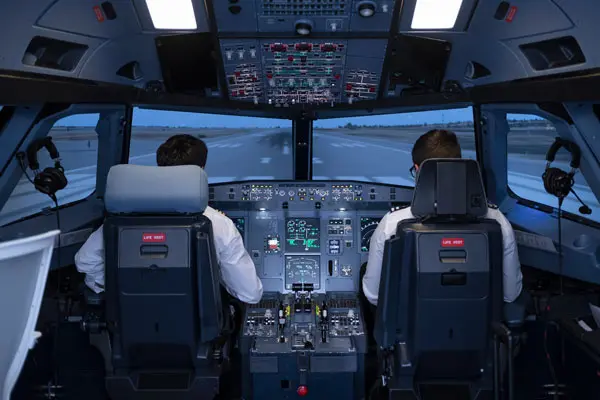
Once the 32 hours of ground school are done, you move into the simulator. At our facility, this means using a Boeing 737 Level D device. Because you already know the rules and the math, you can focus on flying. You won’t spend your sim time asking why a system acts a certain way. Instead, you will use what you learned to handle the plane during takeoffs, landings, and emergencies.
This link between ground and flight is why the ATP-CTP is so helpful. It turns complex ideas into skills you can use in a real job. By the time you sit in the simulator, your mind is ready. You have the facts you need to make good choices as a crew. This makes the move from general flight to airline flight much smoother for every pilot.
Ready to plan your ATP-CTP training? Request upcoming course dates from Las Vegas Flight Academy.
Ground training versus simulator training
The ATP-CTP course has two main parts. Each part has a clear goal to help you get ready for airline work. Ground school focuses on rules and theory. The simulator part tests your skills in a flight deck setting. You must finish both parts to meet FAA rules.
Academic ground school
The first part is the ATP CTP ground school. This part includes 32 hours of class time as set by FAA regulations. You will study high flight, air flow, and bad weather. Teachers also cover team work and safety habits used by big airlines.
This ground school is not a test prep course for the FAA written exam. Instead, it builds the core facts you need to fly a heavy jet. You will learn how to stop and fix stalls or upsets. This class work helps you know the “why” for every move you make in the jet.
Hands-on simulator sessions
The second part moves you from the desk to the jet seat. You will spend 10 total hours in Boeing 737 tools. This includes 4 hours in a fixed base tool and 6 hours in a full motion jet tool. These hours let you use the skills you learned in class without leaving the ground.
During these hours, you will face high altitude issues and low sight landings. The training entails handling real flight tasks in a safe place. This hands-on time is key to building the habit of flying a large jet.
Comparison of training components
| Training component | Ground training | Simulator training |
|---|---|---|
| Primary focus | Build technical knowledge, judgment, and a common airline-operations framework. | Apply that knowledge while operating in a realistic transport-category flight environment. |
| Typical activities | Instructor-led lessons, discussion, scenario analysis, and review of core concepts. | Hands-on flight scenarios, crew coordination, decision-making, and aircraft control. |
| Key subjects | Aerodynamics, weather, air carrier operations, leadership, and professional development. | Low-energy states, upset prevention and recovery, adverse weather, and crew resource management. |
| How they connect | Explains why a risk develops and which principles guide a safe response. | Lets pilots recognize the risk and practice an appropriate response with a crew. |
| Criteria | Ground Training | Simulator Training |
|---|---|---|
| Total Hours | 32 hours | 10 hours |
| Main Focus | Theory and safety rules | Flight skills |
| Tool Used | Classroom | Full flight simulator |
| Key Topics | Air flow and weather | Fixing stalls and upsets |
| FAA Rule | Required for all | Required for all |
How should pilots prepare for ATP CTP ground school?
Preparing for the 32-hour ground school part of your training is not the same as prepping for a checkride. The goal is to build a base of airline knowledge. You do not need to spend weeks reading books before you get here. Most of the work happens in the classroom with your peers and instructors.
Arrive ready to learn
One of the most common questions pilots ask is about pre-study. For the ATP-CTP ground school at Las Vegas Flight Academy, no pre-study is needed. The curriculum is set by the FAA and covers everything you need during the 32 hours of class time. This focus lets you learn the facts in a group where you can ask questions and share stories.
While you do not need to study the course facts ahead of time, you must handle your FAA written exam prep. This training course is not a test prep class. You should use your time before the course to study for the ATP knowledge test on your own. This way, you can focus on the classroom lessons once you start. Being well-rested and ready to talk with the instructors will help you get the most out of the six-day program.
Plan your travel and housing
A smooth training week starts with good plans. You should plan your travel to Henderson, Nevada, well before your start date. This includes booking flights and finding a place to stay that is close to the school. We offer simulator housing options to help make your stay easier. Staying nearby helps you avoid long drives so you can stay fresh for the long days of training.
You should also review basic aviation terms and airline acronyms. While the course covers the technical details, knowing the lingo helps you follow the fast-paced lessons. Arriving with your pilot files ready is also a big help. Make sure you have your commercial pilot certificate and instrument rating details on hand. This keeps the start of your training simple and stress-free.
Understand the legal rules
The FAA made this program to bridge the gap between small planes and large airliners. It is a needed step for any pilot seeking an ATP certificate with a multiengine class rating. The rules for this course come from Advisory Circular AC 61-138A. These rules ensure that all pilots get the same high-level training on safety and high-altitude flight.
Our instructors have years of air carrier experience. They use that time in the airlines to bring the lessons to life. You will spend 32 hours in the classroom followed by time in our Boeing 737 simulators. By focusing on your health and rest before you arrive, you set yourself up for success in this intensive course. Being ready to listen and talk with other pilots is the best way to prepare for your ground school week.
What happens after ground school and simulator training?
Finishing the fixed approved training at Las Vegas Flight Academy is a meaningful step on the path toward an ATP certificate. Once you complete the 32 hours of ATP-CTP ground school and 10 hours of flight training, you receive a course completion certificate. This document is not a pilot certificate. You must still pass the ATP multiengine knowledge test and practical test to earn the ATP certificate.
The FAA written test
Your next step is the ATP multiengine knowledge test. Our ATP-CTP course gives you the base you need, but you must study for the test on your own. You can find a local center to take this exam. Passing is a must before you can book your checkride. Your graduation paper shows the FAA that you met the rules in AC 61-138A.
The medical certificate rule
Many pilots ask about medical rules. You do not need an FAA medical certificate to take the ATP-CTP course at a Part 142 school. This helps you start your training fast. But you will need a valid medical certificate later. You must have one when you take the final test for your ATP license. Check your medical status early to make sure you are ready for airline work.
Your path to the checkride
After passing the knowledge test and meeting the applicable aeronautical experience and eligibility requirements, an applicant can pursue the ATP practical test. This is often called a checkride. An examiner evaluates the applicant against the applicable airman certification standards. Passing the practical test results in the ATP certificate.
Frequently Asked Questions
How many hours of ground school are required for ATP-CTP?
The FAA requires all pilots to finish 32 hours of ground training for the ATP-CTP. This course covers high altitude flight, weather, and how to recover from a stall. At the Las Vegas Flight Academy, you will finish these hours in a classroom. This ground school ensures you have the knowledge needed to fly large multi-engine planes safely. It is a key step before you start your simulator sessions and take your written exam.
What are the prerequisites for the ATP-CTP ground school?
To start the program, you must have a commercial pilot certificate with an instrument rating. You can also qualify with military flight time or a foreign pilot license. All students must be able to read and speak the English language well. According to the Las Vegas Flight Academy, you do not need a medical certificate to take this course. These rules ensure that every pilot is ready for the high-level training taught in the ground school.
Is the ATP-CTP ground school available online?
ATP-CTP must be completed through an authorized training provider under an FAA-approved curriculum. Delivery details can vary by approved provider, so pilots should confirm the current schedule and attendance requirements directly with the school. Las Vegas Flight Academy delivers its fixed approved course from its Las Vegas training location. The FAA Advisory Circular explains the regulatory framework for the program.
Does the ATP-CTP ground school include simulator training?
Yes, the full program includes both ground school and simulator training. After you finish the 32 hours in the classroom, you will spend 10 hours in flight training devices. This includes four hours in a fixed device and six hours in a full-flight simulator. The Las Vegas Flight Academy uses Boeing 737 simulators for this part of the course. These sessions help you use what you learned about high altitude flight and stall recovery in a real cockpit.
Ready to book your ATP-CTP ground school dates?
Waiting to finish your training costs you money every day you are not flying and earning airline pay. Missing your current window can keep you out of the cockpit for months while class seats fill up fast. Booking your spot now gives you a clear path to finish your hours and move into sim training. Check the ATP-CTP course details and view available ATP-CTP start dates to help you plan your trip to Las Vegas and set up your stay. Waiting to set up your course makes it harder to find dates that fit your schedule and your career. Planning your training now ensures you stay ahead of other pilots who are waiting for their chance.
Ready to book? Call 818-489-1738 to contact Las Vegas Flight Academy about an upcoming ATP-CTP course.