
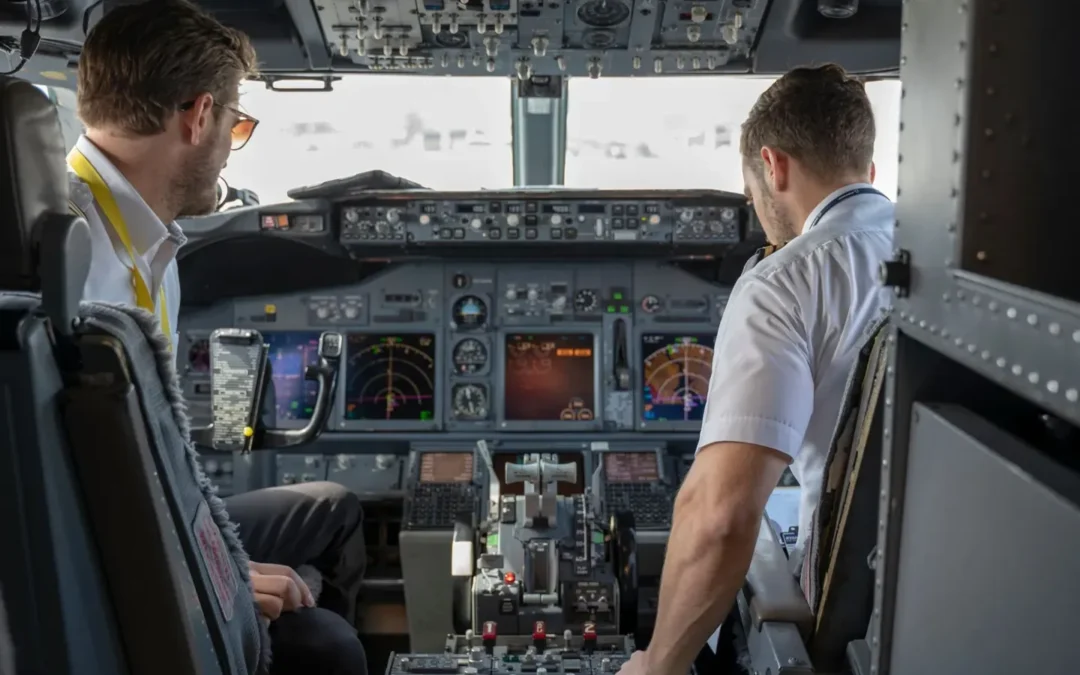
Corporate pilots often find that flight time alone does not prepare them for Part 121 scheduling rules. Moving to an airline cockpit means leaving many business-flight duties for a more standardized operation. The path begins with learning how airline crews work together.
The corporate pilot to airline pilot transition requires more than transferring flight time. An experienced business-aviation pilot must verify ATP eligibility, prepare for standardized multi-crew operations, and complete ATP-CTP before taking the ATP knowledge test. ATP-CTP covers 32 hours of ground training and simulator-based training under a fixed FAA-approved curriculum. It is a required bridge to the knowledge test, not a promise of airline employment or a substitute for an airline’s hiring standards and qualification program.
Knowing what changes in a corporate pilot to airline pilot transition helps you plan the move with fewer surprises. Start by separating transferable experience from the certificates, training, and operating habits the airline path requires.
What changes in a corporate pilot to airline pilot transition?
Moving from a Part 91 or 135 role to a Part 121 airline changes how you fly every day. Airline schedules, pay, and work rules vary by employer and seniority. You trade many varied flight-department duties for standardized air-carrier procedures, defined crew roles, and a stronger focus on flight deck tasks.
Shifting from service to structure
In business aviation, you often handle more than just flying. You might stock the cabin, manage bags, or help with travel plans. The airline world removes these tasks to keep the focus on safe flight operations. You work within a set system where ground teams handle the cabin and cargo. This change allows you to focus on the technical side of the job but removes some personal ties with passengers.
The rules also get tighter. Part 121 flying follows rigid standard operating procedures (SOPs). While Part 135 has rules, airline work is even more uniform. Every crew at the airline must fly the jet the exact same way. This helps maintain safety across a huge fleet. You can learn more about these commercial to airline career progression steps to plan your move.
Adapting to airline schedules
Your time at home will look different after the move. Corporate pilots often have “on-call” blocks where they must be ready to fly on short notice. Airlines use a bid system based on how long you have worked there. New pilots often work a “reserve” list, which means you stay on call during set shifts. As you gain rank, you can bid for “hard lines” with fixed days off.
Time away from home varies across both airline and corporate roles. Airline schedules may include reserve blocks or multi-day trips, while corporate schedules may be fixed or on call. Compare the exact work rules, base, commute, and trip patterns for each employer.
| Feature | Business Aviation (Part 91/135) | Airline Operations (Part 121) |
|---|---|---|
| Primary Duty | Flight, service, and logistics | Standardized flight operations |
| Scheduling | On-call or fixed rotation | Seniority-based bidding |
| Uniformity | Company-specific SOPs | Highly rigid, fleet-wide SOPs |
| Passenger Interaction | High, often personal | Minimal to none |
A new focus on training
The transition requires you to meet new FAA standards. You must complete ATP-CTP before taking the multiengine ATP knowledge test. The program includes 32 hours of ground training focused on large, transport-category aircraft and air-carrier operations. Afterward, your next training step depends on your certificate goals and employer. A Boeing 737 type rating is a separate qualification.
Where does ATP-CTP fit in the airline pathway?
The path from flying small jets to a seat in a large flight deck follows a set of rules. For pilots in a corporate pilot to airline pilot transition, the ATP-CTP is a key step. This course helps you move from your current skills to the fast, high-altitude flight used by big airlines. It is a rule under 14 CFR part 61, section 61.156. You must finish this step before you can take the ATP multiengine knowledge test.
A fixed training path
Some flight training lets you set your own pace, but ATP-CTP follows a fixed, FAA-approved curriculum. Every participant completes the same required course at an authorized training provider. The course addresses aerodynamics, meteorology, air-carrier operations, leadership, and operating large transport-category aircraft. Completing it is one defined step in your commercial to airline career progression.
Six days to get ready
Las Vegas Flight Academy delivers its fixed ATP-CTP curriculum in a focused six-day course. The course includes ground and simulator phases that prepare participants for the next step toward the ATP knowledge test. Review the ATP-CTP course details before choosing a training date.
- Check the prerequisites. Qualifying paths include a commercial pilot certificate with an instrument rating, qualifying military experience under 61.73, or a qualifying foreign ATP or commercial license with instrument privileges. Participants must also be able to read, write, speak, and understand English.
- Finish 32 hours of ground school. The FAA requires a minimum of 32 ground hours on topics like high-altitude flight and airline rules.
- Complete the required simulator training. The simulator phase introduces large-aircraft operations, crew coordination, and handling tasks in a controlled setting.
- Receive your completion certificate. Once you complete the fixed curriculum, you receive the proof needed to take the multiengine ATP knowledge test.
- Plan the next distinct step. The knowledge test, ATP practical test, type rating, and employer training each have their own requirements.
Next steps in the flight path
After ATP-CTP, you can take the multiengine ATP knowledge test. What follows depends on your eligibility, certificate goal, and prospective employer’s requirements. A type rating or employer qualification program is separate from ATP-CTP. Review each requirement before committing to a timeline.
Which credentials and experience should you verify?
Making the switch from corporate flight to the airline world is a big move. Before you apply, you must check your flight records. Airlines have very strict rules for their pilots. You need to ensure your papers meet all FAA standards. This check helps you find any gaps in your training early. It also saves you time during the hiring process. You want to be ready when the call comes.
Key flight certificates and ratings
Your first check starts with the ATP-CTP prerequisites. Qualifying paths include a commercial pilot certificate with an instrument rating, qualifying military experience under 61.73, or a qualifying foreign ATP or commercial license with instrument privileges. You must also be able to read, write, speak, and understand English. Then compare your records with the airline transport pilot certification requirements and each prospective employer’s published standards.
Logbook checks for specific categories
Next, audit your logbook by flight-time category. Total time does not tell an airline or examiner how much multiengine, pilot-in-command, cross-country, night, or instrument experience you can document. Compare your records with FAA certificate requirements and the published hiring standards for each airline. Under 14 CFR part 61 section 61.156, ATP-CTP must be complete before the multiengine ATP knowledge test.
Your logbook should be easy to read and support every time claim. Check signatures, dates, aircraft categories, and how simulator time is recorded. Keep a secure backup if you use a digital logbook. Clear records make it easier to compare your experience with FAA and employer requirements.
English skills and military service rules
Safety in the sky relies on clear talk. You must be able to read, write, and speak English well. This is a hard rule from the FAA. Even if you have flown for years, you must show this skill. It is part of the basic rules for all U.S. pilot certificates. Proper communication is key in a fast-paced airline environment.
If you are moving from the armed forces, use rule 61.73. This rule helps military pilots get civilian certificates. It is one of the best pilot career transition pathways for veterans. You should verify that your military records match the civilian logbook style. Check your flight hours and training dates carefully. This ensures that you get the right credit for your service. Pilots should also check for any special airline-specific rules. Some carriers want more night time than others. Knowing these rules helps you pick the right job.
How does simulator-based airline training differ?
The corporate pilot to airline pilot transition is about more than a new plane. In business flight, you often do many tasks yourself. You might plan the trip, load bags, and talk to passengers. Airline training focuses on a strict team setting. This shift needs a new way of thinking for pilots from small flight groups. You must move from flexible flying to following fixed rules. This change can be hard, but it makes you a safer pilot.
Set rules and training habits
Airlines use Standard Operating Rules (SOPs) for every part of the flight. These rules make sure that any two pilots can fly together safely. In a sim, you learn to follow these steps to the letter. This structure removes the guesswork found in some corporate roles. Pilots must follow the same paths and callouts every time. These habits are a key part of the ATP-CTP course rules set by the FAA.
You will spend a lot of time on flows and lists. Flows are a set of moves you do from memory to set up the cockpit. After the flow, you use a list to check your work. This system helps catch slips before they cause a real problem. It is a big change for pilots used to a more casual style. Learning these habits early helps you with your commercial to airline career progression. You will find that these rules make your work easier in the long run.
Teamwork and flight computers
Airline flight relies on good teamwork. This is often called Crew Resource Management. One pilot flies the plane while the other checks systems and radios. This split of work is vital in large jets. Sim training teaches you how to talk clearly with your partner. You must use specific callouts for every change in the flight. This helps both pilots see the same picture. Clear talk stops confusion during busy times like takeoff or bad weather.
Using computers is another key skill you will learn. Modern jets use complex flight systems to save fuel and time. You must know how to use the auto-pilot and auto-throttle correctly. Training shows you how to switch between different levels of control. This skill is vital for any pilot seeking a Boeing 737 type rating training program. The ATP-CTP is a separate step, but it builds the base for this work. You learn when to trust the computer and when to take over.
Handling emergency events
Sims let you practice risky tasks safely in a controlled space. You can face engine failures, fires, and stalls with no real risk to life. This training builds the muscle memory you need for real life. You learn to stay calm and follow the handbook steps while under pressure. In corporate flight, you might rarely see these events. At an airline, you must be ready for them on every trip. This readiness is why airline travel is so safe for everyone.
Your teachers will push you in the sim to see how you react. They look at how you handle stress and work with your team. This feedback helps you with your pilot career transition pathways. It prepares you for the high standards of an airline check-ride. By the end of the course, you will feel ready for the fast pace of a big jet flight deck. You will have the skills to join a professional airline crew with confidence.
How to prepare for the transition without wasting time
Moving from a corporate cockpit to an airline flight deck takes more than just new stripes. You must shift from an open service role to a fixed and strict world. The best way to start is by mapping each step of your move. This saves time and helps you meet the high bars of major carriers.
Audit your flight records early
Your first task is to check your logbooks against airline hiring rules. Many corporate pilots have plenty of total time but may lack the specific hours needed for a full certificate. Review your multi-engine and cross-country time to find any gaps. Fixing these small issues now prevents delays once you start a formal commercial to airline career progression path.
Airlines look for precise data in your records. Make sure your turbine time and PIC hours are clear and easy to check. If you need more hours, find ways to get them before you apply. Being ready on paper is the first hurdle in the corporate pilot to airline pilot transition. It is also a good time to save your records online if you still use paper logs.
Plan the ATP-CTP bridge
The biggest hurdle for most business pilots is the ATP-CTP course required by the FAA. Under U.S. rule 61.156, you must finish this training before you can take the multi-engine knowledge test. This program includes 32 hours of ground school to teach you about high-altitude flight and jet systems.
Timing matters when you book this course. Compare the course date with your knowledge-test plan, certificate eligibility, and prospective employer’s process. Completing ATP-CTP does not guarantee an interview or job. It satisfies the course requirement needed before taking the multiengine ATP knowledge test.
Shift to a fixed way of flying
Airline flying relies on strict and fixed ways of working. In the corporate world, you often have more freedom in how you manage a flight or serve a client. Major carriers use a different approach that focuses on multi-crew teamwork. You must learn to follow exact checklists and callouts for every phase of flight.
Start reading up on crew resource management and large jet systems now. This mental shift helps you succeed in the heavy training cycles at the airlines. You will need to prove you can work in a team where every move is planned and checked. Most pilots also use expert prep teams to learn how to answer interview questions. Showing that you can handle a raw-data approach in a simulator proves you are ready for the new role.
Is the airline path the right next step for you?
Making a corporate pilot to airline pilot transition is more than just changing your flight deck. It is a major shift in how you work, live, and fly. While the flying part might feel known, the business and rules around it are not the same. Before you make the leap, you should think about how these changes fit your goals.
Shifts in lifestyle and schedule
One big change involves how you spend your time. Corporate and airline schedules vary widely by employer, fleet, base, seniority, and assignment. Compare reserve rules, trip lengths, commuting needs, and days off before choosing a path. Avoid assuming either sector always provides more time at home.
Your life at an airline revolves around seniority. New pilots start at the bottom of the list. This means you will have less choice over your routes and days off. Over time, as you move up the list, you gain more control. This system is not the same as the flexible world of business flying.
A culture of strict standards
Airlines run on a firm system. In corporate roles, you might handle many tasks like food or planning. At an airline, your job is focused on following a set of strict rules. This high level of focus helps keep safety levels high. This shift needs a mindset that values routine and standard rules above all else.
To reach this level, you must meet airline transport pilot certification requirements. This includes taking the ATP-CTP course. The FAA needs 32 hours of ground school for this bridge. This training ensures every pilot has the same core knowledge before they start at a big airline.
Check the rules for each job
Do not assume your past flight hours transfer for all jobs. Each airline has its own rules for hiring. Some may value specific types of jet time more than others. It is wise to look at your commercial to airline career progression. Compare your path to the goals of the airline you want to join.
Most airlines look for pilots who can work well in a team. They want to see that you can follow checklists and get along with others. If you enjoy the change of corporate flight, you might find the airline world feels the same each day. But many pilots find the clear career path and pay are worth the trade.
Frequently Asked Questions
Is an ATP-CTP course required to transition from a corporate pilot role to an airline?
ATP-CTP is required before a pilot can take the multiengine ATP knowledge test. It does not replace an airline’s hiring requirements, ATP eligibility requirements, practical test, type rating, or employer qualification program. Review your full pathway before selecting a course date.
Does corporate flight time qualify for airline pilot job applications?
Corporate flight time may count toward applicable FAA experience requirements and an airline’s hiring minimums. The value depends on how the time is logged and which categories the certificate or employer requires. Audit total, multiengine, pilot-in-command, cross-country, night, instrument, and simulator time against the exact standards that apply to you.
What lifestyle differences should corporate pilots expect when moving to an airline?
Airline schedules often use seniority-based bidding and reserve assignments, while business-aviation schedules may be fixed, rotating, or on call. Neither description applies to every employer. Compare base location, commuting, reserve rules, trip length, and days off when deciding which work pattern fits your life.
How long is the ATP-CTP course for transitioning pilots?
Las Vegas Flight Academy delivers its fixed ATP-CTP curriculum in six days. It includes 32 hours of ground training plus the required simulator-based phase. Review current ATP-CTP course details and available dates directly with LVFA before making travel plans.
Ready to transition from corporate to airline flying?
When your records and timeline are ready, review LVFA’s fixed six-day ATP-CTP course and available dates. The team can explain the course schedule and prerequisites so you can decide when this required step fits your broader airline pathway.
Ready to book your dates? Call 818-489-1738 to contact Las Vegas Flight Academy to discuss ATP-CTP scheduling.