
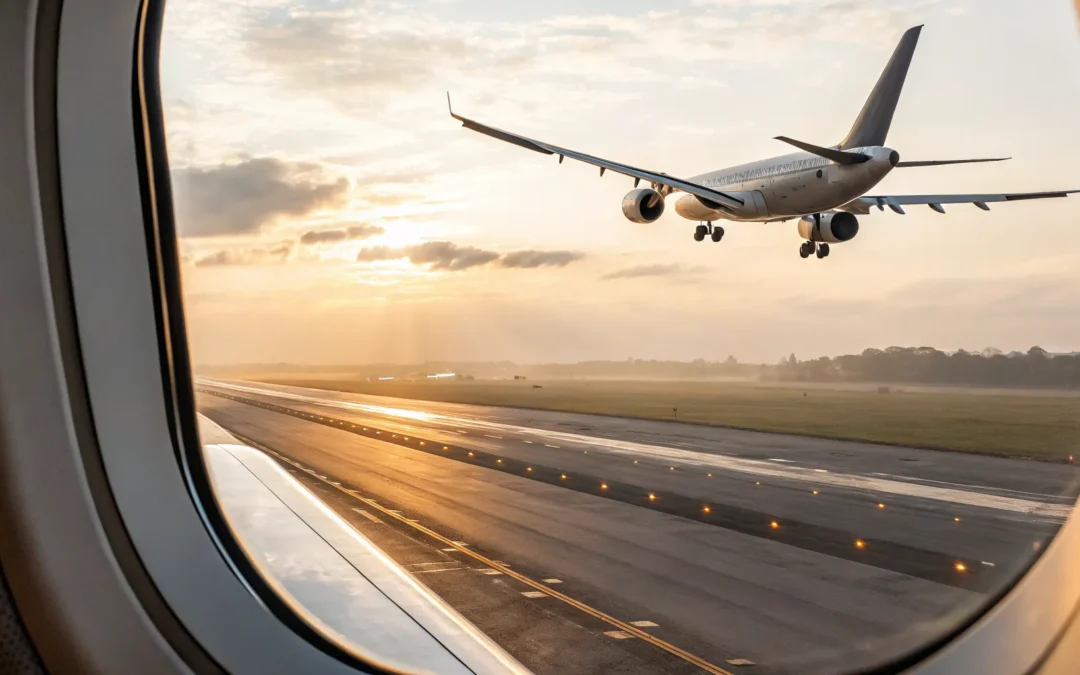
Flight is a constant conversation between the pilot and the aircraft, and much of that dialogue is non-verbal. It’s communicated through the subtle pressures on the controls, the feeling of acceleration in your seat, and the gentle buffet of the airframe as it nears a stall. Learning to speak this physical language is what separates a good pilot from a great one. This sensory skill is most critical during the most dynamic phases of flight. So, what does it actually feel like to take off and land a passenger jet? It feels like interpreting a stream of data through your hands, feet, and entire body. Here, we’ll decode those sensations, connecting the principles of flight to the real-world feelings in the cockpit.
Key Takeaways
- Unusual Sensations Are Standard Procedures: The strong push into your seat on takeoff, the feeling of a slight drop during the climb, and the loud engine roar during landing are all planned parts of a normal flight. Knowing what to expect helps turn anxiety into simple anticipation.
- Pilots Are Trained for Every Bump and Sound: Your flight crew has undergone thousands of hours of rigorous training to handle every possible scenario, including turbulence. Their calm expertise is your best indicator that the aircraft is safe and performing exactly as it should.
- You Can Actively Manage Your Comfort: Simple actions can make a big difference in how you feel. You can manage ear pressure by swallowing, calm your nerves with deep breathing exercises, and use distractions like movies or music to keep your mind occupied.
What Does Takeoff Feel Like?
For many people, takeoff is the most thrilling, and sometimes nerve-wracking, part of the journey. It’s a sequence of powerful sensations, but it helps to know that every feeling and sound is part of a carefully planned procedure. From the moment the plane begins to move until it reaches its initial cruising altitude, pilots are following a precise set of steps they have practiced hundreds of times. This is a critical phase of flight that pilots master through extensive, FAA-approved training.
Understanding what’s happening in the cockpit and how it translates to what you feel in your seat can make the whole experience much more comfortable. Takeoff isn’t just one single event; it’s a process that unfolds in three distinct stages: the acceleration down the runway, the moment of liftoff, and the initial climb into the sky. Let’s walk through what you can expect to feel during each of these phases, so you know exactly what’s going on.
The Runway Roll and Acceleration
Once the plane is lined up on the runway and cleared for takeoff by air traffic control, you’ll hear the engines spool up from a low hum to a powerful roar. This is immediately followed by a strong and sustained push that presses you back into your seat. This sensation of acceleration is often more intense than in a fast car because the aircraft needs to reach a specific speed to generate enough lift to fly. The rumbling and slight vibration you feel are just the wheels rolling over the pavement at high speed. This phase is all about building momentum for a safe and efficient departure.
Rotation and Liftoff
After a short period of acceleration, you will feel the nose of the aircraft gently tilt upward. In aviation, this is called “rotation.” It’s the moment the pilot pulls back on the controls to lift the nose wheel off the ground. You might feel a brief sensation of heaviness, almost like you’re being pushed down into your seat for a split second. This is the force of the wings creating lift and overcoming the aircraft’s weight. Immediately after, you’ll feel the rumbling of the runway disappear as the main wheels leave the ground. The transition from rolling on land to flying through the air is surprisingly smooth, marking the moment you are officially airborne.
Climbing Away from the Ground
As the plane lifts off, it will enter a steady climb. You’ll feel a distinct upward angle, and the view outside your window will quickly expand as the ground falls away. A few minutes after takeoff, you might notice the engine noise decrease slightly and feel a brief sensation that feels like a small drop or a leveling-off. This is a completely normal part of the climb. It happens when the pilots reduce engine power from full takeoff thrust to a more sustainable “climb thrust” and retract the flaps and landing gear to make the plane more aerodynamic. Even though it might feel like you’re sinking for a second, the aircraft is still climbing safely toward its cruising altitude.
How the Climb Affects Your Body
As the plane leaves the ground and points its nose toward the sky, your body experiences a few new sensations. The forces of physics are at play, and everything you feel is a completely normal part of air travel. The initial ascent is one of the most dynamic phases of flight, involving changes in speed, altitude, and pressure. These changes can feel a little strange if you’re not used to them, but understanding why they happen can make the experience much more comfortable.
From the pressure change in your ears to that momentary feeling of your stomach dropping, each sensation has a simple explanation. These feelings are signs that the aircraft is performing exactly as it should, guided by your skilled flight crew. Let’s walk through what’s happening to your body during the climb and why it feels the way it does. Knowing what to expect can help you sit back, relax, and enjoy the view as the world gets smaller below you.
Why Your Ears Pop (and What to Do)
That familiar popping sensation in your ears during takeoff is one of the most common things passengers experience. It’s all about air pressure. As the plane climbs, the air pressure inside the cabin decreases. The air trapped in your middle ear is now at a higher pressure than its surroundings, so it pushes on your eardrum to escape. That “pop” is the sound of a tiny bubble of air moving through your Eustachian tube to equalize the pressure.
To help things along, you can actively try to open those tubes. Simply swallowing or yawning usually does the trick. Chewing gum or sipping on some water can also encourage swallowing and provide relief. It’s a simple bit of biology in action and one of the most easily managed normal flight sensations.
The “Stomach Drop” Sensation, Explained
Shortly after takeoff, you might feel a brief sensation that’s similar to the drop on a roller coaster. It can be a little startling, but it’s perfectly normal. This feeling is caused by a significant change in vertical speed as the pilots adjust the plane’s climb rate. The aircraft is climbing steeply and efficiently, and your body is just taking a moment to catch up with the change in momentum.
This sensation usually only lasts for a few seconds. It’s not a sign of trouble; rather, it’s a sign that the plane is powerfully and safely gaining altitude. Think of it as the aircraft flexing its muscles as it begins the journey to cruising altitude. Once the initial, steep part of the climb is over, this feeling will disappear as the plane settles into a more gradual ascent.
Why the Plane Seems to Slow Down
You’ve just experienced the powerful roar of the engines and a strong push back into your seat. Then, a few minutes into the climb, the engines get quieter and you might feel like the plane is slowing down. This can be confusing, but the aircraft isn’t losing speed. This happens when the pilots reduce the engine power from the maximum takeoff setting to a more sustainable “climb power.”
This transition is a standard and fuel-efficient procedure for every flight. The reduction in thrust lessens the feeling of acceleration, which your body interprets as deceleration. You might even feel yourself shift forward in your seat just a bit. The plane is still climbing at a safe and steady pace, just with less force than it needed to get off the ground. It’s a planned adjustment on your way up to 35,000 feet.
What Does Cruising Altitude Feel Like?
After the intense energy of takeoff and climb, the aircraft gracefully levels off at its cruising altitude. This phase, usually happening between 30,000 and 40,000 feet, is the longest and most stable part of your journey. The feeling is one of remarkable steadiness, almost as if you’re suspended in place while the world scrolls by below. The powerful sensations of acceleration are gone, replaced by a gentle and constant forward motion. From the flight deck, this is a phase of meticulous monitoring. Pilots are overseeing the autopilot, checking instruments, optimizing fuel consumption, and communicating with air traffic control to ensure a safe and efficient path. The aircraft is in its most efficient state, flying high above most weather systems, which is the main reason this part of the flight feels so calm. It’s a period of sustained focus, not intense action, allowing you to relax and appreciate the incredible view from miles above the earth. For aspiring pilots, understanding the transition into this phase is key. It’s where the theoretical knowledge of aerodynamics and systems management meets the practical reality of a long-haul flight, a core component of advanced pilot training.
Normal Noises and Vibrations
Once you reach cruising altitude, the roar of the engines during takeoff fades into a consistent, low hum. This steady drone is a good sign; it means the engines are operating at a constant, efficient power setting. You might feel a very light, consistent vibration through the floor and your seat, which is perfectly normal. You’ll also hear occasional chimes or dings from the cabin. These are usually just signals between the flight crew and cabin crew or indicators that the seatbelt sign has been turned on or off. Learning to interpret every sound and sensation is a core part of a pilot’s education, which is why comprehensive training programs are so important for developing situational awareness.
The Unexpected Calm at 35,000 Feet
Many first-time flyers are surprised by how serene cruising altitude can be. After the dynamic climb, the relative stillness can feel unexpected. The flight is usually incredibly smooth, with only minor adjustments from the autopilot keeping the plane perfectly on course. This calm is by design. Flying at these high altitudes puts the aircraft above the active weather and turbulence often found at lower levels. Understanding that this smoothness is the goal can help turn any lingering apprehension into a more positive experience. This sense of professional calm and control is exactly what our training philosophy aims to instill in every pilot who walks through our doors, ensuring they are prepared to manage every phase of flight with confidence.
What to Expect During Turbulence
Even seasoned flyers can feel a little on edge when the plane starts to bump and sway. But turbulence is a completely normal part of flying. Think of the air as a fluid, much like an ocean. Just as a boat encounters waves, an airplane moves through currents of air that aren’t always perfectly smooth. Pilots are trained to anticipate and manage these changes, and modern aircraft are engineered with incredible resilience to handle them.
The most important thing to remember is that turbulence is an issue of comfort, not safety. While it might feel dramatic from your seat, the plane is simply riding the air currents. Pilots often know when to expect bumpy air based on weather reports and will try to find a smoother altitude if possible. They also turn on the seatbelt sign as a precaution, not because there’s any danger to the aircraft itself, but to keep you safe and secure in your seat. The sensation can be unsettling, but the aircraft is performing exactly as it was designed to. The slight changes in altitude or direction are just the plane adjusting to the air around it. Understanding what’s happening and why your plane is more than capable of handling it can make the experience much less stressful.
The Different Types of Turbulence
So, what exactly is causing those bumps? Turbulence is simply irregular air movement. There are a few common types. Thermal turbulence is caused by rising warm air, often from the sun heating the ground. Mechanical turbulence happens when physical objects like mountains or tall buildings disrupt wind flow. You might also encounter clear-air turbulence at high altitudes near the jet stream.
Whatever the cause, the effect feels similar: the plane might jolt, dip, or sway. The best analogy is a boat on the water. Sometimes the water is glassy and smooth, and other times it’s choppy with waves. Your plane is just navigating these invisible waves in the air. It’s a natural phenomenon that pilots are very familiar with.
Why Your Plane Can Handle It
Commercial aircraft are incredible machines, built to withstand forces far greater than anything they would encounter from turbulence. During the design and testing phase, their wings are bent to extreme angles to prove they can handle immense stress without breaking. In fact, no commercial airplane has ever crashed due to turbulence.
The rigorous standards that aircraft must meet are a testament to the focus on safety in the aviation industry. Flight schools and training centers operate under strict guidelines to ensure pilots are prepared for all conditions. As an FAA Part 142 certified academy, we know firsthand the level of precision and safety that is built into every aspect of aviation, from aircraft manufacturing to pilot training. Your plane is not just flying through turbulence; it was designed for it.
Tips for Staying Calm Through the Bumps
The best thing you can do during turbulence is keep your seatbelt fastened whenever you are seated. This is the single most effective way to prevent injury from any unexpected bumps. If you feel anxious, try some simple deep breathing exercises: inhale slowly through your nose, hold for a few seconds, and exhale slowly through your mouth. This can help calm your nervous system.
Distractions are also a great tool. Put on your headphones and listen to music, watch a movie, or read a book. It also helps to trust the professionals in the cockpit. The pilots have undergone extensive training, like the ATP CTP course, to prepare them for every possible flight scenario. They and the flight attendants are calm because they know the plane is safe.
What to Expect During Descent and Approach
After cruising smoothly for a while, the captain will usually announce the start of the descent. This is where the plane begins its journey back to the ground, and it comes with a new set of sensations and sounds. Just like takeoff, every part of the approach and landing is a carefully choreographed sequence. The pilots are following a precise path, communicating with air traffic control, and configuring the aircraft for a safe touchdown. Understanding what’s happening can make the final phase of your flight feel much more comfortable and predictable.
The “Sinking” Sensation
One of the first things you’ll notice during descent is a change in the engine noise and a gentle feeling of sinking. This isn’t the plane dropping; it’s a controlled, gradual descent. The pilot reduces the engine thrust, which causes the plane to slow down and start losing altitude. You might feel a slight forward motion as the aircraft’s nose pitches down slightly to maintain speed on its new downward path. This entire process is meticulously planned, and pilots undergo extensive training, like in an ATP CTP course, to master these precise maneuvers. It’s a smooth and standard procedure that marks the beginning of your arrival.
New Sounds: Flaps and Landing Gear
As you get closer to the airport, you’ll start to hear some new mechanical sounds. Often, there’s a whirring noise followed by a bit of a thud or clunk. These are the sounds of the plane getting ready to land, and they are completely normal. The whirring is typically the sound of the wing flaps extending. These are panels on the trailing edge of the wings that help the plane generate more lift at slower speeds. The clunks and thuds you hear are often the landing gear deploying and locking into place. These sounds are positive signs that the pilot is configuring the aircraft for a safe and stable landing.
Managing Ear Pressure on the Way Down
Just as your ears might have popped on the way up, you’ll likely feel them again on the way down. This happens because the air pressure inside the cabin is increasing as you descend, and your inner ear needs to adjust. You might feel a sense of fullness or pressure. To help equalize it, try swallowing, yawning, or chewing gum. These actions help open the Eustachian tubes, which connect your middle ear to the back of your throat, allowing the pressure to balance out. If that doesn’t work, you can try the Valsalva maneuver: gently pinch your nostrils closed and blow softly through your nose.
What Does a Real Landing Feel Like?
The descent and approach phases are a gentle, controlled glide path toward the runway. But the landing itself is a distinct sequence of events you can feel in your whole body. As the ground rushes up to meet you, the sensations shift from subtle adjustments to a very physical and noisy arrival. For passengers, it’s the finale of the flight. For pilots, it’s the culmination of intense focus and skill. This is where the countless hours of practice in simulators and aircraft pay off, turning a complex procedure into a series of precise, almost intuitive actions. The ability to consistently perform safe landings in all conditions is a core component of the training you receive in an ATP CTP course.
From the moment the wheels touch down, you’ll experience a rapid series of sensations. The initial contact can range from a barely-there whisper of tires on pavement to a firm, solid bump. This is immediately followed by the roar of the engines and a strong push forward into your seatbelt as the aircraft decelerates. It’s a multi-sensory experience that signals you’ve safely arrived. While it can feel dramatic to the uninitiated, every sound and motion is a planned part of bringing a massive aircraft to a controlled stop on the runway. It’s a testament to both the engineering of the aircraft and the proficiency of the flight crew.
Touchdown, Roaring Engines, and Braking
The first sensation of landing is the touchdown itself. You might feel one bump or a quick series of them as the landing gear makes contact with the runway. Almost immediately, you’ll hear the engines roar back to life. This isn’t the plane speeding up; it’s the sound of reverse thrust, a system that redirects engine power forward to help slow the aircraft down. At the same time, you’ll feel a powerful braking force. This is a combination of the wheel brakes and spoilers (panels on top of the wings that pop up) working together to create drag. This combination of forces creates a strong sensation of slowing down, pinning you gently against your seatbelt until the plane reaches its taxiing speed.
Why Every Landing Feels Different
No two landings are exactly alike because pilots are constantly adjusting to different variables. Factors like crosswinds, runway length, and the aircraft’s weight all influence the pilot’s technique. A windy day might require a firmer landing to ensure the plane settles securely on the runway, while a calm, clear day might allow for a smoother touchdown. Where you sit also changes your perception; passengers near the wings often feel less motion than those at the very front or back of the plane. While passengers feel these differences as bumps and sways, pilots are trained to manage them with precision. Through constant practice, the physical sensations of landing become an intuitive part of a pilot’s job, allowing them to adapt and ensure a safe arrival every single time.
What Is the Pilot Doing Through All This?
While you’re settling in with a drink or feeling your stomach flutter, the flight deck is a scene of quiet, focused activity. The pilots aren’t just sitting back and letting the plane fly itself. They are actively managing every moment of your journey, especially during the dynamic phases of takeoff and landing. Their calm and professional demeanor is a direct result of rigorous training and a deep understanding of the aircraft.
Every sound and sensation you experience is something they have studied, anticipated, and trained for extensively. From the initial push of acceleration on the runway to the final, gentle touchdown, they are in constant communication with each other and with air traffic control. They are meticulously monitoring the aircraft’s systems, navigating the route, and making precise adjustments to ensure a safe and smooth flight. The entire process is a carefully orchestrated procedure, handled by professionals who have dedicated their careers to mastering the art and science of aviation. This level of expertise is the standard for every airline pilot, a standard instilled through comprehensive programs at our FAA Part 142 certified academy.
A Pilot’s Role During Each Flight Phase
During takeoff and landing, pilots are at their busiest. These critical phases demand intense focus and hands-on control. As the plane accelerates down the runway, the pilot flying is managing the aircraft’s speed and direction, ready to make the precise input that lifts the plane into the air. Throughout the climb and descent, they are constantly monitoring instruments, adjusting power settings, and configuring the flaps and landing gear at the exact right moments. This isn’t a solo act; it’s a team effort. The pilots work together, cross-checking each other’s actions and communicating clearly to ensure every step is performed correctly. Their job is to be the active, thinking mind in charge of the machine, ensuring it responds exactly as expected.
How Training Prepares Pilots for Everything
A pilot’s ability to fly smoothly and handle any situation with confidence comes from one place: world-class training. A huge part of their education involves learning to anticipate and manage the very sensations that can make passengers nervous. They study how to counteract sensory illusions and fly with a gentle touch that prioritizes passenger comfort. This preparation goes far beyond normal flight operations. The goal of advanced programs like the ATP-CTP course is to equip pilots with the skills and mindset to handle anything, from unexpected turbulence to complex instrument approaches. Their composure is earned through countless hours in simulators and aircraft, turning complex procedures into second nature. So when you feel a bump or hear a new sound, you can relax knowing your flight crew is fully prepared.
How to Manage Your Flight Anxiety
Even seasoned flyers and pilots-in-training can feel a flutter of nerves. It’s a completely normal human response. The key isn’t to eliminate the feeling entirely, but to have a toolkit of strategies ready to manage it. When you feel anxiety start to build, you can feel powerless, but taking small, deliberate actions can put you back in control. It’s about shifting your focus from the “what ifs” to the “right now.”
Whether you’re a passenger or a student pilot, these simple techniques can help you stay centered and calm from takeoff to touchdown. We’ll cover practical ways to ground yourself with breathing and distraction, how to find reassurance by trusting the professionals on board, and how to reframe your mindset with positive visualization. Think of these as your personal pre-flight checklist for a smoother mental journey.
Practical Breathing and Distraction Techniques
When your mind starts to race, your body often follows. The quickest way to calm your physical response to anxiety is to focus on your breath. Try a simple box breathing exercise: inhale slowly for four counts, hold your breath for four counts, exhale completely for four counts, and then hold again for four counts. Repeat this cycle a few times. This simple rhythm can slow your heart rate and signal to your brain that you are safe.
Distraction is another powerful tool. Before your flight, load your phone or tablet with engaging content. This could be a movie you’ve been dying to see, a complex puzzle game, or a podcast that makes you laugh. The goal is to find something that requires your full attention, pulling your focus away from anxious thoughts and unfamiliar sensations.
Trusting the Flight Crew
The pilots and flight attendants are your greatest resource in the air. Remember that pilots undergo thousands of hours of rigorous instruction, like the ATP CTP course, to prepare for every possible scenario. They are highly trained professionals dedicated to your safety. If you’re a student, don’t hesitate to voice your concerns to your instructor; they are there to guide and reassure you.
On a commercial flight, take your cues from the flight attendants. If you hear a strange noise or feel a sudden movement, look at them. If they are calmly going about their duties, you can be confident that everything is normal. They are trained to know what routine sounds and sensations feel like, and their calm demeanor is one of the most reliable indicators that all is well.
The Power of Positive Visualization
Your mindset has a huge impact on your flight experience. Instead of letting your imagination run wild with worst-case scenarios, you can consciously direct it toward a positive outcome. Understanding that the bumps and sounds of a flight are normal can help transform fear into a more positive experience. Before your trip, take a few minutes to visualize the entire flight going smoothly.
Picture a seamless takeoff, a peaceful cruise above the clouds, and a gentle, perfect landing. Imagine the feeling of excitement and relief as you arrive at your destination. By mentally rehearsing a successful flight, you help train your brain to associate flying with positive feelings rather than fear. This simple act of reframing can make a world of difference.
Your Guide to a Smoother Flight Experience
Understanding the physical sensations of flying can make the entire experience, whether you’re a passenger or a new pilot, much more comfortable. Knowing what’s normal helps you relax and appreciate the journey. During takeoff, as the plane accelerates down the runway, you’ll feel a strong push back into your seat. This is simply the aircraft building the speed it needs to get airborne. As you lift off, you might feel a brief sensation of heaviness or even a slight drop as the plane adjusts its altitude and begins to climb. These are all completely normal flight sensations and part of the process.
Once you’re cruising, you may encounter turbulence, which can feel like bumps or swaying. It’s helpful to think of it like a boat rocking on waves. Modern aircraft are engineered to handle turbulence with ease, so while it might feel a little unsettling, the plane is perfectly safe. Even experienced pilots feel the physical effects of flight, like G-forces that can temporarily narrow their vision during certain maneuvers. As you descend for landing, you’ll notice the engines quiet down and may feel a slight forward motion as the pilot adjusts for the approach. The touchdown itself can range from incredibly gentle to a firm, solid bump, followed by the roar of the engines in reverse thrust to slow the plane down. The more you fly, the more your body adapts to these feelings, turning what might have been anxiety into simple anticipation.
Related Articles
- The Ultimate Commercial Pilot Flight Training Guide – Las Vegas Flight Academy
- International Student Pilot Program: A Complete Guide
- How to Become an FAA Pilot: The Ultimate Guide
Frequently Asked Questions
Why does it feel like the plane drops or slows down a few minutes after takeoff? That sensation is completely normal and happens on every flight. It’s not a drop, but rather a change in acceleration. After using maximum power to get off the ground, the pilots reduce the engines to a more sustainable “climb power.” Your body, which was being pushed back into the seat, interprets this reduction in force as slowing down or even sinking. The aircraft, however, is still climbing safely and steadily toward its cruising altitude.
Is a firm or bumpy landing a sign of a bad pilot? Not at all. A pilot’s number one priority is a safe landing, not necessarily a smooth one. In certain conditions, like with strong crosswinds or on a wet runway, a pilot may intentionally make a firmer landing to ensure the wheels make solid contact and the plane is stable. Every landing is different, and pilots adapt their technique to the specific conditions of the day to ensure the safest possible arrival.
Why do the engines get so loud again right after the plane touches the runway? That powerful roar you hear upon touchdown is called reverse thrust. The pilots are not speeding the plane up; they are redirecting the engine’s power forward to act as a powerful brake. This, combined with the brakes in the wheels and spoilers on the wings, helps the aircraft slow down quickly and safely on the runway. It’s a standard and very effective part of the landing process.
Is turbulence actually dangerous for the airplane? While it can feel unsettling, turbulence is an issue of comfort, not safety. Commercial aircraft are engineered to be incredibly durable and can withstand forces far greater than any turbulence they would ever encounter. Think of it like a boat navigating choppy water. The ride might get bumpy, but the boat is designed to handle the waves. Your plane is simply riding invisible waves in the air.
What are all the whirring and clunking sounds I hear as we get ready to land? Those mechanical sounds are positive signs that the pilots are preparing the aircraft for a normal landing. The whirring noises are typically the flaps extending from the wings, which allow the plane to fly at slower speeds. The thuds and clunks you hear are the landing gear deploying and locking into place. These are all routine sounds that mean you are on the final approach to your destination.