
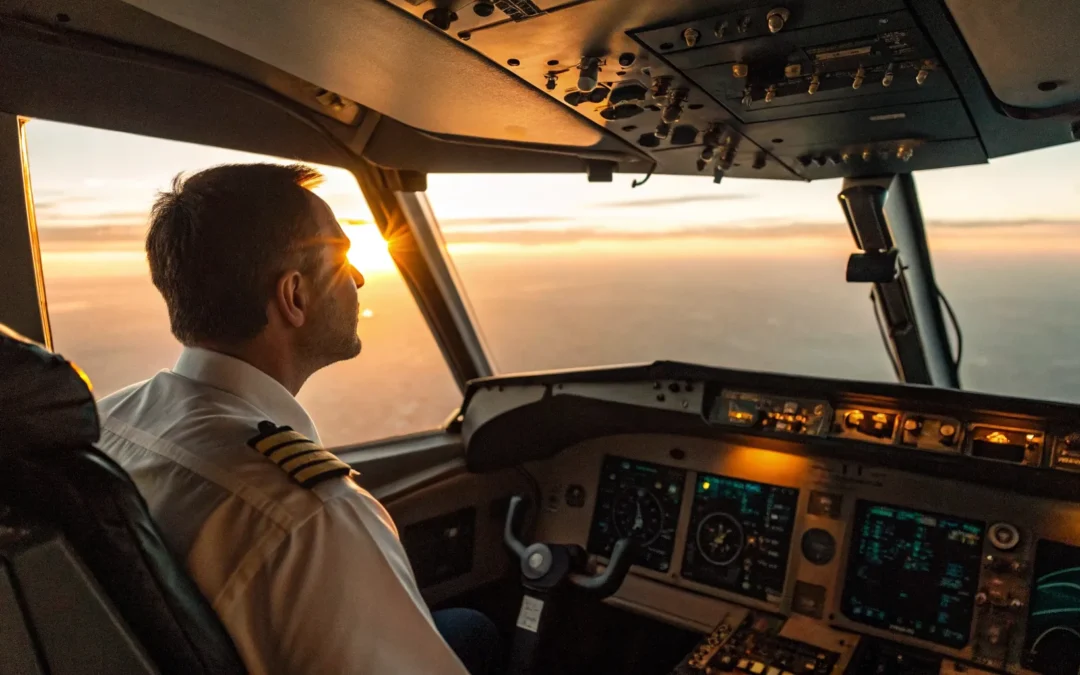
It’s a question that quietly crosses the minds of many nervous flyers and curious passengers alike. Looking into the cockpit, you see a dizzying array of lights and switches and wonder what it all means. Then the big question hits you: what would you do if you were in command of a fully loaded passenger jet? While the odds are astronomically low, the thought experiment is fascinating. The answer isn’t found in action movies. It’s found in calm, methodical steps. This guide is your hypothetical emergency checklist. We’ll cover how to talk to Air Traffic Control, what the one transponder code you need to know is, and how to work with the plane’s automation, not against it.
Key Takeaways
- Communicate Before You Control: Your first move isn’t to fly the plane, it’s to get help. Use the radio to declare “Mayday, Mayday, Mayday” and clearly explain your situation to Air Traffic Control.
- Trust Your Automated Systems: The autopilot and transponder are your lifelines. Confirm the autopilot is engaged to keep the plane stable, and enter the code 7700 to immediately signal your emergency to everyone on the ground.
- Piloting Is a Mental Discipline: This scenario highlights that a pilot’s true expertise is managing information, making clear decisions under pressure, and leading a crew, skills that are only developed through rigorous professional training.
What Does “Pilot in Command” Really Mean?
If you find yourself in the left seat unexpectedly, it helps to understand the role you’ve just inherited. The term “Pilot in Command” (PIC) officially refers to the pilot who is directly responsible for the operation and safety of an aircraft during flight time. This responsibility goes far beyond simply steering the plane. The PIC makes the final call on everything from pre-flight checks and weight distribution to handling in-flight emergencies. It’s a role that demands a cool head and sharp decision-making skills.
However, the PIC never operates in a vacuum. Commercial aviation is a team sport. Pilots work closely with dispatchers, load planners, and air traffic controllers to ensure every aspect of the flight is safe and compliant with regulations. At our flight academy, we emphasize that being a great PIC is as much about leadership and communication as it is about technical skill. While the final authority rests with you, a huge network of professionals is on the ground, ready to help you manage the flight from start to finish. Your job is to be the crucial link between that support system and the aircraft.
One Pilot Down vs. the Entire Crew
Let’s address the movie scenario head-on: one or both pilots are incapacitated, and you’re the only one left. While the remaining pilot is trained to take on the full responsibility of flying, the situation is different for a non-pilot. The good news is that you are not entirely alone. Modern cockpits and air traffic control (ATC) can provide an incredible amount of assistance. It is theoretically possible for a passenger to land a plane with step-by-step guidance from the ground. The real challenge isn’t just flying straight and level; it’s managing the dozens of other critical tasks, from communicating effectively to preparing the aircraft for landing.
What Modern Jets Can Do on Their Own
Today’s passenger jets are marvels of engineering, equipped with sophisticated systems designed to help manage emergencies. These are not just simple autopilots; they are complex emergency response systems that can assist in stabilizing the aircraft and reducing pilot workload in critical situations. The design of modern aircraft prioritizes safety and survivability, with a high level of automation available when things go wrong. While these systems can’t replace a pilot, they provide a powerful safety net. Understanding what the plane can do for you is the first step in taking control of the situation.
Your First 60 Seconds in the Cockpit
Okay, take a deep breath. You’ve found yourself in the cockpit, and you’re now in charge. The next 60 seconds are critical, but not for the reasons you see in movies. Your goal isn’t to grab the yoke and start flying. It’s to stay calm, understand what the plane is already doing, and prepare to ask for help. The aircraft is likely flying itself perfectly fine on autopilot. Your job is to keep it that way. Let’s walk through the first three things you need to do, step by step, to keep the situation under control.
Assess the Aircraft’s State
First, don’t touch anything. Just look around. Your immediate priority is to get a clear picture of the aircraft’s status. Is it flying straight and level? Look at the Primary Flight Display (PFD), the main screen in front of you with the artificial horizon. This will show your altitude, airspeed, and direction. The plane is a complex system, and professional pilots work with teams like dispatchers to manage things like weight and balance. While you can’t consult a team, you can take a moment to gather the facts. What you see on those screens is your new reality. Understanding your current situation is the first step toward making a good decision.
Secure the Cockpit and Check the Autopilot
Now, let’s make sure the plane stays stable. First, secure the cockpit door if it isn’t already. Next, locate the autopilot controls, which are usually on a panel just below the main windshield, called the glareshield. You’ll see buttons labeled “AP,” “CMD,” or “A/P.” If one is lit up, the autopilot is engaged. This is great news. Do not disengage it. Modern aircraft have incredibly sophisticated emergency response systems, and the autopilot is your most important one right now. It’s keeping the plane on its pre-programmed course. Your job is to become its co-pilot, not to take over from it. Verify it’s on, and leave it on.
Manage Panic and Make a Decision
Your heart is probably pounding, and that’s completely normal. The key is to channel that adrenaline into focus. Panic happens when you feel helpless, but you aren’t. Knowing what to do in an emergency is the best way to keep a level head and react correctly. Remember, the hardest part of this situation isn’t physically flying the plane; it’s managing the information and making clear-headed choices. Your one and only decision right now is to communicate. You need to get on the radio and tell someone what’s happening. Every other action will flow from that single step. You are not alone up there as long as you can talk to the ground.
How to Talk to Air Traffic Control
Once you’ve taken a breath and assessed the situation, your next priority is to get help. Air Traffic Control (ATC) is your most valuable resource. These are highly trained professionals whose entire job is to keep aircraft safe. They are your lifeline. Your goal is to establish communication, let them know you have an emergency, and then follow their instructions. Don’t worry about using perfect terminology; just speak clearly and tell them what’s happening. They will guide you through the rest.
Find the Radio and Declare an Emergency
First, you need to find the radio. In a modern jetliner, the controls are typically on the center console between the two pilot seats. Look for a push-to-talk (PTT) switch, which is often a button on the side of the control yoke (the “steering wheel”). Press and hold this button to speak. The most important word you can say is “Mayday.” Repeat it three times: “Mayday, Mayday, Mayday.” This is the universal signal for a life-threatening emergency, and it will get you immediate attention. After saying “Mayday,” simply explain your situation. Something as simple as, “The pilots are incapacitated, and I am a passenger,” is enough to get the ball rolling. The process of declaring an emergency is designed to be straightforward for this very reason.
The One Transponder Code to Know: 7700
While you’re talking on the radio, you can also send a silent, digital alert. Look for the transponder, a small box in the center console with a numeric keypad. This device broadcasts your aircraft’s identity and altitude to ATC. You need to “squawk 7700.” This means entering the code 7-7-0-0 into the transponder. This code is the universal signal for an emergency and will make your aircraft immediately stand out on every controller’s radar screen with a bright, flashing alert. It ensures that even if your radio transmission is unclear, ATC knows you are in distress. This is one of the most critical guidelines for unusual situations and instantly prioritizes your aircraft.
What to Say and What to Expect from ATC
After your initial “Mayday” call, ATC will respond. They will acknowledge your call and start clearing the airspace around you. They will ask for essential information, but they will keep their questions simple. Try to provide your aircraft’s call sign (usually written on a placard on the dashboard), your general location or altitude, the nature of your emergency, and the number of people on board. Don’t worry if you don’t have all the details. Just communicate what you know. From there, ATC will become your co-pilot, providing clear, step-by-step instructions. This is exactly the kind of high-pressure communication that professional pilots master during their ATP-CTP training, learning to work with ATC as a team to resolve emergencies.
A Quick Guide to Cockpit Controls
The flight deck of a modern jet can feel like information overload, but your survival depends on ignoring the noise and focusing on the essentials. If you find yourself in this unbelievable situation, your job isn’t to become a pilot in an instant. It’s to keep the aircraft stable and communicate with the people on the ground who can help you. Let’s break down the three areas you need to understand immediately to manage the situation until help arrives. These are the core components that keep the plane in the air and on course.
Focus on the Yoke, Throttle, and Key Instruments
First, locate the primary controls. The control wheel, or yoke, sits directly in front of the pilot’s seat. Pushing it forward makes the plane’s nose go down, and pulling it back brings the nose up. Turning it left or right banks the aircraft in that direction. Next, find the throttle levers, which are typically between the two pilot seats. These control engine power, affecting your speed and altitude. Finally, your eyes should go to a few key instruments on the main display. Look for the altimeter (shows your altitude), the airspeed indicator (shows your speed), and the artificial horizon, which displays the aircraft’s orientation relative to the actual horizon. The FAA’s Airplane Flying Handbook covers these basics in detail.
Autopilot: Your Most Important Ally
In all likelihood, the autopilot is already flying the plane. This is your single greatest advantage. Modern jets are equipped with incredibly advanced autopilot systems that can manage everything from maintaining altitude to following a pre-programmed flight path. Your immediate goal is not to hand-fly the aircraft but to confirm the autopilot is engaged and monitor its status. You will see an indication on the main flight display, often with letters like “AP” or “CMD” illuminated. Do not disengage it unless instructed to by Air Traffic Control. Understanding how to work with modern autopilot systems is a critical skill, and in this scenario, it’s your lifeline.
Understand the Visual and Audio Alerts
A cockpit in an emergency will likely be filled with chimes, horns, and flashing lights. This is designed to get a pilot’s attention, but it can cause panic for anyone else. Try to stay calm and recognize that these alerts are providing you with information. The aircraft is telling you what’s wrong. Look for messages on the screen that correspond with the sounds. Is there a warning about altitude, cabin pressure, or a specific system? Your job is to relay this information to ATC as clearly as possible. These systems are a fundamental part of how aircraft are designed for safety, and they can help you diagnose the problem for the experts on the ground.
Can a Passenger Jet Land Itself?
This is the million-dollar question you see in movies, and the answer is a qualified yes. Many modern passenger jets have technology that can perform an automatic landing, but it’s not as simple as flipping a switch. The system, known as “autoland,” requires specific conditions and careful inputs to work correctly. Think of it less as a magic button and more as a highly capable assistant that still needs clear direction from a human, whether that’s a trained pilot or you working with guidance from the ground. Understanding what the plane can and can’t do on its own is your next critical step.
How Autoland Systems Work
Modern aircraft often feature sophisticated autoland systems designed to guide the plane to a safe landing, primarily in low-visibility situations. These systems are incredibly precise, using radio signals from the runway (called an Instrument Landing System or ILS) and onboard computers to control the aircraft’s speed, heading, and descent. For an autoland to be successful, the aircraft’s flight management computer must be programmed with the correct runway and approach information. This isn’t something the plane figures out on its own. You, with help from Air Traffic Control, would need to input these details. Once engaged, the system takes over the controls for the final approach and touchdown.
Know Automation’s Strengths and Limits
While autoland is a powerful tool, it has clear limitations. These systems are designed for routine landings and may not function properly in severe weather like strong crosswinds or on a contaminated runway. Furthermore, an autoland requires that both the aircraft’s systems and the airport’s ground equipment are fully operational. An unexpected system failure or a non-standard situation still requires a pilot’s judgment. This is a core reason why professional pilot training emphasizes understanding automation’s boundaries and developing the skills to take over when technology reaches its limit. Automation is a partner, not a replacement for a skilled aviator.
Follow ATC Guidance for an Assisted Approach
In an emergency, you are not alone. Air Traffic Control (ATC) will be your most critical resource. Even if the aircraft is capable of an autoland, ATC provides the essential information needed to make it happen. They will tell you which runway to use, give you the correct frequencies for the ILS, and walk you through programming the flight computer. Think of them as your remote co-pilot. They can provide critical guidance to help you manage the aircraft and prepare for the landing. Your job is to listen carefully and follow their instructions precisely. They will clear other air traffic and coordinate emergency services on the ground.
Passenger Safety Is Now Your Responsibility
Once you have the aircraft under control and are communicating with Air Traffic Control, your focus must expand beyond the cockpit. You are now responsible for every single person on board. This is a massive weight, but you aren’t shouldering it alone. The cabin crew are trained professionals who are your direct line to the passengers. Your job is to lead the entire team, both in the air and on the ground, to a safe outcome. Clear communication and decisive action are what matter most. By working with the cabin crew and following ATC instructions, you can manage the cabin environment and prepare everyone for a safe landing. This is no longer just about flying a plane; it’s about managing a complex emergency situation where human lives are in your hands.
Communicate with the Cabin Crew
The flight attendants are your most valuable asset inside the aircraft. They are not just service staff; they are highly trained safety professionals who practice for emergencies. Your first step is to establish communication. Look for an interphone in the cockpit, which is a dedicated phone system for talking to the cabin crew. When you get in touch with the lead flight attendant, be calm and direct. Explain the situation simply: the pilots are incapacitated, and you are in control of the aircraft, speaking with Air Traffic Control. Delegate the task of managing the passengers to them. They know the procedures to keep passengers calm, informed, and secure. Trust their training and let them handle the cabin so you can focus on flying.
Prepare Passengers for an Emergency Landing
Once the cabin crew understands the situation, you need to instruct them to prepare for an emergency landing. You don’t need to know the specific airline procedures; just give them the command. The crew will take it from there. They will make an announcement to the passengers, demonstrating the brace position and ensuring everyone is ready. Their preparation involves securing the cabin by making sure all loose items are stowed, galley equipment is locked down, and tray tables are up. This is a critical step that minimizes injuries during a potentially hard landing. Your simple, clear command enables the crew to perform their duties, creating a safer environment for everyone when the plane touches down.
Why Weight and Fuel Matter for Landing
An aircraft has a maximum takeoff weight and a maximum landing weight, and the landing weight is typically lower. This is because landing puts immense stress on the landing gear and airframe. Your flight likely took off with enough fuel for the entire trip, plus reserves, making the plane too heavy to land safely right away. Don’t worry; ATC knows this. If the plane is overweight, they will guide you on how to burn off excess fuel. This usually involves flying a specific holding pattern at a certain altitude and speed. It might feel strange to fly in circles when you want to get on the ground, but it’s a necessary safety procedure to reach a safe landing weight. Follow ATC’s instructions precisely; they are managing your fuel and timing to ensure the safest possible approach.
Common Misconceptions About Flying a Jet
Hollywood and pop culture have painted a certain picture of what it’s like to fly a commercial jet. While exciting, these portrayals often create myths that don’t quite match reality. Let’s clear the air on a few common misconceptions you might have heard. Understanding the truth behind these ideas is the first step to appreciating the skill and training that goes into being a professional pilot. It’s not just about pushing buttons or pulling back on a yoke; it’s about command, control, and comprehensive knowledge of the aircraft.
Myth: “The autopilot handles everything.”
While modern autopilot systems are incredibly sophisticated, they are tools to assist the pilot, not replace them. Think of the autopilot as an expert flight engineer who flawlessly executes commands, but it still needs a captain to tell it what to do, when to do it, and to watch over its work. Pilots engage the autopilot to manage routine phases of flight, which frees up their mental capacity to monitor systems, communicate with ATC, and assess weather.
However, the system relies on pilot input and constant supervision. It can’t make judgment calls in unexpected situations or react to complex failures. As many aviation misconceptions get debunked, it’s clear that the physical feel of the aircraft and real-world variables require a human touch that no automated system can fully replicate.
Myth: “Flying the plane is the hardest part.”
For a non-pilot, the most intimidating part of flying seems to be the physical act of controlling the aircraft. In reality, managing the aircraft’s trajectory with the yoke and rudder pedals is often the most intuitive part of the job. The real challenge for any pilot, especially in an emergency, is managing the immense amount of information and multitasking.
The hardest part isn’t just flying; it’s communicating effectively with ATC, interpreting a constant stream of data from instruments, managing aircraft systems, and making critical decisions under pressure. A pilot’s job is less about stick-and-rudder skills and more about being a calm, decisive systems manager. It’s this cognitive workload, not the physical flying, that demands extensive training and practice.
Myth: “Only a trained pilot can land the plane.”
In a perfect world with zero complications, could a passenger be talked through a landing by ATC? It’s technically possible. Modern jets have incredible automation, including autoland systems that can perform a landing with pilot supervision. However, this scenario relies on everything going exactly right. The reality is that emergencies are rarely simple.
Sophisticated aircraft still require human judgment to handle complex and unforeseen events, like a sudden crosswind or a system malfunction during the approach. A non-pilot wouldn’t know how to interpret critical alerts or make the small, precise adjustments needed for a safe touchdown. This is why pilots train relentlessly, preparing for situations where automation reaches its limits and their skill becomes the deciding factor.
The Biggest Challenges for a Non-Pilot
While it’s useful to have a mental map of what to do in an emergency, the reality of being in a cockpit without training is incredibly difficult. The difference between a passenger and a pilot isn’t just knowledge; it’s the ingrained ability to handle immense stress, interpret a flood of information, and physically control a complex machine. Let’s be honest about the three biggest hurdles you would face, which highlight exactly why professional flight training is so rigorous and essential. These challenges show that flying is a skill built through countless hours of dedicated practice, not something you can learn on the fly.
Information Overload from Cockpit Systems
Imagine stepping into a modern cockpit. You’re surrounded by a “glass cockpit” of screens displaying endless streams of data, numbers, and moving maps. Suddenly, alarms blare and lights flash. Is that a critical warning or a routine notification? Modern aircraft have sophisticated systems, but as experts note, complex scenarios still require human judgment. A non-pilot simply doesn’t have the framework to interpret this information. You might hear a “TRAFFIC, TRAFFIC” alert and have no idea how to respond. A pilot, however, has spent hundreds of hours learning to filter this noise, identify the most critical issue, and take immediate, correct action.
The Physical Demands of Flying
Flying a large aircraft isn’t like driving a car. It requires a specific touch and a feel for the machine that only comes with practice. The controls can feel heavy and unresponsive or overly sensitive. In turbulence or an emergency, you’d be fighting to keep the aircraft stable while your body is flooded with adrenaline. The key to managing any emergency is a thorough familiarity with the aircraft and its procedures. Pilots develop muscle memory through repetition, allowing them to perform complex sequences without hesitation. For a non-pilot, just finding and operating the right controls under pressure would be a monumental physical and cognitive task.
The Mental Strain of High-Pressure Decisions
In an emergency, a pilot’s brain is their most important tool. Their training prepares them to stay calm, methodical, and focused on the top priority: the safety of everyone on board. This includes the ability to communicate effectively with Air Traffic Control while simultaneously flying the plane and running checklists. A non-pilot would likely experience “task saturation,” a state where the brain is so overwhelmed it can no longer process information or make rational decisions. Pilots train specifically to avoid this mental trap, learning to prioritize tasks and manage their cognitive load even when everything is going wrong.
Why Professional Pilot Training Is Irreplaceable
While it’s a fascinating scenario to imagine, this entire exercise highlights one undeniable truth: the skill of a professional pilot is about so much more than just flying a plane. It’s about a deep, instinctual understanding of complex systems combined with a mindset forged through years of rigorous training. Pilots spend their entire careers preparing for the worst-case scenarios they hope to never encounter. This commitment to preparation is what separates a passenger from a pilot in command. At our flight academy, we see firsthand how this disciplined training transforms skilled aviators into the calm, competent professionals you trust in the cockpit. It’s a process built on repetition, study, and an unwavering focus on safety and procedure. The ability to remain calm, think clearly, and act decisively under immense pressure isn’t an innate trait; it’s a skill developed through world-class training. This is why standardized programs and certifications exist; they create a baseline of excellence and ensure every pilot has been tested against the highest standards of performance and knowledge. It’s the difference between knowing what a button does and understanding the cascade of events that follows when you push it.
The Power of an Emergency Checklist
In any emergency, a pilot’s first instinct isn’t to guess; it’s to grab the checklist. According to the FAA, effective management of an emergency relies on a pilot’s thorough familiarity with the procedures developed by the airplane manufacturer. These checklists are your lifeline, designed to guide you through a crisis without missing a single critical step. But simply reading a list isn’t enough. Professional training drills these procedures until they become second nature. Pilots know not just what the checklist says, but the “why” behind every action. This deep knowledge, built through countless hours of study and practice, allows them to execute these procedures flawlessly even when their heart is pounding.
How Pros Train for the Unexpected
Modern jets have incredible automation, but as one analysis points out, the complexity of real-world scenarios necessitates human judgment and decision-making. This is where training for the unexpected comes in. Professional pilots spend hours in full-motion simulators, which are certified under strict FAA Part 142 standards, practicing every failure imaginable. They’ve experienced engine fires, hydraulic failures, and electrical shorts dozens of times before they ever face one in a real aircraft. This simulator training builds the muscle memory and mental fortitude required to assess a situation, work with the crew, and take decisive action, ensuring they can respond effectively when it matters most.
Preparing for Pressure with ATP-CTP and Type Rating Training
The final step for any aspiring airline pilot is earning their Airline Transport Pilot certificate. The ATP-CTP course is specifically designed to bridge the gap between flying smaller aircraft and operating a complex, multi-crew passenger jet. This program is all about preparing pilots for the high-pressure environment of airline operations, with a heavy emphasis on crew coordination, leadership, and advanced decision-making. It’s in this training that pilots master the art of managing information overload, communicating clearly in a crisis, and maintaining total situational awareness. It’s the ultimate test of a pilot’s ability to perform under pressure, ensuring they are fully prepared for the responsibility of the flight deck.
Related Articles
- How to Become an Airline Pilot: The Ultimate Guide – Las Vegas Flight Academy
- The Ultimate Commercial Pilot Flight Training Guide – Las Vegas Flight Academy
- Airline Pilot Requirements: The Ultimate Guide
Frequently Asked Questions
So, could a passenger actually land a modern jetliner? While it is theoretically possible under perfect conditions, the reality is far more complicated. Modern jets have autoland systems, but they require precise setup and can’t account for unexpected variables like a sudden crosswind or a system error. The real challenge isn’t the landing itself; it’s managing the aircraft, communicating effectively, and making critical judgments during the approach. A successful outcome would depend entirely on flawless guidance from the ground and a plane that experiences no further issues, a scenario that highlights why a pilot’s ability to handle unforeseen events is so crucial.
What is the absolute first thing I should do if I find myself in the cockpit? Before you do anything else, just take a breath and look around. Your first job is not to fly the plane but to understand what it’s already doing. The aircraft is most likely flying safely on autopilot. Your priority is to confirm the autopilot is engaged (look for an illuminated “AP” or “CMD” button) and then find the radio to ask for help. Touching the controls without knowing what you’re doing is the fastest way to make a stable situation worse. Your role is to be a calm communicator, not an instant pilot.
Why is the autopilot so important? Shouldn’t I try to fly the plane myself? The autopilot is your single most important ally in this situation. It is a highly sophisticated system that is already keeping the aircraft stable and on its pre-programmed course. Trying to hand-fly a commercial jet without any training would be incredibly difficult and dangerous. The physical feel of the controls and the skills needed to make smooth, coordinated inputs take hundreds of hours to develop. Your best course of action is to let the automation do its job while you focus on talking to the experts on the ground who can guide you.
You mentioned the plane might be too heavy to land. Why is that, and what happens then? An aircraft’s maximum safe landing weight is significantly less than its maximum takeoff weight. This is because landing puts enormous stress on the tires, brakes, and landing gear structure. A flight typically takes off with enough fuel for the entire trip plus reserves, making it too heavy to land safely right after departure. If you need to land early, Air Traffic Control will instruct you to fly in a holding pattern, which is essentially flying in circles, to burn off the excess fuel until the aircraft reaches a safe weight for landing.
Besides flying, what is the biggest challenge a non-pilot would face in this situation? The greatest challenge isn’t physically controlling the aircraft; it’s the overwhelming mental strain. A modern cockpit is a flood of information with multiple screens, sounds, and alerts. A professional pilot has spent years training to filter this information, prioritize tasks, and make clear-headed decisions under immense pressure. A non-pilot would likely experience “task saturation,” a state where the brain is too overwhelmed to function effectively. Managing this cognitive load, not just the controls, is what separates a passenger from a pilot in command.