
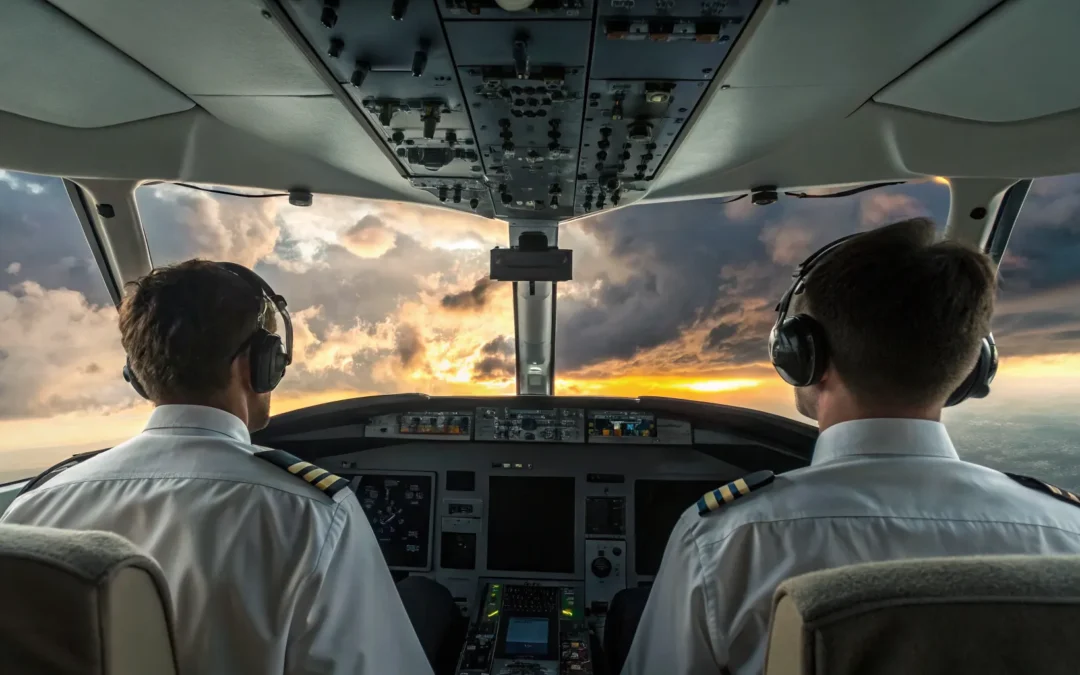
From the passenger cabin, a bumpy flight can feel chaotic and unsettling. The dips and sways make it seem like the aircraft is at the mercy of the storm. But in the flight deck, the reality is completely different. It’s a world of calm, methodical procedure. As a pilot, your relationship with the weather is constant, but it’s one you manage, not one you surrender to. So, what’s it like to fly a commercial jet through changing weather conditions? It’s less about gripping the controls and more about using your training, technology, and crew to stay ahead of the elements, making proactive decisions to keep the flight safe and smooth. This isn’t about fighting the sky; it’s about using your expertise to work with it.
Key Takeaways
- Steer clear of severe weather: The goal is not to endure storms, but to avoid them completely. Pilots use onboard radar and constant communication with air traffic control to plot a safe path around hazards like thunderstorms and icing.
- Safety starts with solid preparation: A safe flight begins on the ground with a complete weather strategy, which includes detailed briefings, planning routes around potential storms, and carrying enough fuel for diversions so a Plan B is always ready.
- Confidence comes from rigorous training: Advanced programs use realistic simulators to prepare pilots for challenging weather scenarios, allowing you to practice making critical decisions, communicating clearly, and handling the aircraft with sound judgment under pressure.
What Weather Do Pilots Face Most Often?
As a pilot, your relationship with the weather is constant. It’s the one variable you can’t control, so you learn to master how you respond to it. While modern jets are engineered to withstand incredible forces, weather remains the most dynamic and challenging factor in aviation. Understanding the most common meteorological threats is the first step in managing them effectively. From the initial pre-flight briefing to in-flight adjustments, every decision is made with the weather in mind. This isn’t about fighting the elements; it’s about using your training, technology, and judgment to work with them safely.
Pilots train extensively to recognize, respect, and react to these conditions, ensuring the safety of everyone on board. You learn to read the signs, interpret the data, and make calm, calculated decisions when the skies get rough. This deep knowledge of meteorology is a core part of becoming a professional aviator. It transforms weather from a source of anxiety into a set of manageable challenges. The goal is never to test the limits of the aircraft or your skills against a storm. Instead, it’s to use your expertise to keep the flight smooth, predictable, and well clear of any significant danger. Let’s look at the specific types of weather you’ll encounter most frequently in your career and how you’ll be prepared to handle them.
Thunderstorms and Convective Activity
Thunderstorms represent one of the most significant weather hazards in aviation. It’s not just about a little rain and lightning; these systems contain a potent mix of severe turbulence, powerful updrafts and downdrafts, hail, and icing. With tens of thousands of thunderstorms forming around the globe daily, they are a common consideration. The cardinal rule for pilots is simple: avoidance. You don’t fly through a thunderstorm. Instead, you use onboard weather radar and ATC guidance to fly around them by a wide margin, respecting the immense power they hold. This isn’t about being tough; it’s about being smart and safe.
Turbulence and Clear-Air Turbulence
Turbulence is probably the weather phenomenon passengers are most familiar with. Caused by irregular air movements, it can range from light bumps to more severe jolts. While it can be uncomfortable, it’s important to remember that commercial aircraft are built to handle these stresses. A more unpredictable challenge is Clear-Air Turbulence (CAT). As the name suggests, CAT occurs in clear skies with no visual cues like clouds, often near the jet stream. Pilots rely heavily on forecasts and reports from other aircraft (PIREPs) to anticipate these invisible bumps and adjust their altitude for a smoother, safer ride.
Fog and Low Visibility
What you can’t see can certainly cause problems, especially during takeoff and landing. Fog, heavy rain, or snow can drastically reduce visibility, creating a major operational challenge. While many large airports and modern jets are equipped for ‘autoland’ procedures that can guide a plane to the runway in zero-visibility conditions, the work isn’t over once the wheels touch down. Pilots must still manually taxi the aircraft to the gate, and navigating a complex airfield in thick fog is slow and demanding. This is why low visibility is a leading cause of flight delays and ground stops.
Icing Conditions
Ice accumulation on wings and control surfaces is a serious threat because it disrupts the smooth flow of air, which can reduce lift and increase drag. While flying in cold air or snow is generally manageable, freezing rain is particularly dangerous. It can cause ice to build up on the aircraft faster than de-icing systems can shed it. Modern jets have sophisticated anti-icing and de-icing equipment, but the best strategy is always avoidance. Learning to interpret weather data to steer clear of icing conditions is a critical skill you’ll master in your ATP-CTP course.
Wind Shear and Crosswinds
Wind shear is a sudden, drastic change in wind speed or direction over a short distance. It’s most hazardous during takeoff and approach, when the aircraft is low, slow, and has less room to recover. Crosswinds, or winds blowing across the runway, also make takeoffs and landings more complex. Pilots train extensively to handle crosswinds up to specific limits for their aircraft type. Fortunately, modern airports and aircraft are equipped with predictive wind shear detection systems that provide advanced warning, allowing crews to take corrective action or go around for another approach.
How Do You Prepare for Weather Before Takeoff?
A safe flight begins long before the wheels leave the runway. Proactive and thorough preparation is the most powerful tool a pilot has against challenging weather. Instead of simply reacting to conditions as they appear, professional pilots build a comprehensive flight plan that anticipates and accounts for potential weather threats from start to finish. This groundwork ensures that the crew has a clear strategy, backup plans, and the resources needed to handle whatever the atmosphere throws their way.
Get the Pre-Flight Weather Briefing
Before any flight, getting a standard weather briefing is a critical first step. This isn’t just a quick look at a weather app; it’s a deep dive into official reports and forecasts that cover your entire route. The briefing provides a complete picture of current and expected conditions, including cloud layers, turbulence, and any significant weather events like thunderstorms or icing. You’ll use resources like the Aviation Weather Center to gather all the necessary data. Understanding this information is fundamental to making sound decisions on the ground, ensuring you never get caught by surprise in the air.
Plan Your Route Around Weather
With a detailed briefing in hand, the next step is to plan your flight path. A smart pilot doesn’t plan to fly through bad weather but around it. This involves carefully evaluating forecast ceilings, wind speeds, and frontal activity to map out the safest and most efficient route. Sometimes this means adding a few extra miles to your trip to avoid a line of thunderstorms or a turbulent area. This strategic decision-making is a core skill that separates seasoned aviators from novices and is a key focus in advanced ATP-CTP training, where you learn to apply meteorological data to real-world flight scenarios.
Calculate Fuel for Potential Diversions
Contingency planning is everything in aviation, and that’s especially true for fuel. Pilots always calculate fuel loads with a significant buffer. This isn’t just for the planned route; it includes enough extra fuel to handle potential delays, hold in a pattern, or divert to an alternate airport if your destination becomes unreachable due to weather. Having a designated alternate (or two) and the fuel to get there is a non-negotiable part of flight planning. It provides a critical safety margin, ensuring you always have a safe place to land, no matter how quickly the weather changes.
What Tech Keeps Jets Safe in Bad Weather?
Modern jets are incredible machines, packed with sophisticated technology designed to give you a clear picture of the environment and the tools to handle what’s ahead. When the weather turns, you aren’t flying blind. You have a suite of systems working together to keep the flight safe, smooth, and on track. Understanding these tools is a core part of your training and a huge source of confidence in the cockpit. From detecting storms miles away to preventing ice buildup, this technology is your partner in making smart, proactive decisions.
Onboard Weather Radar
Your onboard weather radar is your forward-looking eye in the sky. This system scans the path ahead of the aircraft, detecting precipitation like rain, snow, and hail. It displays this information on your navigation screen, typically using colors to show the intensity of the weather. Green might indicate light rain, while yellow, red, and magenta signal progressively more intense and turbulent areas. This technology allows you to detect weather conditions and storm systems far in advance. With this information, you can make informed decisions, planning deviations around the worst cells to ensure a safer and more comfortable ride for everyone on board.
De-Icing and Anti-Icing Systems
Ice is a significant threat to aircraft, as it can disrupt airflow over the wings and control surfaces, reducing lift and making the plane difficult to control. Thankfully, jets have powerful systems to combat this. Planes are built with systems to remove ice (de-icing) and to prevent ice from building up on critical surfaces in the first place (anti-icing). Anti-icing systems, like heating the leading edges of the wings with hot air from the engines, are used proactively when you anticipate icing conditions. De-icing systems, like inflatable boots on smaller aircraft, are used to break off ice after it has started to accumulate.
ADS-B and Advanced Navigation Systems
Situational awareness is everything, especially when you need to deviate from your planned route. This is where Automatic Dependent Surveillance–Broadcast (ADS-B) becomes a critical tool. ADS-B provides real-time, precise information about your aircraft’s position, altitude, and speed to air traffic controllers and other nearby aircraft. This creates a much clearer picture of the airspace for everyone. When you need to request a heading change to avoid a thunderstorm, ATC can see your exact position and the location of other traffic, allowing them to approve your request more quickly and safely. It makes the entire airspace system more collaborative and responsive.
Autopilot and Flight Management Systems
The autopilot is one of the most misunderstood tools in aviation. It’s not about letting the plane fly itself so you can relax. Instead, the autopilot is a workload-reduction tool that is especially valuable in challenging weather. It can precisely maintain the aircraft’s heading, altitude, and speed, which allows you to focus your attention on higher-level tasks. With the autopilot engaged, you can better monitor weather conditions, interpret the radar display, and communicate with ATC. The Flight Management System (FMS) works with the autopilot, allowing you to quickly program new routes or diversions, which the autopilot can then execute flawlessly.
Ground-Based Weather Data and ACARS
Your onboard systems are powerful, but they are supplemented by a constant stream of information from the ground. The Aircraft Communications Addressing and Reporting System (ACARS) is like a text-messaging service for your jet. It allows you to receive real-time weather updates, forecasts, and reports directly from your airline’s operations center and other ground sources. This ground-based data is crucial for making strategic, long-range decisions. For example, you might receive an updated forecast for your destination airport via ACARS, prompting you to consider carrying extra fuel in case you need to hold or divert. This system ensures you always have the most current information to work with air traffic control and make the best decisions.
What Happens in the Cockpit When Weather Changes Mid-Flight?
Even with the most thorough pre-flight briefing, the sky is a dynamic environment. Weather can shift unexpectedly, turning a smooth flight into a complex challenge. This is where a pilot’s training and composure are truly tested. Instead of simply reacting to what’s happening, a professional flight crew stays ahead of the weather by constantly analyzing information and making proactive decisions. It’s a continuous cycle of observing, interpreting, and acting that keeps everyone safe.
When a storm cell appears on the horizon or turbulence begins to ripple through the air, pilots don’t just cross their fingers and hope for the best. They spring into a well-rehearsed set of procedures designed to manage the situation calmly and effectively. This involves using sophisticated onboard technology to see what’s coming, strategically altering the flight path to maintain safety and comfort, and communicating clearly with everyone involved, from the co-pilot to air traffic control. The goal is always to keep the aircraft in the safest possible patch of sky. The entire process is a testament to the incredible synergy between pilot skill, advanced technology, and crew coordination. It’s a calm, controlled process that you will master through your own advanced training.
Read the Radar in Real Time
Think of the onboard weather radar as your forward-looking eyes in the sky. Pilots continuously monitor this system to get a live picture of weather conditions miles ahead. They aren’t just looking for rain; they are analyzing the intensity of precipitation, which is often color-coded from green (light) to red or magenta (severe). This data helps them identify developing thunderstorms, turbulence, and other hazards. Reading the radar is an active skill. Pilots interpret the size, shape, and movement of storm cells to predict their path and intensity, allowing them to make decisions long before they reach the adverse weather.
Adjust Altitude and Reroute
Once the radar shows a potential issue, the crew decides on the best course of action. Sometimes, the solution is a simple altitude change. A climb or descent of a few thousand feet can often place the aircraft in a smoother layer of air, above or below a turbulent area. If a large weather system like a squall line is blocking the path, the crew will work with air traffic control to reroute around it. Pilots always have backup routes in mind, and they plan for diversions to alternate airports in case the planned route becomes unsafe, ensuring there is always a safe place to land.
Work Together: Crew Decision-Making Under Pressure
No decision in the cockpit is made in a vacuum. The Captain and First Officer work as a cohesive team, discussing the weather data and agreeing on a plan. This is a core principle of Crew Resource Management (CRM). Once they decide on a course of action, they begin a clear and concise dialogue with Air Traffic Control (ATC). Effective communication with ATC is essential for safety. The crew will request a deviation from their flight plan, and ATC will work to approve a new heading or altitude that keeps the aircraft clear of weather while maintaining safe separation from other flights.
How Do Pilots Communicate About Weather In-Flight?
Flying a commercial jet is a team sport, and clear communication is the key to winning, especially when the weather turns. Pilots are constantly talking to people on the ground and in the aircraft to get a complete picture of the conditions. This continuous loop of information ensures that every decision is made with the most current data available. From coordinating with controllers hundreds of miles away to updating the cabin crew, every word matters. Effective communication keeps the flight plan flexible and ensures everyone, from the flight deck to the passenger cabin, is on the same page. It’s a skill that is just as important as knowing how to read the instruments in front of you.
Coordinate with Air Traffic Control
Think of Air Traffic Control (ATC) as your partners on the ground. While your onboard radar shows you what’s immediately ahead, controllers have a much broader view of weather systems and traffic. When you encounter unexpected weather, your first call is often to ATC to request a deviation from your flight path. You’ll work with them to find a safe corridor around a storm cell or a smoother altitude to avoid turbulence. This communication is a critical part of aviation safety, turning a potentially stressful situation into a managed, collaborative procedure. It’s a constant dialogue that helps maintain safe separation from other aircraft and handle challenging conditions with professionalism and precision.
Share PIREPs to Help Other Crews
One of the most powerful tools for in-flight weather awareness is a PIREP, or Pilot Report. While technology gives you data, a PIREP provides real-world experience from a fellow pilot who just flew through the area. If you encounter unexpected turbulence, icing, or wind shear, you have a responsibility to report it. This information is then shared with ATC and broadcast to other aircraft in the vicinity. Sharing a PIREP is about looking out for the crews behind you, giving them the heads-up you wish you had. It’s a fundamental part of the aviation community’s safety culture and a key competency emphasized in our ATP CTP course.
Update the Cabin Crew and Passengers
Your responsibilities don’t stop at the cockpit door. Keeping the cabin crew and passengers informed is crucial for both comfort and safety. A calm, confident announcement from the flight deck explaining a route change due to weather or warning of upcoming turbulence can make a world of difference. It reassures passengers that you are in control and have a plan. It also gives the cabin crew time to secure the cabin and suspend service, preventing injuries. This type of clear communication in aviation is a non-negotiable skill that helps manage the human element of the flight and ensures the safety of everyone on board.
What Safety Protocols Kick In When Weather Gets Serious?
When weather moves from challenging to severe, a pilot’s training and a set of established safety protocols take over. These aren’t last-minute guesses; they are well-defined procedures designed to protect everyone on board. The Federal Aviation Administration (FAA), airline dispatchers, and the flight crew work together to make conservative decisions that always put safety first. Think of these protocols as layers of protection that you, as the pilot, are in charge of deploying. The first layer is avoidance, which often means accepting a delay on the ground. If a storm develops mid-flight, the next layer is diverting to a safer airport. The final, most critical layer is declaring an emergency to get immediate assistance when a situation becomes time-sensitive. As a pilot, your job is to know exactly when and how to use each of these tools to manage the situation calmly and effectively. Mastering these protocols is a core part of your professional responsibility. It’s about having the confidence and judgment to make the right call, even under pressure, ensuring that every flight ends safely. Your command of these procedures is what separates a professional aviator from a novice.
Flight Cancellations, Delays, and Ground Stops
No one likes a delay, but a grounded flight is always better than a compromised one. Airlines and the Federal Aviation Administration make these calls when weather conditions make flying too dangerous. This isn’t just about a little rain. We’re talking about conditions like severe thunderstorms, icing, dangerously strong crosswinds, or thick fog that reduces visibility below legal minimums. The pilot in command always has the final say. If the dispatcher says you’re cleared to go but you don’t feel the conditions are safe, you have the authority and responsibility to delay or cancel the flight. This decision is a cornerstone of aviation safety and one that is respected throughout the industry.
Diversion Procedures and Alternate Airports
Sometimes the weather at your destination is perfectly fine when you take off, but it deteriorates unexpectedly while you’re en route. This is where your pre-flight planning pays off. Every instrument flight plan includes designated alternate airports, which are your planned “Plan B.” If the weather at your destination drops below a safe level, or if a serious storm system blocks your path, you don’t just push through it. You initiate a diversion. This is a standard procedure, not a sign of failure. You simply communicate your intentions to Air Traffic Control, and they will assist you in rerouting to your chosen alternate airport where conditions are safe for landing.
Know When to Declare an Emergency
Declaring an emergency is a pilot’s most powerful tool for ensuring safety in a critical situation. It’s a decision that gives your flight immediate priority and access to any assistance you need from Air Traffic Control. While it sounds dramatic, an emergency can be declared for any situation that requires immediate action to maintain safety, including a sudden and severe weather encounter. Effective communication in aviation is absolutely vital here. A calm, clear “pan-pan” or “mayday” call tells ATC everything they need to know to clear traffic and guide you. Knowing when to make this call is a matter of judgment, and it’s a skill you will sharpen during your advanced training, especially in simulator sessions that replicate high-stakes scenarios.
Is Flying in Bad Weather as Dangerous as It Feels?
If you’ve ever been a passenger on a bumpy flight, gripping the armrest as the plane dips and sways, you know how unsettling bad weather can feel. From the cabin, it can seem like the aircraft is at the mercy of the storm. But from the flight deck, the picture is very different. While weather demands respect and careful management, flying in it is far less dangerous than your feelings might suggest, thanks to a combination of robust aircraft, rigorous training, and a system built entirely around safety.
First, it’s important to understand that commercial airplanes are built to withstand incredible stress. The wings are designed to flex, and the airframe can handle forces far greater than any turbulence could generate. While turbulence is uncomfortable, it’s rarely a structural threat to the aircraft. The real strategy, however, isn’t to endure bad weather but to avoid the worst of it entirely. Pilots use onboard weather radar and data from the ground to steer clear of dangerous cells, especially thunderstorms.
Pilots and airlines view thunderstorms as one of the most dangerous weather events, which is precisely why they are so meticulously avoided. No pilot will intentionally fly through a thunderstorm. Instead, they will request deviations from Air Traffic Control to fly around storm systems, even if it adds time to the flight. The same goes for other hazards like severe icing or wind shear. There are established procedures and operational limits for every phase of flight, and pilots train for these scenarios constantly.
Ultimately, the entire aviation ecosystem is designed to put passenger safety first. If conditions at an airport or along a route are deemed unsafe, flights will be delayed, rerouted, or canceled. The pilot in command always has the final authority to make the safest call. So, while the ride might feel rough, you can be confident that you are in a capable aircraft operated by a well-trained crew that is actively managing the situation with a safety-first mindset.
What It’s Really Like to Fly Through a Storm
Let’s be direct: the number one rule for flying near a storm is to not do it. With tens of thousands of thunderstorms happening across the globe every day, avoidance is the most critical skill a pilot can have. Your training, weather radar, and pre-flight planning are all designed to keep you far away from convective activity. But sometimes, weather changes faster than predicted, and you might find yourself on the edge of a system or dealing with its effects. When that happens, the experience is intense and demands every bit of your focus and training. It’s less about a dramatic movie scene and more about methodical, disciplined airmanship.
If you inadvertently enter a storm cell, the conditions can be chaotic. You will likely face severe turbulence that makes simply reading your instruments a challenge. Powerful updrafts and downdrafts can cause rapid altitude changes, while wind shear creates abrupt shifts in wind speed and direction. Visibility can drop to near zero in an instant, forcing you to rely completely on your instruments. The goal isn’t to “fight” the storm but to fly the aircraft smoothly and maintain a level attitude while getting out of the hazardous weather as quickly and safely as possible. The FAA’s guidance on adverse weather is something every pilot should know inside and out.
Inside the cockpit, your job is to remain calm and execute the procedures you’ve practiced countless times. You’ll focus on maintaining aircraft control, communicating with your crew and air traffic control, and following your instruments. While passengers in the back may feel the unsettling bumps and drops, you are actively working the problem, making precise inputs to keep the jet stable. This is where your authority as pilot in command is absolute. You make the final call on whether to divert, delay, or continue, because the safety of everyone on board rests on your judgment. The experience reinforces that a pilot’s most important asset isn’t just skill, but the wisdom to make the right decision under pressure.
How Training Prepares You for Real-World Weather
Facing a line of thunderstorms on the radar or handling a low-visibility approach can feel intense, but it’s what professional pilots train for. Managing challenging weather isn’t about gut feelings or luck; it’s a direct result of rigorous, standardized training that builds competence and confidence. Every decision made in the cockpit comes from a deep well of knowledge and practice.
This is the core of advanced certification programs. The entire process is designed to equip you with the skills to manage complex situations calmly and effectively. At an FAA Part 142 certified training center, you’ll go beyond theory and put everything into practice. You’ll learn to interpret data, communicate clearly, and make command decisions under pressure. This preparation is what separates an amateur from a professional and ensures you’re ready for whatever the sky throws your way. The training focuses on three key areas: realistic simulator practice, clear communication, and solid aeronautical judgment.
Practice Weather Scenarios in ATP-CTP Simulators
Weather plays a defining role in a pilot’s education. Your ability to read the sky, interpret data, and make smart decisions is critical on every flight. Modern full-flight simulators are where you safely build these skills. In an ATP CTP course, you’ll face realistic scenarios that would be too dangerous to practice in a real aircraft, like severe wind shear on final approach or dealing with embedded thunderstorms.
These sessions allow you to apply classroom knowledge in a hands-on environment. You’ll practice recognizing weather threats on the radar, executing avoidance maneuvers, and managing aircraft systems in icing conditions. This isn’t just about passing a test; it’s about building the muscle memory and procedural fluency you need to act decisively in the real world.
Master Clear Communication for Tough Situations
Effective communication between pilots and air traffic control (ATC) is a crucial component of aviation safety, especially when weather becomes a factor. You must work closely with ATC to ensure a safe and efficient flight. This means using precise, standard phraseology to request route deviations around a storm, report turbulence, or get the latest weather updates for your destination.
This skill is honed in the simulator, where you practice making these calls under pressure. You also learn to maintain clear and concise communication with your fellow crew members and flight attendants. Keeping everyone in the loop ensures the entire team is coordinated and ready to respond to changing conditions. It’s a practiced skill that keeps the entire flight deck operating smoothly.
Build the Judgment to Make the Right Call
Ultimately, flying safely in bad weather comes down to sound judgment. Airlines and the FAA always put passenger safety first, and as a pilot, you are the final authority on that commitment. Your training teaches you to make tough but necessary calls, even if it means delaying or canceling a flight. It’s a responsibility that can’t be taken lightly.
This is where all your preparation comes together. You’ll learn to assess all the variables: the weather forecast, your aircraft’s performance capabilities, your fuel reserves, and the availability of alternate airports. The goal of a program like the Airline Transport Pilot Certification Training Program is to develop your aeronautical decision-making so you can confidently choose the safest course of action, every single time.
Related Articles
- How to Become an Airline Pilot: The Ultimate Guide – Las Vegas Flight Academy
- The Ultimate Commercial Pilot Flight Training Guide – Las Vegas Flight Academy
- Your Guide to 90 Day Night Landing Currency
Frequently Asked Questions
What’s the one weather condition pilots are trained to avoid at all costs? Without a doubt, it’s thunderstorms. While icing and wind shear are serious hazards, the cardinal rule of aviation is that you do not fly through a thunderstorm. They contain a dangerous combination of severe turbulence, hail, lightning, and powerful up and downdrafts. Your training and onboard weather radar are all geared toward one primary goal: identifying these storm cells early and navigating a wide, safe path around them. It’s not about being tough; it’s about being smart and respecting the immense power of convective weather.
Can turbulence actually damage a modern jet? It’s a common concern, but you can rest assured that commercial jets are engineered to withstand forces far greater than even severe turbulence can produce. The wings are designed to be flexible, and the overall airframe is incredibly robust. While turbulence can certainly be uncomfortable for everyone on board, it does not pose a structural threat to the aircraft. The primary goal when encountering turbulence is to find a smoother altitude for passenger comfort and safety, not because the plane itself is in danger.
What happens if the weather at my destination gets bad right before I’m supposed to land? This is a classic scenario that every professional pilot plans for on every single flight. Before we even take off, we designate at least one alternate airport and carry enough extra fuel to fly there with reserves to spare. If the weather at our destination drops below safe landing minimums, we don’t take any chances. It becomes a standard, well-practiced procedure: we communicate with air traffic control, initiate a diversion, and simply fly to the planned alternate airport where conditions are safe.
Why are flights sometimes delayed for weather when it’s sunny at my departure airport? This is a great question that highlights the complexity of flight planning. A flight’s safety depends on the weather along the entire route, not just at the departure and arrival airports. A line of severe thunderstorms hundreds of miles away could be blocking the only viable flight paths. Similarly, heavy fog or strong crosswinds at the destination airport can prevent arrivals, creating a backlog that leads to ground stops at airports across the country. The decision to delay is always made with the complete picture in mind.
How realistic is the weather training I’ll get in a simulator? The training is incredibly realistic, and it’s where you build the confidence to handle real-world challenges. In a full-flight simulator for a course like the ATP-CTP, you will face scenarios that would be far too dangerous to practice in an actual aircraft. You’ll manage an engine failure in icing conditions, execute a missed approach due to sudden wind shear, and navigate complex storm systems using the radar. This allows you to apply your knowledge, practice procedures, and develop the critical judgment you need to make the right call under pressure.