
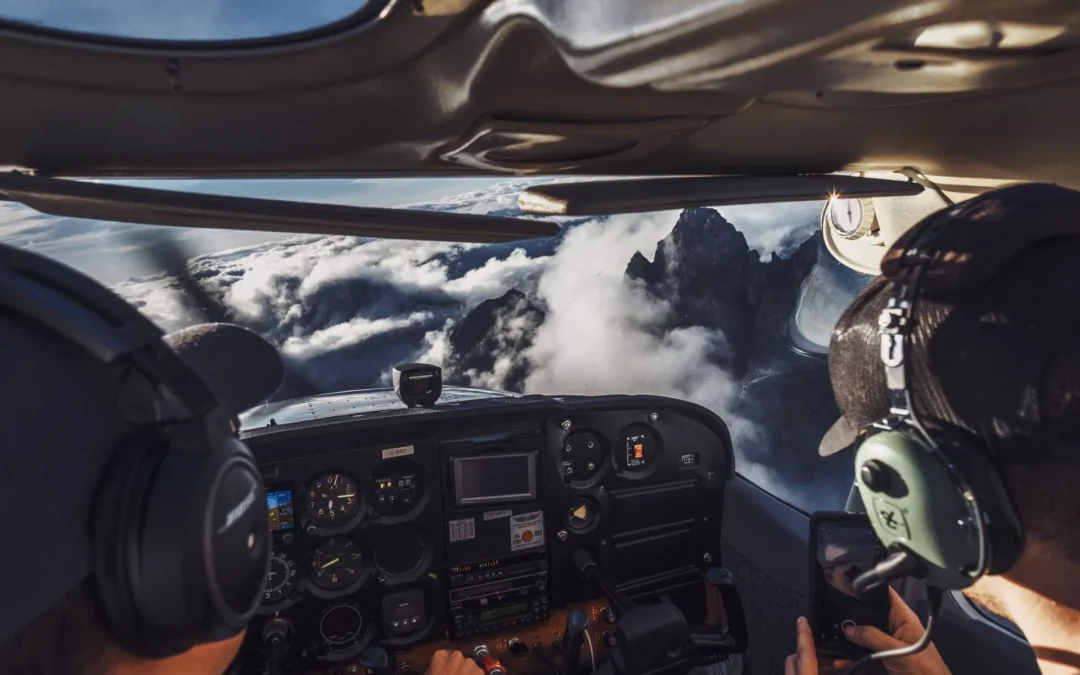
ATP CTP for Part 135 pilots is a required bridge for professionals pursuing an ATP certificate with an airplane multiengine class rating. Charter, air ambulance, and on-demand cargo experience can provide valuable operational judgment, but ATP CTP introduces the transport-category concepts and crew disciplines the FAA requires before a pilot may take the ATP multiengine knowledge test.
Ask Las Vegas Flight Academy about an upcoming ATP CTP course date.
Part 135 pilots complete the same fixed FAA-approved ATP CTP curriculum as other eligible pilots: 32 hours of ground training and 10 hours of simulator training. The graduation certificate is required before taking the ATP multiengine knowledge test, but completing the course does not itself issue an ATP certificate.
For an experienced professional pilot, the key planning questions are not simply whether the course is required. They are when to complete it, which enrollment documents to prepare, how its training differs from Part 135 operations, and what must happen afterward. This guide answers those questions without treating ATP CTP as a substitute for ATP eligibility, knowledge-test preparation, or the practical test. Pilots mapping the full progression can also review the airline pilot ATP roadmap.
Why Do Part 135 Pilots Need ATP CTP?
A pilot seeking an ATP certificate with an airplane multiengine class rating must complete an FAA-approved ATP CTP before taking the related knowledge test. The course establishes a common foundation in transport-category aerodynamics, operations, leadership, and crew resource management before the pilot advances toward the ATP practical test.
Part 135 experience can be demanding and highly relevant to an airline career. A charter pilot may regularly make independent weather decisions, operate into unfamiliar airports, coordinate with passengers, and respond to changing schedules. A cargo or air ambulance pilot may work at night, manage time-sensitive missions, and exercise disciplined risk management. Those experiences can strengthen professional judgment, but they do not replace the regulatory ATP CTP requirement.
ATP CTP is designed around concepts associated with large, turbine-powered, transport-category airplanes and air carrier operations. It establishes a shared baseline for pilots arriving from different backgrounds. A pilot coming from a light twin, midsize business jet, military aircraft, or foreign commercial operation completes the same approved course. Las Vegas Flight Academy cannot customize the curriculum around a pilot’s experience because the course is fixed and FAA approved.
What ATP CTP does and does not accomplish
Successful completion results in an ATP CTP graduation certificate. That certificate allows an eligible pilot to take the ATP multiengine knowledge test. ATP CTP is not the knowledge test, an ATP practical test, a type rating, or an airline training program. It also does not guarantee that a pilot meets every aeronautical-experience requirement for an unrestricted or restricted ATP certificate.
That distinction matters when coordinating training with an airline application or another career move. Pilots should separately confirm their ATP eligibility, flight-time records, knowledge-test plan, and practical-test path. The overview of what happens after ATP CTP can help organize those next steps.
Why the course matters even for experienced captains
Experienced Part 135 captains may already be proficient in turbine systems, multi-crew communication, or high-altitude operations. ATP CTP still provides a structured introduction to the standards and concepts specified by the approved curriculum. Its value is not based on assuming that a professional pilot lacks judgment. Instead, it creates a common training foundation before the knowledge test and eventual ATP evaluation. The guide to ATP CTP for flight instructors explains how the same fixed course fits a different professional background.
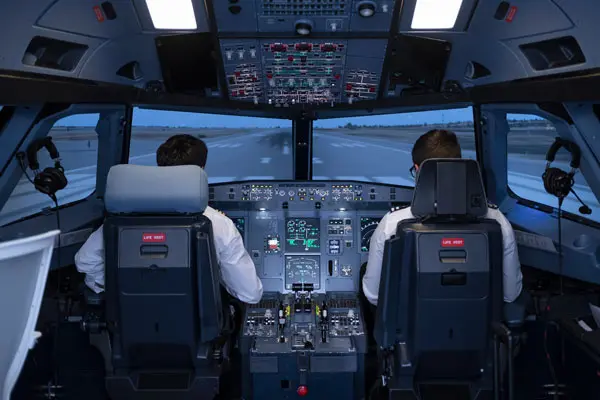
Who Is Eligible to Enroll in ATP CTP?
ATP CTP enrollment requires a commercial pilot certificate with an instrument rating, qualifying military experience under 14 CFR 61.73, or a qualifying foreign ATP or commercial pilot license with instrument privileges. Every applicant must also be able to read, speak, write, and understand English.
Many active Part 135 pilots qualify through a commercial pilot certificate with an instrument rating. The FAA also recognizes other enrollment pathways, including qualifying military experience under 14 CFR 61.73 and a qualifying foreign ATP or commercial pilot license with instrument privileges. Prospective students should provide the appropriate documents for their pathway and full ATP-CTP requirements checklist for their pathway and confirm acceptance before making travel arrangements.
Certificate and English-proficiency requirements
The enrollment prerequisites are specific. An applicant must hold a commercial pilot certificate with an instrument rating, have qualifying military experience under 61.73, or hold a qualifying foreign ATP or commercial pilot license with instrument privileges. The applicant must also be able to read, speak, write, and understand English. These requirements should not be reduced to vague claims that anyone can enroll.
ATP CTP enrollment is also distinct from meeting the total flight-time and experience requirements for an ATP certificate. A pilot may be eligible to take ATP CTP before meeting all requirements for the eventual ATP practical test. Before choosing a course date, review logbooks and records for accuracy, determine whether the intended path is an unrestricted or restricted ATP, and confirm the requirements that apply to that path.
Is an FAA medical certificate required?
An FAA medical certificate is not required to take ATP CTP. This point is especially useful for pilots coordinating medical renewal dates, leave, and training. However, a medical certificate is required when taking the ATP certificate practical test, commonly called the checkride. Pilots should plan for that later requirement rather than incorrectly treating it as an ATP CTP enrollment prerequisite. Review ATP CTP start dates when coordinating leave and later testing.
Current Part 135 pilots often already maintain an appropriate medical certificate for their duties, but each pilot’s situation is different. Confirm the medical requirements for the intended practical test and future operation with the appropriate FAA guidance or examiner. ATP CTP providers issue course graduation certificates; they do not determine a pilot’s medical eligibility for an ATP certificate.
What records should a professional pilot prepare?
Before enrollment, prepare clear copies of the certificate, license, instrument privileges, military documentation, or other records supporting the applicable pathway. Verify that names and identifying information are consistent. Separately review logbooks, electronic flight-time reports, and employer records for the later ATP eligibility process. Resolving discrepancies early is more professional and less stressful than discovering them near an interview or practical test.
What Does the Fixed ATP CTP Curriculum Include?
ATP CTP consists of 32 hours of ground training and 10 hours of simulator training. The curriculum is fixed and FAA approved, so it is not shortened, expanded, or customized based on a Part 135 pilot’s previous aircraft, seniority, or total time. Every student completes the required course content and training footprint.
Ground training: transport-category knowledge
The 32 ground-training hours address subjects relevant to safe operation of large, complex airplanes and air carrier environments. Topics include aerodynamics, meteorology, air carrier operations, leadership, professional development, and crew resource management. For Part 135 pilots, the useful challenge is to connect familiar operational judgment with the terminology, performance considerations, and structured crew concepts used in transport-category operations. LVFA’s ATP CTP course overview provides the program details in one place.
High-altitude aerodynamics deserves particular attention. The relationship among speed margins, aircraft weight, altitude, configuration, and maneuvering becomes increasingly important in transport-category operations. The course also addresses upset prevention and recovery principles. These subjects are not merely facts for a written exam; they support disciplined recognition, communication, and response in a multi-crew environment.
Simulator training: applying concepts as a crew
The course includes 10 hours of simulator training, including required training in qualified devices under the approved curriculum. Simulator sessions connect classroom concepts to flight-deck decisions and crew coordination. A Part 135 pilot should approach these sessions as an opportunity to practice precise communication, monitoring, workload management, and threat recognition, rather than as an aircraft-specific proficiency check.
- High-altitude operations: recognize performance margins and aerodynamic considerations that differ from lower-altitude flying.
- Crew resource management: communicate clearly, monitor actively, and use all available resources.
- Upset prevention and recovery: identify developing conditions and apply the principles taught in the approved program.
- Leadership and professionalism: connect sound cockpit conduct with safe air carrier operations.
- Operational decision-making: evaluate threats, manage workload, and maintain situational awareness.
How experienced pilots should prepare
Professional experience is an advantage when paired with an open, disciplined learning approach. Review core instrument knowledge and arrive ready to participate in crew-based scenarios. Avoid assuming that familiarity with one aircraft or operation makes every transport-category concept intuitive. The course is not designed to validate a pilot’s current Part 135 technique; it is designed to deliver the required ATP CTP curriculum consistently.
Contact Las Vegas Flight Academy to discuss ATP CTP enrollment requirements and available dates.
How Does Part 135 Experience Translate to Airline Preparation?
Part 135 flying can build valuable judgment, adaptability, passenger awareness, and risk-management habits. Airline preparation adds a more standardized operating framework, defined crew roles, and transport-category systems knowledge. ATP CTP helps pilots connect existing professional strengths with the common concepts required before the ATP multiengine knowledge test.
The strongest Part 135 candidates do not dismiss their experience, and they do not assume it eliminates the need to adapt. They identify transferable strengths while preparing for differences in standardization, scale, and crew structure. The exact transition varies widely because Part 135 operations range from single-pilot turboprops to sophisticated, multi-crew business jets.
| Professional area | Part 135 experience may develop | Airline transition emphasis |
|---|---|---|
| Decision-making | Independent judgment amid changing missions and destinations | Decisions within highly standardized procedures and shared operational resources |
| Crew coordination | Single-pilot discipline or coordination in a small crew | Defined pilot flying and pilot monitoring roles with consistent callouts |
| Customer and mission pressure | Balancing service demands with safe completion | Maintaining safety and compliance within a scheduled network |
| Airport familiarity | Frequent operations at varied or unfamiliar airports | Complex hub operations, flow constraints, and standardized company procedures |
| Aircraft knowledge | Detailed knowledge of assigned Part 135 aircraft | Transport-category concepts followed by aircraft-specific airline training |
Transfer judgment without transferring assumptions
A charter pilot’s experience with rapidly changing weather, nonstandard destinations, passenger needs, and operational pressure can demonstrate maturity. The airline environment, however, may distribute planning and decision support differently. Dispatch coordination, formalized procedures, and larger organizational systems require pilots to communicate and use resources in a consistent way. Good judgment remains essential, but it must operate within the new framework.
Strengthen pilot monitoring habits
Some Part 135 pilots already work in disciplined two-pilot crews. Others have substantial single-pilot experience. In either case, airline preparation places significant emphasis on monitoring, standard callouts, verification, and timely intervention. Treat pilot monitoring as an active safety function, not a passive role. ATP CTP’s crew resource management content provides a useful foundation for that mindset.
Keep ATP CTP in its proper role
ATP CTP supports the transition, but it does not replace airline-specific indoctrination, systems training, procedures training, or qualification events. The course includes required 32 hours of ATP-CTP ground school as part of the FAA-approved curriculum. It also does not train a pilot to a specific employer’s standard operating procedures. Pilots seeking a broader transition plan can review this guide to the corporate pilot to airline pilot transition.

When Should a Part 135 Pilot Schedule ATP CTP?
The best course date supports a defined career sequence. ATP CTP should be early enough to complete the knowledge test and later ATP steps without unnecessary pressure, but not selected without considering flight-time eligibility, work obligations, travel, and the intended practical-test timeline. A disciplined plan is more useful than booking solely because a date is available.
Build the schedule backward from the next milestone
Start with the likely airline application, interview, ATP practical test, or other professional milestone. Then allow time for ATP CTP, knowledge-test study, the knowledge test itself, record review, and any remaining eligibility requirements. Part 135 schedules can change with little notice, so protect the course period from trips, reserve obligations, and avoidable distractions. Include the current ATP CTP cost breakdown in the planning process.
The ATP CTP graduation certificate itself does not expire. The knowledge test report has its own validity rules, so pilots should verify current FAA requirements and coordinate the test with the broader plan. The article on whether the ATP CTP certificate expires explains the important distinction between the course certificate and later steps.
Consider how the course date interacts with recurrent training, company assignments, commuting, and fatigue. ATP CTP is concentrated professional training, not an administrative appointment that can be completed between trips without preparation. Arriving rested and free from operational interruptions supports stronger participation in both classroom discussions and simulator sessions. If an employer is helping coordinate the transition, communicate the fixed course commitment clearly and confirm any required leave well in advance.
Knowledge-test timing deserves the same attention. Some pilots prefer to test soon after the course while its concepts are fresh, while others need additional study time around an active flying schedule. Choose a realistic testing plan, verify current testing requirements, and preserve enough margin to address an unexpected schedule change. A rushed sequence can create avoidable pressure even when the underlying career plan is sound.
Use a practical planning checklist
- Confirm that you meet an ATP CTP enrollment pathway and English-proficiency requirement.
- Review the ATP or restricted ATP path that applies to your career plan.
- Audit logbooks and supporting records before an interview or practical-test deadline.
- Reserve uninterrupted time for the fixed 32-hour ground and 10-hour simulator course.
- Plan knowledge-test preparation and testing after course completion.
- Confirm medical-certificate requirements before the eventual ATP practical test.
Las Vegas can be a practical training location for pilots based throughout the West and for pilots traveling nationally. Travel convenience should still be evaluated alongside course dates, employer leave, and the complete ATP timeline. Do not assume that completing ATP CTP alone resolves every remaining ATP or airline-hiring requirement.
What Happens After a Part 135 Pilot Completes ATP CTP?
After successfully completing the fixed course, the pilot receives an ATP CTP graduation certificate. The next immediate step is typically the ATP multiengine knowledge test, supported by appropriate study and scheduling. Passing that knowledge test is not the same as earning the ATP certificate. The pilot must still satisfy the applicable eligibility requirements and pass the ATP practical test.
Protect and use the graduation certificate
Maintain accurate copies of the graduation certificate with other professional records. Confirm the documentation required by the knowledge-testing provider before the appointment. Names and identifying information should match the pilot’s records. If a discrepancy appears, address it before testing rather than allowing it to disrupt a carefully planned career timeline.
Prepare for the knowledge test and practical test separately
ATP CTP provides required foundational training, but pilots should still use a focused knowledge-test preparation process. After the knowledge test, continue preparing for the practical test or employer training path that will lead to it. Remember that an FAA medical is not required for ATP CTP, but it is required when taking the ATP certificate practical test.
Present the transition professionally
When discussing Part 135 experience with an airline, explain how it built judgment, risk management, communication, and operational discipline. Also show readiness to learn a new company’s procedures and operate within a highly standardized system. That combination is more credible than suggesting that charter experience and airline operations are identical.
Ready to plan your next step? Contact Las Vegas Flight Academy about ATP CTP training.
Frequently Asked Questions About ATP CTP for Part 135 Pilots
Do Part 135 pilots have to complete ATP CTP?
A Part 135 pilot seeking an ATP certificate with an airplane multiengine class rating must complete an approved ATP CTP before taking the ATP multiengine knowledge test. Prior Part 135 experience does not waive the course requirement.
Can ATP CTP be customized for an experienced Part 135 captain?
No. ATP CTP is a fixed FAA-approved course. Experienced captains complete the same required curriculum, including 32 hours of ground training and 10 hours of simulator training, as other eligible students.
Is an FAA medical certificate required to take ATP CTP?
No. An FAA medical certificate is not required to take ATP CTP. A medical certificate is required later when the pilot takes the ATP certificate practical test, commonly called the checkride.
Does completing ATP CTP give a pilot an ATP certificate?
No. Completing ATP CTP provides a graduation certificate required before the ATP multiengine knowledge test. The pilot must also meet the applicable ATP eligibility requirements, pass the knowledge test, and pass the ATP practical test to earn the certificate.