
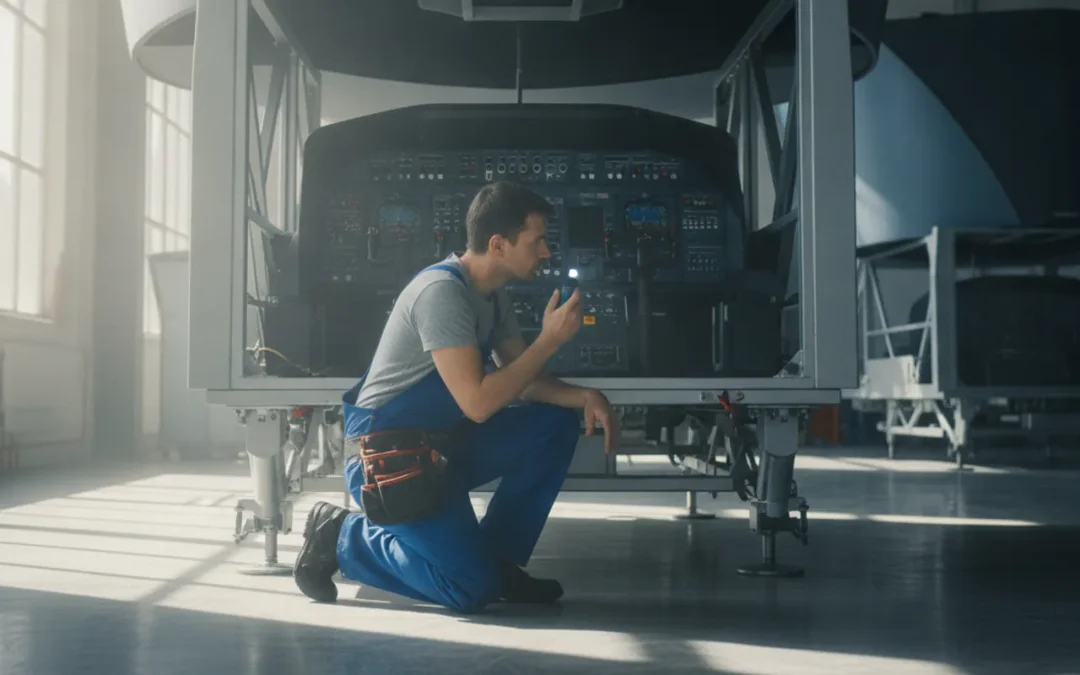
Flight simulator technician schools prepare people to maintain, troubleshoot, and support the complex equipment used to train pilots. They are different from pilot schools: one path teaches you to work on simulator systems, while the other teaches you to operate aircraft. If you are comparing flight simulator technician schools, first identify the job you want, then examine the curriculum, equipment access, credentials, and employer connections. This distinction matters because a facility that uses simulators for pilot instruction does not necessarily teach technicians how to maintain them.
Ask Las Vegas Flight Academy about its training programs
What do flight simulator technician schools teach?
A simulator technician helps keep a training device ready for use. Depending on the equipment and employer, the work can involve electronics, computers, displays, controls, motion systems, visual systems, and software. A technician may inspect components, diagnose a fault, document maintenance, or coordinate a repair with a manufacturer or specialist. Some jobs focus on scheduled checks; others involve responding when an instructor or operator reports a problem.
There is no single curriculum that every school uses. A program might cover aviation maintenance fundamentals, electrical and electronic systems, computer networking, software support, or a combination of these. Some employers train technicians on a specific simulator platform after hiring. Ask what equipment is used in class and how much of the course involves hands-on troubleshooting rather than lecture alone. A course that discusses simulator systems in general may not provide experience on the device named in a job posting.
Do not assume that a school’s title tells you exactly what you will learn. Request a course outline, then match each module to the kind of technician role you want. For background on how pilot training centers are organized, read this guide to Part 142 training. That subject is about pilot training-center operations, not a technical qualification for simulator maintenance.
How is technician training different from pilot training?
The difference is the work you are preparing to do. A pilot trainee practices aircraft procedures and decision-making in a simulator. A technician trainee learns how to inspect, support, and troubleshoot the simulator itself. A flight academy can operate a simulator for pilot instruction without offering a technician-school program.
Las Vegas Flight Academy is an FAA Part 142 certified aviation training center focused on professional pilot education, including ATP-CTP and Boeing 737 training. Its simulator facility is part of that pilot-training environment; this does not mean the academy offers a technician course or credential. People interested in pilot training can review the academy’s ATP-CTP course information or its Boeing 737 type-rating information. Those programs serve pilot-training goals, not technician career preparation.
If your goal is to work on simulators, keep the actual job title and duties in view while researching. Roles may be listed as simulator technician, flight simulator engineer, maintenance technician, technical support specialist, or field service technician. Read the responsibilities rather than relying on a title. Similar titles can call for different combinations of electronics, mechanical, software, or customer-support experience.
Which skills and credentials should you compare?
Start with the requirements in the types of job postings you hope to pursue. Some positions emphasize electronics or electrical systems; others may prioritize computer support, networking, mechanical maintenance, or aviation experience. A school should explain which skills it teaches and what evidence a graduate can show an employer. Ask the school to connect each course module to a practical task, such as tracing a fault or recording an inspection.
- Technical fundamentals: Look for practice reading diagrams, using diagnostic tools, tracing faults, and following safe work procedures.
- Relevant systems: Ask whether instruction addresses controls, displays, computers, motion or visual systems, and how the curriculum relates to actual simulator equipment.
- Hands-on troubleshooting: Find out whether students diagnose realistic faults and explain the steps they used to isolate them.
- Documentation: Confirm that students learn to record inspections, findings, repairs, and follow-up clearly.
- Credentials: Ask which credentials are included, who issues them, what exams or prerequisites apply, and whether employers in your target area request them.
- Transferable experience: Consider whether the program helps you build on electronics, IT, aviation maintenance, military, or other technical experience you already have.
Do not treat a credential as a job guarantee. Ask for the exact credential name, awarding organization, prerequisites, and assessment method. Then compare these details with recent job descriptions from employers you would realistically consider. The FAA website is a starting point for aviation information, but requirements depend on the specific job and program. Verify a role’s requirements with the employer or relevant authority instead of assuming every simulator technician position follows the same rule.
How can you compare flight simulator technician schools?
Use the same questions for every program so you can compare more than marketing language. Request a written curriculum, estimated lab hours, equipment access details, instructor qualifications, and a complete list of potential costs. Ask what students actually do in a lab and how their work is evaluated. If the program advertises simulator access, clarify whether students work directly on a device, on component-level training equipment, or only observe demonstrations.
| What to compare | Questions to ask | Why it matters |
|---|---|---|
| Curriculum | Which technical subjects and simulator systems are covered? | Shows whether the program fits the job duties you want. |
| Hands-on practice | How many lab sessions are included, and what tasks do students perform? | Distinguishes practical troubleshooting from classroom-only exposure. |
| Equipment | What devices or components can students inspect and use? | Clarifies how closely the learning environment relates to the work. |
| Credentials | Who awards each credential, and what prerequisites apply? | Helps you verify what completion actually demonstrates. |
| Career support | Are job-search support, employer introductions, or outcomes documented? | Lets you assess support without treating broad claims as promises. |
| Total cost | What tuition, materials, exam, travel, and other fees may apply? | Helps you budget for the full program rather than tuition alone. |
Ask for any completion or employment figures in writing, including how the figures are defined and the period they cover. If a school cannot explain what its numbers represent, do not treat them as a reliable comparison. Find out whether lab access is guaranteed or scheduled subject to availability, and what happens if a session is rescheduled. For a fair comparison, note both the stated number of lab hours and the tasks included in those hours; a short, supervised diagnostic exercise is not equivalent to extended individual practice.
Build a simple comparison sheet before you speak with enrollment staff. Give every program a row and record the same items: prerequisites, technical modules, equipment, supervised practice, assessment, credential, total estimated cost, and career support. Use “not specified” where information is missing rather than filling gaps with assumptions. Then send each school the same follow-up questions. Clear, specific answers are more useful than broad claims about being industry-ready.
What does a simulator technician career path involve?
The day-to-day work depends on the employer and simulator platform. A technician may support routine checks, respond to faults, help return a device to service, or work with engineering and vendor teams on more involved issues. The job calls for careful documentation and communication as well as technical knowledge, because the device supports pilot training and must be ready according to the operator’s procedures.
A training program is one possible entry point, not the only route. Relevant experience in electronics, information technology, aviation maintenance, industrial controls, or military technical work may also be useful, depending on the role. Review job postings first and make a list of repeated requirements. You can then decide whether you need foundational training, a particular credential, direct simulator exposure, or a better way to demonstrate skills you already have.
For example, if several postings request electronics troubleshooting, prioritize a program with component-level diagnostics and supervised lab work. If they emphasize computer systems and networks, ask how those topics are taught and tested. If they require experience on a named platform, ask whether the program provides access to that platform or whether the employer supplies platform-specific training. Do not assume that general coursework qualifies you for every simulator model.
Someone with IT experience might already know how to document a problem and isolate a network issue but may need practice with electrical diagrams or cockpit controls. A person with maintenance experience may be comfortable following inspection procedures but need more exposure to computer-based systems. In both cases, compare the applicant’s existing strengths with actual requirements. A useful course fills identifiable gaps; enrolling in a broad program simply because its title sounds relevant may not be the best use of time or money.
What should you ask before enrolling?
Before paying a deposit, get clear answers to practical questions. Speak with an instructor or program adviser who can explain the technical content, not only enrollment steps. If possible, visit the lab or request a live demonstration of equipment and student exercises. Ask for policies and costs in writing so you can review them at your own pace.
- What entry-level knowledge or prerequisites do students need?
- Which systems are covered, and which are outside the course scope?
- How much hands-on practice is provided, and how is competency evaluated?
- What credentials can students earn, and what additional exams or fees are involved?
- What is the total estimated cost, including materials and other required expenses?
- What support is available for applications, interviews, or employer contacts?
- Can the school provide verifiable information about graduate outcomes?
- What happens if a student misses a lab or the equipment is unavailable?
Compare answers side by side. If a school describes graduates as “job-ready,” ask which tasks they can perform on completion and how the school measures that ability. Ask for a sample assessment or example of a completed lab exercise, with any private student information removed. Favor concrete demonstrations and written scope over assurances that do not explain what training includes.
How does Las Vegas Flight Academy fit into simulator training?
Las Vegas Flight Academy’s simulator environment supports pilot training rather than a technician-school curriculum. The academy describes its professional programs and facility on its about page. It also provides information about simulator housing and maintenance services, a business-to-business service for simulator operators. That page may help a reader understand facility support, but it should not be mistaken for technician training or an individual credential program.
If your goal is to become a pilot, the questions are different: confirm the scope of the desired pilot course, its prerequisites, and how it fits your next training step. The academy’s ATP-CTP overview explains that pilot-training topic. If you are exploring technical employment, focus on the qualifications employers request and contact a school that can demonstrate a matching technical curriculum. The academy’s employment opportunities page can also be reviewed for roles it lists; openings and qualifications can change.
When evaluating any simulator-based pilot program, make sure the course is intended for the pilot outcome you need. The ATP-CTP program page and the academy’s international student information offer separate details for readers considering those pathways. Neither should be interpreted as a technician curriculum. Keeping those categories separate helps prevent a common research mistake: choosing a school based on simulator access alone when the desired result is technical employment.
Contact Las Vegas Flight Academy about pilot training
Frequently asked questions about flight simulator technician schools
Do flight simulator technician schools train pilots?
No. Technician programs focus on maintaining or supporting simulator equipment. Pilot programs use simulators to teach aircraft operation and procedures. A school may offer one kind of training, the other, or neither, so check the actual course description and intended outcome.
Do flight simulator technician schools guarantee a job?
A course cannot guarantee that an employer will hire a graduate. Ask what career support is offered and request clear definitions and documentation for any published placement or hiring claims. Compare the curriculum with job postings for the roles and locations you are considering.
Do flight simulator technician schools require aviation experience?
Requirements vary by program and job. Some employers may value technical experience in electronics, IT, or maintenance, while others may provide platform-specific training. Check prerequisites with each school and employer rather than assuming every role requires a pilot certificate or prior aviation work.
Can flight simulator technician schools prepare me for every simulator platform?
Not necessarily. General technical skills can transfer, but specific equipment and procedures vary. Ask which platforms and components students encounter, and check whether employers provide additional training on their own systems.
How can you choose your next step?
Choose the role before choosing the school. If simulator maintenance is your goal, compare technical programs against employer requirements and verify the practical training, credentials, and full cost. If you are seeking pilot instruction instead, review the relevant pilot course and confirm its fit directly with the training provider. For a question about Las Vegas Flight Academy’s pilot programs or simulator services, call the academy and describe the training outcome you are seeking.