
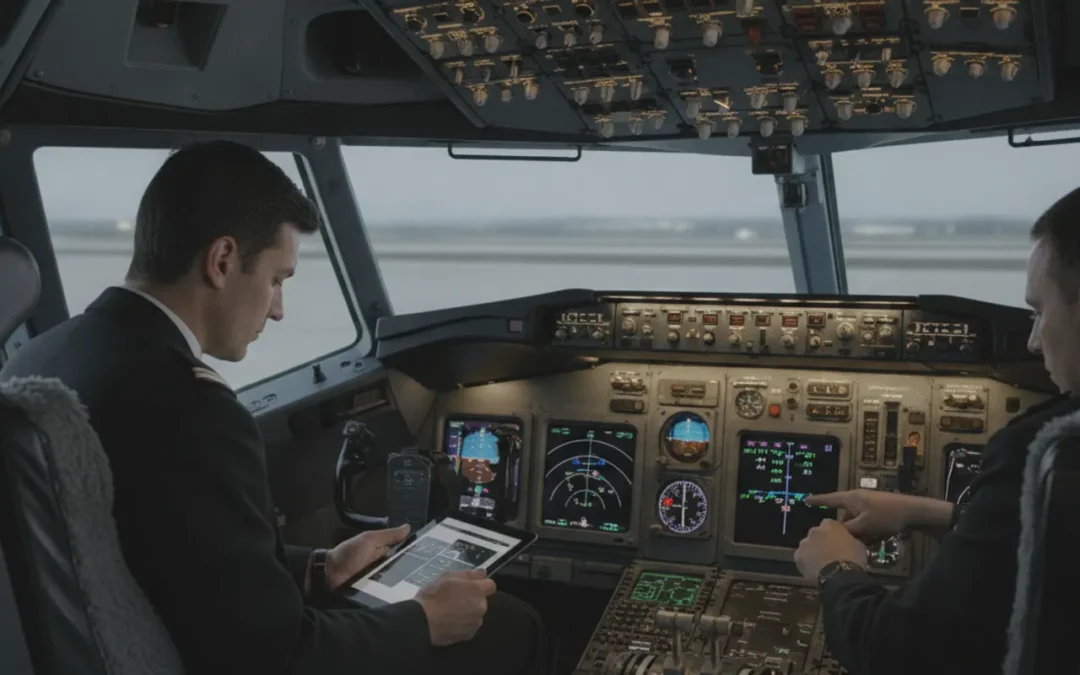
Pilots researching the 737 type rating oral exam and checkride often want to know what happens first, how to prepare, and how the oral portion connects with simulator evaluation. There is no safe one-size-fits-all script: the applicable test, training plan, and examiner determine the details. Still, a structured sequence can help you organize your study, identify questions early, and arrive ready to learn.
Ask about B737 type-rating training
What does the oral portion assess in a 737 type rating?
The oral portion is a chance to demonstrate that you can explain the knowledge relevant to operating the aircraft, not simply recite isolated facts. The precise areas and format depend on the applicable test requirements and the examiner. Preparation commonly centers on understanding aircraft systems, limitations, procedures, and the reasoning behind decisions, then applying that knowledge to operational scenarios.
That distinction matters. Memorizing a number without knowing what it means or when it applies can leave you unprepared for follow-up questions. A stronger approach is to learn the source and context for each item, explain it in your own words, and connect it to the procedure or decision it supports. Use the current materials and guidance supplied by your training provider; do not rely on an old question list as a substitute.
Oral preparation is also a useful diagnostic. If you cannot describe a system clearly, determine whether the gap is terminology, system logic, or a weak mental model. Then review the appropriate material and practice explaining it again. This is more useful than simply counting how many pages or questions you have reviewed.
How does the 737 type rating oral exam and checkride preparation fit together?
Oral knowledge and simulator performance are related, but they are not interchangeable. A pilot may understand a system in discussion yet need practice applying that understanding under workload. Conversely, a memorized simulator flow may be fragile if the pilot cannot explain the procedure or respond appropriately when a scenario changes.
Think of preparation as a cycle: review, explain, apply, receive feedback, and revisit. Ground study builds a usable mental model. Briefings help you state what you expect to do and why. Simulator practice lets you apply procedures and decision-making in a training environment. Debriefing identifies what to strengthen next. Your school’s approved syllabus determines the actual sequence and requirements; this cycle is a preparation framework, not a substitute syllabus.
FAA material on type-rating tests describes paths for same-type and common type ratings, which is a reminder that test paths are not identical for every applicant. Consult the applicable training and test documents rather than assuming someone else’s sequence applies to you. The FAA’s type-rating test guidance is one authoritative reference to discuss with your provider.
What preparation sequence can help you stay organized?
The steps below give you a practical way to prepare without treating a generic article as an official checklist. Your instructor or training center should tell you which materials, events, and standards apply to your enrollment.
- Confirm your training objective. Clarify whether you are pursuing an initial rating, a transition, or another path, and identify the aircraft variant and applicable program. Do not assume the requirements for another pilot’s course match yours.
- Collect current source materials. Ask which manuals, course materials, limitations, procedures, and test references to use. Confirm revisions and access before investing time in third-party summaries. Keep a simple index so you can return to the source behind an answer.
- Build a knowledge map. Organize topics into manageable groups such as systems, limitations, normal procedures, abnormal or emergency procedures, and operational decision-making. Use the provider’s course outline as the authority for what is in scope.
- Study for explanation, not just recall. For each topic, ask what the system or procedure is for, what conditions affect it, and where the authoritative guidance is found. Practice a concise explanation, then verify it against the supplied material.
- Connect knowledge to procedures. As you review a procedure, understand the trigger, sequence, relevant callouts or coordination, and the reason for the action. Use the exact terminology and method taught in your course.
- Practice briefings and scenario reasoning. Explain your plan before a training event, including what you expect and what would cause you to reassess. Discuss uncertainties with an instructor rather than guessing or creating a personal substitute procedure.
- Use simulator sessions deliberately. Go into each session with clear learning goals. Follow instructor direction, focus on the assigned objectives, and note specific items to review after the session. The training device and session plan are part of the approved program, not an invitation to practice unsupervised procedures.
- Debrief and close gaps. Record feedback as actionable items, find the relevant source, and return to the skill or knowledge area that needs attention. Ask for clarification when feedback or materials appear inconsistent.
- Confirm readiness and logistics. Before the evaluation, ask the training provider what documents, records, preparation, and scheduling details apply. Confirm what the examiner expects you to bring and how any remaining training events are arranged.
For an overview of the training option and aircraft-specific program, see the Boeing 737 type-rating page. Pilots who want broader background on the training-center framework can also review LVFA’s guide to what Part 142 training means and its Part 142 overview.
What should you study before each part of the process?
Use a study plan that keeps knowledge, procedures, and application connected. The following table is an organizing aid, not a promised sequence or an official list of test items.
| Preparation area | Useful focus | What to confirm |
|---|---|---|
| Knowledge review | Understand systems, limitations, and the reasoning behind relevant procedures. | Which current course references and subject areas your provider expects you to use. |
| Oral practice | Explain concepts clearly, locate supporting references, and work through instructor-led scenarios. | How oral preparation is integrated into your specific training plan. |
| Procedure briefing | Describe the plan and intended actions using the course’s terminology and methods. | Which flows, callouts, and briefing practices apply to your event. |
| Simulator training | Apply instruction in the assigned training scenarios; use feedback to set the next study goal. | Session objectives, instructor expectations, and any required follow-up events. |
| Evaluation readiness | Review prior feedback and make sure required preparation is complete. | Applicable documents, scheduling, examiner instructions, and the test path for your case. |
It can help to keep a short readiness log with three columns: topic or skill, evidence that you can explain or perform it to the course standard, and the next action if you cannot. This keeps study sessions specific. For example, “review electrical system” is broad; “explain the assigned electrical-system topic using the current course reference, then ask the instructor about the unresolved item” gives you a concrete next step.
Use the log to distinguish preparation from proficiency claims. A checked box should mean that you can demonstrate the objective in the way your instructor expects, not merely that you attended a lesson or read a chapter. If an item remains uncertain, mark it as a question and bring it to the next briefing. This prevents an unresolved assumption from quietly becoming part of your personal procedure.
Keep the schedule flexible enough for feedback. A course sequence may move between ground review, briefing, and simulator application as instructors address the training objectives. If you are preparing before a confirmed start date, focus on the source materials the provider has approved and avoid trying to predict every event. Once the provider gives you its plan, use that plan to prioritize; do not let generic advice displace the assigned syllabus.
How can you turn simulator feedback into a useful study plan?
A simulator debrief is most useful when you convert observations into a small number of specific follow-up actions. Rather than writing “do better on the next session,” record what happened, what standard or objective it relates to, and what you will review or ask before the next event. Keep the description neutral and concrete so you can act on it.
For example, if an instructor notes that an explanation during a scenario was incomplete, identify the underlying knowledge area and locate the related course reference. If the feedback concerns sequencing or coordination, review the method taught in the program and ask for clarification about the expected standard. If workload affected your decisions, discuss which cues you missed and how the instructor wants you to prioritize them in a future practice scenario. These are study prompts, not aircraft procedures.
Separate a one-time slip from a repeated gap. One error may call for a focused review and another attempt. A pattern across events may mean that your mental model, preparation method, or understanding of a standard needs more attention. Ask the instructor to help distinguish between them. Then revisit the objective after the next session and update your log: resolved, still in progress, or needs instructor clarification. This creates a clear learning loop without deciding on your own that an evaluation standard has been met.
When two references seem to disagree, do not combine them into a new answer. Note the exact materials and passages, check whether they are current and apply to your aircraft or course, and bring the discrepancy to the training provider. That approach saves time and reduces the risk of repeating a statement from an unrelated variant or program as if it were universal.
How can you make oral study more effective?
Start with approved, current materials and make your own notes in a way that preserves the link to the source. When you write a summary, record the reference or section so you can verify it later. Do not turn a peer’s notes, online flashcards, or an old oral-exam question bank into your only authority. They may omit context, reflect a different revision, or describe another training provider’s approach.
Use active recall in short sessions. Close the book and explain a topic aloud, then reopen the source and check accuracy. If you miss an item, classify the miss: Did you forget a fact, misunderstand a system relationship, confuse a limitation, or fail to explain how a procedure applies? That diagnosis tells you whether to revisit a reference, clarify terminology, or practice scenario reasoning.
Practice concise answers without cutting out important qualifications. A good explanation states the concept, identifies the source or condition when relevant, and connects it to the operational context. If you do not know an answer, say what you do know and identify how you would verify the point. In training, asking a precise question is more valuable than confidently repeating an unverified answer.
You can also use a question-and-reference routine with a study partner. Have the partner ask about a topic from the assigned outline, answer from your understanding, and then locate the support in the current course material. The partner should help you spot unclear reasoning, not supply an unofficial answer key. If a question goes beyond the assigned scope or prompts uncertainty, write it down for the instructor instead of improvising technical detail.
Finally, protect time for rest and logistics. Last-minute cramming can crowd out the review that addresses actual gaps. Plan study blocks around your training schedule, and ask the provider how to prioritize if you have limited preparation time.
What should you confirm with a type-rating provider?
Before you commit to a training plan, ask specific questions. Provider information should clarify what is included and how the course is arranged, while your own situation determines the applicable path. The FAA’s regulatory material also describes eligibility, aeronautical knowledge, and experience as matters tied to the relevant rating; do not infer your individual eligibility from a general article. Review the applicable requirements with your training provider and, when needed, the FAA. See the Federal Register’s qualification and type-rating rule material as a reference, not as individualized advice.
- Which aircraft variant and type-rating path does the training plan address?
- What current study references and course materials should you use before arrival?
- How are oral review, briefing, simulator events, and debriefing organized in this program?
- What should you bring, and what documents or records should you confirm in advance?
- How does the provider handle questions about eligibility, prerequisites, and the applicable test path?
- What happens if an instructor identifies an area that needs more preparation?
- Which scheduling and travel details should you verify directly, since arrangements can vary?
LVFA provides information about its training center and a contact page for training inquiries. Use those channels to confirm current program details rather than relying on assumptions about schedules or course arrangements. If ATP-CTP is also part of your broader career plan, review the separate ATP-CTP course information; it is a distinct training program, not a substitute for clarifying the requirements of a type-rating plan.
What common preparation mistakes should you avoid?
Studying only memorized questions: Question banks can be useful for practice, but they cannot guarantee the format or content of an evaluation. Learn concepts from current, approved course materials and use questions to test understanding.
Mixing procedures from different sources: Materials from different aircraft variants, revisions, or operators may not align. Follow the references and procedures specified by your training provider, and raise discrepancies before they become habits.
Treating oral and simulator work as separate boxes: Knowing an answer in a quiet room is not the same as applying it in an assigned scenario. Connect system knowledge to briefing, procedure, and instructor feedback.
Assuming every pilot follows the same timeline: Entry point, prior experience, rating path, training plan, and scheduling all matter. Avoid relying on another pilot’s day-by-day account as a promise of your own sequence.
Leaving questions until the evaluation: Keep a list of unresolved points and ask early. If a requirement or instruction is unclear, confirm it with the training provider or the appropriate authority instead of guessing.
Using a checklist as proof of readiness: A completed study plan only shows that you worked through the plan. It does not establish that you can explain or apply each objective to the standard expected in your course. Use instructor feedback and the training program’s criteria to judge progress.
Contact LVFA to discuss your B737 training plan
Frequently asked questions about the 737 type rating oral exam and checkride
What is the typical 737 type rating oral exam and checkride sequence?
There is no universal sequence for every applicant. The provider’s applicable program, test path, and examiner determine the specifics. A useful preparation pattern is to study current references, explain the knowledge, apply it in briefings and assigned simulator work, use debrief feedback to address gaps, and confirm readiness and logistics with the provider.
Does the 737 type rating oral exam and checkride always happen in the same order?
Do not assume that every applicant has the same order or event structure. Confirm the schedule and applicable test plan directly with your training center. The broad relationship between oral preparation and practical application is useful for planning, but it does not establish a required order for an individual course.
How should I prepare for the 737 type rating oral exam and checkride?
Use the current materials assigned by your provider, practice explaining concepts rather than only memorizing answers, connect procedures with their context, and apply instructor feedback to your next study session. Ask early about unclear references, requirements, and evaluation logistics.
Can an online question bank prepare me for the 737 type rating oral exam and checkride?
A question bank may help you test recall, but it should not replace current course materials or instructor guidance. Questions can be incomplete, out of date, or based on a different program. Verify the underlying answer with the references your provider identifies.
With a clear plan, current study materials, and open communication with your training provider, you can make oral and simulator preparation more focused. Confirm the details that apply to your rating path directly before you schedule or begin training.