
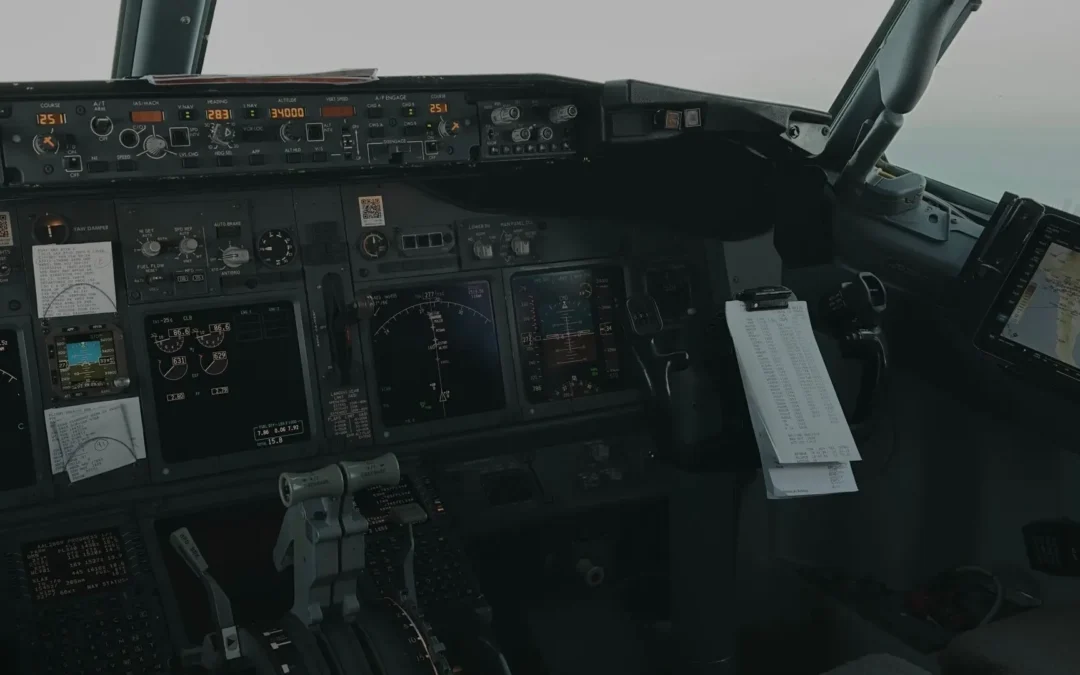
ATP CTP simulator hours explained means understanding why the course separates simulator training between a fixed training device (FTD) and a full-flight simulator (FFS). The standard ATP-CTP structure includes 10 hours of flight simulation training: 4 hours in an FTD or qualifying device for navigation and automation work, plus at least 6 hours in a Level C or higher FFS for higher-consequence airline operating scenarios.
Contact Las Vegas Flight Academy to discuss ATP-CTP eligibility, dates, and enrollment.
Those 10 hours are part of a larger course. Las Vegas Flight Academy’s FAA Part 142 ATP-CTP program includes 32 hours of ground school, 4 hours in a fixed-base simulator, and 6 hours in Boeing 737-300/-800 Level D full-flight simulators across six days. The two simulator blocks are connected, but they are not interchangeable descriptions of the same training activity.
What does ATP CTP simulator hours explained mean?
ATP CTP simulator hours explained refers to how the required flight simulation time is divided by training purpose. The FTD block gives pilots a controlled environment for navigation, flight management systems, automation, and related procedures. The FFS block lets pilots apply those concepts in a more complete transport-category environment that supports motion, visual cues, aircraft response, and scenario-based training.
Under 14 CFR 61.156, an ATP-CTP includes at least 10 hours of training in a qualifying flight simulation training device (FSTD) representing a multiengine turbine airplane. At least 6 of those hours must be in a Level C or higher full-flight simulator. The remaining hours may be completed in a Level 4 or higher FTD, subject to the approved course and device requirements.
The practical takeaway is simple: the FTD hours emphasize systems, navigation, and automation tasks, while the FFS hours emphasize applying airline operating concepts to conditions such as low-energy states, upset recovery, runway safety, and adverse weather. The exact lesson sequence belongs to the provider’s FAA-approved course.
How are the four ATP-CTP FTD hours used?
The four-hour FTD portion is used for training objectives that benefit from repeatable access to navigation displays, flight management systems, electronic flight instruments, traffic and terrain awareness systems, and automation controls. It is not a casual introduction to a generic desktop simulator. The device must meet the applicable qualification and equipment requirements for the approved ATP-CTP.
The FAA’s Advisory Circular 61-138A, Change 1 identifies navigation and automation as FTD training areas. In practice, an instructor can use this block to help pilots:
- Interpret primary flight and navigation displays during airline-style operations.
- Load, verify, and manage route information in a flight management system.
- Understand how navigation equipment interfaces with automation.
- Use autopilot, flight director, and autothrottle modes with appropriate monitoring.
- Recognize how mode changes affect the flight path and the crew’s workload.
- Practice callouts, cross-checks, and crew coordination while managing automation.
That focus matters because automation is not a substitute for pilot judgment. A pilot must know what the system is doing, confirm that it is doing what was commanded, and intervene when the result does not match the plan. The FTD provides a practical setting for building that monitor-and-manage discipline before more demanding full-flight scenarios.
FTD training also makes it easier to repeat a procedure and debrief a specific decision. An instructor can pause, reset, or revisit a navigation or automation task without representing the full range of a complete flight scenario. The objective is not to make the device feel like an aircraft in every respect. The objective is to use the device that best supports the approved learning objective.
How are the six ATP-CTP full-flight simulator hours used?
The six-hour FFS portion is used to apply ATP-CTP concepts in a more complete transport-category training environment. The FAA requires at least six hours in a Level C or higher FFS that represents a multiengine turbine airplane and meets the applicable weight and qualification requirements. The FFS training focuses on operational situations where aircraft response, crew coordination, workload, and decision making must be considered together.
FAA guidance identifies several required or recommended training areas for the FFS block, including:
- Runway safety and adverse weather, including conditions such as icing, thunderstorms, and crosswinds with gusts.
- Low-energy states and stall awareness.
- Upset prevention and recovery techniques.
- Airline operating procedures, including the pilot flying and pilot monitoring roles.
- Threat recognition, workload management, communication, and crew resource management.
These scenarios are not designed to turn ATP-CTP into a type rating or an airline operator’s recurrent course. They are designed to give an ATP applicant structured exposure to transport-category operations and the decision making required when conditions change. Simulator training is instructor-led, and a session may include briefing, scenario work, coaching, and debriefing rather than six hours of uninterrupted maneuver practice.
At Las Vegas Flight Academy, the FFS block uses Boeing 737-300/-800 Level D simulators. Level D is a high-fidelity FFS qualification level, but the presence of a Boeing 737 simulator does not make ATP-CTP a B737 type rating. The ATP-CTP remains a separate certification-training requirement, and any type rating or other certificate must be addressed through its own approved training and evaluation path.
How do FTD and full-flight simulator hours work together?
FTD and full-flight simulator hours work together as a progression from focused technical practice to integrated operational application. The FTD block can establish the navigation, FMS, and automation habits that a pilot must manage in a broader scenario. The FFS block then gives the crew an opportunity to apply those habits while balancing aircraft control, weather, runway risks, workload, communication, and abnormal or upset-related events.
| Training device | Minimum or planned time | Primary use |
|---|---|---|
| FTD or qualifying device | Up to 4 hours in the standard allocation | Navigation, FMS, displays, automation, and mode awareness |
| Level C or higher FFS | At least 6 hours | Low-energy states, upset recovery, adverse weather, runway safety, and integrated crew operations |
| Total FSTD training | At least 10 hours | Applying ATP-CTP learning objectives in qualifying simulation devices |
The table uses the word “typically” because the regulation establishes minimum training requirements and device standards, while an approved provider’s courseware defines how the lessons are sequenced. A full-flight simulator may be used for an FTD training portion when it meets the minimum equipment requirements for that portion. Pilots should therefore ask the provider how its approved syllabus assigns each lesson rather than assuming that the device label alone explains the training.
What do ATP-CTP simulator hours not include?
ATP-CTP simulator hours are training-device time, not aircraft flight time. They do not add airplane hours to a pilot’s logbook, replace the aeronautical experience requirements for an ATP certificate, or by themselves qualify a pilot for an airline job. They also do not grant a type rating, remove every remaining ATP certification step, or guarantee a practical-test result.
The course is also not the same as ATP written-exam preparation. ATP-CTP completion is a required step for applicable applicants before the ATP knowledge test, but pilots need separate preparation for that test. LVFA’s ATP-CTP versus ATP written-exam guide explains that distinction in more detail.
Finally, the simulator allocation is not a menu of optional hours that a student can exchange for a shorter course. LVFA delivers its FAA-approved curriculum as structured. Prior simulator experience may help a pilot feel more comfortable, but it does not change the approved hour allocation or allow the student to skip required course components.
How does LVFA’s six-day ATP-CTP course apply simulator hours?
LVFA’s six-day ATP-CTP structure places the simulator hours inside a complete course rather than treating them as a standalone simulator booking. The 32-hour ground-school block establishes the academic foundation. The 4-hour fixed-base simulator block develops navigation and automation familiarity. The 6-hour Level D full-flight simulator block applies the course objectives in a higher-fidelity environment.
This sequencing helps commercial pilots see why the course includes both device types. The classroom work supplies the concepts. The FTD supports targeted practice with systems and automation. The FFS supports integrated application, crew coordination, and response to operational threats. The three parts support one another, but completing one part does not replace the others.
Pilots who want the broader course outline can review LVFA’s FAA Part 142 ATP-CTP program. The ATP-CTP ground-school guide covers the academic component, while the ATP-CTP simulator guide provides additional context about the training-device portion.
What should commercial pilots ask before enrolling?
Commercial pilots evaluating ATP-CTP providers should ask specific questions about the approved course and the device allocation. A clear answer helps a pilot compare training plans without confusing ATP-CTP with a type rating, recurrent training, or an informal simulator experience.
- Does the course include at least 10 hours of qualifying FSTD training?
- How many hours are assigned to the FTD or qualifying device, and what objectives are covered there?
- How many hours are assigned to the Level C or higher FFS, and what scenarios are included?
- Which aircraft representation and simulator qualification level will be used?
- How are briefings, instructor coaching, and debriefings included in the scheduled sessions?
- Which eligibility documents and certificate requirements must be confirmed before the course?
- Which ATP knowledge-test and practical-test steps remain after ATP-CTP completion?
Review the provider’s written course information and confirm current details before booking. Device availability, scheduled aircraft representation, course dates, and approved syllabus details should come from the training center, not from assumptions based on a search result or a generic simulator listing.
Talk with Las Vegas Flight Academy about the ATP-CTP simulator schedule and course requirements.
Frequently Asked Questions
What does ATP CTP simulator hours explained mean?
ATP CTP simulator hours explained means separating the 10 hours of required FSTD training by purpose. The standard allocation uses up to 4 hours in an FTD or qualifying device for navigation and automation work and at least 6 hours in a Level C or higher FFS for integrated airline operating scenarios. The approved course determines the final sequence and device use.
How many ATP CTP simulator hours are required?
ATP-CTP requires at least 10 hours of qualifying FSTD training under the applicable FAA rules. At least 6 hours must be completed in a Level C or higher full-flight simulator. The remaining training may be completed in a Level 4 or higher FTD or another qualifying arrangement permitted by the approved course.
What is the difference between ATP-CTP FTD and FFS training?
FTD training is generally used for focused navigation, flight management, displays, and automation objectives. FFS training is used for broader transport-category scenarios that combine aircraft response, crew coordination, workload, upset recovery, runway safety, and adverse-weather training. Both are qualifying simulation training, but the devices support different learning objectives.
Does ATP-CTP simulator training count as flight time?
No. ATP-CTP simulator training is not airplane flight time and does not replace the aeronautical experience requirements for an ATP certificate. It is a required training component for applicable applicants and results in course-completion documentation, but the remaining certification steps still apply.
Does ATP-CTP simulator training include a B737 type rating?
No. A provider may use Boeing 737 full-flight simulators for ATP-CTP, but ATP-CTP completion does not grant a B737 type rating. A type rating is a separate training and evaluation path with its own eligibility, course, and checking requirements.
Is ATP-CTP simulator training the same as ATP written-exam preparation?
No. Simulator training is one part of the ATP-CTP curriculum. The ATP knowledge test is a separate step, and pilots should use appropriate written-exam preparation resources while confirming the remaining certification requirements with the FAA or an authorized training professional.
Plan Your ATP-CTP Training at Las Vegas Flight Academy
The simulator hours in an ATP-CTP are structured for a reason. FTD time supports focused navigation and automation practice, while full-flight simulator time supports integrated airline operating scenarios. Together with the 32-hour ground-school component, the 4-hour FTD block and 6-hour FFS block form the published six-day ATP-CTP structure at Las Vegas Flight Academy.
Pilots evaluating providers can use this breakdown to ask better questions about devices, objectives, scheduling, and the steps that follow course completion.