
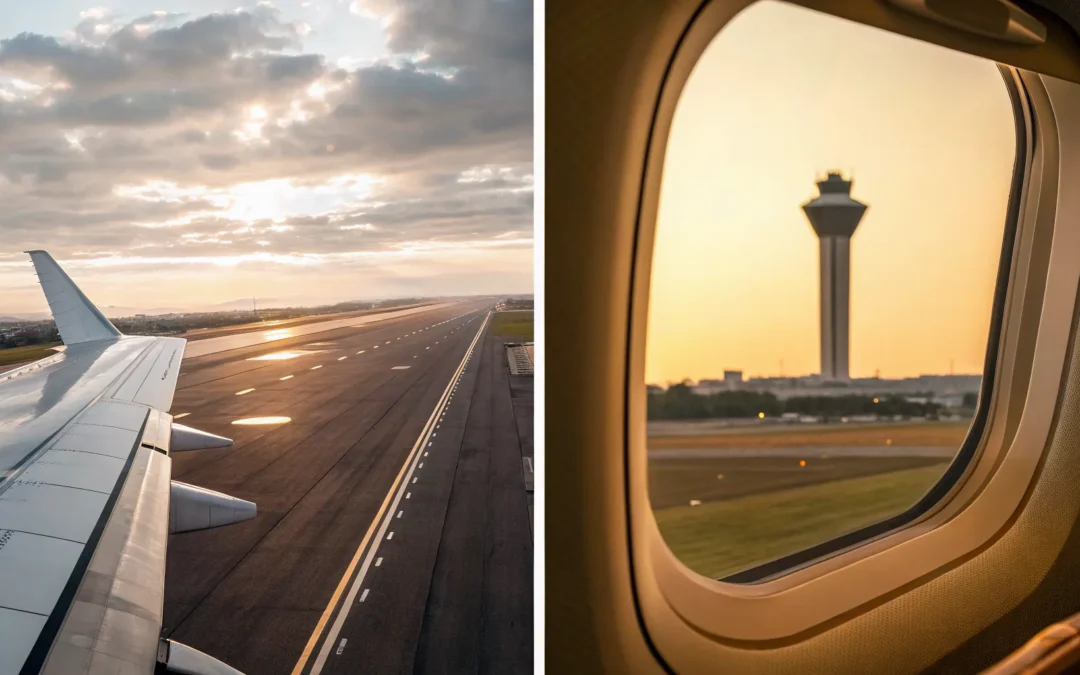
For any pilot with their sights set on an airline career, the landing takes on a whole new meaning. The techniques that work in a light aircraft don’t always translate to a 150,000-pound jet. Have you ever imagined making a smooth landing at a major international airport, sitting in the right seat of a Boeing 737? Achieving that dream requires moving beyond the basics and mastering the procedures of a transport-category aircraft. This is where advanced training becomes essential. It’s about unlearning habits that no longer serve you and adopting the mindset of an airline professional, where a safe, stable, and on-target touchdown is the only acceptable standard.
Key Takeaways
- Prioritize a Safe Landing, Not a Smooth One: A firm, positive touchdown is often safer than a “buttered” landing. It ensures your aircraft’s systems, like spoilers and brakes, activate immediately for a controlled stop within the touchdown zone.
- A Great Landing Starts with a Stable Approach: Your landing is only as good as the approach preceding it. Prepare by briefing the entire procedure, establishing a stable configuration early, and knowing when to make the call for a go-around.
- Adjust Your Technique for Adverse Conditions: Your landing strategy must adapt to variables like weather, runway length, and aircraft weight. A firm touchdown is a key technique for maintaining control in crosswinds or on wet runways to prevent issues like hydroplaning.
The “Smooth Landing”: Passenger Perception vs. Pilot Reality
As a pilot, you know the landing is one of the most critical phases of flight. It’s also the one part your passengers will remember most vividly. They often judge the entire flight, and your skill, on those final few seconds. The smoother the touchdown, the better the pilot, right? Not exactly. There’s a significant gap between what passengers consider a “good” landing and what constitutes a safe, professional one. This difference isn’t just about comfort; it’s about adhering to procedures that prioritize safety above all else. Understanding this distinction is a key part of your development as a professional aviator.
Debunking the “Buttered Landing” Myth
Passengers often dream of a “buttered” landing, one so smooth they barely feel the wheels touch the pavement. It’s an understandable metric from their perspective, but it’s a flawed way to measure a pilot’s proficiency. A textbook landing is a controlled, positive arrival on the runway, not a gentle guess. A firm touchdown ensures the aircraft is definitively on the ground, allowing the spoilers and braking systems to engage immediately. This is especially critical on shorter or contaminated runways. Chasing that silky-smooth feeling can lead to floating, which eats up precious runway. True skill lies in executing a safe, stable, and predictable landing every single time, which is a core focus of professional flight training.
Why Passenger Expectations Put Pressure on Pilots
Knowing that everyone in the cabin is waiting to critique your landing can create real pressure. It’s tempting to try and deliver that ultra-smooth experience to please the crowd. However, giving in to this pressure can lead pilots to deviate from standard operating procedures. You might be tempted to carry a little extra speed or extend the flare to soften the touchdown, but these actions compromise safety. They can lead to a long landing, increasing the risk of an overrun. Our training philosophy emphasizes that a pilot’s first duty is to the safety of the aircraft and everyone on board. A safe, firm landing in the touchdown zone is always better than a smooth one halfway down the runway.
The Anatomy of a Safe Landing
A successful landing isn’t a single event; it’s the result of a carefully executed sequence that begins miles from the airport. Think of it as a three-act play: the setup, the approach, and the finale. Each phase requires precision, discipline, and a deep understanding of the aircraft’s performance. As a pilot, your goal is to remain ahead of the airplane, making small, deliberate adjustments to stay on a stable and predictable path. Getting this sequence right is what separates a stressful arrival from a controlled, professional one.
Pilots often say that a good approach makes for a good landing, and they’re absolutely right. If you’re wrestling with the aircraft on final, you’re already playing catch-up. The key is to establish a stabilized approach early and maintain it all the way down. Mastering these fundamentals is the core of advanced flight training and a non-negotiable skill for any professional aviator. At our FAA Part 142 certified academy, we drill these procedures until they become second nature, preparing you for the real-world demands of airline operations.
Configure the Approach and Control Your Speed
Long before you see the runway numbers grow in the windscreen, you should be configuring the aircraft for landing. This means methodically working through your checklists to extend flaps and lower the landing gear at the appropriate speeds and altitudes. Your objective is to establish a stable approach speed and descent rate. By the time you reach 500 feet above the ground, the aircraft should be fully configured and on target. This proactive setup minimizes last-minute rushes and allows you to focus your attention outside the cockpit, monitoring your path and looking for any potential hazards. A rushed approach is a recipe for an unstable one.
Manage the Glide Path and Descent Rate
Once you’re configured, your next job is to stay on the correct glide path, that invisible highway leading down to the touchdown zone. You need to hold this path steady all the way from your 500-foot gate until you begin the flare. To help with timing, look far down the runway instead of directly over the nose of the aircraft. As you get closer to the ground, your peripheral vision will register the ground rushing up, giving you the cue to begin pulling back on the controls. This technique helps you accurately judge your height and initiate the flare at the perfect moment, transitioning smoothly from the final approach to the landing itself.
Execute the Flare, Touchdown, and Rollout
The flare is the graceful maneuver where you raise the aircraft’s nose, slowing your descent rate for a gentle arrival. The goal is to have the wings lose lift just inches above the pavement, allowing the plane to settle onto the runway. A firm landing is not a bad landing; it ensures positive contact with the runway so the spoilers and brakes can activate immediately. After touchdown, your job isn’t over. You must continue to fly the airplane, using the rudder to track the centerline and applying brakes to slow to a safe taxi speed. This entire sequence is a critical skill you’ll perfect in a B737 Type Rating program.
Smooth vs. Safe: What Really Defines a Good Landing?
A truly good landing isn’t measured by how quiet the cabin is on touchdown. It’s measured by the pilot’s skill in assessing a complex set of variables and executing a plan that guarantees safety. While passengers might praise a “buttery” smooth landing, professional pilots know that a firm, positive touchdown is often the mark of a well-flown approach. The definition of a “good” landing changes with every flight, depending on three critical factors: the runway, the aircraft, and the weather.
Factor in Runway Length and Condition
Every pilot knows that runway is finite. When you’re aiming for a smooth, gentle touchdown, you often “float” in the ground effect, eating up hundreds, or even thousands, of feet of precious pavement. On a long, dry runway, you might have that luxury. But on a shorter field, that float is a hazard. A firm landing ensures the wheels make positive contact with the runway at the intended touchdown point. This allows you to apply brakes and spoilers sooner, giving you the maximum available distance to slow down safely. It’s about prioritizing a controlled stop over a soft arrival.
Account for Aircraft Type and Weight
What works for a Cessna 172 won’t work for a Boeing 737. The aircraft’s size, weight, and systems dictate the proper landing technique. It’s important to remember that a “firm” landing is not the same as a “hard” one; it simply means making decisive contact with the runway. Heavier aircraft carry more inertia and require a more assertive touchdown to prevent floating and ensure the landing gear settles properly. This is a core concept we reinforce in our B737 Type Rating program, where pilots learn to transition from lighter aircraft to the specific demands of a commercial jet.
Respond to Wind and Weather
Weather is the ultimate variable, and it often makes the decision for you. Landing in gusty winds, crosswinds, or rain requires a different strategy. In these conditions, a pilot’s priority shifts entirely to maintaining control of the aircraft through touchdown. According to NOAA, weather is responsible for a majority of air travel delays, and conditions like wind shear are especially disruptive. To counter this, pilots often fly a slightly faster approach speed and make a firm landing to get the plane on the ground quickly and minimize the effects of unpredictable winds. The goal is to fly the plane onto the runway, not just let it settle. Mastering this is a key part of advanced training, like what we cover in the ATP CTP course.
Why a Firm Landing Is Often a Safer Landing
As pilots, we’ve all heard passengers rave about a “buttered landing.” While a smooth touchdown feels great, the truth is that a firm, positive landing is often the safer and more professional maneuver. It’s important to distinguish that a “firm” landing is not a “hard” one. It’s a deliberate technique to get the aircraft on the ground and configured for stopping as quickly and safely as possible.
Chasing that feather-light touchdown can introduce unnecessary risks, especially in challenging conditions. A pilot’s primary responsibility is to ensure the aircraft stops safely within the available runway, not to impress passengers with a barely-there touchdown. The most skilled pilots know that a good landing is defined by control and safety, not just smoothness. Understanding the mechanics behind a firm landing is a critical step in your development as a professional aviator, something we emphasize in our ATP CTP course. Let’s explore why a decisive touchdown is often your best and safest option.
Activate Spoilers and Brakes Sooner
A firm touchdown gets your aircraft’s systems working for you immediately. Modern airliners rely on weight-on-wheels sensors to know they are on the ground. A decisive landing ensures these sensors are activated without delay, which in turn allows the ground spoilers to deploy and the autobrake system to engage. If you float in pursuit of a soft landing, you delay this critical sequence. The spoilers are essential for “dumping” lift and putting the aircraft’s full weight on the tires, which dramatically improves braking effectiveness. A firm plant ensures these systems kick in right away, transitioning the airplane from a flying machine to a ground vehicle exactly when you need it to.
Prevent Hydroplaning on Wet Runways
On a wet or contaminated runway, a firm landing is your first line of defense against hydroplaning. When a runway is covered in water, a gentle touchdown can allow the tires to ride on top of the water’s surface instead of gripping the pavement. This can lead to a partial or total loss of braking action and directional control. By making positive contact with the runway, the tires are forced through the water layer to connect with the asphalt. This decisive action is crucial for maintaining control and allowing the brakes to work effectively. The FAA highlights that a firm touchdown is a key technique to mitigate the risks of landing on wet surfaces.
Ensure a Shorter, More Efficient Stop
Every pilot knows that floating eats up runway. When you hold the aircraft off the ground in the flare, trying to achieve that perfect smooth landing, you are floating in the ground effect. While you float, you are traveling down the runway at a high speed without any braking action. This can easily cause you to miss the touchdown zone and significantly increase your total landing distance. A firm, decisive landing minimizes float, ensuring you touch down where you planned. This gives you the maximum amount of runway available for deceleration, which is a non-negotiable factor for safety, especially on shorter runways or in high-density altitude conditions.
Understand the Dangers of “Floating”
Floating is more than just a waste of runway; it’s a period of reduced control. When an aircraft floats, it is in a low-energy state where it is neither truly flying nor firmly on the ground. This makes the aircraft highly susceptible to wind gusts and crosswinds, which can push you off the centerline or even cause a wing to drop. The goal of a landing is to safely transition from flight to a controlled stop on the ground. A firm landing achieves this by quickly transferring the aircraft’s weight onto the wheels, establishing positive control on the ground, and allowing you to begin deceleration immediately. It’s about making a controlled, deliberate choice to end the flight.
How to Prepare for Every Single Landing
A successful landing doesn’t start a few hundred feet above the runway; it begins long before the descent. Consistent, safe landings are the product of disciplined preparation and a proactive mindset. Every approach is a unique challenge, shaped by weather, air traffic, and aircraft performance. As a pilot, your job is to anticipate these variables and have a clear plan for every phase of the landing, ensuring you’re always ahead of the aircraft.
This preparation isn’t just about following a checklist. It’s about building a mental model of the entire sequence, from the initial approach fix to the final rollout. It means knowing your procedures cold, understanding the environmental factors at play, and having the confidence to make decisive calls when conditions change. By treating every landing with the same level of detailed planning, you establish the habits that define a professional aviator. This structured approach is a core component of advanced training, including the ATP CTP course, where pilots refine their ability to manage complex scenarios in a controlled environment. The goal is to make sound judgment and precise execution second nature, so when you’re in the cockpit, you’re not just reacting; you’re commanding the situation with skill and foresight.
Brief the Approach
A smooth landing almost always comes from a good approach. If your approach isn’t stable, your landing probably won’t be either. Before you begin your descent, a thorough approach briefing is essential. This isn’t just reciting information from a chart; it’s a strategic review of the entire procedure. You’ll confirm the landing runway, review the instrument approach plate or visual approach procedures, and note key altitudes and airspeeds.
Your briefing should also cover threats and contingencies. What’s the weather doing? Are there crosswinds or potential wind shear? What is the runway condition? By verbalizing the plan and potential challenges, you and your crew are aligned and ready to act. This simple habit primes your brain for the task ahead, turning a complex sequence of actions into a manageable, rehearsed procedure.
Handle Air Traffic and Airport Sequencing
You aren’t flying in a vacuum. As you get closer to the airport, you become part of a carefully managed sequence of arrivals. Your ability to communicate effectively with air traffic control (ATC) and anticipate instructions is critical. This is especially true at busy airports or when conditions are less than ideal. Remember, weather is a major factor in air transportation delays, which means ATC may issue speed adjustments, vectors, or holding patterns to maintain safe separation.
Being prepared means having your radios tuned and ready, listening to ATIS for the latest airport information, and maintaining situational awareness of the traffic around you. A proactive pilot anticipates the next instruction and flies a predictable flight path, making the controller’s job easier and ensuring you arrive at the final approach fix stabilized and on schedule.
Make the Call: Go-Around vs. Commit to Land
One of the most important decisions a pilot makes happens in the final moments of the approach: whether to continue to a landing or execute a go-around. A go-around is not a failure; it’s a well-executed safety procedure and often the smartest choice. You should have predefined criteria for a stable approach. If you cross the final approach fix or a specified altitude (typically 1,000 feet for instrument approaches) and you aren’t configured, on speed, and on the correct flight path, it’s time to go around.
Adverse conditions can also force your hand. When severe turbulence or wind shear is expected, pilots often do not fly their standard approach speed. If you encounter an unexpected hazard, like an aircraft still on the runway or a sudden wind shear alert, the decision is clear. Making the call early and executing the go-around decisively is a hallmark of a disciplined and professional pilot.
How to Adapt to Adverse Landing Conditions
Weather is the one variable you can never fully control as a pilot. In fact, weather accounts for a huge percentage of all air travel delays, which tells you just how much it can affect operations. While you can’t change the forecast, you can change how you respond to it. Adapting to adverse conditions is a non-negotiable skill, and it’s where your training truly shines. It’s about having a plan and the confidence to execute it when the wind picks up, the clouds roll in, or the runway is slick.
Successfully managing a landing in difficult weather comes down to mastering specific techniques for the challenge at hand. Whether you’re dealing with unpredictable winds, flying with zero visibility, or touching down on a contaminated runway, your preparation makes all the difference. The right ATP-CTP course is designed to build these exact skills, giving you the muscle memory and situational awareness to handle whatever the elements throw your way. Let’s walk through how to approach three of the most common adverse landing scenarios.
Correct for Crosswinds, Gusts, and Wind Shear
Fighting the wind on final approach is a true test of a pilot’s skill. When you’re dealing with strong crosswinds, gusts, or the potential for wind shear, your standard approach speed just won’t cut it. You’ll need to add a few extra knots to your Vref to create a buffer, giving you more control authority to counteract sudden changes in wind speed or direction.
Your primary techniques here are the crab and the sideslip. You’ll use the crab method on final approach, pointing the nose into the wind to maintain your course over the ground. Just before touchdown, you’ll transition to a sideslip, using your rudder to align the aircraft with the runway centerline while using aileron to prevent drifting. It’s a delicate dance, but with the right training, it becomes second nature.
Fly Instrument Approaches in Low Visibility
When fog, heavy rain, or low clouds obscure the runway, you have to put your complete trust in your instruments. This is where instrument approaches become your lifeline. Instead of relying on what you can see out the window, you’ll fly a precise, pre-defined path using the guidance from your flight director and navigation systems. This allows you to descend safely toward the runway, even when you can’t see it until the last few hundred feet.
Flying an instrument approach requires discipline and a deep understanding of your aircraft’s systems. It’s a skill that is perfected through repetition, especially in a simulator where you can practice for the worst-case scenarios. This is a core component of our West Coast ATP-CTP training, ensuring you have the confidence to fly the needles all the way to minimums.
Land on Wet, Icy, or Contaminated Runways
A wet or icy runway dramatically changes the landing equation. The biggest risk is hydroplaning, where your tires lose contact with the pavement and ride on a thin layer of water, severely reducing your braking ability. This is precisely why a firm touchdown is often the safest choice in these conditions. A positive landing ensures the wheels make solid contact, allowing the spoilers to deploy and the brakes to engage effectively.
Landing on a contaminated surface requires you to be ahead of the airplane. You need to calculate your landing distance with the conditions in mind and be prepared for a longer rollout. It also means being decisive with your flare; floating down the runway eats up valuable stopping distance. Mastering this takes practice and a solid understanding of aircraft performance, which is a key focus of our FAA Part 142 certified programs.
What Are the Toughest Landing Challenges for Pilots?
Landing is the final exam of every flight, and it tests more than just your stick-and-rudder skills. The toughest challenges often are not the visible ones, like a gust of wind or a short runway. Instead, they are the internal battles and ingrained habits that can make the difference between a good landing and a great one. Mastering the final approach means confronting the mental and physical demands of the job and consciously overriding habits that no longer serve you at a professional level. It’s about showing up prepared, not just technically, but mentally.
Manage Fatigue and Stress on Long Hauls
Long flights across multiple time zones take a toll on your body and mind. Managing fatigue is a critical skill, especially when you need to be at your sharpest during the approach and landing. Weather is a major factor here; it is responsible for a huge percentage of air travel delays, which can extend your duty day and significantly increase pilot fatigue. When you are tired, your decision-making can slow down, and your situational awareness can narrow. Professional pilots learn to actively manage this stress through disciplined rest, effective crew communication, and recognizing their own physiological limits before they become a factor in the cockpit.
Unlearn Bad Habits from Early Training
One of the hardest habits to break is the pursuit of the “perfectly smooth” landing. Passengers often judge a pilot’s skill by how soft the touchdown is, but this creates a dangerous misconception. Chasing a “buttered” landing can lead to floating down the runway, eating up valuable stopping distance. A firm, decisive touchdown is often the safer and more professional technique, especially on wet or short runways. It ensures the wheels are down and the braking systems can engage immediately. Part of your growth as a pilot is to unlearn the misconception that smoothness equals skill and instead prioritize a safe, stable, and controlled arrival every time.
How ATP-Level Training Prepares You for Real-World Landings
Moving into the right seat of an airliner requires more than just flight hours; it demands a higher level of proficiency, judgment, and skill. This is where advanced training makes all the difference. An Airline Transport Pilot Certification Training Program (ATP-CTP) is specifically designed to prepare you for the complexities of operating a transport-category aircraft. It’s not about just passing a test; it’s about mastering the skills needed to handle any landing scenario with confidence and precision. The transition to an airline career is a significant one, and this program serves as the essential bridge between your commercial pilot experience and the demands of flying for a major carrier.
The goal of our ATP-CTP course is to refine your abilities to an airline standard. This intensive training focuses on aerodynamics, automation, and operating in a multi-crew environment. You’ll move beyond the fundamentals and learn to manage high-stakes situations, from navigating severe weather to handling system malfunctions on final approach. We immerse you in the procedures and professionalism expected by airlines from day one. This program is the critical step that prepares you to think, act, and perform like a seasoned airline pilot, ensuring you’re ready for whatever the flight deck throws your way.
Build Muscle Memory and Situational Awareness
In the cockpit, hesitation can be costly. That’s why ATP-level training is so focused on building deep-seated muscle memory. Through structured repetition in a high-fidelity simulator, correct procedures become second nature. This isn’t just about rote memorization; it’s about conditioning your mind and body to react correctly under pressure. When you encounter a challenging situation, you won’t be fumbling for a checklist. Instead, you’ll rely on instinct honed by hours of realistic practice.
This process also sharpens your situational awareness. By addressing common misconceptions and replacing them with FAA-approved techniques, the training ensures your foundation is solid. Our focused approach helps you develop the mental clarity to see the bigger picture, anticipate changes, and make proactive decisions, which is the hallmark of a truly professional pilot.
Simulate High-Pressure and Adverse Weather Scenarios
You can’t request a real-world engine failure or a sudden microburst just for practice. Simulators are where you safely gain experience with the most demanding scenarios you could ever face. ATP training uses full-flight simulators to replicate everything from landing in a gusting crosswind to flying an instrument approach down to minimums. You’ll learn how to adapt your technique for the conditions, like adjusting your approach speed in severe turbulence to maintain a stable path.
This is your chance to practice emergency procedures and complex decision-making in a controlled environment. As one of the only West Coast ATP-CTP providers, we give pilots the opportunity to train for these exact moments. You’ll feel the adrenaline and learn to manage it, so if you ever face these conditions in the real world, you’ll be prepared, not panicked.
Bridge the Gap Between Theory and Performance
Knowing the theory behind a safe landing is one thing; executing it flawlessly is another. ATP-level training is designed to connect what you know with what you can do. It’s an interactive process that forces you to apply your knowledge in dynamic, real-time scenarios. You’ll learn how to manage aircraft systems, communicate effectively as part of a crew, and make critical go-around decisions when an approach becomes unstable.
This is the essence of an FAA Part 142 certified program. The curriculum isn’t just a collection of facts; it’s a structured pathway to performance. By actively engaging with challenging scenarios, you reconstruct your understanding and solidify your skills. This is what transforms a pilot with theoretical knowledge into a pilot with proven capability, ready for a successful career in the airlines.
Related Articles
- Your Guide to 90 Day Night Landing Currency
- Flight School Skills Every Pilot Needs | Las Vegas Flight Academy
Frequently Asked Questions
Is a firm landing actually a bad landing? Not at all. It’s important to separate the idea of a “firm” landing from a “hard” one. A firm landing is a controlled, positive technique where the aircraft touches down decisively. This is often the safest option because it ensures the weight-on-wheels sensors activate immediately, deploying spoilers and allowing the brakes to engage. Chasing a super-soft touchdown can lead to floating, which uses up precious runway and delays the stopping process.
Why is “floating” down the runway to get a smooth touchdown so risky? Floating might feel smooth, but it’s a period of high risk. While you’re hovering in the ground effect, you are still traveling at a high speed without any braking action, eating up hundreds of feet of runway. This significantly reduces your safety margin, especially on shorter fields. You’re also more vulnerable to crosswinds or gusts that can push you off the centerline. A professional landing is about ending the flight with authority, not lingering in a state of uncertainty just above the pavement.
How should my landing technique change on a wet or short runway? On a wet or short runway, your priority shifts entirely to stopping safely within the available distance. This means a smooth touchdown is no longer the goal. You should aim for a firm landing in the touchdown zone to cut through any standing water, prevent hydroplaning, and get the brakes working as soon as possible. On a short field, minimizing float is critical. A decisive touchdown ensures you have the maximum amount of runway ahead of you for deceleration.
When should I make the call to go around instead of trying to save a bad approach? You should decide to go around the moment your approach is no longer stable. A good rule is to have firm criteria, for example, being fully configured and on the correct speed and path by 1,000 feet. If you cross that gate and you’re still fighting the aircraft, the safest and most professional decision is to go around. A go-around is not a sign of failure; it’s a sign of a disciplined pilot who prioritizes safety over forcing a landing.
I learned to aim for smooth landings in my initial training. How do I unlearn this habit? This is a common challenge as pilots advance in their careers. Unlearning this habit comes from focused, professional training that rewires your instincts. Advanced programs, like an ATP-CTP course, use high-fidelity simulators to repeatedly practice landings in transport-category aircraft. This helps build new muscle memory based on airline-standard procedures, where a safe, stable, and predictable landing is valued far more than a soft one. It’s about replacing old habits with the techniques required for your professional career.