
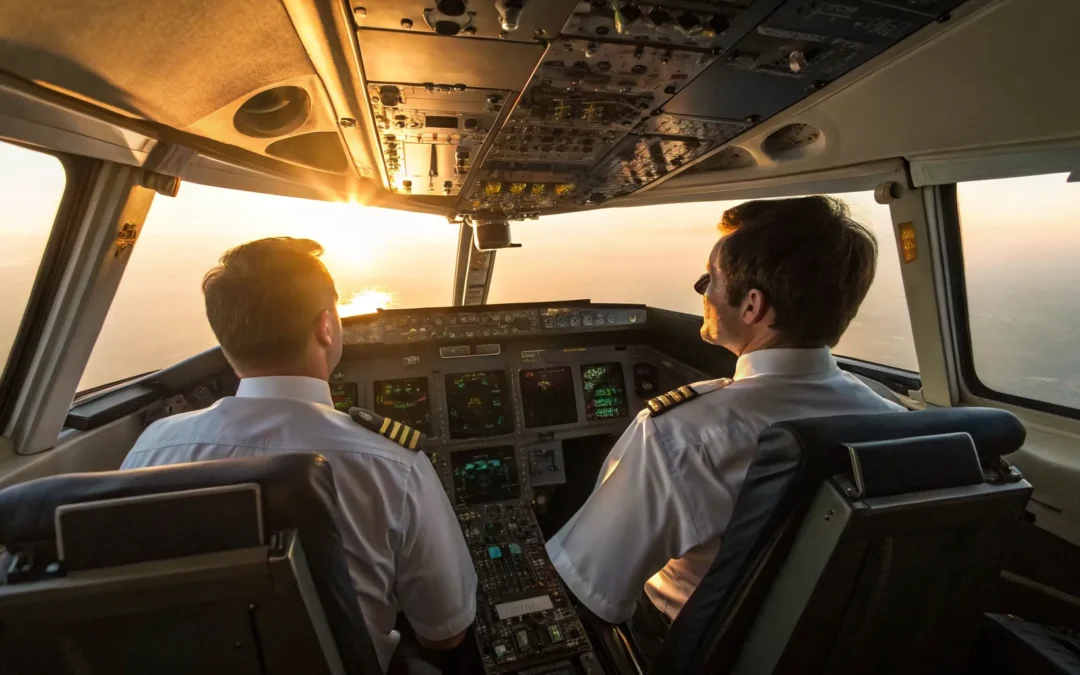
It’s a classic scene in movies: a passenger with some gaming experience has to land a 747. While it makes for great entertainment, the reality is far more complex. Landing a commercial jet is one of the most demanding tasks in aviation, requiring a level of precision and situational awareness that takes years to develop. Ever wonder what it would be like to fly a real airliner? It’s less about dramatic heroics and more about disciplined management. Pilots are expert communicators and systems managers, constantly making decisions under pressure. This article breaks down the myths and shows you the structured path, from the ATP-CTP course to a type rating, that prepares you for the real-world challenges of the flight deck.
Key Takeaways
- Professional Training Bridges the Gap: Simulators are great for practice, but they can’t teach you how to handle the real-world pressure and responsibility of the flight deck. FAA-approved programs like the ATP-CTP are designed to build the professional judgment and decision-making skills you’ll need for an airline career.
- Pilots Are Expert Managers: Flying a modern airliner is less about hands-on steering and more about managing complex systems, communicating with your crew and air traffic control, and making critical decisions all at once.
- Prepare for the Demands Beyond Flying: Becoming an airline pilot requires a major investment of your time, money, and mental focus. Success depends on your personal discipline and ability to balance the intense training schedule with the rest of your life.
What It Really Takes to Fly an Airliner
Flying a commercial airliner is a dream for many, but the path from the ground to the captain’s seat is paved with specific, demanding requirements. It’s not just about having a passion for flight; it’s a structured journey of education, training, and accumulating serious experience. Think of it less like a single leap and more like a staircase you climb one step at a time. Each license, rating, and flight hour is a critical step that builds the foundation you need to command a multi-million dollar aircraft with hundreds of lives on board.
The Licenses and Ratings You Need
Your journey starts with a Private Pilot Certificate, which lets you fly solo and with passengers but not for compensation. Next, you’ll earn a Commercial Pilot Certificate, the ticket to getting paid for flying. The ultimate goal for an airline career, however, is the Airline Transport Pilot (ATP) Certificate. This is the highest level of pilot certification and a requirement to act as an airline captain. Along the way, you’ll also need specific ratings for the type of aircraft you want to fly, like a multi-engine rating, which proves you’re proficient in handling planes with more than one engine. Each step is a building block for the next.
The Flight Hours You Must Log
Experience is measured in hours, and you’ll need a lot of them. To qualify for the ATP certificate, the FAA requires a minimum of 1,500 total flight hours. This isn’t just about being in the air; the quality of that time matters. Within that 1,500 hours, you must log at least 250 hours as the pilot-in-command, where you are directly responsible for the flight. This extensive time in the cockpit is non-negotiable because it’s where you develop the judgment and skill to handle the immense complexities of airline operations. This is the standard for most aspiring airline pilots on the West Coast and beyond.
Why FAA-Approved Training Is Essential
Where you train matters just as much as how many hours you fly. FAA-approved training programs are essential because they follow a structured, regulated curriculum designed to produce safe and competent pilots. Training at a Part 142 certified center, for example, ensures you receive comprehensive instruction that meets the highest federal standards. This isn’t just about checking boxes; it’s about immersing yourself in a professional environment that covers everything from advanced aircraft systems to crew resource management. This rigorous approach prepares you for the realities of the flight deck and ensures you have the skills to succeed in your airline career.
How Realistic Are Flight Simulators?
If you’re an aspiring pilot, you’ve probably spent countless hours behind a virtual yoke, flying everything from a Cessna to a 747 on your computer. Modern flight simulators are incredibly powerful, and they’ve inspired a whole new generation of aviators. But how close do they really get to the experience of flying a real airliner? The truth is, it’s complicated. Simulators are an essential part of modern aviation, from basic home setups to the full-motion, FAA-certified devices we use in professional training.
They provide a safe and controlled environment to learn procedures, practice emergencies, and build a foundational understanding of complex aircraft systems. However, they are a tool, not a replacement for the real thing. A simulator can teach you the “how” of flying, but it can’t fully prepare you for the dynamic, high-stakes reality of the flight deck. Understanding what simulators do well, and where they fall short, is key to seeing how they fit into your journey to becoming a professional pilot. The goal of simulator training isn’t just to practice; it’s to prepare you for the day you step into a real cockpit as part of a professional ATP-CTP course.
What Simulators Get Right
Simulators are a cornerstone of flight training for a reason: they are exceptionally good at teaching procedures. Think of them as a flight deck gymnasium where you can build muscle memory without the cost of fuel or the risk of a real-world mistake. You can practice checklists, emergency protocols, and instrument scans over and over until they become second nature. This is where simulators truly shine. They offer a cost-effective and safe way for pilots to improve their technique and learn complex systems. Want to practice an engine-out scenario ten times in a row? In a simulator, you can. This level of repetition is invaluable for building the confidence and competence you need before you ever leave the ground.
Where Simulators Fall Short
While a simulator can perfectly replicate the steps of a procedure, it can’t replicate the environment in which you perform it. In a real cockpit, you aren’t just flying the plane; you’re managing multiple tasks at once. You’re talking to Air Traffic Control, monitoring weather, cross-checking instruments, and coordinating with your co-pilot, all while the aircraft is moving through a dynamic environment. Many pilots find that landing a real airliner is much harder than it is in a simulator because of these added layers of complexity and stress. A home simulator can’t recreate the pressure of a busy airport or the mental workload of making critical decisions in real time. This is the gap that professional training is designed to fill.
Sensations a Sim Can’t Replicate
Flying is a full-body experience, and this is something no simulator can truly capture. Pilots talk about the “seat-of-the-pants” feeling, the subtle physical cues that tell you what the aircraft is doing. You can feel the gentle G-forces in a coordinated turn, the rumble of the landing gear locking into place, and the slight buffet as you approach a stall. These sensations are a vital part of a pilot’s situational awareness. Beyond the physical, there’s the psychological weight of responsibility. The immense focus and discipline required when you are in command of a real airliner is a feeling that can only be understood through experience. It’s this combination of skill and mindset that defines a true professional, something our team of experienced instructors works to instill in every student.
Do Simulator Skills Transfer to the Cockpit?
Many aspiring pilots get their start on a home flight simulator, dreaming of the day they’ll sit in a real flight deck. This raises a common question: how much of that practice actually translates to flying a multi-million dollar airliner? The answer is that simulators are an incredibly powerful tool, but they are just one piece of a much larger puzzle. While they can teach you procedures and patterns, they can’t replicate the full experience of being a pilot in command. True proficiency comes from combining structured simulator training with real-world flight hours and professional instruction.
Where Simulator Skills Help
Simulators are an essential part of modern flight training for good reason. They provide a safe and controlled environment where you can practice everything from basic maneuvers to complex emergency procedures without burning expensive fuel or putting a real aircraft at risk. This is where you build the muscle memory for checklists, instrument scans, and flight management system inputs. Because it’s a more affordable way to train, you can repeat scenarios until they become second nature. This kind of practice is invaluable, especially when preparing for your ATP-CTP course, where you’ll be expected to demonstrate a high level of procedural knowledge in a full-flight simulator.
The Gap Between Sim and Reality
For all their benefits, simulators have their limits. They can’t fully replicate the subtle physical sensations of flight, like the feeling of the aircraft in a crosswind or the slight G-forces of a turn. There’s also a psychological gap. Knowing you can just hit the reset button is very different from managing a real aircraft where the stakes are infinitely higher. While simulator time is incredibly valuable for learning procedures, it doesn’t count as Pilot in Command time for a reason. The experience of making real-time decisions with real consequences is something you can only get in an actual cockpit, which is why logging flight hours is a non-negotiable part of becoming a pilot.
Why Sims Are a Tool, Not a Substitute
The best way to think of a simulator is as a tool, not a substitute for real flying. It’s a place to learn and perfect your craft in a way that would be impractical or unsafe in the air. Professional flight schools use simulators to help pilots train smarter, bridging the gap between classroom theory and real-world application. Within a structured, FAA-approved program, simulators allow instructors to create specific training scenarios that challenge a pilot’s skills. This combination of simulator practice and actual flight experience is what builds a competent, confident, and safe professional pilot. It’s not about one or the other; it’s about using both to their full potential.
What Pilots Actually Do in the Cockpit
Flying a commercial airliner is so much more than just steering a plane through the sky. In the real world, pilots are expert managers, communicators, and problem-solvers, responsible for hundreds of lives and a multi-million dollar aircraft. While flight simulators provide a fantastic foundation, the actual cockpit environment is a dynamic space where training and experience truly come to life. It’s a constant juggle of technical skill, situational awareness, and clear-headed decision-making. Let’s look at what a typical day in the flight deck involves.
Navigating and Communicating with ATC
Pilots are in a constant state of multitasking. You aren’t just following a pre-programmed route; you are actively managing your flight path while maintaining a continuous dialogue with Air Traffic Control (ATC). This involves interpreting instructions, providing updates, and making real-time adjustments based on traffic, weather, and other factors. In the real world, there’s a lot to handle at once, from navigating complex airspace to making critical decisions under pressure. Mastering this symphony of tasks is a core part of your development, and it’s a skill honed to perfection in an Airline Transport Pilot Certification Training Program (ATP-CTP), where you learn to operate effectively in a multi-crew environment.
Monitoring Critical Aircraft Systems
A huge part of a pilot’s job is being a systems expert. Modern airliners are incredibly complex, and you are responsible for monitoring everything from engine performance and fuel consumption to cabin pressurization and hydraulic systems. While simulators are excellent tools for learning these systems, the real test is applying that knowledge in flight. You need to understand what every alert means and how to respond correctly. This constant vigilance ensures the aircraft is operating safely and efficiently from takeoff to touchdown. Professional training for a B737 Type Rating is where you gain the hands-on experience needed to become intimately familiar with every aspect of the aircraft, preparing you for this critical responsibility.
Managing the Unexpected
No two flights are ever the same, and a pilot’s most important job is to be prepared for the unexpected. This could be anything from a sudden change in weather to a minor system issue that requires troubleshooting. While simulators let you practice emergency procedures in a controlled setting, the real cockpit adds layers of stress and unpredictability. This is why so few people, even experienced simmers, feel confident they could land a large airliner by hand without incident. Rigorous, standardized training builds the procedural knowledge and mental resilience to handle these situations calmly and effectively. It’s this level of preparation, certified under strict FAA Part 142 standards, that separates a hobbyist from a professional pilot.
Could a Passenger Really Land a Plane?
It’s a classic movie scene: both pilots are incapacitated, and a brave passenger with some flight simulator experience is talked down to a perfect landing by air traffic control. It makes for great drama, but could it actually happen? While it’s a fun scenario to think about, the reality is far more complicated. Landing a commercial airliner is a demanding phase of flight that requires a deep understanding of the aircraft, precise control inputs, and clear communication. Even with someone on the radio, the person in the cockpit faces a monumental task. The gap between a simulator and the real flight deck is immense, especially under pressure. Professional pilots spend years honing the skills needed to handle these moments with calm and precision, a level of expertise that can’t be replicated by a few hours on a home computer.
The Reality of an ATC-Guided Landing
Let’s break down the “talk-down” landing. Air traffic controllers are incredible professionals, but they aren’t pilots sitting in the cockpit with you. They could provide instructions, but you would still need to translate those words into actions on an instrument panel you’ve never seen before. Many people believe you could just activate the “autoland” feature. However, setting up a modern airliner for an automated landing involves a complex sequence of inputs. You have to correctly configure the flight management system and arm the approach mode. This isn’t a single red button; it’s a detailed procedure that pilots practice extensively in their ATP-CTP course. A novice would be completely overwhelmed by the terminology and the sheer number of buttons.
Why It’s More Complex Than the Movies
Movies conveniently skip the most challenging parts: the crushing stress and intense multitasking. In a real cockpit, you aren’t just flying the plane. You’re communicating with ATC, monitoring dozens of critical systems, and managing your airspeed and altitude simultaneously. A commercial flight deck is designed for a two-pilot crew specifically because the workload is too high for one person, let alone an untrained one. The entire aviation system is built on redundancy to prevent this exact scenario. With two highly trained pilots and multiple backup systems, the chances of a passenger ever needing to step in are practically zero. This focus on safety and procedure is at the core of professional aviation, and it’s what separates a trained pilot from a hobbyist. Our entire philosophy is built on providing this level of real-world, professional training.
Common Myths About Flying an Airliner
If you’ve spent hours in a flight simulator, you might have a certain picture of what it’s like in a real airliner cockpit. The truth is, flying a commercial jet is far more complex and demanding than it often appears. It’s a profession built on extensive training, precision, and the ability to manage an incredible amount of information at once. Let’s clear the air and talk about some of the most common myths about flying an airliner. Understanding the reality is the first step in appreciating what you’ll learn in professional flight training.
Myth #1: Autopilot Does All the Work
It’s easy to imagine pilots switching on the autopilot and then kicking back for the rest of the flight. While autopilot is an amazing tool, it doesn’t fly the plane by itself. Think of it as an advanced cruise control system that can maintain heading, speed, and altitude. The pilots are the ones who program it, monitor it, and constantly make adjustments. They are always managing the flight, especially during critical phases like takeoff, landing, and any unexpected situations. Even an “autoland” requires immense pilot oversight and coordination with air traffic control. True mastery comes from understanding and managing these complex systems, not just turning them on.
Myth #2: It’s Just Like a Video Game
Flight simulators are fantastic for learning procedures and getting familiar with a cockpit layout, but they can’t replicate the full experience of flying a real aircraft. The biggest difference is the sheer amount of real-world pressure and multitasking involved. In a real cockpit, you’re not just flying the plane; you’re communicating with ATC, interpreting weather data, monitoring aircraft systems, and making critical decisions under stress. There’s a physical feel to the controls and a sense of responsibility that a computer screen can’t convey. A professional training environment is designed to bridge this gap, teaching you to handle the dynamic, real-world challenges that simulators leave out.
Myth #3: Any Pilot Can Fly Any Plane
A pilot’s license isn’t a universal key to every cockpit. Flying a small, single-engine plane is a completely different world from operating a 150,000-pound Boeing 737. Even an experienced private pilot would be completely out of their element in an airliner without specific training. Commercial jets are so complex that pilots must earn a specific type rating for each model they fly. This involves intensive, aircraft-specific ground school and simulator training to learn its unique systems, performance characteristics, and emergency procedures. This specialization is what ensures pilots have the exact skills needed to operate their aircraft safely and efficiently.
How Automation Shapes Modern Flying
Modern airliners are marvels of technology, and automation is at the heart of how they operate safely and efficiently. But it’s a common misconception that pilots just press a button and let the plane fly itself. The reality is a dynamic partnership between the pilot and the aircraft’s systems. As the pilot in command, your job is to manage this technology, understand its limits, and always be prepared to take manual control. This philosophy is a cornerstone of professional flight training.
Learning to work with automation is a huge part of becoming a competent airline pilot. In advanced training, like the ATP-CTP course, you don’t just learn what the buttons do. You learn the logic behind the systems, how to program a flight plan, and how to monitor the aircraft to ensure it’s performing exactly as expected. Think of the automation as an incredibly skilled first officer. It can handle a lot of the workload, but you are ultimately responsible for every decision and every outcome of the flight. This synergy is what makes modern aviation so reliable, but it all hinges on a well-trained pilot in the captain’s seat.
What Autopilot Actually Does
So, what does the autopilot system really do? At its core, it’s designed to reduce pilot workload by managing the primary flight controls to maintain a set heading, altitude, and airspeed. In more advanced aircraft, pilots interact with a Flight Management System (FMS) to program the entire flight route, and the autopilot executes that plan. Some systems can even perform an “autoland” in low visibility conditions.
However, an autoland isn’t a simple, one-click process. It requires precise setup by the flight crew and close coordination with air traffic control on the ground. The pilots are actively monitoring every parameter, ready to disengage the system and fly the approach manually if anything deviates from the plan. The autopilot is a powerful tool, but it only does what the pilot tells it to do.
Why Manual Flying Skills Are Still Critical
With all this sophisticated automation, you might wonder if pilots even need to hand-fly the plane anymore. The answer is a resounding yes. The pilot is the ultimate safety net. When automation encounters a situation it wasn’t designed for, or if a system fails, the crew needs the skill and confidence to take over immediately. Real-world flying involves managing stress, communicating with ATC, and interpreting complex information, all things a computer can’t fully replicate.
Even pilots with thousands of hours in smaller aircraft find that manually flying a large airliner is a completely different challenge. The physics, timing, and control inputs are unique, which is why a B737 Type Rating is so important. Your manual flying skills are your foundation, ensuring you can safely command the aircraft through any phase of flight, no matter what challenges arise.
What Makes Landing an Airliner So Difficult?
Landing is the most demanding phase of any flight. While simulators give you a feel for the controls, they can’t fully prepare you for the intense focus required to bring a multi-ton aircraft safely onto the runway. It’s a sequence that demands precision, adaptability, and a deep respect for the machine and the elements. Every single landing, from the routine to the challenging, is a test of a pilot’s training and skill. It’s far more than just pointing the nose toward the pavement; it’s a carefully choreographed procedure where small errors can have big consequences. The transition from a simulated environment to a real flight deck reveals just how many variables are at play. The physical sensations, the real-time communication with air traffic control, and the weight of responsibility are things a computer just can’t replicate. This is why even experienced sim users find real-world landings to be a completely different challenge, one that requires a foundation of professional, hands-on training.
Juggling Speed, Altitude, and Timing
Think of landing an airliner as a delicate dance where you have to get every step right. You’re constantly managing your airspeed to stay above stall speed but slow enough for a gentle touchdown. At the same time, you’re controlling your descent rate, following a precise glide path to the runway. Come in too high, and you’ll overshoot your landing point; come in too low, and you risk hitting an obstacle. All of this has to be timed perfectly to arrive over the runway threshold at the right altitude and speed. This is a skill that requires hundreds of hours to master, and it’s a core focus of getting your B737 Type Rating.
How Weather Changes the Game
The perfect, sunny day landing you practice in a simulator is rarely the reality. Real-world weather adds a dynamic and unpredictable layer of difficulty. A strong crosswind can push the aircraft sideways, forcing the pilot to use advanced techniques to keep it aligned with the runway. Wind shear, a sudden change in wind speed or direction, can dramatically affect your airspeed and descent rate in critical moments. Low visibility from fog, rain, or clouds can obscure the runway, making the final approach entirely dependent on your instruments and training. This is why student pilots have weather restrictions; handling these conditions safely requires the kind of experience you gain through professional, structured flight training.
Why Every Landing Demands Respect
Even for a captain with thousands of hours, landing is never treated as routine. It’s a phase of flight that demands complete focus because the margins for error are so small. In a real cockpit, you aren’t alone. The entire process is a team effort, built on clear communication, checklists, and crew resource management. This collaborative environment is a core part of professional aviation and a key component of the ATP CTP course. Real airliners have multiple pilots and redundant systems for a reason. Every landing is a reminder that safety is built on procedure, teamwork, and a healthy respect for the complexity of the task at hand.
The Unspoken Challenges of Pilot Training
Becoming an airline pilot is an incredible ambition, but the journey from the passenger seat to the flight deck involves more than just learning to fly. The path is filled with personal challenges that test your commitment, finances, and mental fortitude. While the dream of flying is powerful, it’s important to have a clear picture of the dedication required. Understanding these hurdles is the first step to overcoming them and successfully earning your wings.
The Financial Investment
Let’s be direct: flight training is a significant financial investment. The costs can feel daunting, but it’s crucial to look beyond the price tag and focus on the value you receive. A low-cost program that doesn’t prepare you for the realities of the cockpit isn’t a bargain. The best flight schools are transparent and honest, providing superior training that justifies the expense. A structured, FAA-approved program helps make costs more predictable. By using advanced flight simulators for a portion of the training, schools can offer a more affordable path without compromising the quality of your education, ensuring your investment truly pays off in your career.
The Mental and Emotional Demands
Piloting is as much a mental discipline as it is a hands-on skill. The training is intense, with demanding schedules, rigorous exams, and the constant pressure to perform consistently. You’ll need to develop sharp decision-making skills and maintain composure under stress. The most successful students are the ones who arrive prepared. You can get more out of every single lesson by studying the material beforehand and coming with specific questions. This proactive approach shows your instructors you’re serious and helps you stay on track in a fast-paced learning environment, guided by a team of experienced aviation professionals.
Balancing Training with Your Life
A tough but important fact is that more people start flight training than complete it. The commitment extends far beyond your scheduled time at the academy. It requires discipline to balance study hours, simulator sessions, and flight lessons with your personal life, work, and family responsibilities. For international students, this challenge is even greater as they adapt to a new country on top of their training. Succeeding isn’t just about showing up; it’s about organizing your life to support your ambition. While it demands sacrifice, structuring your time and staying focused makes the goal of becoming a pilot entirely achievable.
How to Go From Simulator to Cockpit
Making the leap from a high-fidelity simulator to the flight deck of a real airliner is one of the most exciting moments in a pilot’s career. It’s a transition that doesn’t happen by chance. It’s the result of a highly structured, FAA-regulated training path designed to prepare you for the immense responsibility of flying a transport category aircraft. This journey involves specific certifications and advanced training that build upon your existing skills, turning you from a pilot into an airline professional. Let’s walk through the exact steps you’ll take to get there.
What Are ATP-CTP and B737 Type Ratings?
Think of these as the two essential keys you need to unlock an airline career. First, there’s the Airline Transport Pilot Certification Training Program, or ATP-CTP. This is a mandatory course required by the FAA before you can even take the ATP written exam. It’s an intensive program that covers advanced topics like high-altitude aerodynamics, automation, and crew resource management. Completing an ATP-CTP course proves you have the foundational knowledge for airline operations.
Next is the type rating, like the B737 Type Rating. While the ATP certificate is a general license to act as an airline pilot, a type rating certifies you to fly a specific aircraft model. It involves in-depth training on that plane’s unique systems, performance, and handling characteristics.
What to Expect in Professional Flight Training
Professional flight training is a focused, fast-paced experience that bridges the gap between your commercial pilot skills and the demands of an airline cockpit. The ATP-CTP, for example, is a standardized program that includes 30 hours of academic ground school and 10 hours of simulator training. The ground school portion dives deep into air carrier operations, handling adverse weather, and maintaining a strong safety culture.
The simulator sessions are where you apply that theory. You’ll practice handling complex emergencies and work with a crewmate in a realistic, multi-crew environment. This isn’t just about learning procedures; it’s about developing the judgment and decision-making skills expected of an airline pilot. Our FAA Part 142 certification ensures our training meets the highest standards.
Take Your First Step Toward the Flight Deck
Your journey to the flight deck begins with one clear action: completing the ATP-CTP course. This program is the non-negotiable first step that qualifies you for the ATP knowledge test and prepares you for what comes next. The simulator experience you gain is invaluable, giving you a safe environment to master the skills needed for real-world airline flying.
Once you have your ATP-CTP completion certificate, you can take the written exam and then move on to pursuing a type rating for an aircraft like the Boeing 737. This is how you become a qualified candidate for a first officer position. For pilots on the West Coast, finding a convenient and reputable training center is key. Our location makes us a premier choice for West Coast ATP-CTP training, helping you take that first critical step efficiently.
Related Articles
Frequently Asked Questions
I have hundreds of hours on my home flight simulator. Will that give me a big advantage in my professional training? Your time in a home simulator is valuable because it shows your dedication and likely means you’re familiar with basic procedures and cockpit layouts. That familiarity can give you a small head start. However, the biggest leap in professional training, like the ATP-CTP course, is learning to operate as part of a crew under pressure. This involves communication, task management, and decision-making that simply can’t be replicated on a home setup. Think of your sim time as building a good foundation, but the real professional skills are built in a certified, multi-crew training environment.
What is the exact order of steps I need to take after getting my Commercial Pilot Certificate to get to an airline? Once you have your Commercial Pilot Certificate, your path is very structured. First, you need to build flight time to meet the FAA minimums for an ATP certificate, which is typically 1,500 total hours. Next, you must complete an Airline Transport Pilot Certification Training Program (ATP-CTP). After finishing the course, you are eligible to take the ATP written exam. With the exam passed and your flight hours logged, you can then take the practical exam for the ATP certificate itself, which is often done in conjunction with getting a type rating for a specific airliner once you are hired.
Flight training is a huge investment. How can I be sure I’m spending my money wisely? You’re right to view it as a major investment in your career, and the key is to focus on value, not just cost. The wisest investment is in a program that will make you a competent, confident, and hirable pilot. Look for FAA-approved training centers with a transparent, structured curriculum. These programs are designed to meet the highest industry standards and ensure you are truly prepared for the demands of an airline cockpit. A cheaper program that cuts corners or leaves you unprepared for interviews isn’t a bargain in the long run.
I’m an international student hoping to train in the U.S. Are there extra steps I need to take? Yes, there are a few important extra steps for international students. The main requirement is obtaining an M-1 student visa to train in the United States. To get this visa, you must first be accepted into a flight school that is approved by the Student and Exchange Visitor Program (SEVP). The school will then provide you with a Form I-20, which is necessary for your visa application. It’s a process with specific requirements, so it’s essential to choose a school that has experience guiding international students through it.
What is the biggest difference between the training I’ve done so far and the ATP-CTP course? The biggest difference is the shift in mindset from “me” to “we.” All of your training up to this point has focused on your skills as a single pilot in command. The ATP-CTP course is your first deep immersion into the world of multi-crew operations. You’ll learn how to effectively communicate, manage complex systems, and make critical decisions as part of a two-person flight crew in a high-fidelity simulator. It’s less about basic flying skills and more about learning the professional habits and procedures of an airline pilot.