
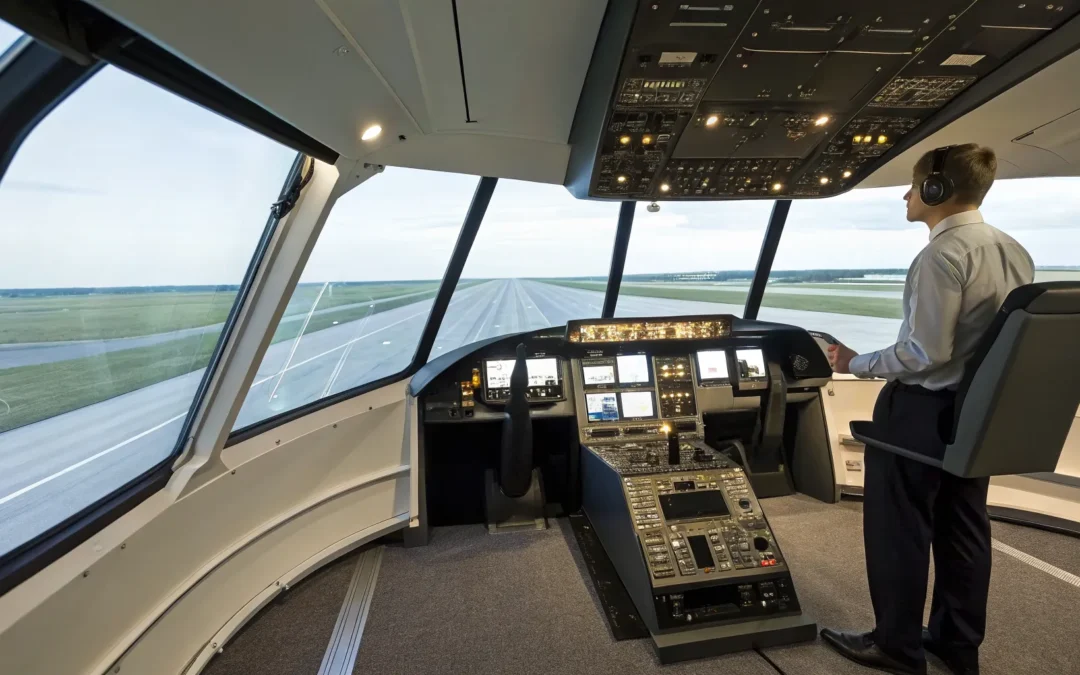
Have you ever wanted to experience airline pilot training without leaving the ground? The heart of modern aviation training lies in sophisticated flight simulators that act as your personal cockpit on the ground. These aren’t video games; they are powerful tools designed to build the skills and confidence you need to command a real aircraft. Think of simulator training as the bridge between the theory you learn in ground school and the practical experience you gain in the air. It’s where you apply your knowledge in a controlled, safe, and highly realistic environment. This article explores how this ground-based training is your secret weapon, allowing you to practice everything from basic maneuvers to complex emergency procedures until they become second nature, ensuring you’re fully prepared for the flight deck.
Key Takeaways
- Your Foundation is Built on the Ground: Master aviation theories in ground school and practice them in the simulator; this is how you build the deep knowledge and critical thinking skills that define a professional pilot.
- The ATP-CTP is Your Path to the Airlines: This required program is the final step to qualify for your ATP certificate, combining advanced classroom instruction with realistic simulator training to prepare you for a multi-crew environment.
- Choose a Certified Program for Quality Training: Look for an FAA Part 142 certified training center, as this designation ensures the program meets the highest standards for curriculum and instruction, giving you the quality education that airlines value.
What to Expect from Airline Pilot Training
Becoming an airline pilot is a journey of two parts: learning the theory on the ground and applying it in the sky. While logging flight hours is what everyone pictures, your time in the classroom is just as critical. This ground-based training is where you build the intellectual framework for a successful career in the cockpit. Let’s break down what you can expect from this essential phase of your training.
Ground School vs. Flight Time
Think of your pilot training as having two classrooms. One is the cockpit, where you get hands-on experience. The other is the actual classroom for ground school. This is where you’ll build the theoretical knowledge that makes safe flying possible. You’ll cover a wide range of topics, including aerodynamics, weather patterns, navigation, and FAA regulations. This isn’t just about passing a written exam; it’s about understanding the principles you’ll apply during every flight. The knowledge you gain here is the foundation for everything you’ll do in our ATP CTP course and beyond.
Why Ground Training is Your Secret Weapon
It’s easy to focus on flight hours, but the most successful pilots know that ground training is their secret weapon. This is where you develop the deep understanding required to be a competent and confident pilot. The classroom provides the essential context for every decision you’ll make in the air, from reading a weather chart to handling an unexpected situation. This foundational knowledge is crucial for passing your FAA written exams and gives you the tools to think critically under pressure. A structured program from an FAA Part 142 certified center ensures you get the comprehensive education needed to become a safe and proficient aviator.
Flight Simulators: Your Cockpit on the Ground
Flight simulators are the heart of modern pilot training, acting as your personal cockpit on the ground. These aren’t the video games you might have on your home computer; they are incredibly sophisticated devices designed to build the skills and confidence you need to command a real aircraft. Think of simulator training as the bridge between the theory you learn in ground school and the practical experience you gain in the air. It’s where you get to apply your knowledge in a controlled, safe, and highly realistic environment.
At a professional flight academy, simulators are used to practice everything from basic maneuvers to complex emergency procedures that would be too dangerous to replicate in a real plane. This hands-on practice is essential for developing the muscle memory and quick thinking required of an airline pilot. By spending time in the sim, you can repeat procedures until they become second nature, all while an instructor provides real-time feedback. This approach makes your training more efficient and effective, ensuring you’re fully prepared before you even step into an actual cockpit. The experience you gain here is a critical part of your journey to becoming a competent and confident aviator.
How Simulators Replicate Reality
The magic of a professional flight simulator lies in its ability to create an experience that feels just like real flying. This is achieved by merging cutting-edge technology with incredibly detailed programming. The most realistic simulators feature precise modeling of aircraft physics and aerodynamics, meaning the device responds exactly as a B737 would to your control inputs, turbulence, or different weather conditions. It’s not just about what you see out the window; it’s about how the aircraft feels. To be considered truly realistic, a simulator must also have a meticulously detailed cockpit replica with authentic avionics, allowing you to train on the same systems you’ll use in your career. This level of detail is a core component of our ATP-CTP course.
Full-Flight vs. Desktop vs. VR Simulators
Not all simulators are created equal. While desktop and VR simulators are great for familiarization, professional pilot training relies on full-flight simulators. These advanced machines use high-resolution visual displays, full-motion platforms, and precise control systems to create a completely immersive environment. The motion platform mimics the physical sensations of flight, from the rumble of the engines on takeoff to the jolt of landing. The realistic cockpit layout and high-definition visuals allow you to practice complex flight scenarios and maneuvers with incredible accuracy. This is why FAA-approved programs use these powerful tools; they provide a training experience that directly translates to the real world, preparing you for the demands of the airline industry.
What to Expect in the Simulator
When you step into the simulator, you’re entering a safe space to learn, make mistakes, and grow as a pilot. It’s an effective environment for mastering procedural training, which involves learning and repeating specific tasks like pre-flight checks, programming the flight management computer, and running through emergency checklists. Using a simulator allows you to practice these skills until they become automatic. You can face engine failures, severe weather, and system malfunctions without any real-world risk, building the critical thinking and situational awareness you need to handle any challenge. This focus on practical, hands-on learning is central to the superior training we provide, ensuring every pilot graduates with confidence.
What You’ll Learn in Ground School
Ground school is where your journey to becoming a professional pilot truly begins. It’s the academic backbone of your flight training, providing the essential knowledge you’ll apply in the simulator and the cockpit. While flight time teaches you the hands-on skills, ground school teaches you the why behind every action you take. Think of it as the intensive, classroom-based curriculum that builds the theoretical foundation you need to make smart, safe decisions in the air. At Las Vegas Flight Academy, our ATP-CTP course integrates 30 hours of rigorous academic instruction to prepare you for the complexities of operating in an airline environment. This isn’t just about memorizing facts to pass an exam; it’s about developing the deep, instinctual understanding that separates a good pilot from a great one. You’ll be in a classroom with other dedicated pilots, learning from experienced instructors who have been where you are and know what it takes to succeed at the highest levels of aviation. This structured learning environment ensures you master the concepts before you ever step into the simulator, making your flight training more efficient and effective.
Aerodynamics and Aircraft Systems
Before you can command an aircraft, you need to understand the forces that allow it to fly. This part of your training covers the core principles of aerodynamics: lift, weight, thrust, and drag. You’ll learn how these forces interact and how you, as the pilot, can manage them through every phase of flight. Beyond the physics, you’ll get a comprehensive overview of the aircraft’s complex systems. From the hydraulics and electrical systems to the powerplant and avionics, you’ll learn what each component does and how they work together. This knowledge is critical for both normal operations and for troubleshooting any issues that might arise.
Navigation and Flight Planning
This is where you learn how to get from point A to point B safely and efficiently. Ground school teaches you the art and science of flight planning, far beyond just plugging a destination into a GPS. You’ll learn to read and interpret aeronautical charts, plot courses, and calculate fuel requirements. A major focus is understanding the national airspace system, including the different classifications of airspace and the specific rules for operating within each one. Mastering these skills ensures you can plan and execute any flight with confidence, whether it’s a short hop or a cross-country journey.
Meteorology and Weather
As a pilot, the weather is your constant companion, and understanding it is non-negotiable. This portion of ground school is dedicated to meteorology, teaching you how to read and interpret complex weather reports, forecasts, and charts from sources like the Aviation Weather Center. You’ll learn to identify hazardous weather phenomena like thunderstorms, icing conditions, and turbulence. More importantly, you’ll develop the critical judgment needed to make informed go/no-go decisions and to anticipate how changing weather will affect your flight plan. This training is all about risk management and respecting the power of Mother Nature.
Aviation Regulations and Airspace
Flying is a highly regulated activity, and for good reason. In ground school, you’ll become well-versed in the Federal Aviation Regulations (FARs) that govern every aspect of aviation in the United States. These rules cover everything from pilot certification standards and aircraft maintenance requirements to in-flight procedures like right-of-way. You’ll also build on your knowledge of airspace, learning the specific communication and equipment requirements for flying near major airports or at high altitudes. A thorough understanding of the FAA’s rules is essential for operating legally and safely within the system.
Emergency Procedures
While every pilot hopes for uneventful flights, being prepared for the unexpected is a hallmark of professionalism. Ground school systematically covers standardized emergency procedures for a wide range of potential scenarios, including engine failures, instrument malfunctions, and in-flight fires. The goal is to build a calm, methodical, and immediate response to any critical situation. By studying these procedures on the ground, you commit them to memory so that if an emergency ever occurs, your training takes over. This preparation is a cornerstone of building the confidence and competence required to be a captain.
ATP-CTP: What It Is and Why You Need It
If your goal is to fly for an airline, the Airline Transport Pilot Certification Training Program (ATP-CTP) is a mandatory step in your journey. Think of it as the official bridge that takes you from being a commercial pilot to qualifying for the highest pilot certification issued by the FAA: the Airline Transport Pilot (ATP) certificate. This program was created to ensure every future airline pilot has a solid foundation in the knowledge and skills needed to operate in a complex, multi-crew environment. It’s not just about logging more hours; it’s about a fundamental shift in mindset and operational readiness.
The course covers critical topics that go beyond what you learned for your commercial license, including high-altitude aerodynamics, advanced meteorology, and the specifics of air carrier operations. Essentially, it prepares you for the real-world demands of flying a large transport aircraft. Completing an ATP-CTP course is a prerequisite before you can even sit for the ATP multiengine written exam. So, if you’re serious about a career in the right seat of an airliner, this program isn’t just recommended, it’s required. It’s the professional standard that airlines expect and the FAA demands for ensuring safety and proficiency in the skies.
Is the ATP-CTP Course for You?
This course is designed for you if you’re ready to take the final step toward becoming an airline pilot. Specifically, the ATP-CTP is a requirement for any pilot seeking an ATP certificate with a multiengine class rating. If you’ve met the flight time requirements for your ATP certificate, or you’re getting close, this is your next move. It’s the key that allows you to take the ATP knowledge test.
Our FAA-approved program is built to provide every student with the exact training needed to meet certification standards. Whether you’re a lower-time pilot or have extensive experience, you will receive the same comprehensive, high-quality instruction. We welcome pilots from all over the world and are an SEVP-certified school equipped to help foreign students through the process.
What to Expect from the ATP-CTP Course
The ATP-CTP course is an intensive program that combines academic classroom instruction with hands-on simulator training. You’ll start with ground school, where you’ll cover the theoretical knowledge essential for airline operations. This includes everything from crew resource management and leadership to the complex systems of transport category aircraft. The focus is on building the decision-making skills you’ll need in a dynamic flight deck environment.
After the academic portion, you’ll move into the simulator. This is where the theory becomes practice. You’ll get time in a full-flight simulator that replicates the experience of flying a large jet, allowing you to practice normal, abnormal, and emergency procedures in a safe, controlled setting. This part of the ATP CTP course is invaluable for building the confidence and muscle memory required to operate as part of a professional flight crew.
Why to Choose an FAA Part 142 Program
When you enroll in an ATP-CTP course, choosing an FAA Part 142 certified training center is a significant advantage. This certification isn’t just a piece of paper; it’s a guarantee that the program meets the FAA’s highest standards for curriculum, instructors, and equipment. Part 142 centers are subject to rigorous oversight, ensuring a structured and professional training environment from start to finish.
As one of the only FAA Part 142 ATP-CTP providers on the West Coast, we offer training that is meticulously designed and approved. This means you’ll be learning in advanced simulators and following a curriculum that is proven to prepare pilots for the airline industry. Graduating from a Part 142 program shows airlines that you’ve received top-tier, standardized training, which can give you a competitive edge in your career.
Why Great Pilots Are Made on the Ground
It’s easy to think that a pilot’s skill is measured only by their hours in the sky. While flight time is essential, the true foundation of a great airline pilot is built long before the wheels leave the tarmac. The most capable and confident pilots are the ones who have mastered the complexities of aviation on the ground, through dedicated academic study and advanced simulation. This is where you learn to think like a captain, manage complex systems, and make critical decisions under pressure.
This ground-based training is your secret weapon. It transforms you from someone who can simply fly a plane into a professional aviator who can command a commercial jet with authority and precision. At Las Vegas Flight Academy, our entire training philosophy centers on this principle. We believe that rigorous ground school and realistic simulator training are what prepare you for the immense responsibility of the right seat, and eventually, the left seat. It’s not just about passing a test; it’s about preparing you for a long and successful career in the airlines.
Build Confidence and Situational Awareness
Confidence in the cockpit doesn’t come from instinct; it comes from knowledge. Ground school is where you build that deep well of understanding you’ll draw from for the rest of your career. This comprehensive course gives you the essential knowledge to not only pass your FAA written exams but also to develop true situational awareness. When you understand the principles of aerodynamics, weather systems, and federal regulations on a fundamental level, you can anticipate challenges before they become emergencies. This preparation is a core component of the Airline Transport Pilot Certification Training Program (ATP-CTP), designed to equip you with the judgment required of an airline pilot.
Develop Skills Safely with Realistic Scenarios
Some of the most important lessons a pilot can learn are ones you never want to experience for the first time in a real aircraft. This is where flight simulators become invaluable. Far from being simple video games, modern simulators create incredibly realistic training environments with high-resolution visuals and full-motion platforms that mimic the feel of a specific aircraft. In the simulator, you can safely practice emergency procedures, navigate equipment failures, and fly in hazardous weather conditions. As an FAA Part 142 certified training center, our simulators allow you to build critical skills and muscle memory in a controlled setting, ensuring you’re prepared for anything.
Apply Your Knowledge in the Real World
Ground school and flight training are two sides of the same coin. The subjects you cover in the classroom, like navigation, aerodynamics, and air law, are directly applied during every training flight and simulator session. For example, learning about meteorology in a classroom is one thing, but using that knowledge to interpret a complex weather chart and then execute a diversion in the simulator makes that theory tangible. This process of learning, practicing, and applying is what solidifies your skills. It ensures that when you face a challenge in the real world, your response is backed by both deep theoretical knowledge and practical experience.
Breaking Down the Cost of Pilot Training
Becoming an airline pilot is a significant investment, but understanding the costs makes the path feel more manageable. The total price tag is a combination of different training components, and when you break it down, you can see how each piece contributes to your success. The two main cost categories for your training on the ground are simulator time and ground school. Let’s look at what goes into each of these and how you can approach your budget wisely.
Flight Simulator Costs
Modern flight simulators are incredibly realistic, giving you a true-to-life cockpit experience without ever leaving the ground. While there’s a cost to using these advanced devices, it’s often more affordable than logging the same hours in an actual aircraft. Think of it as an investment in efficiency and safety. You can practice emergency procedures and complex maneuvers in a controlled environment, which makes your time in the air more productive. This approach leads to safer, more streamlined pilot training and helps you build confidence before you even touch the controls of a plane.
Ground School Fees
Ground school is the academic heart of your pilot education, and its fees cover your classroom instruction, books, and learning materials. This is an essential component of pilot training where you’ll get a handle on the theories behind flying. You’ll study everything from aerodynamics and aircraft systems to federal regulations and weather patterns. While it might feel like you’re just sitting in a classroom, this knowledge is what turns a good pilot into a great one. Paying for a quality ground school means you’re investing in a solid foundation that will make every hour in the cockpit more valuable.
How to Manage Your Training Costs
Being strategic about your training schedule is one of the best ways to manage your budget. Some pilots find it helpful to complete ground school before starting flight lessons. By front-loading the theory, you can apply what you’ve learned more effectively in the air, potentially reducing the number of repeat lessons you might need. This strategy focuses on building your aviation knowledge foundation first. Also, be sure to understand how simulator hours fit into your goals. The FAA has specific limits on how many simulator hours you can apply toward your certification, so planning ahead ensures you get the maximum value from every part of your training.
Is Ground Training Enough to Become an Airline Pilot?
Let’s get straight to the point: ground training is absolutely essential, but it’s not the only step to becoming an airline pilot. Think of it as building the foundation of a house. You can’t live in the foundation alone, but you can’t build a stable house without it. Ground school provides the critical knowledge you’ll use every single day of your career, from understanding weather patterns to mastering complex aircraft systems.
This classroom and simulator-based learning is where you build the mental framework for safe and effective flying. It’s the “why” behind every action you take in the cockpit. While you won’t earn your wings in a classroom, the knowledge you gain on the ground is what makes you a competent, confident, and professional pilot in the air. It’s the first major step on your path to the flight deck.
Ground Training’s Role in Your Career Path
Ground school is your introduction to the world of professional aviation. It’s a comprehensive course designed to give you the theoretical knowledge needed to pass your FAA written exams and become a licensed pilot. During this phase, you’ll cover a wide range of important subjects, including aerodynamics, air law, navigation, and aircraft systems. This isn’t just about memorizing facts for a test; it’s about understanding the principles that govern flight.
This foundational knowledge is what you’ll apply directly during your flight training. When you’re in the air, you won’t have time to look up regulations or second-guess how your plane will react. At a focused training center, ground school is treated as the critical first phase of your professional development, setting you up for success in the simulator and the real cockpit.
What Comes After Ground School?
After you’ve built a strong knowledge base in ground school, the next step is to apply it. This is where flight training and simulator sessions come in. Some pilots complete ground school before ever stepping into an aircraft, while others take on ground and flight training at the same time. There’s no single right way, but the goal is always the same: to merge theoretical knowledge with practical, hands-on skill.
You’ll take what you learned about instrument flight rules, weather patterns, and emergency procedures and put it into practice. For aspiring airline pilots, this path eventually leads to advanced certifications. The Airline Transport Pilot Certification Training Program (ATP-CTP) is a perfect example, combining advanced classroom instruction with high-fidelity simulator training to prepare you for an airline career.
The Reality of an Airline Pilot Career
So, is ground training enough? The clear answer is no. An airline pilot career is built on a combination of deep knowledge, extensive flight hours, and proven practical skills. Ground school is the starting block, not the finish line. Airlines are looking for pilots who can demonstrate competency not just on paper, but in the most demanding real-world and simulated scenarios. This is why programs like the ATP-CTP are so important.
Becoming a pilot means committing to a journey of lifelong learning. The foundation you build in ground school will support you throughout your career, but you must continue to build upon it with flight time and advanced training. For pilots on the West Coast, finding a dedicated ATP-CTP provider is the key to taking that next step from being a licensed pilot to becoming a true airline professional.
Choose the Right Ground Training Program
Selecting a ground training program is one of the most important decisions you’ll make in your aviation career. This is where you build the entire knowledge base for your life as a pilot. Think of it as the foundation of a skyscraper; if it’s not solid, everything you build on top of it will be unstable. A great program will equip you with a deep understanding of aviation principles, while a poor one will leave you with critical gaps in your knowledge.
The right program does more than just prepare you to pass a test. It instills the confidence and competence you need to handle real-world situations in the cockpit. As you evaluate your options, remember that not all training is created equal. You’ll want to look for a school with a proven track record, a structured curriculum, and the proper certifications. Your goal is to find a partner in your training that is as committed to your success as you are. At Las Vegas Flight Academy, we believe that a pilot’s journey to excellence begins with world-class instruction on the ground.
Ask These Questions Before You Enroll
Before you commit to a program, it’s time to do your homework. Asking the right questions upfront can save you a lot of time, money, and frustration down the road. Start by looking at the curriculum. Does the school provide a clear, detailed outline of what you’ll be learning? You should see essential topics like aerodynamics, navigation, meteorology, and federal aviation regulations. If the syllabus is vague, that’s a warning sign.
Next, ask how the program prepares you for your FAA exams. Is there a structured approach to learning, or is it just a collection of lectures? Find out about the instructors and their qualifications. Finally, inquire about the school’s certification and its history of success. A reputable program will be transparent and happy to provide this information, giving you a clear picture of the training you can expect to receive in their ATP-CTP course.
The Advantage of FAA Part 142 Programs
When you see that a school is an FAA Part 142 certified training center, you know you’re looking at a program held to a higher standard. This isn’t just another piece of paper; it’s a designation reserved for flight training centers that meet the FAA’s most stringent requirements for curriculum, personnel, and facilities. These programs operate with an FAA-approved syllabus, which means every lesson and every simulator session is part of a structured, proven process.
Choosing a Part 142 program means you can be confident in the quality and consistency of your education. The instructors are highly vetted, the training devices are top-notch, and the curriculum is designed to produce proficient, knowledgeable pilots. You can view our FAA Part 142 certificate to see our commitment to this standard of excellence.
Spot These Red Flags
As you research different schools, keep an eye out for red flags that might indicate a low-quality program. One of the biggest warning signs is a lack of transparency. If a school is hesitant to share details about its curriculum, instructor qualifications, or FAA certification, you should be cautious. A quality institution will have nothing to hide. Another red flag is a disorganized or incomplete curriculum. Your ground school should cover everything from aircraft systems to emergency procedures in a logical sequence.
Be wary of programs that promise to heavily customize their courses for every student. While some personalization is helpful, a standardized, FAA-approved curriculum ensures that every pilot receives the same comprehensive training required to meet the highest safety standards. The FAA recommends you do thorough research, so trust your gut. If something feels off, it probably is.
Start Your Pilot Career Today
If you’ve set your sights on a career in the cockpit, your journey begins long before you take to the skies. Every successful pilot builds their skills on a solid foundation of knowledge, and that foundation is built in ground school. This is where you’ll move from an aspiring aviator to a knowledgeable pilot-in-training, mastering the core principles that ensure safety and confidence in the air. Think of it as learning the language of aviation so you can communicate with your aircraft and the world around it.
During ground school, you’ll cover the essential theories that make flight possible. You’ll study everything from aerodynamics and aircraft systems to meteorology and flight planning. This is also where you’ll get a firm handle on Federal Aviation Administration (FAA) regulations and airspace rules, which are critical for operating safely and legally. This classroom time isn’t just about passing a written exam; it’s about developing the judgment and understanding that separates good pilots from great ones. The concepts you learn here are directly applied during every flight, helping you make smart, split-second decisions.
This fundamental training is the bedrock of your entire career, preparing you for more advanced certifications down the line. For those aiming for the airlines, this knowledge is essential for succeeding in demanding programs like the Airline Transport Pilot Certification Training Program (ATP-CTP). Taking the first step on the ground is what prepares you to eventually command the skies.
Related Articles
- 14 CFR Part 142: The Ultimate Pilot’s Guide
- What is Part 142? The Ultimate Pilot’s Guide
- ATP CTP Course Requirements: The Ultimate Guide
Frequently Asked Questions
Should I complete ground school before I start my flight training? There isn’t a single required path, but many pilots find it very effective to complete their ground school first. Building your theoretical knowledge on the ground before you get in the air means you can make your flight lessons more productive. When you already understand the principles of flight, weather, and navigation, you can focus your expensive flight time on applying that knowledge and mastering the hands-on skills.
When exactly do I need to take the ATP-CTP course? The ATP-CTP is a mandatory program you must complete before you can take the Airline Transport Pilot (ATP) multiengine written exam. You should plan to enroll in the course when you are getting close to meeting the flight time requirements for your ATP certificate. Think of it as the final, essential step that bridges your commercial pilot experience with the qualifications needed for an airline career.
How realistic is simulator training, and what’s its main purpose? Professional full-flight simulators are incredibly realistic, using full-motion platforms and high-definition visuals to replicate the exact look and feel of flying a specific jet. Their purpose isn’t to replace real flying but to provide a safe and controlled environment to master skills. In the simulator, you can practice complex emergency procedures and system malfunctions repeatedly until your response is automatic, something that would be far too dangerous to do in an actual aircraft.
Your ATP-CTP course is FAA-approved. Does that mean the training is the same for everyone? Yes, and that is a significant strength of our program. As an FAA Part 142 certified training center, our ATP-CTP course follows a meticulously designed and approved curriculum. This ensures that every single pilot, regardless of their previous experience, receives the same comprehensive and high-quality training required to meet the FAA’s highest standards for certification and airline readiness.
I am an international pilot. Can I train at your academy? Absolutely. We have extensive experience working with pilots from around the world and are an SEVP-certified school. We can guide you through the specific requirements for foreign students, including the visa application and the necessary TSA approvals. Our goal is to make the process as clear and straightforward as possible so you can focus on your training.