
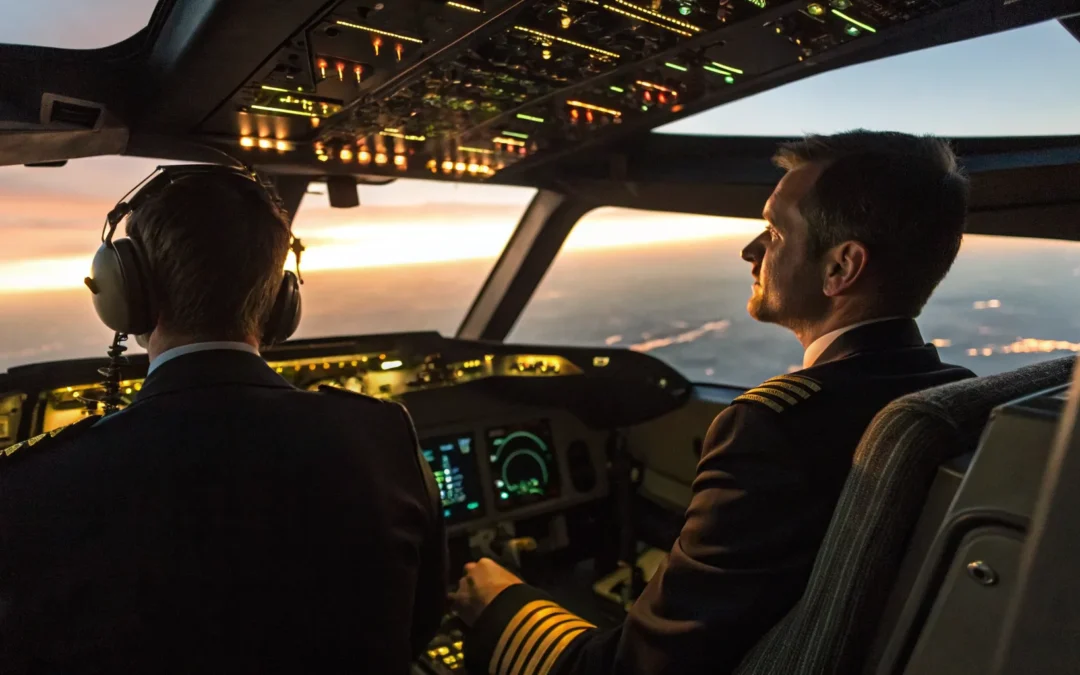
Passengers experience a flight as a smooth journey from one city to another, often unaware of the constant activity in the cockpit. Behind that locked door, pilots are engaged in a continuous process of analysis, communication, and execution. They aren’t just passively monitoring automated systems; they are actively managing the flight every second. They are scanning instruments, interpreting weather, communicating with their crew, and always thinking several steps ahead. The question is, what skills do airline pilots use every day to fly safely around the world? It’s a deep well of non-technical and technical abilities that ensures they are prepared for any scenario, maintaining a calm and controlled environment from takeoff to touchdown.
Key Takeaways
- Master both the machine and the crew: A pilot’s job goes beyond technical flying; it requires pairing deep systems knowledge with strong communication, teamwork, and leadership to create a safe and collaborative cockpit.
- Develop a proactive, not reactive, mindset: Stay ahead of the aircraft by maintaining constant situational awareness. When challenges occur, use structured decision-making frameworks and checklists to act with calm, decisive authority.
- Commit to professional discipline and lifelong learning: Your training never truly ends. A successful career is built on a dedication to continuous improvement, staying current with regulations, and actively managing your personal wellness to ensure you are always fit to fly.
What Technical Skills Does Every Pilot Need?
Flying a commercial airliner is more than just handling the controls; it’s a complex job that demands a deep well of technical knowledge. From understanding the intricate systems of your aircraft to interpreting complex weather patterns, these hard skills are the foundation of a safe and successful flight. They are non-negotiable and are honed through rigorous training and continuous practice. Let’s walk through the core technical skills you’ll need to master on your journey to the flight deck. These are the abilities that ensure you are not just a pilot, but a commander of your aircraft, ready for any situation that comes your way.
Master Your Aircraft’s Systems
Before you even think about takeoff, you need to know your aircraft inside and out. This means conducting thorough pre-flight, in-flight, and post-flight checks using detailed checklists. You’ll be responsible for monitoring everything from fuel levels and engine performance to the hydraulic and electrical systems. A deep understanding of your plane’s systems allows you to identify and troubleshoot issues before they become problems. At a top-tier training center, you learn the specifics of complex aircraft, ensuring you have the expertise to manage every component with confidence. This systems knowledge is a critical part of the advanced training programs that prepare you for the airline environment.
Plan Your Flight and Understand Aerodynamics
A successful flight begins long before you enter the cockpit. You need a solid grasp of flight planning, which includes understanding aerodynamics, calculating performance, and charting your navigation route. This involves knowing how the aircraft will behave under different conditions and how to work with air traffic control to ensure a smooth journey. A core part of your training will focus on the principles of flight, meteorology, and navigation. For pilots aiming for an airline career, the Airline Transport Pilot Certification Training Program (ATP-CTP) is where these skills are refined to meet the highest standards of the industry, preparing you for complex operational scenarios.
Read the Weather Like a Pro
Weather is one of the most dynamic and challenging factors in aviation. As a pilot, you must be able to interpret weather reports, forecasts, and real-time data to make critical decisions. This goes beyond just knowing if it will rain; you need to understand how wind, temperature, and pressure systems will affect your flight path, fuel consumption, and overall safety. Developing this skill is essential, especially for pilots operating on the West Coast, where diverse weather patterns from the Pacific Ocean and mountainous terrain create unique challenges. Your ability to anticipate and react to changing weather is a hallmark of a professional pilot.
Balance Manual Flying with Automation
Modern airliners are equipped with sophisticated automation, but a great pilot knows when to use it and when to take manual control. You must have a complete understanding of the flight management system, autopilot, and autothrottle, and be able to recognize their limitations. At the same time, your manual flying skills need to be sharp. Simulators play a huge role in developing this balance, allowing you to practice handling the aircraft in various scenarios, both with and without automation. A B737 Type Rating course, for example, focuses heavily on mastering this interplay between manual control and automated systems.
Keep Up with Regulations and Certifications
The aviation industry is built on a framework of strict regulations, and staying current is a fundamental part of your job. You must maintain your certifications and be knowledgeable about all applicable Federal Aviation Administration (FAA) rules. The final step for any aspiring airline pilot is earning the Airline Transport Pilot (ATP) certificate, which represents the highest level of pilot qualification. To get there, you must complete an FAA-approved ATP CTP course, which is designed to bridge the gap between your commercial pilot experience and the demands of flying for an airline. This commitment to regulatory compliance ensures safety across the board.
How Do Pilots Communicate in the Cockpit and Beyond?
Great pilots are great communicators. It’s a skill that goes far beyond just talking on the radio. From the moment you step into the flight deck until you’ve parked at the gate, you are constantly exchanging critical information. You’re communicating with your co-pilot, the flight attendants, ground crews, and of course, Air Traffic Control (ATC). Every word matters because clear communication is directly linked to the safety and efficiency of every single flight. It’s how you build a shared understanding of the flight plan, manage the workload, and handle any unexpected challenges that come your way.
This isn’t a skill you’re just born with; it’s developed and perfected through rigorous practice. Professional training programs, especially an ATP-CTP course, place a heavy emphasis on communication protocols because they are fundamental to operating in a multi-crew environment. You learn not just what to say, but how and when to say it. Mastering this skill ensures you can lead with confidence and maintain a calm, controlled, and safe cockpit, no matter what the flight throws at you. It’s the invisible framework that holds a successful flight together.
Use Standardized Phraseology on the Radio
When you communicate with Air Traffic Control, you use a specific, standardized language. This isn’t about being overly formal; it’s about being absolutely clear. Standardized phraseology is the universal language of aviation, designed to eliminate any chance of misinterpretation, especially when pilots and controllers from different countries are talking to each other. Using the correct terms and the phonetic alphabet (Alpha, Bravo, Charlie) ensures your messages are understood the first time, every time. This precision is vital in busy airspace where a single misunderstood word could create a dangerous situation. Getting this language right is a non-negotiable part of being a professional pilot, and you can study the official Pilot/Controller Glossary to become fluent.
Speak with Clarity, Brevity, and Listen Actively
Beyond using the right words, how you communicate is just as important. Your communication should always be clear, brief, and calm. Speak distinctly so there’s no question about what you said. Keep your transmissions concise and to the point, providing only the necessary information to avoid cluttering the frequency. Just as importantly, you need to be an active listener. Communication is a two-way street. Pay close attention to instructions from ATC and communications from your crew. Repeating back key instructions, known as a readback, is a critical step to confirm you’ve understood correctly and to give ATC a chance to catch any errors. This simple habit prevents countless potential problems.
Coordinate with Your Crew Before Takeoff
Effective communication starts long before the plane leaves the ground. The pre-flight briefing is where the entire crew syncs up and establishes a game plan. As the pilot, you lead this conversation, covering the flight plan, weather conditions, any potential abnormalities, and specific duties for each phase of flight. This is a core component of Crew Resource Management (CRM). It’s your chance to set a professional and collaborative tone, ensuring everyone from your co-pilot to the flight attendants knows their role and feels comfortable speaking up if they notice something is off. A thorough briefing ensures the entire team is operating from the same playbook, which is essential for managing the flight effectively and handling any emergencies that might arise.
Work Effectively with Air Traffic Control
Think of Air Traffic Control as a crucial member of your team. Your relationship with them should be professional, respectful, and collaborative. They provide the instructions and guidance that keep the airspace organized and safe for everyone. However, you are the Pilot in Command (PIC). Your first and final responsibility is the safety of your aircraft, your crew, and your passengers. If you receive an instruction from ATC that you believe would compromise safety, you have the right and the responsibility to say “unable.” This isn’t about being defiant; it’s about exercising sound judgment. Developing this balance of compliance and assertive command is a hallmark of an experienced aviator and a key focus of West Coast ATP-CTP training.
Situational Awareness: Why Pilots Are Always Scanning
Situational awareness is one of the most critical skills in a pilot’s toolkit. It’s the ability to build a complete mental picture of what’s happening with your aircraft, in the surrounding airspace, and on the ground, then use that picture to predict what might happen next. It’s far more than just looking out the window. Great pilots are constantly gathering information, processing it, and planning their next move. This active, ongoing process is what keeps flights safe, especially when conditions change unexpectedly. Developing this skill is a cornerstone of advanced flight training, where you learn to manage multiple streams of information without feeling overwhelmed.
Monitor Your Instruments Continuously
A pilot’s instrument panel is their connection to the aircraft’s health and performance. Maintaining situational awareness means you’re in a constant loop of scanning your instruments. This isn’t a random glance here and there; it’s a systematic flow, checking your altitude, airspeed, heading, engine status, and fuel levels. You’re not just reading numbers; you’re confirming that the aircraft is doing exactly what you expect it to be doing. This continuous monitoring helps you catch small deviations before they become big problems. Mastering this scan is a key part of your ATP CTP course, where you learn to interpret complex systems in a multi-crew environment.
Watch the Weather and Surrounding Airspace
While your instruments tell you what’s happening inside the cockpit, your eyes tell you what’s happening outside. Pilots are always scanning the horizon for other aircraft, checking for changes in terrain, and, most importantly, reading the weather. Weather is often the most dynamic element of any flight. You need to understand the forecast before you take off and then verify it with your own eyes throughout the journey. This means looking for developing cloud formations or shifts in visibility that might signal changing conditions. For pilots training on the West Coast, understanding diverse weather patterns, from coastal fog to mountain turbulence, is essential for safe flying.
Plan for Scenarios and Recognize Hazards
A huge part of situational awareness is always thinking one step ahead. Pilots are trained to constantly ask themselves questions like, “Where are we right now?”, “What are we expecting to happen next?”, and “What is my plan if that doesn’t happen?”. This forward-thinking mindset turns you from a reactive pilot into a proactive one. You’re constantly running through potential scenarios and making plans for them, whether it’s a sudden change in weather or a technical issue. This habit of recognizing hazards early is heavily emphasized during B737 Type Rating training, where you practice responding to countless scenarios in the simulator until it becomes second nature.
Stay Sharp on Long-Haul Flights
It might seem easy to let your guard down during a long, routine flight, but that’s often when complacency can become a risk. Maintaining focus for hours on end is a skill in itself. Pilots manage this by staying actively engaged with the flight, even when autopilot is on. This includes running checklists, communicating with the crew, and continuing to monitor the aircraft and the environment. Managing fatigue and stress is also crucial for staying sharp. At Las Vegas Flight Academy, we believe that a pilot’s professionalism is defined by their ability to maintain high standards of awareness on every single flight, from takeoff to touchdown.
How Do Pilots Make Decisions Under Pressure?
Every pilot knows that a smooth flight can change in an instant. The ability to think clearly and act decisively when things go wrong is a non-negotiable skill. This isn’t about gut feelings or guesswork; it’s a trained response built on a foundation of frameworks, procedures, and extensive practice. Great pilots don’t just react to pressure, they manage it with a calm, methodical approach that they’ve honed over countless hours of training. This is how they keep a level head when it matters most.
Use Risk Assessment Frameworks
As the pilot in command, you are the final authority and are responsible for every decision made during a flight. To handle this responsibility, especially when faced with changing weather or unexpected system issues, pilots rely on structured risk assessment frameworks. These are essentially mental models that guide you through a logical process of identifying hazards, assessing risks, and making the best possible choice. Instead of panicking, you learn to gather information, analyze your options, and act deliberately. This systematic approach ensures you consider all factors before committing to a course of action, turning a potentially chaotic situation into a manageable problem.
Trust Your Checklists in an Emergency
In a high-stress situation, it’s easy to forget a critical step. That’s why checklists are a pilot’s most trusted tool. They are meticulously designed to ensure you perform all necessary actions in the correct sequence, especially during an emergency. By relying on a checklist, you offload the mental burden of trying to recall every procedure from memory. This frees up your cognitive bandwidth to focus on flying the aircraft and maintaining situational awareness. Following your checklists for everything from pre-flight inspections to in-flight abnormalities is a fundamental discipline that ensures a consistent and safe outcome.
Manage Stress in the Cockpit
Staying calm under pressure is a skill you can develop. While an emergency will certainly get your adrenaline pumping, effective training teaches you how to manage that physiological response so it doesn’t compromise your decision-making. Techniques like controlled breathing and focusing on one task at a time can help keep your mind clear and focused. The goal isn’t to eliminate stress but to perform confidently within it. This composure is what allows a pilot to work through a problem methodically, communicate clearly with the crew and ATC, and fly the airplane to a safe landing.
Build Mental Resilience in the Simulator
The safest place to practice making life-or-death decisions is in a simulator. This is where you build the mental resilience needed for real-world emergencies. At Las Vegas Flight Academy, our ATP-CTP course heavily emphasizes this type of training. In our Boeing 737 Level D full flight simulators, you’ll face challenging scenarios like engine failures, severe weather, and complex system malfunctions in a controlled environment. This repeated exposure helps you build the confidence and muscle memory to handle immense pressure, ensuring your first time facing a serious event isn’t in a real aircraft with passengers on board.
What Soft Skills Make a Pilot Great?
While technical mastery is the price of entry for a career in aviation, it’s the soft skills that separate a good pilot from a great one. These are the human factors that turn a checklist operator into a true leader in the cockpit. Think of them as the essential, non-technical abilities that ensure every flight is not just successful, but also safe, efficient, and professional. Developing these skills is just as important as learning to fly the aircraft itself, as they form the bedrock of sound judgment, effective teamwork, and confident command. From the moment you begin your training, you should be focused on cultivating these qualities for a long and successful career.
Lead with Confidence and Accountability
As the Pilot in Command (PIC), the ultimate responsibility for the aircraft, its crew, and its passengers rests on your shoulders. This requires a deep-seated confidence that isn’t about ego, but about earned expertise and a calm, decisive presence. When faced with changing weather, a mechanical issue, or an unexpected directive from air traffic control, you are the final authority. Great leaders take ownership of their decisions and their outcomes, using all available information to make the safest and most effective choice. This sense of accountability is forged through rigorous training and real-world experience, creating a pilot who inspires trust and leads by example.
Practice Excellent Teamwork and CRM
Flying a modern airliner is a team sport, not a solo performance. Crew Resource Management (CRM) is the formal practice of using all available resources, especially your fellow crew members, to ensure a safe flight. This means fostering an environment where your first officer, flight attendants, and even dispatchers on the ground feel empowered to speak up with questions or concerns. A great pilot listens actively, communicates clearly, and values the input of their entire team. They understand that a collaborative cockpit, where information flows freely and respectfully, is a safer and more effective cockpit.
Solve Problems and Adapt to Change
No two flights are ever exactly the same. A pilot’s workday is a constant exercise in dynamic problem-solving and adaptability. You must be able to think on your feet and adjust your plan in response to countless variables, from a last-minute runway change to an evolving weather system hundreds of miles away. This skill is about more than just reacting to problems; it’s about anticipating them. Great pilots are always thinking several steps ahead of the aircraft, running through “what-if” scenarios so they are prepared to act decisively when challenges arise. It’s a mindset of proactive flexibility that keeps you in control of the situation.
Communicate with Empathy
While pilots are known for using standardized, technical language, communication extends far beyond the radio. It’s about connecting on a human level with both your crew and your passengers. Think about the difference a calm, reassuring announcement from the captain makes during a bout of turbulence or a ground delay. Communicating with empathy means understanding your audience’s perspective and providing clear, timely, and considerate information. This builds trust with passengers and fosters a more cohesive and supportive environment among your crew, making the entire operation run more smoothly.
Maintain Your Physical and Mental Health
A pilot’s most critical piece of equipment is their own mind and body. The job comes with unique stressors, including irregular schedules, high-pressure situations, and the immense responsibility of keeping people safe. Managing this requires a disciplined approach to personal wellness. Prioritizing quality sleep, maintaining a healthy diet, getting regular exercise, and actively managing stress are not luxuries; they are professional obligations. A pilot who is physically rested and mentally sharp is better equipped to handle the demands of the flight deck, ensuring they can perform at their peak when it matters most.
Commit to Lifelong Learning and Training
The day a pilot believes they know everything is the day they become a danger. The aviation industry is constantly evolving with new technologies, updated procedures, and changing regulations. A commitment to lifelong learning is essential for staying sharp and safe. This journey begins by choosing a top-tier training institution, like an FAA Part 142 certified academy, that provides a strong foundation. It continues throughout your career with recurrent training, type ratings, and a personal dedication to always improving your skills and knowledge. The best pilots are perpetual students of their craft.
Related Articles
- Flight School Skills Every Pilot Needs | Las Vegas Flight Academy
- How to Become an Airline Pilot: The Ultimate Guide – Las Vegas Flight Academy
- Airline Pilot Requirements: The Ultimate Guide
- The Ultimate Commercial Pilot Flight Training Guide – Las Vegas Flight Academy
- What is FAA Part 142? A Pilot’s Guide
Frequently Asked Questions
What’s more important for a pilot: technical skills or soft skills? Think of it this way: technical skills get you in the door, but soft skills are what build a long and successful career. You absolutely cannot fly an airliner without mastering the aircraft’s systems, understanding aerodynamics, and reading weather; those are the non-negotiable foundations. However, skills like leadership, teamwork, and clear communication are what allow you to effectively manage the flight deck, especially when things don’t go as planned. Great pilots have a balanced command of both.
How does simulator training prepare you for real-life pressure? Simulator training is about building mental resilience in a safe, controlled setting. It allows you to face high-stakes scenarios, like engine failures or severe weather, without any real-world risk. By repeatedly practicing emergency procedures and making critical decisions in the sim, you develop the muscle memory and mental clarity needed to perform calmly under pressure. It ensures that your first time handling a serious event isn’t in a real aircraft with passengers.
Why is aviation communication so rigid and specific? The structured language used in aviation, called standardized phraseology, is all about eliminating ambiguity. In a busy airspace with pilots and controllers from all over the world, a single misunderstood word can create a serious safety risk. Using specific, pre-defined terms ensures that every message about altitude, heading, or an instruction is understood perfectly the first time. It’s a universal language designed for absolute clarity and safety.
I’m not a natural leader. Can I still become a great airline pilot? Absolutely. Leadership in the cockpit isn’t about having a commanding personality; it’s about taking responsibility and creating a collaborative environment. It’s a skill you develop through training and practice. A great pilot-leader is someone who communicates clearly, listens to their crew, and makes decisive choices based on sound judgment and procedure. Your training will teach you the principles of Crew Resource Management, which is the foundation for this type of effective, team-oriented leadership.
What is the first step to mastering all these skills for an airline career? The journey to the flight deck is a structured path, and the capstone for any aspiring airline pilot is the Airline Transport Pilot (ATP) certificate. To qualify for the ATP knowledge test, you must complete an FAA-approved ATP Certification Training Program (ATP-CTP). This course is specifically designed to bridge the gap between your experience as a commercial pilot and the complex demands of an airline environment, focusing on the advanced skills we’ve discussed.