
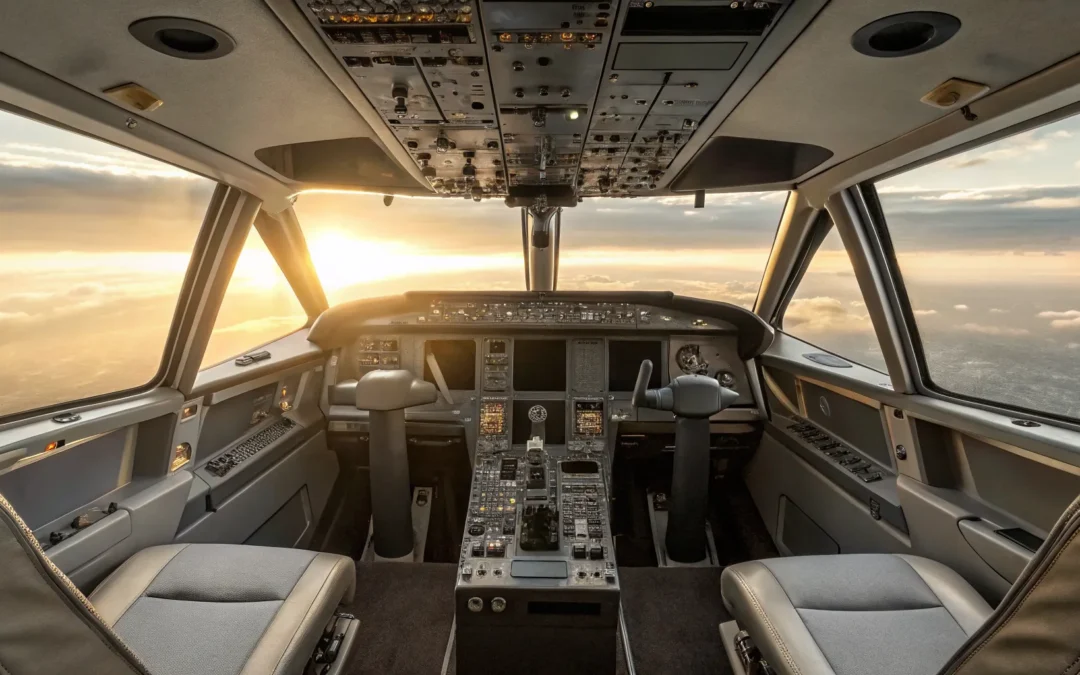
We’ve all seen the movie scene: an untrained hero lands a 737 with help from air traffic control. It’s a thrilling idea, but it raises a serious question for any aviation enthusiast. Could you successfully complete a flight in a realistic airline cockpit? While Hollywood makes it look straightforward, the reality is far more complex. Flying a commercial aircraft involves managing sensory overload, immense mental pressure, and unpredictable conditions that no script can prepare you for. This guide separates the myths from the facts and reveals the skills real pilots use every day to ensure safety in the skies.
Key Takeaways
- Simulators build knowledge, not hands-on skill: Use home simulators to learn procedures and cockpit layouts, but recognize they cannot teach you how to physically handle an aircraft or manage the real-world pressures of flight.
- Pilots are active managers, not passive operators: Autopilot is a powerful tool that assists with workload, but a pilot’s true value is in managing the aircraft’s systems, making critical decisions, and handling unexpected events.
- Structured training is the only path to the cockpit: To safely and legally fly a commercial plane, you must complete FAA-approved training; this is where you turn theoretical knowledge into the practical skill and clear judgment required of a professional pilot.
What Does It Take to Fly a Commercial Plane?
Stepping into a real cockpit is a world away from even the most advanced home simulator. While the idea of taking the controls is exciting, the reality is that flying a commercial airliner requires a deep well of knowledge, skill, and composure. It’s less about dramatic, movie-style maneuvers and more about a disciplined, professional approach to managing a complex machine. So, what are the core skills that separate a passenger from a pilot? It boils down to three key areas: mastering the aircraft’s systems, handling communication and navigation, and making clear decisions when the pressure is on.
Master the Technical Systems
A modern flight deck is a sophisticated web of interconnected systems. Pilots need to be more than just operators; they need to be expert managers of the aircraft. This means having an almost intuitive understanding of everything from the hydraulics and electrical systems to the flight management computer. As the FAA’s own handbook states, to handle any abnormal situation, it is “crucial to have a thorough familiarity with, and adherence to, the procedures developed by the airplane manufacturer.” This knowledge isn’t optional. It’s the foundation that allows pilots to keep a small problem from becoming a major emergency. This is precisely the kind of deep, procedural knowledge you gain in an ATP-CTP course, where you learn the aircraft inside and out before you ever leave the ground.
Handle Navigation and Communication
Getting a 200-ton aircraft from point A to point B involves more than just pointing the nose in the right direction. Pilots are constantly navigating complex airspace and communicating with air traffic control (ATC). While basic aircraft control is fundamental, knowing how to use the radios in an emergency and tune the right frequencies is just as vital. You need to understand the specific language and protocols of aviation to give and receive instructions clearly. Following ATC guidance isn’t like using a GPS in your car; it requires active participation and a clear understanding of your position, altitude, and heading at all times. This constant loop of communication and verification is a core pilot skill that ensures every plane stays safely separated in the sky.
Make Decisions Under Pressure
Perhaps the most critical skill a pilot possesses is the ability to think clearly and act decisively under stress. A pilot’s mind is their most important tool. One expert notes that a key part of handling an emergency is “the psychology of first deciding that you’re going to handle the situation successfully.” This confident, prepared mindset is built through rigorous training and practice. While some speculate that a passenger could land a plane with help from ATC, this scenario relies on a perfect storm of luck and simple instructions. Real pilots are trained to prevent emergencies from happening in the first place by making hundreds of small, correct decisions throughout a flight. This is the true mark of a professional, and it’s a skill that can only be developed through structured training.
How Flight Simulators Prepare You
Many aspiring pilots get their first taste of aviation from a home flight simulator. These programs are more realistic than ever and can be an incredible tool for learning. They give you a safe space to explore aircraft systems, practice procedures, and get a feel for the complexities of flight. While a desktop simulator can’t replace the hands-on experience of actual flight training, it can give you a solid foundation of knowledge to build upon. Think of it as studying the playbook before you step onto the field. You’ll understand the concepts, but you still need a coach to teach you how to execute them in a real game.
Learn the Cockpit and Procedures
One of the biggest advantages of using a flight simulator is the ability to familiarize yourself with the cockpit environment. If you spend enough time in a high-fidelity simulated cockpit, you’ll learn the location and function of key switches, dials, and instruments. This means that when you step into a real aircraft or a professional-grade simulator, you won’t be starting from scratch. You can practice running through pre-flight checklists and standard operating procedures until they become second nature. This procedural knowledge is a huge head start, allowing you to focus more on the physical act of flying during your actual training for something like a B737 Type Rating.
Build Situational Awareness
Simulators are also great for developing cognitive skills related to situational awareness. You can practice instrument scanning, interpreting navigation displays, and managing flight plans without the immediate pressures of a real flight. However, this is also where the first major gap appears. Real flying involves a level of sensory input that a home simulator just can’t replicate. You don’t feel the subtle movements of the aircraft, hear the true sounds of the engines, or experience the stress that comes with real-world consequences. This can lead simmers to rely too heavily on instruments, a habit that must be unlearned in professional training like an ATP CTP course, where true awareness is critical.
Know the Limits of Simulators
It’s essential to understand what simulators are good for and what they are not. They are fantastic for learning what things are and how systems work. They are not, however, effective for learning the physical and mental skills required to hand-fly an aircraft. There is a significant difference between knowing the procedure for a crosswind landing and having the fine motor skills and real-time judgment to perform one safely. Professional flight training bridges this gap. At a certified training center, you learn the “feel” of the aircraft in full-motion simulators that are worlds beyond any desktop setup, all under the guidance of experienced instructors.
Sim vs. Cockpit: What’s the Real Difference?
While flight simulators are incredible tools for learning procedures and cockpit layouts, they can create a false sense of confidence. The jump from a desktop setup to a real flight deck is massive, and the differences go far beyond the view out the window. The gap lies in the physical, environmental, and mental challenges that simply can’t be replicated through a screen. Understanding these distinctions is the first step in appreciating what it truly takes to be a pilot. It’s not just about knowing which buttons to press; it’s about performing under real-world pressures that a simulator can only hint at. The real test begins when the simulation ends.
The Physical Feeling of Flight
Flying a real aircraft is a full-body experience. Unlike a game controller, a real yoke and rudder pedals give you constant feedback. You feel the resistance of the control surfaces against the air, the subtle vibrations of the engines, and the pull of gravity during a turn. One pilot described real flying as a form of “sensory overload,” where you feel movements and hear sounds that a game just can’t reproduce. This physical feedback is crucial for making the tiny, constant adjustments needed to fly smoothly and safely. Without it, you’re flying blind in a sensory way, missing a whole layer of information that pilots rely on every second.
Unpredictable Real-World Conditions
In a simulator, you can program a crosswind or a storm, but you always know it’s coming. The real world is far less predictable. You might encounter unexpected turbulence, sudden wind shear on final approach, or an icy patch on the runway you weren’t expecting. As one expert noted, landing a plane by hand is incredibly difficult even for trained pilots without real-world experience. Simmers might know the procedures, but they lack the hands-on control needed to adapt to a constantly changing environment. Real flying demands that you react instantly to conditions that are often completely out of your control.
The Mental Pressure of Real Flight
This is perhaps the biggest difference of all. In a simulator, the stakes are zero. If you make a mistake, you can just hit reset. In a real cockpit, every decision has consequences for the aircraft, the passengers, and yourself. This creates a level of mental pressure that you can’t experience in a game. The hardest part isn’t just flying the plane; it’s managing all the other tasks at the same time, like communicating with air traffic control and monitoring aircraft systems, all while your heart is pounding. Professional training at a Part 142 certified school is designed to help you manage this pressure and make clear-headed decisions when it matters most.
Common Myths About Flying Untrained
Movies and flight simulators have made the cockpit seem more accessible than ever, but they often paint an incomplete picture. It’s easy to watch a hero talk a novice through a landing or master a simulator and think, “I could probably do that.” The truth is, flying a commercial aircraft is a skill built on thousands of hours of dedicated study and hands-on practice. Many common beliefs about flying untrained are based on these simplified portrayals and don’t account for the complexities of real-world aviation.
Let’s clear the air and look at some of the most persistent myths. Understanding the gap between perception and reality is the first step for any aspiring pilot. While enthusiasm for aviation is fantastic, it’s crucial to respect the profession and the rigorous training it demands. True confidence in the cockpit doesn’t come from a simulator; it comes from FAA-approved training that prepares you for anything.
“Autopilot does all the work.”
One of the biggest misconceptions is that autopilot is a magic button that flies the plane from takeoff to touchdown. While autopilot is an incredibly sophisticated tool that assists with tasks like maintaining altitude and heading, it doesn’t replace the pilot. The flight crew is always actively managing the system, making critical inputs, and monitoring the aircraft’s performance. Think of it as advanced cruise control, not a self-driving car. A pilot must still possess deep system knowledge and sharp decision-making skills to use it effectively and take over instantly if something goes wrong.
“Sim experience is the same as real flying.”
Flight simulators are amazing for learning procedures, familiarizing yourself with cockpit layouts, and practicing instrument flying. However, even the most advanced sims can’t replicate the full experience of being in the air. They don’t capture the physical sensations of flight, the subtle feedback from the controls, or the immense mental pressure of knowing real lives are at stake. Relying solely on a simulator can even teach you bad habits that are hard to unlearn. Real-world flying requires a level of situational awareness and adaptability that only comes from professional instruction and actual flight hours.
“Modern planes are easy to fly.”
It’s true that technology has made modern aircraft like the Boeing 737 incredibly capable, but “capable” doesn’t mean “easy.” In fact, the advanced systems that make these planes so safe also add layers of complexity. An untrained person in a real cockpit would likely face immediate sensory overload. You’re not just looking at a screen; you’re feeling the aircraft’s movements, hearing dozens of auditory cues, and communicating with air traffic control, all at once. This is a high-stress, dynamic environment that requires the specific, in-depth knowledge you gain from a B737 Type Rating course.
Can Autopilot and Autoland Really Save You?
It’s a classic movie scene: an untrained person finds themselves in the cockpit and has to land a massive airliner. The hero on the ground usually says something like, “Just turn on the autopilot!” It’s a comforting thought, the idea that a complex machine can fly and land itself with the push of a button. While modern aircraft are technological marvels, the reality is that these automated systems are tools for the pilot, not replacements. They are designed to assist a trained professional, not to fly the plane solo. Understanding what these systems actually do reveals why a pilot’s skill and judgment are truly irreplaceable.
How Autopilot Works
Think of an autopilot system as an extremely capable assistant. Its main job is to reduce the pilot’s workload on long flights by precisely managing the aircraft’s flight path. Before takeoff, pilots program a detailed route into the flight management computer. Once engaged, the autopilot can follow this route, maintaining a set altitude, speed, and heading. This frees up the pilots to focus on other critical tasks, like monitoring weather, communicating with air traffic control, and managing the aircraft’s systems. The pilot is always in command, supervising the automation and ready to take manual control in an instant.
What Autoland Systems Can and Cannot Do
Autoland is another incredible piece of technology, but it’s not the magic “land” button many imagine. An autoland system can guide an aircraft to a landing and even bring it to a complete stop on the runway, but only under very specific circumstances. The system relies on signals from specialized airport equipment that must be available and active at the destination runway. The aircraft must also be properly configured for the approach by a trained pilot. It’s a tool used for precision landings, often in low-visibility conditions, not an emergency solution for someone who doesn’t know how to fly.
Why Technology Alone Isn’t Enough
While automation is powerful, it can’t account for the unexpected. What happens if a sensor provides faulty data, or if air traffic control issues a last-minute change to the flight plan? Technology follows instructions, but it can’t problem-solve or exercise judgment. This is where a pilot’s training is essential. A pilot’s real value lies in their ability to manage the aircraft as a whole, make critical decisions under pressure, and handle emergencies that no computer could anticipate. Professional flight training isn’t just about learning which buttons to push; it’s about developing the situational awareness and decision-making skills to be the ultimate authority in the cockpit.
The Biggest Risks for an Untrained Person
Stepping into a real cockpit without training isn’t just about knowing which button to press; it’s about managing a flood of new information and intense physical sensations. The gap between a simulator and a real flight deck is immense, and the risks go far beyond just getting lost. For an untrained person, the environment itself can become the biggest obstacle, creating a high-stakes situation where every decision is critical. Let’s break down the most significant dangers you would face.
Facing Sensory Overload
In a real aircraft, you’re not just watching a screen; you’re part of the machine. The subtle vibrations through your seat, the roar of the engines, and the feeling of G-forces during a turn all create a sensory experience that a home simulator can’t replicate. This is what pilots call “sensory overload.” Your brain is hit with so much new information that it becomes difficult to focus on the most important tasks, like monitoring altitude or airspeed. Even seasoned pilots find it challenging to hand-fly an aircraft during evaluations because of this pressure. For someone without training, this overload can quickly lead to disorientation and an inability to make clear decisions when it matters most.
Managing Complex Aircraft Systems
A modern airliner is a web of interconnected systems. While a simulator can teach you the basic layout of a cockpit, it doesn’t prepare you for the deep knowledge required to manage these systems effectively. Knowing what a switch does is one thing; understanding how it interacts with the hydraulic, electrical, and fuel systems is another. Without proper training, you could easily make a mistake that creates a cascade of failures. This is why pilots undergo such rigorous advanced training, learning the aircraft inside and out so they can anticipate how one action affects the entire plane. Simply following a memorized startup sequence from a game won’t give you the understanding needed to keep the aircraft safe.
Handling In-Flight Emergencies
When an emergency happens, there is no time for guessing. Pilots spend countless hours in training practicing for failures, from engine trouble to cabin depressurization. Their response is guided by strict, methodical checklists and procedures developed by the aircraft manufacturer. The key to successfully managing an emergency is a thorough familiarity with these official procedures. An untrained person wouldn’t know where to find the right checklist, how to interpret it, or how to execute the steps under extreme stress. In a situation where seconds count, fumbling through menus or trying to recall a YouTube video is a recipe for disaster. Professional training builds the muscle memory and calm demeanor needed to resolve the situation safely.
How Air Traffic Control Can (and Can’t) Help
The idea of an air traffic controller talking a passenger through a landing is a popular movie scene, but the reality is far more complicated. While ATC can provide verbal guidance, they can’t fly the plane for you. You would still need to understand their instructions, which are filled with specific aviation terminology. You’d have to locate and operate the correct controls, tune radios to the right frequencies, and manage the autopilot. If a controller tells you to “squawk 7700,” would you know what that means or how to do it? ATC is an incredible resource, but their help is only effective if the person in the cockpit has a foundational level of knowledge to act on their instructions.
What Do Real Pilots Think?
Flight simulators are incredible tools, but what do the pros who spend their days in a real cockpit think about them? The consensus is clear: while simulators are valuable for learning procedures and systems, they are a supplement to, not a replacement for, actual flight training. Pilots appreciate the role sims play, but they are also quick to point out the critical differences that separate a game from the real deal.
Thinking you can hop from your desktop setup into a Boeing 737 is a common fantasy, but the reality is far more complex. Professional pilots understand that true airmanship is forged through structured training, hands-on experience, and hours spent in the sky, not just in front of a screen. Let’s look at what they have to say about the gap between the simulator and the cockpit.
Why Sim Hours Don’t Equal Flight Hours
Ask any pilot, and they’ll tell you that simulator hours are not the same as flight hours. A home flight simulator can be a fantastic way to get familiar with aircraft systems and basic principles of flight. As one pilot on Reddit put it, it “can help you learn about planes and how they work, but it’s not the same as flying a real plane.” The biggest missing piece is the physical feedback. You don’t feel the subtle vibrations of the airframe, the resistance in the controls, or the G-forces in a turn. This sensory input is crucial for developing the intuitive “feel” for an aircraft that defines a skilled pilot. That’s why even an advanced ATP CTP course combines high-fidelity simulator sessions with ground school and a deep understanding of aerodynamics.
Bad Habits from Simulators
Without a certified instructor to guide you, home simulators can unfortunately teach you some bad habits. One of the most common issues pilots see is an over-reliance on instruments. In a simulator, it’s easy to get fixated on the screens. However, as one pilot noted, “in real basic flight training, you need to look outside the window most of the time.” This is essential for maintaining situational awareness, spotting other traffic, and actually flying the plane. Professional training programs spend a significant amount of time breaking these “head-down” habits. The goal is to teach you to use your instruments as tools while keeping your primary focus outside, where the real action is. Our experienced instructors are experts at building the right habits from day one.
The Gap Between Knowing and Doing
Knowing the steps to land a plane and actually performing the maneuver are two completely different things. The physical and mental effort required to fly a real aircraft by hand is intense. As a pilot explained, “Flying a real plane by hand is much harder than in a game.” This is especially true during critical phases of flight like takeoff and landing. Landing, in particular, requires a delicate touch and precise judgment that simulators can’t fully replicate. Even for trained pilots, a perfect landing is a skill that takes constant practice. The pressure is real, the stakes are high, and you only get one chance to get it right. This is why pilots from across the West Coast and beyond come to us for structured, hands-on training.
The Legal and Safety Risks of Flying Unlicensed
The fantasy of being the untrained hero who lands a plane is a powerful one, fueled by movies and incredibly realistic flight simulators. But when we step away from the screen, the reality of aviation is governed by strict rules and serious responsibilities. Flying an aircraft without the proper certification isn’t a gray area; it’s a black-and-white issue with significant consequences. These regulations aren’t just bureaucratic red tape. They are the foundation of a global safety system that allows thousands of flights to operate seamlessly and securely every single day.
Choosing to operate an aircraft without a license puts yourself and countless others in danger. It also breaks federal law, leading to consequences that can alter the course of your life. For anyone passionate about aviation, understanding these risks is the first step toward respecting the profession and the skill it demands. It clarifies why structured training and certification are non-negotiable. Let’s break down exactly what’s at stake when someone flies unlicensed, from the immediate safety hazards to the severe legal repercussions. This isn’t about gatekeeping the skies; it’s about ensuring everyone in them, and below them, stays safe.
Understanding the Safety Hazards
Flying without a license means you haven’t been trained to manage the countless variables that can arise in the air. It’s not just about knowing which buttons to press; it’s about developing the judgment to handle engine trouble, unexpected weather, or a medical emergency. An untrained person in the cockpit poses a direct threat to other aircraft operating under established procedures. We see a similar issue with the rise of drones, where unregulated flying near airports creates dangerous situations for commercial airliners. A pilot’s license is proof that you have mastered the skills needed to be a predictable and safe member of the aviation community, not a rogue hazard in the sky.
Know the Rules of the Air
The sky might seem wide open, but it’s governed by invisible highways and strict rules of the road. The Federal Aviation Administration (FAA) has established clear regulations that every pilot must know and follow. These rules dictate everything from right-of-way procedures to communication protocols with air traffic control. For example, even commercial drone pilots must obtain a Part 107 certificate to operate legally. For pilots of manned aircraft, the requirements are exponentially more demanding. This structured system ensures that all pilots are speaking the same language and following the same playbook, which is essential for preventing mid-air collisions and maintaining order in crowded airspace. Flying without this knowledge is like trying to merge onto a highway without knowing the speed limit or what lane markings mean.
The Legal Consequences
Beyond the immediate safety dangers, flying an aircraft without a license is a federal crime with severe penalties. This isn’t a simple traffic ticket. According to federal law, a person caught operating an aircraft without a valid pilot certificate can face life-altering consequences. The specific statute, 49 U.S.C. 46317, outlines penalties that include fines of up to $250,000 and imprisonment for up to three years. These laws underscore how seriously this offense is taken. The legal system recognizes that an unlicensed pilot endangers public safety, and the punishment reflects the gravity of that risk. For anyone dreaming of a career in aviation, attempting to fly without certification is the surest way to guarantee that dream will never take off.
Bridge the Gap: From Simulator to the Sky
If you’ve logged hundreds of hours in a flight simulator, you already have a leg up. You likely know your way around a cockpit, can follow a pre-flight checklist, and understand the basics of navigation. This passion and foundational knowledge are fantastic starting points for a career in aviation. But turning that virtual experience into a real-world pilot certificate requires a significant next step: professional, structured training. While a simulator teaches you the “what,” certified flight instruction teaches you the “how” and “why” in a dynamic environment where decisions have real consequences.
The journey from a home setup to a commercial flight deck is a challenging but incredibly rewarding one. It involves moving beyond the predictability of a game to master the physical feel of an aircraft, the pressures of live air traffic control, and the responsibility that comes with having lives in your hands. This is where your simulator enthusiasm meets professional expertise.
Go from Sim Enthusiast to Certified Pilot
Your time in Microsoft Flight Simulator can give you a great head start. You probably recognize instruments, understand basic procedures, and have a general idea of how aircraft systems work. This familiarity can make the initial ground school lessons feel more intuitive. However, a simulator can’t replicate the physical sensations of flight or the nuances of handling an aircraft in variable weather. It can also unintentionally teach bad habits, like relying too heavily on instruments, that need to be corrected by an instructor. The key is to use your sim experience as a springboard, not a substitute, for the real thing. When you’re ready to take that next step, a formal ATP CTP course is designed to build upon your knowledge with professional, hands-on training.
Why Structured Training Is Essential
Flying a real plane is a full-body, sensory experience that a computer simply cannot duplicate. You’ll feel the subtle shifts of the aircraft, hear the engine respond to your inputs, and learn to manage the mental load that comes with real-world flying. This is why structured training is so critical. An experienced instructor does more than just teach you to fly; they provide real-time feedback and ensure you develop the right habits from day one. Our FAA Part 142 certified programs provide a standardized curriculum that has been proven to produce safe, competent pilots. This structured environment is the only way to bridge the gap between knowing the procedures and executing them flawlessly under pressure.
Related Articles
- How to Become an Airline Pilot: The Ultimate Guide – Las Vegas Flight Academy
- What is FAA Part 142? A Pilot’s Guide
- The Ultimate Commercial Pilot Flight Training Guide – Las Vegas Flight Academy
- Airline Pilot Requirements: The Ultimate Guide
Frequently Asked Questions
If I’m good at simulators, will professional flight training be easier for me? Yes, your simulator experience can be a huge advantage. You’ll likely arrive at training with a solid understanding of cockpit layouts, instrument scanning, and standard procedures. This means you can spend less time learning the “what” and more time focusing on the “how.” However, be prepared for your instructor to help you unlearn some habits, like focusing too much on instruments instead of looking outside. Your sim knowledge is a great foundation, but professional training is where you build the actual house.
What’s the biggest thing my home simulator can’t teach me? The biggest missing piece is the physical and mental pressure of real flight. A simulator can’t replicate the feeling of the aircraft responding to your inputs, the subtle vibrations, or the G-forces in a turn. More importantly, it can’t simulate the very real stress that comes from knowing your decisions have consequences. Professional training is designed to teach you how to manage this sensory input and mental load, helping you make clear, correct decisions when it truly counts.
Why can’t autopilot and autoland just land the plane for an untrained person? These systems are sophisticated tools for pilots, not replacements for them. Autopilot needs to be correctly programmed and constantly monitored by a trained professional. Autoland systems are even more specific; they only work at specially equipped airports and require a pilot to properly configure the aircraft for the approach. Without a pilot’s knowledge to set up and manage these systems, they are effectively useless in an emergency scenario with an untrained person at the controls.
What is the most immediate danger for an untrained person in a real cockpit? The most immediate danger is sensory overload. A real cockpit is a flood of information that a simulator can’t prepare you for: the engine noise, the physical feeling of movement, the constant radio chatter, and dozens of visual cues. This overload can quickly lead to disorientation and an inability to focus on critical tasks like maintaining airspeed and altitude. It’s this overwhelming environment, not just a lack of knowledge, that makes the situation so hazardous.
I’ve spent a lot of time on simulators and want to become a professional pilot. What’s my next step? Your next step is to channel that passion into a structured training program. The best way to start is by researching FAA-approved flight schools and the specific certifications you’ll need for your career goals, such as an Airline Transport Pilot certificate. A program like an ATP-CTP course is designed to bridge the gap between foundational knowledge and the high-level skills required to fly commercial aircraft. This is where your simulator hobby transforms into a professional skill set.