
What Is ATP-CTP Training? A Complete Guide for Commercial Pilots
You’ve put in the hours. You’ve logged the cross-countries, the instrument approaches, and the night flights. Now you’re sitting at 1,500 hours, looking at an airline application, and you keep seeing the same phrase: ATP-CTP training. If you’re not sure exactly what it is, what it covers, or whether you actually need it before your checkride, this guide will clear it up – with no filler and no guessing.
ATP-CTP stands for Airline Transport Pilot Certification Training Program. It is an FAA-mandated academic and simulator course that every pilot must complete before sitting for the ATP Multiengine Knowledge Test (the ATP written exam). Since 2014, no one can take that test – and no one can hold an ATP certificate in the airplane category with a multiengine class rating – without an ATP-CTP completion certificate in hand.
This guide covers everything: the regulatory background, what the course actually involves hour by hour, prerequisites, what you walk away with, common misconceptions, and how to choose the right provider for West Coast ATP-CTP training.
Why ATP-CTP Exists: The Regulatory Background
Before July 2014, pilots could take the ATP written exam with little structured preparation. The Airline Safety and FAA Extension Act of 2010 changed that. After a series of high-profile regional airline accidents that investigators linked to inadequate upset-recovery training, CRM deficiencies, and overreliance on automation, Congress mandated a new prerequisite course. The result was 14 CFR Part 61, Section 61.156 – the regulatory home of the ATP-CTP requirement.
The course is deliberately academic and simulator-based. It is not a checkride preparation course in the traditional sense. It is designed to build the kind of foundational knowledge – high-altitude aerodynamics, stall physics, automation discipline, air carrier operations – that regulators found missing in accident investigations. Think of it as the bridge between general aviation experience and airline operating standards.
Who Needs ATP-CTP Training?
You need ATP-CTP training if you are applying for an Airline Transport Pilot (ATP) certificate in the airplane category with a multiengine class rating. In practical terms, that means anyone pursuing airline employment as a First Officer at a Part 121 carrier.
Specifically, you must complete ATP-CTP if you:
- Hold a commercial pilot certificate with an instrument rating and are approaching the 1,500-hour ATP minimums
- Are a current or former rated military pilot of the U.S. Armed Forces who meets requirements under 14 CFR 61.73
- Hold a foreign airline transport pilot license with instrument privileges, or a foreign commercial pilot license with instrument rating issued by an ICAO contracting state without geographical limitations
You do not need ATP-CTP for a restricted ATP (R-ATP) certificate, a single-engine ATP, or for type ratings alone. But if an airline is hiring you as a First Officer – which requires a full multiengine ATP – you need this certificate in your logbook before you can take the written exam.
What ATP-CTP Training Covers: The Full Breakdown
The FAA prescribes a minimum curriculum, but the experience at Las Vegas Flight Academy runs 42 total hours spread across six days. LVFA delivers this ATP-CTP program at their Las Vegas facility using Boeing 737 Level D simulators. Here is exactly how the program is structured:
Ground School: 32 Hours
Ground school is where you build the theoretical foundation. Topics include:
- Aerodynamics at high altitude – Mach buffet, coffin corner, the relationship between indicated and true airspeed above FL350. This section goes deeper than anything in the commercial curriculum.
- Meteorology for air carrier operations – weather systems at jet altitudes, significant weather avoidance procedures, icing implications on transport-category aircraft.
- Transport airplane performance – V-speeds, weight and balance in the context of a heavy jet, performance charts for a Boeing 737.
- Air carrier operations – sterile cockpit, Crew Resource Management (CRM), flight operational quality assurance (FOQA), safety management systems.
- Automation philosophy – when to use automation, when to disengage it, and how overreliance on automation has contributed to accidents.
- Stall awareness and upset prevention and recovery training (UPRT) – the regulatory mandate that came directly from accident investigations. You will learn the aerodynamics of stall in clean configuration at altitude, and the correct recovery technique at the transport category level.
- Leadership and professionalism – first officer duties, captain authority, threat and error management.
- Runway safety and incursion avoidance – hotspot awareness, proper communication in complex airspace environments.
There is nothing to study before you arrive. All course materials are provided on Day 1. The curriculum is structured so that each topic builds on the previous one – you are not expected to walk in with airliner-level knowledge. You are expected to walk out with it.
Fixed Base Simulator (FBS): 4 Hours
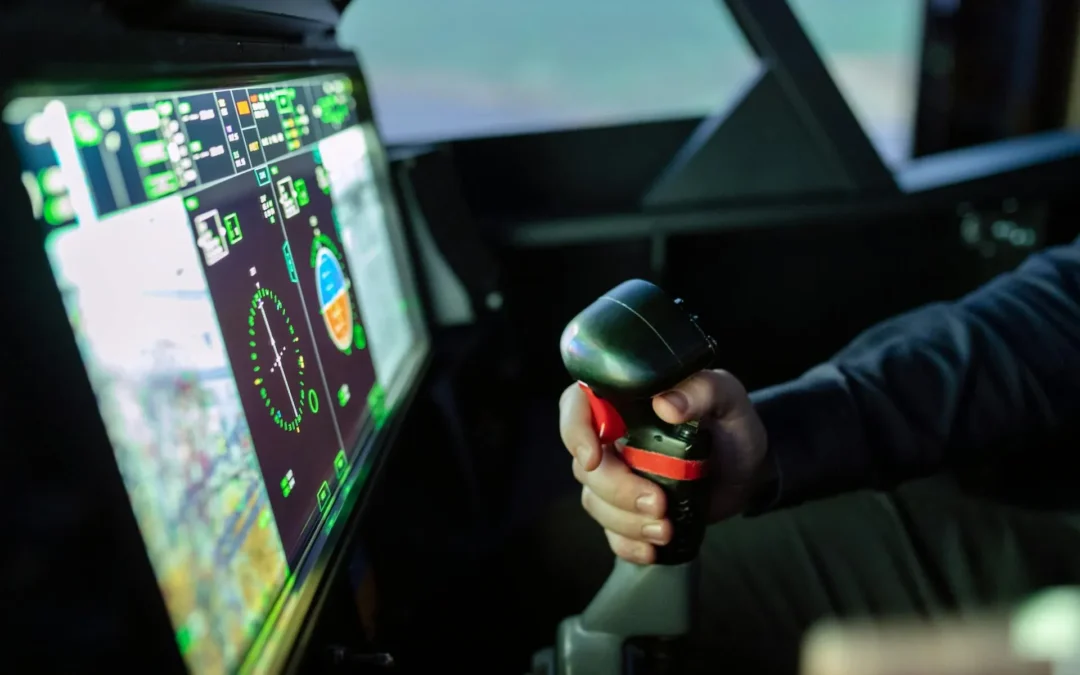
The Fixed Base Simulator is a cockpit procedures trainer – it looks and functions like the real flight deck but does not move. These four hours introduce you to the Boeing 737 cockpit environment before you ever get into the full-motion Level D simulator. You will work through:
- Flight Management System (FMS) programming and operation
- Advanced navigation systems and autopilot modes
- Air carrier automation and autoflight management
This is deliberate sequencing. Putting a pilot in a Level D full-motion simulator without first familiarizing them with the FMS and autoflight system architecture wastes time. The FBS session ensures you arrive at the full-flight sim ready to focus on flight dynamics, not button locations.
Full Flight Simulator (FFS): 6 Hours
This is where the course becomes visceral. Las Vegas Flight Academy uses Boeing 737-300/-800 Level D full-flight simulators – the same FAA certification standard used by major airlines for type rating and recurrency training. Level D is the highest qualification attainable for a flight simulator. The motion platform and visual systems are indistinguishable from the real aircraft at a physiological level.
In six hours of FFS time, you will experience and practice:
- Runway safety and incursion scenarios – situational awareness drills in complex airport environments
- Adverse weather conditions – windshear, microburst escape maneuvers, icing at altitude
- High altitude operations – cruise at FL390, coffin corner recognition, emergency descent procedures
- Stall and upset prevention and recovery – you will feel what it is like when a transport-category aircraft approaches the aerodynamic stall, and you will practice the correct recovery inputs. This section is non-negotiable under the FAA curriculum mandate.
- Ground operations – taxi in complex environments, proper use of taxi charts and airport hot spot advisories
No actual aircraft flight time is included in ATP-CTP. The entire flight portion is simulator-based, which is by design. You are not learning to fly the 737 – that comes with type rating training. You are learning how to operate at the air carrier standard of professionalism, judgment, and automation discipline.
ATP-CTP vs. the ATP Written Exam: A Critical Distinction
This is the most common misconception candidates arrive with, so it is worth being direct: ATP-CTP is not a prep course for the ATP Multiengine written exam.
The ATP-CTP completion certificate is required to sit for the written exam. But the written exam itself – the ATP Multiengine Knowledge Test – tests a different, broader body of knowledge: weather theory, flight planning, instrument procedures, regulations, and more. You will need a separate study resource (Gleim, Sporty’s, King Schools, or similar) to prepare for the written test after completing ATP-CTP.
The sequence is: complete ATP-CTP -> obtain your completion certificate -> study for and pass the ATP written exam -> complete flight time requirements -> take your ATP checkride.
Prerequisites: What You Need Before Showing Up
To enroll in ATP-CTP at Las Vegas Flight Academy, you must meet at least one of the following qualifications:
- Hold a commercial pilot certificate with an instrument rating
- Meet military pilot experience requirements under 14 CFR 61.73 (rated or former rated U.S. Armed Forces pilots)
- Hold a foreign ATP license with instrument privileges, or a foreign commercial pilot license with instrument rating issued by an ICAO member state without geographical limitations
You must be able to read, write, speak, and understand English. No specific flight hour minimum applies to ATP-CTP enrollment itself – the 1,500-hour requirement is for the ATP certificate application, not this course.
International pilots are also eligible. LVFA accepts students on B-1/B-2 visas, ESTA waivers, and current F-1/M-1 visas with TSA approval.
What You Receive at the End: The Completion Certificate
Upon successfully completing all 42 hours of the program, you receive an ATP-CTP completion certificate. This document has a few important characteristics pilots often ask about:
- It does not expire. The ATP-CTP completion certificate has no expiration date. If you completed the course in 2024 and are applying for your ATP checkride in 2027, the certificate is still valid.
- It is not a rating or endorsement. The certificate proves you completed the course. It does not confer any rating, add anything to your pilot certificate, or qualify you to act as pilot in command of a transport-category aircraft.
- It is required to take the ATP written exam. No testing center will schedule your ATP Multiengine Knowledge Test without proof of ATP-CTP completion. You present the certificate at the time of testing.
FAQ: Common Questions About ATP-CTP Training
Is ATP-CTP the same as the ATP written exam?
No. ATP-CTP is the prerequisite course you must complete before you are eligible to take the ATP written exam. The written exam is a separate knowledge test administered at an FAA-approved testing center. ATP-CTP teaches the foundational knowledge; the written exam tests a broader regulatory and technical knowledge base. You will need dedicated written exam study materials in addition to ATP-CTP.
Does my ATP-CTP certificate expire?
No. The ATP-CTP completion certificate has no expiration date under FAA regulations. You complete it once and it remains valid indefinitely. There is no recurrency requirement for the certificate itself.
Can I take ATP-CTP before I have 1,500 hours?
Yes. There is no flight hour minimum tied to ATP-CTP enrollment. The 1,500-hour total time requirement (or reduced R-ATP minimums) applies to the ATP certificate application – not to taking this course. Many pilots complete ATP-CTP at 1,200-1,400 hours so they are prepared the moment they hit minimums.
How long does ATP-CTP take?
At Las Vegas Flight Academy, the course runs six consecutive days. You arrive with nothing to study in advance – all materials are provided on Day 1. The structured schedule covers 32 hours of ground school, 4 hours in a fixed base simulator, and 6 hours in a Level D full-flight simulator.
Is ATP-CTP different from an ATP type rating?
Yes. ATP-CTP is a general knowledge and simulator course – it is not tied to a specific aircraft type rating. A type rating qualifies you to act as PIC or SIC on a specific aircraft type (e.g., B737) and is a separate training program. LVFA offers both ATP-CTP and Boeing 737 Type Rating programs, and some pilots choose to pursue a type rating immediately after ATP-CTP to maximize their airline applications.
How many ATP-CTP providers are there in the U.S.?
As of the most recent FAA authorization list, approximately 40 certificate holders are authorized to conduct ATP-CTP training nationwide. Of those, only a handful operate on the West Coast – making Las Vegas Flight Academy’s position as one of the only FAA Part 142 ATP-CTP providers west of the Rockies particularly significant for California, Arizona, Oregon, Washington, Nevada, Utah, Idaho, New Mexico, and Hawaii-based pilots.
Why West Coast Pilots Choose LVFA for ATP-CTP
Until Las Vegas Flight Academy received its FAA Part 142 authorization in February 2024, West Coast pilots who needed ATP-CTP had one option: travel east. That meant flights to Dallas, Miami, Denver, or Orlando – adding cost, time away from work, and logistical complexity to what is already an expensive phase of a pilot’s career.
Las Vegas Flight Academy was built specifically to address that gap.
- FAA Part 142 certified – Certificate LVAX430K, authorized to conduct ATP-CTP as of February 12, 2024.
- Level D full-flight simulators – Two Boeing 737-300/-800 Level D FFS units (FAA IDs #1168 and #2104). Level D is the highest simulator qualification attainable – the same equipment major airlines use for pilot recurrency.
- Instructor experience – Instructor team averaging 20,000+ hours of total flight time, drawn from airline and military backgrounds.
- Pricing – ATP-CTP at $3,950. Transparent. No hidden fees. Well below many eastern providers.
- Location – Henderson, Nevada (1771 Whitney Mesa Drive), minutes from Harry Reid International Airport. Non-stop or one-stop access from Los Angeles, San Diego, San Francisco, Phoenix, Portland, Seattle, Salt Lake City, Boise, and Honolulu. California-based pilots can use LVFA’s ATP-CTP training for California pilots page to compare Las Vegas travel and scheduling context.
- Boutique class sizes – You are not a number in a factory. Small class sizes mean direct access to your instructors and a curriculum paced to your questions.
LVFA’s founder, Ron Kelly, is a 2023 FAA Wright Brothers Master Pilot Award recipient – one of the most prestigious recognitions in U.S. aviation – with 50+ years of flying experience. He acquired and developed this facility with a mission to make elite training accessible to West Coast pilots, including those from underrepresented communities through the Minority Pilot Advancement Foundation.
Next Steps: After ATP-CTP
Completing ATP-CTP puts you at the start of the final stretch of your airline career journey. After the course:
- Study for and pass the ATP Multiengine Knowledge Test using a dedicated prep course (Gleim, Sporty’s, or King Schools). The test is administered at FAA-approved testing centers.
- Accumulate your remaining flight time if needed. Most ATP applicants take the written during their final hours as a flight instructor or charter pilot.
- Apply to regional airlines. Your ATP-CTP certificate, ATP written score, and logbooks are the core of every application.
- Consider a Boeing 737 Type Rating. Many pilots pursuing legacy or ultra-low-cost carrier positions find that a self-sponsored type rating strengthens their application significantly. LVFA offers initial, upgrade, and differences training for the 737-300, 737-800, and 737 MAX.
The timeline from commercial pilot to ATP is well-documented – if you want a broader view of each milestone, that guide walks through the full progression from instrument rating forward.
If you are curious whether FAA Part 142 certification matters when choosing a training provider, the answer is yes, and the reasons are worth understanding before you enroll anywhere.
And when it comes time to sit in the simulator, understanding the difference between Level D and Level C simulators will help you appreciate exactly what you are training in – and why it matters for your preparation.
Ready to Get Started?
Las Vegas Flight Academy keeps start dates flexible based on availability. There is no pre-study required. You show up on Day 1 and get everything you need to complete the course and earn your ATP-CTP certificate.
For West Coast pilots, this is the most practical, cost-effective path to ATP eligibility available. Call (818) 489-1738 to speak directly with the team, or visit our ATP-CTP course page to review scheduling options and reserve your seat.