
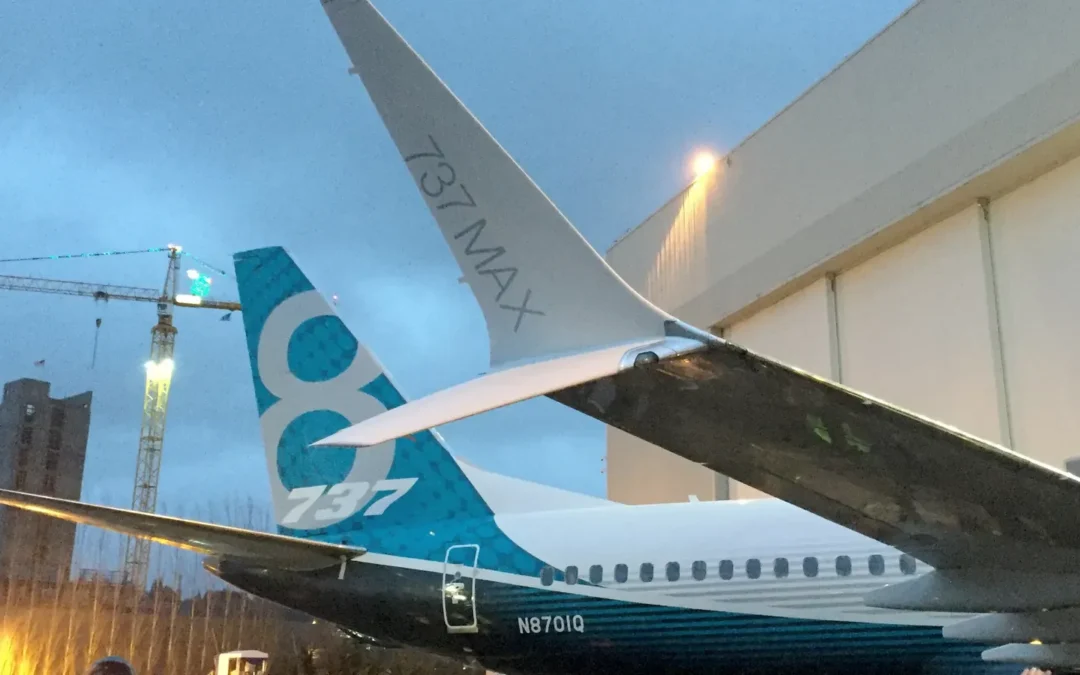
For pilots, the 737 MAX vs 737 NG differences are not just cosmetic. The MAX keeps the same B-737 type rating family, but it changes enough aerodynamics, displays, engine behavior, flight control logic, and training expectations that an NG pilot should treat the transition as a serious systems study, not a casual familiarization.
Las Vegas Flight Academy trains pilots in Boeing 737-800 NG Level D simulators. LVFA does not operate a 737 MAX simulator or offer 737 MAX differences training. This guide is provided for general comparison; pilots seeking MAX qualification should use an operator or training provider approved for that program.
Training for a Boeing 737 assignment? Review Las Vegas Flight Academy’s Boeing 737 type rating programs and build your foundation in Level D 737-800 NG simulators.
The 737NG family, including the 737-800, became the airline standard for short and medium-haul operations. The MAX 8 and MAX 9 were designed to preserve cockpit commonality while improving fuel burn, range, noise, and airline economics. That commonality is valuable, but it can also hide the details that matter most in training. A pilot moving from an NG to a MAX must understand what changed, why it changed, and how those changes appear in normal and non-normal operations.
737 MAX vs 737 NG Differences at a Glance
The easiest way to understand the MAX is to begin with Boeing’s goal: keep the 737 familiar for operators while making the aircraft more efficient. That goal shaped almost every visible and hidden difference between the MAX and NG.
| Area | 737 NG, such as 737-800 | 737 MAX, such as MAX 8 or MAX 9 | Why pilots care |
|---|---|---|---|
| Engines | CFM56 engines | CFM LEAP-1B engines | Different engine size, placement, indications, and performance profile |
| Winglets | Blended or split scimitar winglets on many aircraft | Advanced Technology split-tip winglets | Easy visual identifier and part of the MAX efficiency package |
| Flight controls | No MCAS | MCAS incorporated into flight control logic | Requires dedicated knowledge of system function, alerts, and failure conditions |
| Flight deck | NG-style display layout | Larger display screens with updated indications | Changes scan habits, system presentation, and abnormal recognition |
| Training | Baseline 737 type rating and NG procedures | Ground and flight differences training required for NG-to-MAX transition | FAA training expectations are more explicit after MAX return to service |
The short answer is this: the 737 MAX is intentionally familiar, but it is not identical. The aircraft was designed around commonality, yet the systems and handling differences are significant enough that pilots need structured differences training before operating it.
The Engine Change: CFM56 to LEAP-1B
The most important physical change from the NG to the MAX is the move from CFM56 engines to CFM LEAP-1B engines. Boeing describes the LEAP-1B as specifically designed for the 737 MAX, combining CFM56 reliability with newer fuel-saving technology. For pilots, that engine change is the starting point for understanding several downstream differences.
The LEAP-1B has a larger fan than the CFM56. Because the 737 sits low to the ground, installing a larger engine was not simply a matter of hanging a bigger nacelle in the same place. The MAX engine nacelles sit farther forward and higher relative to the wing. That installation helps maintain ground clearance, but it also changes airflow and aircraft pitching characteristics in certain parts of the envelope.
From a pilot-training perspective, the engine change affects more than performance charts. Pilots should be comfortable with updated engine indications, engine start behavior, thrust response, and non-normal procedures tied to the MAX configuration. The LEAP engines are a major reason the MAX delivers improved economics, but they are also the reason the aircraft required new aerodynamic and control-law considerations.
Winglets and Aerodynamics: What You Can See From the Ramp
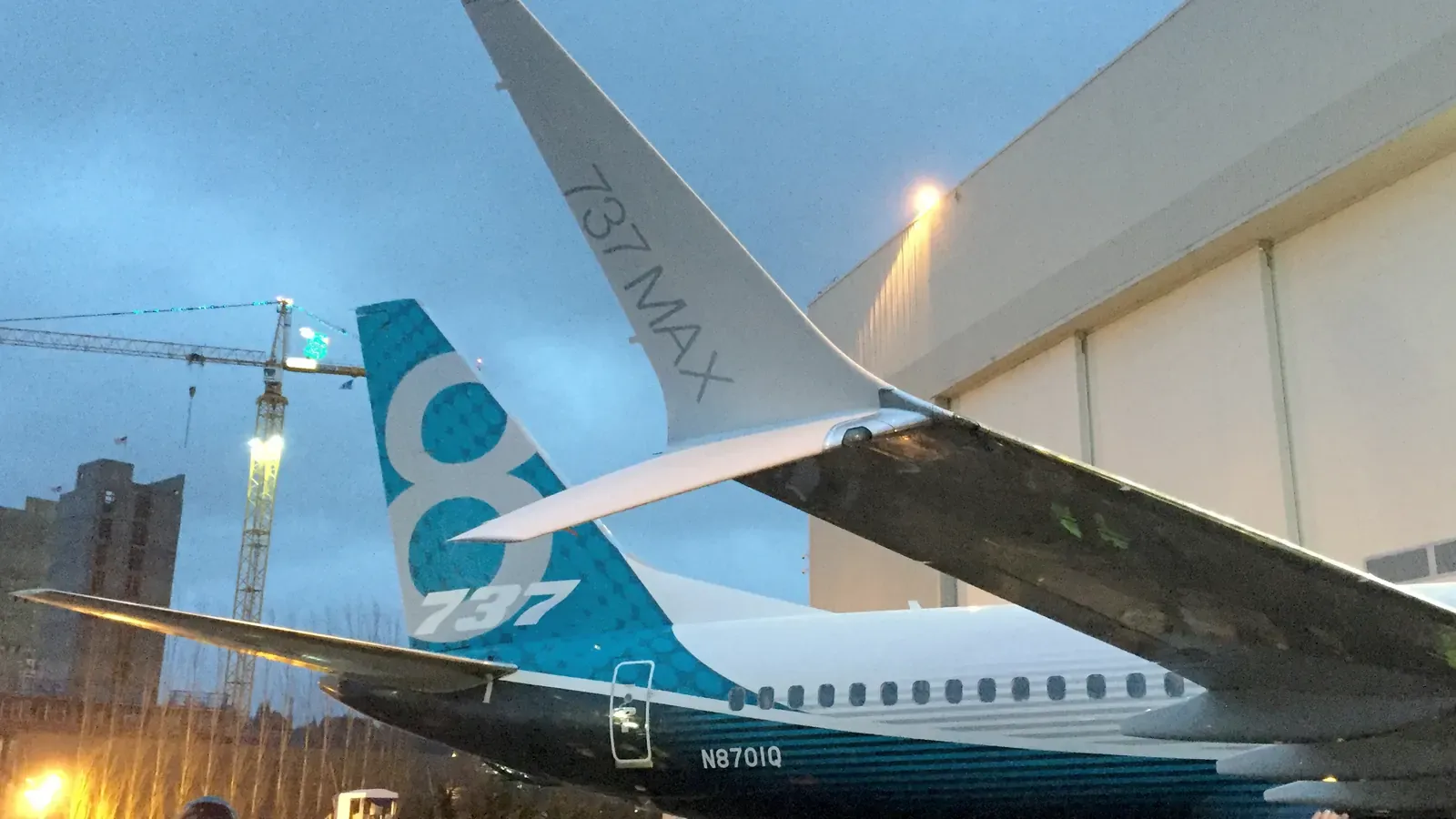
One of the easiest ways to tell a MAX from an NG is the winglet. Many 737-800 NG aircraft use blended winglets or split scimitar winglets. The MAX uses Boeing’s Advanced Technology winglets, the distinctive split-tip design with an upper and lower element. Boeing states that these winglets reduce drag and can cut fuel use and carbon dioxide emissions by up to 2 percent.
The winglet is not just a branding cue. It is part of the broader aerodynamic package that allows the MAX to achieve better fuel efficiency and range. The MAX also includes aerodynamic refinements around the nacelle and aft body. These changes matter to pilots because aerodynamic efficiency is connected to climb, cruise, descent planning, and energy management.
For image accuracy, remember that a 737-800 with split scimitar winglets is still an NG, not a MAX. A MAX has the Advanced Technology split-tip winglet and LEAP-1B nacelles. That distinction matters in training content because pilots will notice if the aircraft shown does not match the system being discussed.
MCAS: The System Pilots Ask About First
No discussion of 737 MAX pilot training is complete without MCAS, the Maneuvering Characteristics Augmentation System. MCAS was added to help the MAX meet handling-characteristic requirements in specific high angle-of-attack conditions. It is not a system found on the 737NG.
After the MAX grounding and return-to-service process, MCAS training became a central part of MAX differences instruction. The FAA’s 737 Flight Standardization Board report states that MCAS ground training must address the latest flight control computer system description, functionality, and associated failure conditions, including flightcrew alerting. The report also requires this training in initial, transition, differences, and recurrent training.
For pilots, the practical takeaway is not to memorize headlines about MCAS. The training objective is to understand when the system can activate, what information it uses, what the flight deck alerts may look like, how the stabilizer trim system is involved, and how the correct non-normal procedures should be applied. MCAS belongs in the broader context of flight controls, trim, unreliable data recognition, and crew resource management.
Flight Deck Differences: Familiar Layout, New Presentation
The MAX flight deck was designed to preserve 737 commonality, but it uses larger display screens and updated system presentation. NG pilots will recognize the overall flight deck philosophy, but the display format, certain indications, and some alerting details require practice.
This is where simulator-based training becomes valuable. A pilot may understand a display change intellectually, then still need repetition to build a smooth scan. Larger screens can improve situational awareness, but only if the pilot knows where to look and how to interpret the information under time pressure. Differences training should connect the system lesson to actual flight deck workflow.
MAX training also commonly covers updated flight control computer behavior, autopilot flight director system enhancements, and MAX-specific normal and non-normal checklist considerations. The objective is not to make the MAX feel mysterious. It is to remove surprises before the pilot encounters the aircraft in line operations.
Need to strengthen your NG foundation first? LVFA’s 737-800 type rating guide explains the training path, requirements, and simulator expectations for pilots preparing for B-737 operations.
Does the MAX Require a New Type Rating?
In the United States, the 737NG and 737 MAX remain within the B-737 type rating family. That means a pilot does not typically earn a completely separate type rating just because the aircraft is a MAX. However, that does not mean an NG pilot can simply step into the MAX without additional training.
The FAA Flight Standardization Board report identifies required differences training between the 737NG and 737 MAX. It specifically notes that both ground training and flight training are required for NG-to-MAX differences. It also states that special training must be completed before operating the 737 MAX aircraft with the applicable updated flight control computer software.
This distinction is important. A type rating answers the broad qualification question. Differences training answers the operational readiness question. Pilots should not view differences training as a paperwork exercise. It is the bridge between a familiar 737 foundation and the MAX-specific systems, procedures, and handling considerations.
737 MAX Pilot Training Differences to Expect
A strong MAX differences program should connect systems knowledge to cockpit execution. For an NG pilot, the training usually focuses on the areas that are meaningfully different rather than reteaching the entire 737 from the beginning.
- MCAS and flight control computer logic: pilots need clear instruction on system function, associated failure modes, and flightcrew alerting.
- Runaway stabilizer and trim-related non-normal procedures: MAX training should reinforce recognition, callouts, and disciplined checklist use.
- LEAP-1B engine differences: training should cover indications, operating characteristics, and related procedural changes.
- Flight deck display differences: pilots need practice building a reliable scan on the MAX display format.
- Handling and performance differences: pilots should understand how the MAX differs in energy management, climb, descent, and aircraft response.
- Scenario-based abnormal training: the most useful instruction places system failures into realistic crew situations, not isolated textbook questions.
Las Vegas Flight Academy trains pilots in FAA Part 142 programs using Boeing 737-800 Level D full flight simulators. That NG platform is especially useful for pilots who need a strong 737 foundation before moving into airline differences training. LVFA’s curriculum also positions pilots to understand NG-to-MAX differences from a systems and procedures perspective, rather than treating the MAX as a completely unrelated aircraft.
737-800 NG vs 737 MAX 8: Pilot-Focused Comparison
The 737-800 and MAX 8 are often compared because they occupy similar airline missions. Both are single-aisle workhorses used across short and medium-haul networks. The pilot’s comparison should focus less on passenger capacity and more on what changes in training and operation.
Handling and pitch behavior
The MAX engine installation changed certain aerodynamic characteristics. That is one reason MCAS exists. Pilots should understand the relationship between engine placement, angle-of-attack conditions, stabilizer trim, and control feel. The point is not fear. The point is system fluency.
Automation and alerts
MAX training places more attention on updated flight control computer behavior, alerting, and non-normal recognition. A disciplined crew must be able to identify unreliable data, trim issues, or flight control abnormalities without becoming fixated on one instrument or one explanation.
Performance and fuel efficiency
The MAX was built for better fuel burn and lower noise. Airlines value that efficiency, but pilots experience it through performance planning, aircraft response, and operating procedures. A pilot who understands why the MAX performs differently can manage the aircraft more confidently.
Visual identification
From outside, the MAX is commonly identified by its split-tip Advanced Technology winglets, larger LEAP nacelles, and other aerodynamic details. The 737-800 NG may have blended winglets or split scimitar winglets, which can create confusion. The specific winglet shape and nacelle configuration are the clues to check.
Where LVFA Fits in a 737 Training Path
LVFA specializes in advanced simulator-based training for pilots preparing for airline and Boeing 737 operations. The academy operates as an FAA Part 142 certified training center in Henderson, Nevada, with Boeing 737-800 Level D full flight simulators, dedicated classrooms, and briefing rooms. For West Coast pilots, that offers a practical training location without traveling across the country.
For pilots comparing the NG and MAX, LVFA’s role is especially relevant because the 737-800 NG remains the foundation for many type rating, recurrent, and differences-training pathways. A pilot who knows the NG well is better prepared to absorb the MAX differences. The NG cockpit, callouts, profiles, crew coordination, and non-normal discipline all carry forward into the transition.
LVFA provides Boeing 737 training on 737-800 NG Level D simulators. Review LVFA’s Boeing 737 type rating program to build an NG foundation; pilots seeking MAX qualification should use an operator or training provider approved for that program.
FAQ: 737 MAX vs 737 NG Differences
What is the biggest difference between the 737 MAX and 737 NG?
The biggest difference is the MAX’s new efficiency package, especially the LEAP-1B engines, Advanced Technology winglets, aerodynamic refinements, and related flight control changes. For pilots, MCAS and MAX-specific training requirements are the most important operational differences.
Does the 737 MAX have the same type rating as the 737NG?
The 737 MAX and 737NG are part of the B-737 type rating family, but NG pilots still need required differences training before operating the MAX. The FAA identifies both ground and flight training requirements for NG-to-MAX differences.
What is MCAS on the 737 MAX?
MCAS stands for Maneuvering Characteristics Augmentation System. It is a MAX flight control system designed for specific high angle-of-attack conditions. MAX training must cover the system description, functionality, associated failure conditions, and flightcrew alerting.
How can pilots identify a 737 MAX from a 737-800 NG?
The MAX usually has Advanced Technology split-tip winglets and larger LEAP-1B nacelles. A 737-800 NG may have blended winglets or split scimitar winglets, so pilots should look at both the winglet design and engine nacelle shape rather than relying on one cue.
Is MAX differences training just computer-based training?
No. After the MAX return-to-service process, training expectations became more robust. FAA guidance requires specific ground and flight training elements for NG-to-MAX differences, including MCAS and special training items.
Build the NG Foundation Before the MAX Transition
The 737 MAX was designed to feel familiar to 737 pilots, but familiarity is not the same as readiness. The key 737 MAX vs 737 NG differences involve engines, aerodynamics, flight controls, displays, procedures, and training requirements. Pilots who understand those differences are better prepared to manage the aircraft with confidence and discipline.
For many pilots, the smartest path begins with a strong 737-800 NG foundation. That means learning the flows, callouts, systems, profiles, and crew coordination habits in a high-fidelity training environment before layering MAX-specific differences on top.
Ready to advance your Boeing 737 training? Explore LVFA’s Boeing 737 type rating program or contact the team to discuss the right training path for your experience level.
Featured image credit: Boeing 737 MAX winglet photo by Aka The Beav, derivative work by Altair78, used under CC BY 2.0 via Wikimedia Commons.