
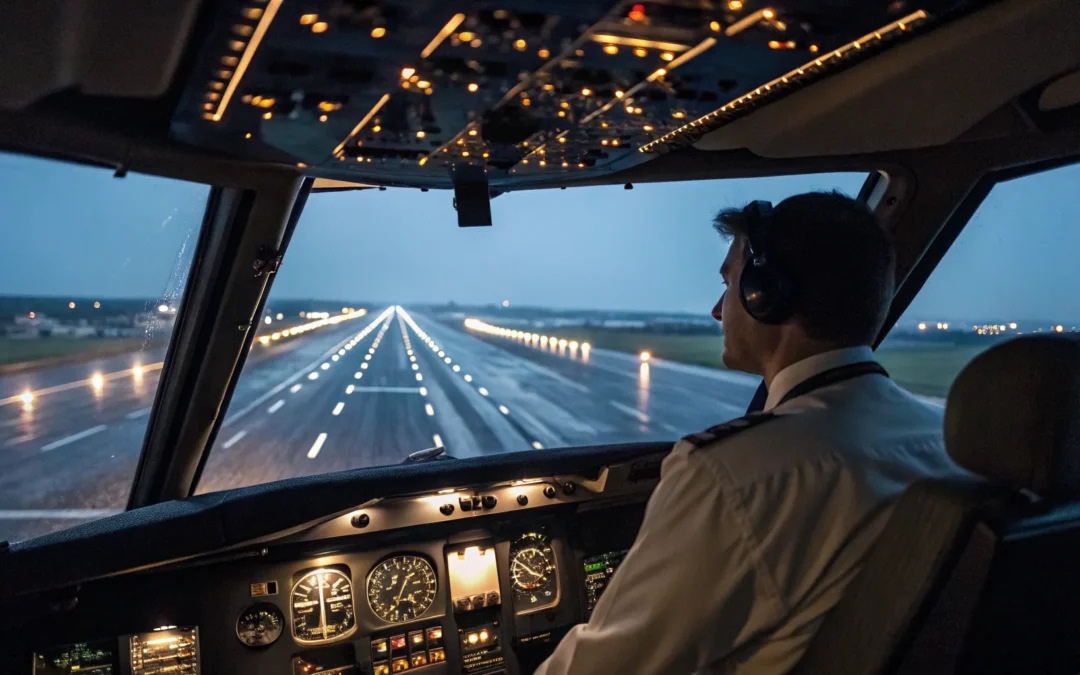
It’s a scenario many pilots know well. A friend asks for a city lights tour, and you realize with a jolt that you can’t remember the last time you did night landings. Life gets busy, weather gets in the way, and suddenly that 90-day window has closed. Letting your 90 day night landing currency expire is more common than you think, and it immediately grounds you from flying with passengers after dark. The good news is that getting current again is straightforward. This article provides a clear, no-nonsense guide to the rules, explaining exactly what you need to do to regain your currency safely and legally, so you’re always ready for that next night flight.
Key Takeaways
- Remember the “3 in 90” Rule: To legally fly with passengers at night, you must log three takeoffs and three full-stop landings in the last 90 days. These must happen during the specific night period, which is one hour after sunset to one hour before sunrise, and touch-and-go landings won’t count.
- Day and Night Currency Are Not Interchangeable: While your night landings also satisfy day currency, the opposite is not true. You must track your night full-stop landings separately because the requirements are stricter than those for daytime passenger flights.
- Aim for Proficiency, Not Just Compliance: Use digital logbooks and set reminders to stay ahead of your expiration date. Treat every currency flight as a real training session by planning specific goals, which helps you stay sharp, confident, and safe in the cockpit.
What is 90-Day Night Landing Currency?
Let’s get straight to it. The 90-day night landing currency rule is a core part of being a safe and legal pilot. In simple terms, if you plan to fly with passengers at night, the FAA requires you to be proficient. This isn’t just a suggestion; it’s a hard-and-fast rule. Specifically, within the preceding 90 days, you must have performed at least three takeoffs and three landings to a full stop. And these can’t just be any landings. They have to happen during the specific night period, which the FAA defines as the time from one hour after sunset to one hour before sunrise.
This requirement is all about ensuring you have recent, hands-on experience with the unique conditions of night flying before you take on the responsibility of carrying passengers. Think of it as the FAA’s way of making sure your skills are sharp when visibility is low and the visual cues you rely on during the day are gone. It’s a standard that applies across the board, from private pilots enjoying a city lights tour to commercial pilots on a red-eye flight. Staying current is a fundamental aspect of responsible pilot training and a non-negotiable for anyone who wants to share the magic of flight after the sun goes down.
Why Night Currency is Crucial for Safety
So, why is this rule so important? It boils down to safety and proficiency. Flying at night presents a completely different set of challenges than flying during the day. Your depth perception changes, familiar landmarks disappear, and you become much more reliant on your instruments. The 90-day currency requirement ensures that you’re not just legally compliant, but genuinely prepared for these conditions. Regular night practice keeps your skills sharp for handling takeoffs and landings with fewer visual references. It’s about protecting yourself, your passengers, and the aircraft by making sure your recent experience matches the demands of the flight. Staying current builds the confidence you need to act as a safe, competent pilot in command.
The Rules for Flying Passengers After Dark
When it comes to the specifics, the FAA is very clear. To meet the 90-day night currency requirement for carrying passengers, you must log at least three takeoffs and three landings to a full stop. It’s critical to remember that “touch-and-go” landings don’t count here. A full-stop landing demonstrates that you can safely manage the aircraft through the entire landing, taxi, and takeoff sequence. These flights must also occur during the official night period, which begins one hour after sunset and ends one hour before sunrise. Following these recent flight experience rules isn’t just about logging hours; it’s about maintaining the precise skills needed for night operations.
What Does the FAA Consider “Night”?
When it comes to logging flight time and maintaining currency, “night” isn’t just when it gets dark outside. The Federal Aviation Administration (FAA) has a very specific definition that every pilot needs to understand. Getting this right is essential for staying legal, especially when it comes to carrying passengers after the sun goes down.
Knowing the official definition is the first step, but you also need to know how to apply it to your specific location and time of flight. It’s easy to get tripped up by common misconceptions that can put your currency in question. Let’s clear up the confusion and make sure your logbook is accurate.
The Official FAA Definition
So, what’s the official rule? According to the FAA, “night” is the time between the end of evening civil twilight and the beginning of morning civil twilight. This is the definition you’ll use for the purpose of logging night flight time. Civil twilight is a specific period when the sun is just below the horizon, but there’s still enough natural light to see. Because these times change daily and depend on your geographic location, you can’t just guess. Using the wrong times could mean the night hours you’re logging aren’t valid.
How to Calculate Sunset and Sunrise
To log your night hours correctly, you need to use a reliable source for civil twilight times. Your phone’s standard weather app, which usually just shows sunset and sunrise, isn’t precise enough for FAA purposes. Instead, you should use official tools that provide the exact end and beginning of civil twilight for your location. Aviation apps like ForeFlight have this information readily available, or you can use the U.S. Naval Observatory’s Air Almanac data. Making this part of your pre-flight planning ensures every entry in your logbook is accurate and defensible.
Common Myths About Night Flight Time
There are a couple of common myths that can easily trip up pilots. First, while you can log night flight time starting at evening civil twilight, the rule for night currency is different. To meet the 90-day landing requirements for carrying passengers, your takeoffs and landings must be made at least one hour after sunset and one hour before sunrise. Another point of confusion is the type of landing. For night currency, only full-stop landings count. Touch-and-go landings are great for practice, but they won’t satisfy the currency requirement.
What Are the Specific 90-Day Requirements?
When flying passengers at night, the FAA has clear, non-negotiable rules. These aren’t suggestions; they are firm requirements designed to ensure you have recent, hands-on experience with the specific challenges of night operations. The core of these requirements revolves around a simple principle: practice makes proficient. Within any 90-day period, you need to prove you’ve recently mastered the fundamentals of night takeoffs and landings. Let’s break down exactly what that entails.
The 3 Takeoffs & Full-Stop Landings Rule
The foundation of night currency is the “3 in 90” rule. To act as pilot in command (PIC) while carrying passengers at night, you must have performed at least three takeoffs and three full-stop landings in the preceding 90 days. According to Part 61 § 61.57, these must be done during the official night period, starting one hour after sunset and ending one hour before sunrise. The FAA specifically requires “full-stop” landings, where the aircraft comes to a complete stop, ensuring you’ve demonstrated proficiency through the entire landing sequence.
How Aircraft Type Affects Currency
Your night currency is specific to the kind of aircraft you are flying. The FAA’s recent flight experience regulations state that your takeoffs and landings must be in an aircraft of the same category, class, and, if required, type. For example, currency in a single-engine airplane doesn’t apply to a multi-engine airplane. This rule is especially important for airline pilots. If you fly a Boeing 737, your currency must be established in a B737, which is why recurrent training is a key part of maintaining your B737 Type Rating.
Pilot-in-Command vs. Safety Pilot Rules
To meet the night currency requirements, you must be the sole manipulator of the flight controls during the three takeoffs and landings. This means you can’t log the experience if an instructor or another pilot is handling the aircraft. You can, however, practice and regain your currency by flying solo or with another qualified pilot who is not considered a passenger. The key is that you are the one flying the plane, ensuring the pilot responsible for passengers has the recent, relevant experience. This flight time is logged as PIC, solidifying your readiness for night passenger flights.
Which Landings Count Toward Night Currency?
When it comes to maintaining your night currency, the FAA is very specific about what counts. It’s not enough to just go up for a few laps in the pattern after dark. To legally carry passengers at night, your takeoffs and landings must meet a few key criteria. Understanding these details is essential for staying compliant and, more importantly, for ensuring you are a safe and proficient pilot in night conditions. Let’s break down exactly what type of landing makes the cut.
What Qualifies as a Full-Stop Landing
The regulations are crystal clear on this point: to count toward your 90-day night currency, your landings must be full-stop. This means the aircraft’s wheels touch down, it decelerates, and it comes to a complete stop on the runway before you taxi off or reconfigure for another takeoff. These landings must happen during the specific night period, which is from one hour after sunset to one hour before sunrise. You can find more details on how to properly log night flight time to ensure compliance. The FAA requires this because a full-stop landing demonstrates your ability to manage the aircraft through the entire landing sequence in a low-visibility environment, from final approach to a safe stop.
Why Touch-and-Go’s Don’t Count
While touch-and-go landings are great for practicing approaches and flares efficiently, they do not meet the requirements for night currency. A touch-and-go involves landing on the runway and then taking off again without ever coming to a full stop. This practice skips the crucial final phases of a landing, like braking and controlling the aircraft at low speeds on the ground. The FAA’s rule ensures that pilots regularly practice the entire process of bringing an airplane to a safe conclusion at night. Honing these precise skills is a core part of any advanced pilot training program and is non-negotiable for night currency.
Airport and Runway Factors to Consider
Beyond the type of landing, you also need to think about where you’re landing. The FAA has published specific rules on night flying currency, emphasizing that the environment matters. Your three full-stop landings must be made in an aircraft of the same category, class, and type (if a type rating is required) that you plan to fly with passengers. This means you can’t get current in a single-engine Cessna and then fly passengers at night in a multi-engine aircraft. Always consider the airport’s operational hours and runway lighting. Planning your currency flights at a familiar, well-lit airport can make the process smoother and safer.
How is Night Currency Different From Day Currency?
At first glance, day and night currency requirements seem almost identical. Both involve three takeoffs and three landings within a 90-day period. However, the Federal Aviation Administration (FAA) has specific, non-negotiable differences between them that every pilot must understand. These distinctions aren’t just about checking boxes in your logbook; they are fundamental to safety and your legal ability to carry passengers. Keeping them straight is a core responsibility of being a pilot in command.
The key differences come down to the type of landings required and the specific time frame in which they must occur. While the goal is the same, which is ensuring you are proficient and safe, the execution is quite different. Let’s break down exactly what sets these two types of currency apart.
Comparing Day and Night Requirements
To carry passengers during the day, you need to have performed three takeoffs and three landings within the preceding 90 days. For most aircraft, these can be touch-and-go landings. The rules are much stricter for night currency. To carry passengers at night, you must complete three takeoffs and three landings to a full stop. These must be done during the specific period defined as “night,” which is from one hour after sunset to one hour before sunrise. This full-stop requirement ensures you’re proficient with the entire landing sequence in low-light conditions, from final approach to taxiing off the runway.
Why You Must Track Them Separately
You have to track day and night currency independently because they are not interchangeable. While your night landings will also count toward your day currency, the reverse is not true. A touch-and-go landing performed during the day does nothing to satisfy your night currency requirements. It’s also important to remember that the FAA has different definitions of “night.” The time you can log general “night flight time” is different from the more restrictive window for logging night landings for currency. Meticulous logbook entries are essential to keep everything clear.
Passenger Rules for Day vs. Night Flights
The ultimate reason for maintaining currency is the privilege of sharing your flight experience with others. The rules are simple: if you want to fly with passengers, you must be current. For daytime flights, this means having your three takeoffs and landings logged within the last 90 days in the same category, class, and type of aircraft. To take passengers up after dark, you must meet the more stringent night currency rules. Failing to meet these specific requirements means you are legally restricted to flying solo, a crucial regulation for any pilot pursuing an ATP-CTP course and a career with the airlines.
What Happens if Your Night Currency Lapses?
So, you checked your logbook and realized your 90-day night currency has expired. Don’t worry, it happens to even the most diligent pilots. Life gets busy, weather doesn’t cooperate, or schedules just don’t align for those late-night flights. The good news is that getting current again is straightforward. The FAA has clear rules in place to ensure you can safely and legally get back to flying passengers after dark.
Letting your currency lapse doesn’t ground you completely, but it does change who can be in the cockpit with you. The regulations are designed with safety as the top priority, ensuring that the pilot in command has recent experience with the unique challenges of night operations before taking friends or family up for a flight. Think of it as a built-in refresher. Below, we’ll walk through the specific restrictions you face and the simple steps you can take to regain your night currency, whether you choose to do it on your own or with an instructor.
Restrictions on Flying with Passengers
The most important rule to remember when your night currency lapses is this: you cannot act as pilot in command (PIC) of an aircraft carrying passengers at night. This is a non-negotiable safety regulation. The FAA wants to ensure you have recent, hands-on experience with night takeoffs, landings, and visual references before you have the added responsibility of passengers. You can, however, still fly solo at night to practice and regain your currency. You can also fly with a certified flight instructor, which is a fantastic way to sharpen your skills while meeting the requirements.
Getting Current Again on Your Own
If you feel confident in your skills and just need to log the required flights, getting current on your own is simple. The process is exactly the same as maintaining currency in the first place. You’ll need to perform at least three takeoffs and three full-stop landings at night in an aircraft of the same category, class, and type. Once you’ve completed and logged these flights, your 90-day clock resets, and you are once again legal to fly with passengers after dark. It’s a perfect excuse to get some quiet time in the cockpit and enjoy the unique beauty of flying at night.
Options for Regaining Currency with an Instructor
Flying with an instructor is always a smart choice, especially if it’s been a while since you’ve flown at night. An instructor can provide valuable feedback, run through emergency procedures, and help you feel more confident and proficient. This flight time fully counts toward your three takeoffs and landings. While you’re thinking about currency, it’s also a good time to check your instrument currency. If you’ve gone more than six calendar months without meeting instrument experience requirements, you’ll need an Instrument Proficiency Check (IPC) with a CFII to get current again. Combining a night currency flight with proficiency training is an efficient way to stay sharp.
How to Easily Track and Maintain Night Currency
Keeping track of your night currency doesn’t have to be a chore. Let’s be honest, with everything else on your plate, it can be easy to let the 90-day window slip by. The key is to build a simple, consistent system that works for you. Forgetting to log a flight or miscalculating your currency window can ground you from flying with passengers at night, so it’s worth putting a little effort into getting it right from the start.
Fortunately, modern tools and a few good habits can make this process almost automatic. Instead of flipping through a paper logbook and counting days on a calendar, you can use technology to do the heavy lifting. By combining digital tools with clear, accurate logbook entries, you can stay on top of your requirements and focus on what really matters: flying safely and confidently. The goal is to create a system that not only keeps you legal but also encourages you to maintain true proficiency in the cockpit.
Using Digital Logbooks and Apps
If you’re still using a paper logbook, now is a great time to consider going digital. Apps like ForeFlight, LogTen Pro, or MyFlightbook are designed to track your currency automatically. Once you log a flight with night landings, the app starts the 90-day clock for you and will often display a clear “current” or “not current” status right on your dashboard. This is especially helpful because the number of currency requirements you need to track grows with every new license and rating you earn.
These apps take the guesswork out of the equation, sending you alerts when your currency is about to expire. More importantly, they help you distinguish between being legally current and feeling truly proficient. Just because the FAA says you can fly with passengers doesn’t always mean you should. Seeing your flight frequency at a glance can help you decide if you need a bit more practice to feel sharp and confident.
Best Practices for Logbook Entries
Whether you log your flights digitally or on paper, accuracy is everything. Your logbook is a legal record, so your entries need to be clear, correct, and complete. For night currency, it’s critical to remember that only full-stop landings count. While touch-and-go landings are great for practicing other skills, they do not meet the requirement for carrying passengers at night. Make sure you explicitly note “full stop” in your entry.
It’s also your responsibility to log night flight time correctly. This means logging only the time between the end of evening civil twilight and the beginning of morning civil twilight. Don’t just guess based on sunset times. Use an official source like the FAA’s Air Almanac or a reliable aviation app to find the precise times for your location and date of flight. A detailed entry that includes the date, aircraft, location, and number of full-stop landings creates an undeniable record of your currency.
Setting Up Reminders to Stay Current
A good tracking system is proactive, not reactive. Don’t wait until you have a night flight scheduled to check your currency. Set up reminders to keep it on your radar. If you use a digital logbook, enable push notifications to get an alert a few weeks before your currency expires. This gives you plenty of time to schedule a flight without scrambling at the last minute. You can also set a recurring 60-day event in your personal calendar to prompt a quick logbook check.
This habit is about more than just following the rules; it’s about professionalism and safety. The FAA’s regulations, including 14 CFR § 61.57, exist to ensure pilots maintain a baseline level of skill to keep themselves and their passengers safe. By staying consistently current, you demonstrate a commitment to excellence and ensure your skills are always sharp when you need them most.
Common Challenges in Maintaining Night Currency
Staying night current is more than just a box to check in your logbook; it’s a commitment to proficiency and safety that requires consistent effort. While the FAA rules are straightforward, real life often gets in the way. Many pilots find that maintaining night currency presents a unique set of challenges that go beyond just logging hours.
From finding an available aircraft after sunset to juggling personal schedules and unpredictable weather, the hurdles are real. It’s one thing to be legally current, but it’s another to feel truly confident and sharp in the right seat when flying in the dark. Let’s break down some of the most common obstacles pilots face and how you can think about approaching them. The key is to anticipate these challenges so you can create a practical plan to stay both current and proficient for night operations.
Finding Opportunities to Fly at Night
One of the biggest practical challenges is simply getting access to an aircraft. If you’re part of a flying club or rent from an FBO, you might find that aircraft availability dwindles after business hours. Some organizations also have stricter rules for night flights, especially for lower-time pilots, which can add another layer of complexity. You have to coordinate getting to the airport, completing a thorough pre-flight inspection in the dark, and securing the plane afterward. These logistical steps take more time and planning than a typical daytime flight, making it harder to find a convenient window to get your three takeoffs and landings in.
Working Around Weather and Your Schedule
Life happens. Between work, family, and other commitments, finding a free evening can be tough enough. When you finally do, you’re still at the mercy of the weather, which can be less predictable and more hazardous at night. A low ceiling, unexpected fog, or gusty winds that might be manageable during the day can be a no-go after dark. This combination of a tight personal schedule and weather constraints means your opportunities can be few and far between. It often feels like you’re trying to align three things: your availability, the plane’s availability, and good weather, which can be a frustrating waiting game.
Staying Confident with Regular Practice
FAA regulations define the legal minimum to fly with passengers, but true safety comes from proficiency. If you only fly at night once every 90 days, your skills can get rusty. Night flying requires a greater reliance on instruments, a solid understanding of visual illusions, and sharp emergency procedures. When you don’t practice regularly, your confidence can fade. Even if your logbook says you’re current, you need to honestly assess if you feel skilled enough for the flight. This is why it’s so important to view night currency not as a requirement to meet, but as a standard of personal proficiency to maintain.
Best Practices for Staying Night Current
Staying night current is more than just a box to check every 90 days; it’s about maintaining true proficiency and confidence in a more demanding flight environment. Simply going up to do three quick landings in the pattern might meet the legal requirement, but it doesn’t do much for your skills. The key is to make your currency flights count. Instead of just staying in the local pattern, use these flights as opportunities to sharpen your abilities.
Treat each currency flight as a chance to practice. Fly to a different airport, try a new instrument approach, or work on emergency procedures. This approach keeps your skills sharp and makes you a safer, more competent pilot. Remember, the goal isn’t just to be legal, it’s to be safe and prepared for any situation that might arise after the sun goes down. A thoughtful and cautious attitude, combined with a commitment to continuous learning, is what truly makes a pilot ready for the challenges of night flying.
Plan Productive Night Flying Sessions
To get the most out of your currency flights, go beyond the minimums. While the rules require three takeoffs and landings to a full stop, you can use that time to accomplish so much more. Before you even head to the airport, create a clear plan for your flight. Maybe you want to practice short-field landings at a nearby airport or fly a VOR approach under the stars. Having a specific goal turns a routine flight into a valuable training session.
Consider combining your currency flight with a fun trip, like flying to a neighboring city for dinner. This makes the experience more enjoyable and gives you practical cross-country night experience. The key is to make every hour in the air productive. By actively working on your skills, you’ll build the confidence and proficiency needed to handle any night flight with ease.
Prepare for Night Operations
Proper preparation is essential for any flight, but it takes on extra importance at night. Your pre-flight routine should be even more thorough. Check all aircraft lighting, including navigation, landing, and cockpit lights, before you even start the engine. Carry at least two reliable flashlights with fresh batteries, preferably one with a red light to preserve your night vision.
Your flight planning should also be more detailed. Review weather forecasts carefully, paying close attention to potential for fog or low clouds. Check NOTAMs for any outages related to airport lighting systems, like runway lights or VASI/PAPI systems. The FAA regularly updates its guidance, so staying informed on the latest night takeoff and landing currency rules is also a smart move. Being well-rested and mentally prepared is just as important as any equipment check.
Review Safety and Emergency Procedures
Night flying reduces your visual references, which means you need to be completely confident in your ability to handle emergencies by relying on your instruments and training. Before each night flight, take a few minutes to mentally walk through key emergency procedures. What would you do if you had an engine failure right after takeoff? How would you handle a complete electrical failure in the dark?
This mental rehearsal keeps critical procedures fresh in your mind. It’s also a great idea to periodically practice these scenarios with a certified flight instructor. For pilots looking to achieve the highest level of preparedness, advanced programs like an ATP-CTP course provide in-depth training on aircraft systems and emergency management. Adopting a mindset that is open to learning will help you become a current and competent pilot ready for a safe flight.
Related Articles
- How to Become an Airline Pilot: The Ultimate Guide – Las Vegas Flight Academy
- Your Guide to Commercial Pilot Training in the USA
- The Ultimate Commercial Pilot Flight Training Guide – Las Vegas Flight Academy
- Airline Transport Pilot License Cost: A Full Breakdown – Las Vegas Flight Academy
- 8 Best Aviation Schools in USA for International Students – Las Vegas Flight Academy
Frequently Asked Questions
What’s the difference between logging “night flight time” and being “night current” to carry passengers? This is a great question because it trips up a lot of pilots. You can start logging general night flight time as soon as evening civil twilight ends. However, to meet the specific currency requirements for carrying passengers, your three takeoffs and landings must happen during a more restrictive window: from one hour after sunset until one hour before sunrise. Think of it this way: the FAA gives you a wider window to log general night experience, but a narrower, darker window to prove your proficiency before you can take others along for the ride.
Do my night landings also count for my daytime currency? Yes, they absolutely do. The requirements for night currency are stricter than those for daytime currency, so when you meet the night rules, you automatically satisfy the day rules. Since night currency requires full-stop landings, those same three landings will keep you current for daytime passenger flights. The reverse isn’t true, however. Performing three touch-and-go landings during the day will keep you day current, but it will do nothing to meet your night currency requirements.
My night currency just expired. What are my options for getting it back? First, don’t panic. You are not grounded from flying at night, you just can’t take passengers with you until you’re current again. You have two simple options. You can go up by yourself and complete the three required takeoffs and full-stop landings. Or, you can fly with a certified flight instructor, which is a great way to get current while also sharpening your skills with a professional. Once you’ve logged those three flights, you’re good to go.
Why are full-stop landings required for night currency when touch-and-go’s are fine for day currency? The FAA requires full-stop landings at night for safety reasons. A full-stop landing demonstrates your ability to manage the aircraft through the entire landing sequence in a low-visibility environment, from the final approach and flare to braking and safely taxiing off the runway. A touch-and-go skips these final critical steps. The rule ensures that pilots who carry passengers at night have recently practiced the complete set of skills needed to bring a flight to a safe conclusion in the dark.
Besides the legal minimums, what’s the best way to stay truly proficient for night flying? Meeting the legal minimum is one thing, but feeling truly confident and safe is another. Instead of just doing three quick laps in the pattern every 90 days, make your currency flights productive. Use them as an opportunity to fly to a different, perhaps less familiar, airport. You could also practice flying an instrument approach or review emergency procedures, like handling a landing light failure. The goal is to use that time to be a better pilot, not just a legal one.