
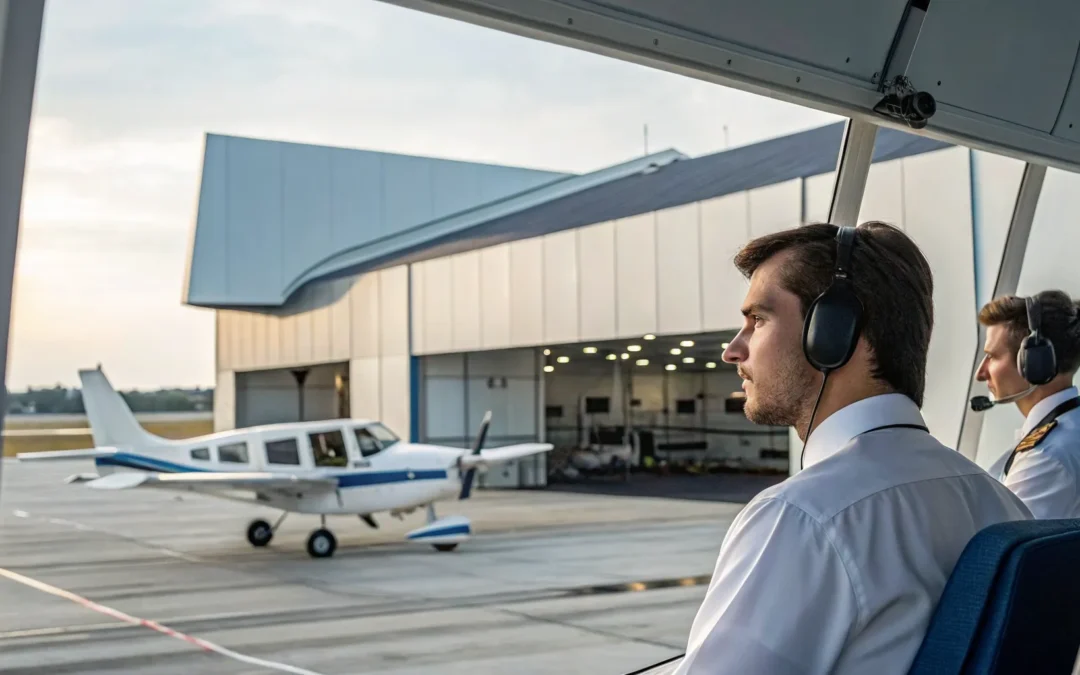
Your dream of sitting in the captain’s seat of an airliner is closer than you think. Training in the US gives you a world-class FAA license, opening doors to a global aviation career. But before you take off, you need a clear flight plan for the financial journey ahead. This article provides a comprehensive look at the pilot training in usa for indian students fees, breaking down the costs for each license, from your Private Pilot License to your Airline Transport Pilot certification. We’ll also cover essential topics like funding your education, choosing the right school, and converting your license for a career back home in India.
Key Takeaways
- Create a comprehensive budget beyond tuition: Your total investment includes living expenses, visa applications, and travel costs, not just flight school fees. Proactively research education loans and scholarships in India to build a complete financial plan before you start.
- Map out your entire training journey: Success involves more than just flying. Understand the key steps, from choosing the right visa (M-1 vs. F-1) for your career goals to the final process of converting your FAA license to a DGCA license for flying in India.
- Choose a flight school based on quality and support: Look past the sticker price and evaluate schools on essential criteria like FAA approval, the condition of their aircraft, instructor experience, and dedicated resources for international students. The right support system is crucial for your success.
How Much Does US Pilot Training Cost for Indian Students?
One of the first questions you probably have is about the cost. Let’s break down what you can expect to pay for pilot training in the US. The total investment for Indian students to earn a Commercial Pilot License (CPL) typically falls between $70,000 and $110,000. In Indian Rupees, that’s roughly ₹62 lakh to ₹98 lakh. This is a significant investment, but it covers the comprehensive training needed to launch your career as a professional pilot.
This price range is a general estimate, and the final cost can change based on a few key factors. The flight school’s location, the type of aircraft you train in, and even your instructor’s experience level can influence the total price. Your personal learning pace also plays a role; some students may need more flight hours than others to master certain skills. Understanding these variables will help you find a program that fits your budget and career goals. We have specific programs designed to support Indian pilots on their journey to the cockpit.
What’s Included in the Total Cost?
When you see a total cost from a flight school, it’s helpful to know what’s behind that number. The fees generally cover all the essential components of your education. This includes your ground school lessons, where you’ll learn the theoretical side of aviation. It also covers your flight hours with an instructor, simulator time to practice procedures, and aircraft rental fees. Beyond the hands-on training, the cost typically includes study materials, exam fees, medical checks, and the final fees for issuing your license. This all-inclusive approach ensures you receive a complete and thorough education without unexpected expenses.
How to Plan Your Budget and Currency Conversion
Thinking about your budget early on is one of the smartest moves you can make. Start by calculating the total estimated cost in Indian Rupees so you have a clear picture of the investment. This will help you explore your options for funding, such as education loans or personal savings. On average, you will need between 235 and 260 flying hours to qualify for your CPL in the United States, so be sure to factor this into your financial planning. Creating a detailed budget that includes tuition and living expenses will give you peace of mind as you begin your training. You can find more guidance on our page with foreign student info.
A Breakdown of Pilot License Costs
Think of your pilot training as a series of building blocks. You’ll start with the basics and add more advanced certifications as you go, with each license opening up new opportunities in the sky. Understanding the costs associated with each step helps you map out your financial plan from your first flight to your career in the cockpit.
The total investment can seem big, but remember that these costs are spread out over the course of your training. Each license is a milestone and a significant achievement. Let’s walk through the typical costs for each major pilot license in the US, so you can see exactly where your investment is going. Keep in mind that these figures are estimates and can vary based on the flight school, location, and how quickly you progress through the material.
Private Pilot License (PPL)
Your journey starts with the Private Pilot License (PPL). This certification is your ticket to flying an aircraft solo or with friends and family for non-commercial purposes. It’s the foundational license where you’ll master the fundamentals of flight, from takeoffs and landings to handling the aircraft in various conditions. The cost to earn your PPL in the US generally falls between $10,000 and $15,000. This covers flight hours with an instructor, ground school, and exam fees. For Indian students, this is a crucial first step toward a professional career.
Commercial Pilot License (CPL)
Once you have your PPL and have built up enough flight hours, the next step is the Commercial Pilot License (CPL). This is the license that allows you to get paid to fly. Earning your CPL involves more advanced training and a deeper understanding of aircraft systems, regulations, and commercial operations. The cost for a CPL program typically ranges from $30,000 to $50,000. This investment covers the required flight hours and intensive training needed to meet the high standards of a professional pilot, preparing you for a career in aviation.
Instrument Rating (IR) and Multi-Engine Rating (MER)
To be a truly versatile and employable pilot, you’ll want to add ratings to your license. An Instrument Rating (IR) allows you to fly in low-visibility conditions, like clouds or fog, by relying solely on your instruments. This rating costs around $8,000 to $10,000. A Multi-Engine Rating (MER) qualifies you to fly aircraft with more than one engine, which is a requirement for most airline jobs. This training is usually shorter and can cost between $3,000 and $5,000. Both are essential additions to your CPL.
Airline Transport Pilot License (ATPL)
The Airline Transport Pilot License (ATPL) is the highest certification a pilot can achieve. It’s required to act as a captain for a major airline. To qualify, you need extensive flight experience, typically around 1,500 hours. A key component of this is the Airline Transport Pilot Certification Training Program (ATP-CTP), which prepares you for the ATPL knowledge test. The total cost to reach ATPL status can be significant, but it’s the final step toward the left seat of an airliner. At Las Vegas Flight Academy, we specialize in providing the FAA-approved ATP-CTP course to help you reach this career milestone.
What Other Costs Should You Budget For?
Your flight school tuition covers the core of your training, but it’s not the full picture. To create a realistic budget, you need to account for several other essential expenses. Thinking about these costs from the start helps prevent financial surprises down the road and allows you to focus on what really matters: your training. From your visa application to your monthly rent and daily meals, these additional costs are a significant part of your journey to becoming a pilot in the US.
Planning for these expenses is just as important as planning for your tuition. It ensures you have a comfortable and stable living situation, which is crucial for staying focused during an intensive training program. Let’s break down the main costs you should factor into your budget beyond the flight school’s sticker price. This way, you can build a comprehensive financial plan that covers you from the day you leave India to the day you earn your wings.
Living and Accommodation Expenses
Once you arrive in the US, your biggest ongoing expenses will be housing and daily living costs. You should plan to spend between $500 and $1,000 per month on accommodation. This can vary widely depending on the city and whether you choose to live alone or with roommates. Your day-to-day living expenses, including groceries, transportation, and utilities, will likely range from $800 to $1,200 per month. Researching the cost of living in the specific city of your flight school will give you a much clearer idea of what to expect and help you create a more accurate monthly budget.
Visa and Travel Fees
Before you can even start your training, you’ll need the proper visa. Most international flight students enter the US on an M-1 visa. The application process involves several fees, including the SEVIS fee, which together can cost between $350 and $500. Don’t forget to also budget for your round-trip airfare from India to the United States, which can be a substantial one-time expense. Many schools provide detailed information for foreign students to help you with the process, so be sure to use those resources.
Ground School Materials
Most comprehensive pilot training programs bundle essential materials into the total tuition cost. This typically includes your ground lessons, flight hours with an instructor, simulator time, aircraft rental, and initial exam fees. However, it’s always a good idea to confirm exactly what is included. Ask your flight school for a detailed breakdown. You may still need to purchase personal items like a quality headset, flight bag, or supplementary study guides, so it’s wise to set aside a small budget for these additional learning tools.
Exams and Medical Certifications
Becoming a pilot requires you to meet specific medical standards. Before you begin training, you must pass a medical exam to secure the necessary certifications. For students from India, this means obtaining both an FAA Class 1 and a DGCA Class 1 medical certificate. These exams are a critical prerequisite and come with their own fees, separate from your tuition. Make sure to complete this step early in your application process, as your medical certificate is essential for you to be able to fly.
Do You Meet the Requirements for US Flight Training?
Before you get too deep into planning your budget and choosing a flight school, it’s a good idea to make sure you meet the basic requirements for pilot training in the United States. Think of it as a pre-flight check. Getting these fundamentals sorted out first will make the rest of your application process much smoother. Let’s walk through the key qualifications set by the Federal Aviation Administration (FAA) so you can move forward with confidence.
Age and Education Prerequisites
First things first, let’s talk about age and education. The FAA has set clear minimum age limits for different pilot licenses. You’ll need to be at least 17 years old to earn a Private Pilot License (PPL) and at least 18 to get your Commercial Pilot License (CPL). On the education front, the requirement is straightforward: you must have a high school diploma or an equivalent certificate. These initial requirements are the first step on your path to the cockpit. If you’re an international student, our team can help you understand how your credentials translate and guide you through the initial enrollment process.
English Language Proficiency
In the world of aviation, clear communication is everything. English is the official international language of flight, so proficiency is a must for safety in the skies. You’ll need to demonstrate that you can read, write, and speak English fluently. This isn’t just about passing a test; it’s about being able to communicate clearly and without confusion with Air Traffic Control and other pilots. Your instructors will assess your language skills throughout your training, and you’ll need to prove your proficiency to earn your license. The FAA has specific language standards that all pilots must meet to ensure everyone stays on the same page.
Medical Fitness Standards
Being a pilot carries a huge responsibility, and your health is a critical part of your ability to fly safely. To begin your training, you must pass a comprehensive medical exam conducted by an FAA-authorized Aviation Medical Examiner (AME). Depending on your career goals, you’ll need either a Class 1 or Class 2 medical certificate. For students from India, it’s important to note that you’ll need to meet the medical standards for both the FAA and the DGCA. This ensures you’ll be qualified to fly back home after completing your US training. You can easily find an AME near you to schedule your examination and get this essential step completed.
Which US Visa is Right for You?
Figuring out your visa is one of the most important steps in your journey to train in the United States. The right visa doesn’t just get you into the country; it defines what you can do while you’re here and what opportunities are available after you complete your program. For flight training, you’ll generally be looking at two main options: the M-1 visa or the F-1 visa. Your choice will depend on your long-term career goals and the type of training program you enroll in.
It’s essential to choose a school that is authorized to enroll international students. As a SEVP-certified flight school, Las Vegas Flight Academy has the experience to guide you through this process. Let’s break down the differences between the M-1 and F-1 visas so you can decide which path is the best fit for you.
The M-1 Visa for Vocational Training
The M-1 visa is designed specifically for students attending vocational or non-academic programs. This is often the most direct route for pilots who want to complete a specific flight certification, like an ATP-CTP course, and then return to their home country. The M-1 is a great fit if your goal is to get your training done efficiently.
However, there are some key restrictions to keep in mind. With an M-1 visa, you are not permitted to work during your studies. Once your program ends, you must leave the U.S. within 30 days. This visa is ideal for focused vocational training where the objective is to gain a specific skill or certification in a set timeframe.
F-1 Visa Options for Study and Work
The F-1 visa is typically for students enrolled in academic programs, such as a university aviation degree. While this path might take longer, it comes with a significant advantage: the opportunity for post-graduation work experience. After completing your studies, F-1 visa holders can apply for up to 12 months of Optional Practical Training (OPT).
During your OPT period, you can legally work in the U.S. in a field related to your studies. For new pilots, this is an incredible opportunity to work as a Certified Flight Instructor (CFI), build valuable flight hours, and gain professional experience. This practical training option makes the F-1 visa an excellent choice if you want to start your aviation career in the U.S. before heading home.
How Long Does Training Take (And What Affects the Cost)?
One of the most common questions I hear from aspiring pilots is, “How long will this all take?” It’s a great question, because time is money, especially in aviation. While there are general timelines, your personal journey from student to certified pilot is unique. Think of the timelines as a roadmap, not a rigid schedule. Training in the US is often faster than in other countries, with many pilots completing their core licenses in 12 to 18 months. A full program, taking you from zero flight experience to a full Airline Transport Pilot License (ATPL), might take closer to two and a half years.
Your progress depends on several things: how often you can fly, how quickly you master new skills, and the type of program you choose. Some schools offer accelerated programs, while others allow for a more flexible pace. The key is to find a program that matches your learning style and financial plan. For example, the final step for many is the ATP CTP course, a specialized program with a set duration that caps off your training before you can fly for a major airline. Understanding these phases helps you set realistic expectations for both your schedule and your budget.
Typical Timelines for Each License
Every pilot license builds on the one before it, creating a clear path for your training. While everyone learns at a different pace, you can generally expect your training to follow a predictable sequence. Most students start with their Private Pilot License (PPL), which can take a few months of consistent flying. From there, you’ll work on your Instrument Rating (IR) and Commercial Pilot License (CPL). Completing all of these licenses can take anywhere from 12 to 18 months if you’re training full-time. This timeline is often quicker than what you might find in India, which can take up to 24 months for the same qualifications.
Factors That Can Change Your Schedule and Budget
Your total investment in flight training isn’t just about tuition. Several factors can influence your final cost and how long it takes to finish. The flight school’s location, the type of aircraft you train in, and your instructor’s experience level all play a role. Your personal learning pace is also a major factor; the more quickly you grasp concepts and maneuvers, the fewer flight hours you may need.
Beyond the training fees, you’ll need to budget for living expenses, visa applications, travel, and health insurance. It’s important to have a clear picture of these additional costs from the start. Our resources for Indian pilots can help you anticipate these expenses and plan accordingly, so there are no surprises along the way.
How Can You Fund Your Pilot Training?
Let’s talk about the biggest question on every aspiring pilot’s mind: how to pay for it all. The cost of flight training is a significant investment, but it’s also a manageable one if you approach it with a clear strategy. Don’t let the numbers discourage you. Thousands of students from India have successfully funded their training in the US, and you can too. The key is to explore every avenue available to you and piece together a financial plan that works for your unique situation.
Think of funding your training like building a flight plan. You have multiple waypoints, and each one gets you closer to your destination. Your main funding sources will likely be a combination of education loans, scholarships and grants, and flexible payment plans offered by your flight school. By leveraging all three, you can cover your tuition, fees, and living expenses without putting an impossible strain on your finances. It takes research and persistence, but securing the right funding is the first major step toward earning your wings and launching your career in the cockpit. Many students find that a multi-pronged approach is the most effective way to cover the full cost, ensuring they can focus on their studies without constant financial stress. This proactive planning sets a strong foundation for your entire journey.
Finding Education Loans
One of the most common ways to fund flight training is through an education loan. For Indian students, the best place to start your search is right at home. Many national and private banks in India offer specific loan products for students planning to study abroad. These institutions are familiar with the process and can guide you through the application, documentation, and disbursement procedures. Government-backed loan schemes can also be a great option, sometimes offering more favorable interest rates and repayment terms.
When you approach a lender, be prepared with your letter of acceptance from a flight school, a detailed breakdown of costs, and a clear plan for your career path after graduation. This shows them you’re a serious candidate. Securing a loan can cover a substantial portion of your expenses, making it a foundational piece of your funding strategy. Many foreign students find this to be the most direct path to financing their pilot education.
Applying for Aviation Scholarships and Grants
Scholarships and grants are fantastic resources because they provide funds you don’t have to pay back. The aviation community is passionate about supporting the next generation of pilots, and there are many organizations that offer financial aid. These awards can range from a few hundred dollars to covering the full cost of an advanced rating. Some scholarships are based on academic merit or flight performance, while others are awarded to students who demonstrate a deep passion for aviation.
Start your search early and apply to as many scholarships as you qualify for. Look for opportunities from aviation organizations, aircraft manufacturers, and even your chosen flight school. The application process often requires an essay or personal statement, so take the time to share your story and your commitment to becoming a pilot. Every scholarship you earn reduces your reliance on loans and brings your dream closer to reality. It’s a competitive field, but dedicated Indian pilots find success every year.
Exploring Flight School Payment Plans
Many flight schools understand that paying for training all at once isn’t feasible for most students. That’s why they often offer flexible payment plans that allow you to pay for your training in installments. This approach helps you manage your cash flow and pay for your training as you progress through the program. Instead of one large lump sum, you might make payments at the start of each new phase, such as for your Private Pilot License, then your Instrument Rating, and so on.
When you’re researching schools, be sure to ask about their payment options. A good program will be transparent about costs and work with you to find a schedule that fits your budget. Combining a payment plan with personal savings, a loan, and any scholarships you’ve received can create a comprehensive and sustainable funding solution. This makes it easier to focus on what really matters: your training for an ATP CTP course and beyond.
How to Convert Your FAA License to a DGCA License
Earning your wings in the US is a huge accomplishment, but if your goal is to fly for an airline in India, there’s one more step: converting your FAA license to a DGCA license. Think of it as translating your qualifications so they’re recognized by India’s Directorate General of Civil Aviation (DGCA). This process is a standard part of the journey for many international pilots and, with a bit of planning, it’s completely manageable. It’s the final bridge between your world-class training in the United States and your career in the Indian skies.
What Paperwork Will You Need?
Once you have your FAA license, your focus shifts to the conversion paperwork. The first thing to do is get familiar with the latest requirements from the DGCA. Specific forms and documentation can change, so it’s always best to go straight to the source. You’ll generally need to provide your FAA license details, flight training records, medical certificates, and exam results. The key is to be meticulous with your records throughout your training. Keeping everything organized from day one will make this part of the process much smoother.
Understanding the Timeline and Fees
Patience is a virtue, especially with administrative processes. The conversion from an FAA to a DGCA license typically takes three to six months, so it’s important to factor this timeline into your career plans. While the conversion fees aren’t excessive, you should maintain a clear budget. Remember, for your US visa, you had to show proof of funds for training and living costs. It’s wise to continue that financial planning through the conversion period. We’ve gathered resources to help you plan as an Indian pilot training with us.
Flying in India After Your US Training
Completing the license conversion is your ticket to flying professionally in India. It validates your US training and makes you a competitive candidate for Indian airlines. The best part? You’ll hold credentials recognized by two of the world’s leading aviation authorities: the FAA and the DGCA. This dual recognition broadens your career horizons, opening up opportunities not just in India but around the globe. The high standards you meet during your ATP-CTP course and other US training will serve you well as you launch your career.
How to Choose the Right Flight School
Picking a flight school is one of the most important decisions you’ll make in your aviation career. It’s a major investment of your time and money, so you want to get it right. The best school for you will offer a blend of quality instruction, modern equipment, and solid support, all at a fair price. Think of it less as shopping for a product and more as choosing a long-term partner for your professional journey. To find the right fit, you’ll need to look closely at what each program offers and ask the right questions before you commit.
Finding a Cost-Effective Program
Let’s talk about the numbers. The total cost for pilot training in the USA can range from $70,000 to $110,000, which is a significant financial commitment. But “cost-effective” doesn’t just mean finding the lowest price. It’s about getting the best value for your investment. Training in the US is often faster, taking about 12 to 18 months compared to longer timelines elsewhere. This efficiency means you can start your career sooner. Plus, you’ll graduate with a globally recognized FAA license, which opens up more opportunities worldwide. When you see a price tag, consider what’s included: flight hours, ground school, exam fees, and the quality of the aircraft and simulators you’ll be using. A slightly higher cost might reflect better resources that prepare you more effectively for your career.
Key Factors to Compare Between Schools
Once you have a few schools on your list, it’s time to compare them. Start with the essentials. Is the school FAA-approved? This is non-negotiable. For advanced training, look for a school with a Part 142 certification, which signifies the highest level of FAA approval. Next, look at their resources. Do they have a well-maintained fleet of aircraft and modern simulators? Experienced instructors and strong student support are also critical, especially if you’re an international student. A school that understands the needs of foreign students can make your transition much smoother. Also, consider the type of visa support they offer, as the choice between an M-1 and F-1 visa can affect your ability to work in the US after training.
Questions to Ask Before You Enroll
Before you sign any paperwork, make sure you have clear answers to a few key questions. First, confirm that you meet all the enrollment requirements. Do you have a valid passport, a high school diploma with a background in math and physics, and the required English language skills? Second, be prepared to show proof of funds for the entire program cost, plus an extra $5,000 or so for your first year of living expenses.
Here are a few more questions to ask the admissions team:
- What is the instructor-to-student ratio?
- What kind of career placement assistance do you offer graduates?
- Can I speak with a current or former international student about their experience?
- What is the school’s safety record?
Getting straightforward answers will help you feel confident that you’re choosing a school that truly has your best interests at heart.
How to Prepare for Your Studies in the US
Moving to the US for flight training is an incredible opportunity, but it’s also a major life change. Beyond packing your bags and getting your visa, preparing mentally and financially will set you up for success. Thinking through the cultural, financial, and social aspects of your move can make the transition smoother, allowing you to focus on what you came here to do: fly. Here are a few key areas to consider as you get ready for your training in the United States.
Adjusting to a New Culture and School
The learning environment in the US might feel different from what you’re used to. The aviation industry here operates under very strict safety standards, which is a good thing, but it can be an adjustment. Be prepared for a hands-on, proactive approach to learning. Your instructors will expect you to ask questions and speak up if you don’t understand something. Take the time to get to know your school’s culture and connect with your classmates. A supportive school environment, like the one we foster at Las Vegas Flight Academy, can make all the difference in helping you feel comfortable and confident in the cockpit.
Managing Your Finances Abroad
Your training fees are just one part of the financial picture. The total cost for pilot training in the US can range from $70,000 to $110,000, which covers everything from flight hours to living expenses. Before you arrive, create a detailed budget that includes housing, food, transportation, visa fees, and health insurance. It’s a good idea to open a US bank account soon after you arrive to make managing your money easier. Understanding the currency conversion and having a clear financial plan will help you avoid stress so you can concentrate on your ATP CTP course and other training milestones.
Building a Strong Support System
Moving thousands of miles from home is a big step, and you don’t have to do it alone. Building a support system is one of the most important things you can do. Connect with other students in your program, especially other international students who are going through a similar experience. Don’t hesitate to lean on the staff at your flight school for guidance. We have a lot of experience helping foreign students get settled and are always here to answer questions. Having a network of friends, mentors, and instructors will provide encouragement and help you feel at home while you work toward your pilot license.
Related Articles
- Airline Transport Pilot License Cost: A Full Breakdown – Las Vegas Flight Academy
- The Ultimate Commercial Pilot Flight Training Guide – Las Vegas Flight Academy
- 5 Cheapest ATP CTP Course Options for Pilots – Las Vegas Flight Academy
Frequently Asked Questions
Why is pilot training in the US a good investment compared to training in India? While the initial cost might seem high, training in the United States often provides better value in the long run. The structured, efficient nature of FAA-approved programs means you can typically earn your licenses faster, often in 12 to 18 months. This allows you to start your career and begin earning an income sooner. Plus, an FAA license is recognized globally as a gold standard, which gives you greater career flexibility and more opportunities around the world.
Can I work in the US after completing my flight training? Yes, it is possible, but it depends entirely on the type of visa you have. If you train on an F-1 visa, which is tied to an academic program, you may be eligible for Optional Practical Training (OPT). This allows you to work for up to 12 months after graduation, often as a flight instructor, which is an excellent way to build flight hours. However, if you are on an M-1 vocational visa, you are not permitted to work and must return home after your training is complete.
What is the biggest financial mistake students make when planning their budget? The most common mistake is focusing only on the tuition fees quoted by the flight school. It’s essential to create a comprehensive budget that includes all your living expenses for the entire duration of your training. This means accounting for accommodation, food, transportation, visa application fees, medical exams, and health insurance. Building a buffer for these additional costs will prevent financial stress and allow you to focus completely on your studies.
How difficult is it to convert my FAA license to a DGCA license to fly in India? The conversion process is a standard and well-traveled path for many Indian pilots. It’s less of a difficult hurdle and more of an administrative process that requires careful organization. The key is to keep meticulous records of your flight hours, training, and medical certificates from day one. As long as you follow the DGCA’s guidelines and submit the correct paperwork, the conversion is a straightforward step to launching your career back home.
What’s the most important factor to consider when choosing a flight school? While cost is certainly a factor, the most important thing to look for is value and support. A quality school will have a strong safety record, a well-maintained fleet of aircraft, and experienced instructors. For an international student, it’s also critical to choose a school that has a proven track record of supporting students from abroad. Look for a program that understands your unique needs, from visa guidance to helping you adjust to a new country.